cicadas
-
Cicadas
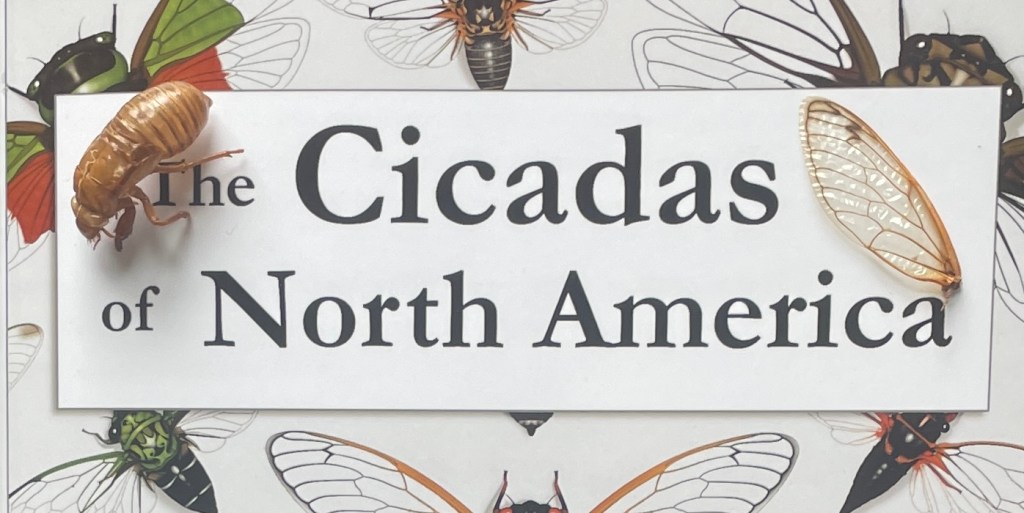
The clade Pancrustacea includes both crustaceans and hexapods. So it makes sense that cicadas taste, writes Chris Alice Kratzer, a little like shrimp, albeit “somewhat nuttier and earthier.” This also means you should stay away from them if you’re allergic to shellfish. Evolution is nutty that way. In her new guidebook The Cicadas of North America,…
-
Brood X: A Spectacular Spectacle
Brood X is nearing the end of its absolute reign upon the regions graced with it. The tiny larvae are probably already dropping out of their twig nests and burrowing into the earth. They will emerge in 2038. What will be the state of the planet then? 2024 is the next periodical cicada year: the…
-
Yes, More Cicadas
Robert Evans Snodgrass’s Insects: Their Ways and Means of Living, first published in 1930 and then republished by Dover, has an excellent chapter on the periodical cicadas with some fine illustrations. Turns out the abdomen of the adult is mostly hollow. The newly emergent adult cicada has to harden off and darken over a few…
-
Cicada Chorus
The communal roar of the cicada chorus, a dynamo seventeen years in the making, and the individual buzzing and rustle of the periodical cicadas at Princeton Battlefield State Park. The thicket of understory and woods pictured, bordering a trail and a meadow, was the loudest, most active spot here on Thursday. The cicadas were flying,…
-
Brood X
There are actually three species of periodical cicadas that make up Brood X. Magicicada septendecim or Pharaoh Cicada; Magicicada cassinii or Dwarf Periodical Cicada; and Magicicada septendecula or Decula Periodical Cicada. We call these seventeen year cicadas (there are also some thirteen year ones), but these are median spans: Decula can live from ten to…
-
Brooding
New York, except possibly for parts of Long Island, are not in the range of Brood X Magicicada genus periodical cicadas. We had to travel to Princeton, NJ, practically their northeastern-most outpost, to see them. And hear them: a thrumming incantation, background for much of our time in the town. In the thick of it,…
-
-
Emergence
On Saturday, your correspondent stumbled upon a cicada emerging from its larval husk. The folded forewing has sprung from the exoskeleton, but the hindwing remains inside. The left hindwing, on the other side, was free soon enough, but this right one would remain inside the tight confines of the husk for the entire time. From…
-
An Ecosystem
On Monday, we started with cicadas. I’ve been trying to get a photo of a Cicada-killer Wasp with her six mitts on a cicada. Thrice now laden-wasps have zipped by me, white underside of their prey visible, but I haven’t been quick enough with the camera. ONce they land, the wasps are quite quick into…
-
More Wasps
This Cicada-killer Wasp was emerging from her nest. She had just deposited a paralyzed cicada inside and, presumably since this is what they do, laid an egg on the cicada. I tried to get a photo of her carrying her progeny-to-be’s food inside, but she was too fast for me. I waited for about fifteen…
 Backyard and Beyond