mthew
-
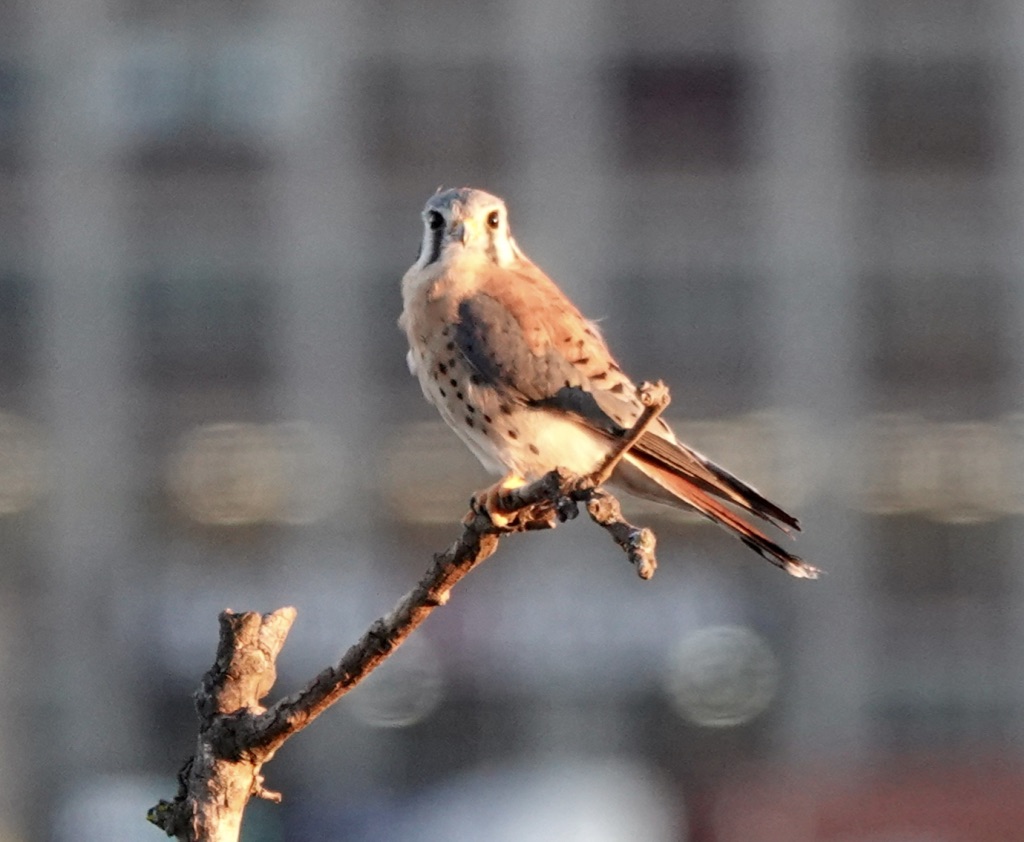
Raptor Wednesday
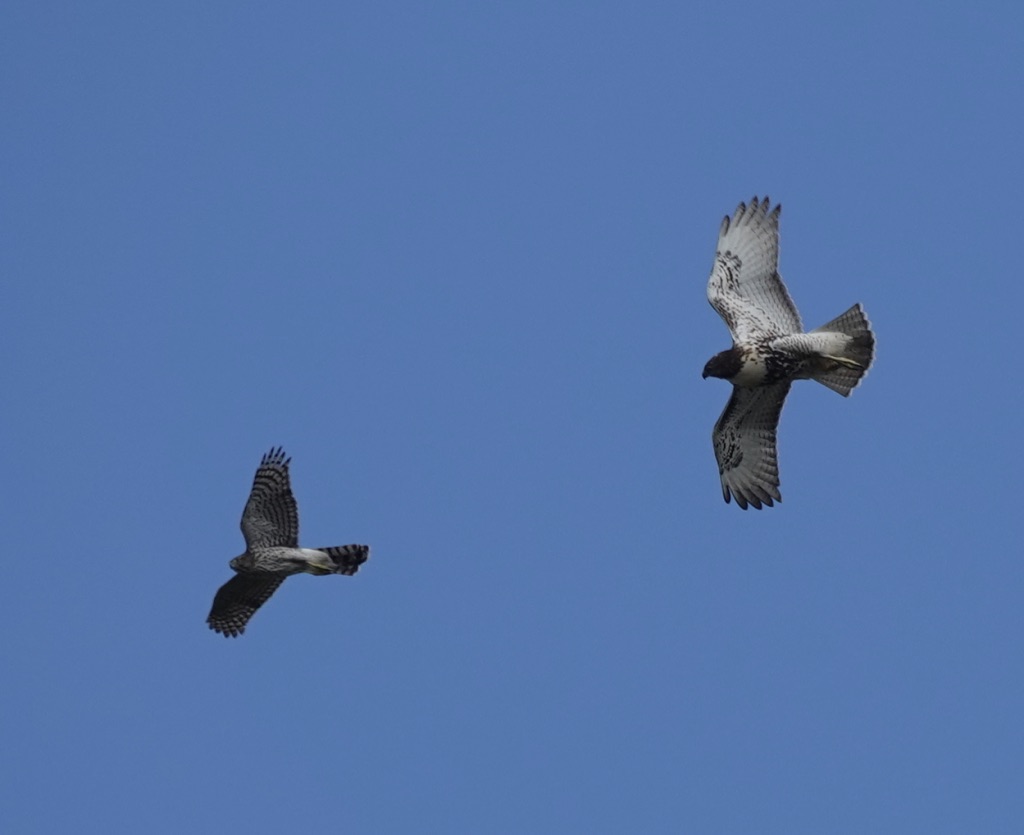
Across the street in the early morning. This one was jockeying with a crow for pole position on field lights: This one was being chased around by another male and a couple of Blue Jays.
-
-
-
-
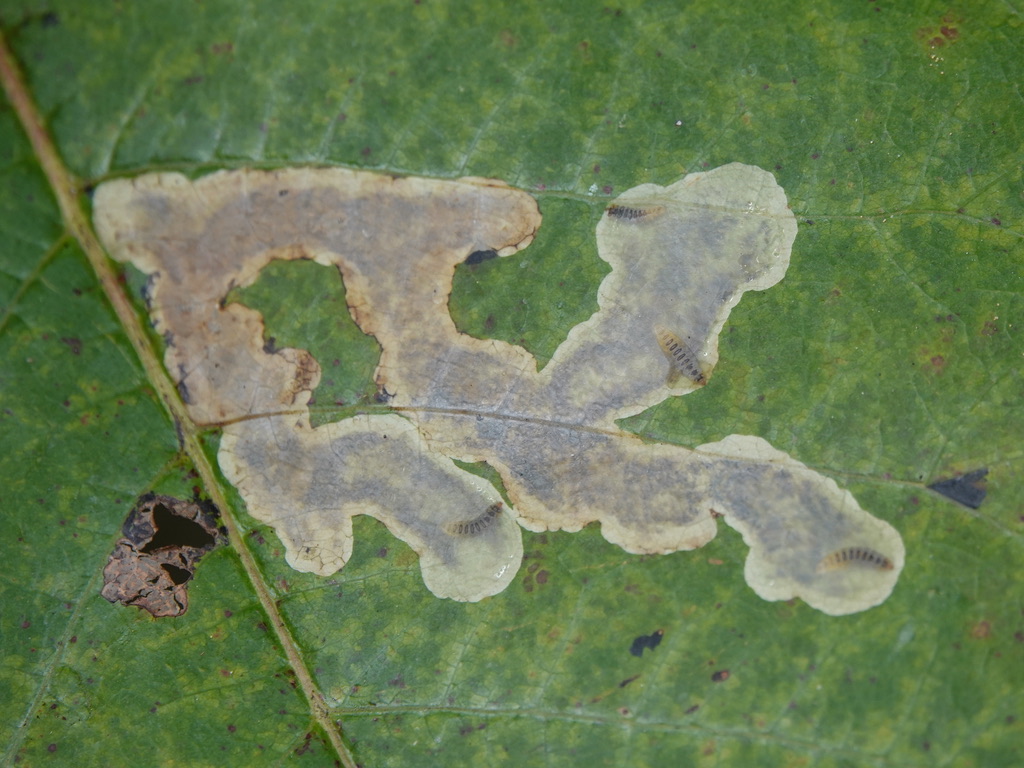
Poison Ivy Leaf-miner Moth
There’s a notable blotch on this large Eastern Poison Ivy leaf. Look closer. And you can see the actual larvae of the moth Cameraria guttifinitella. Two of the four inside mining away (eating the internal layers of leaf).
-
-
Paper Wasps
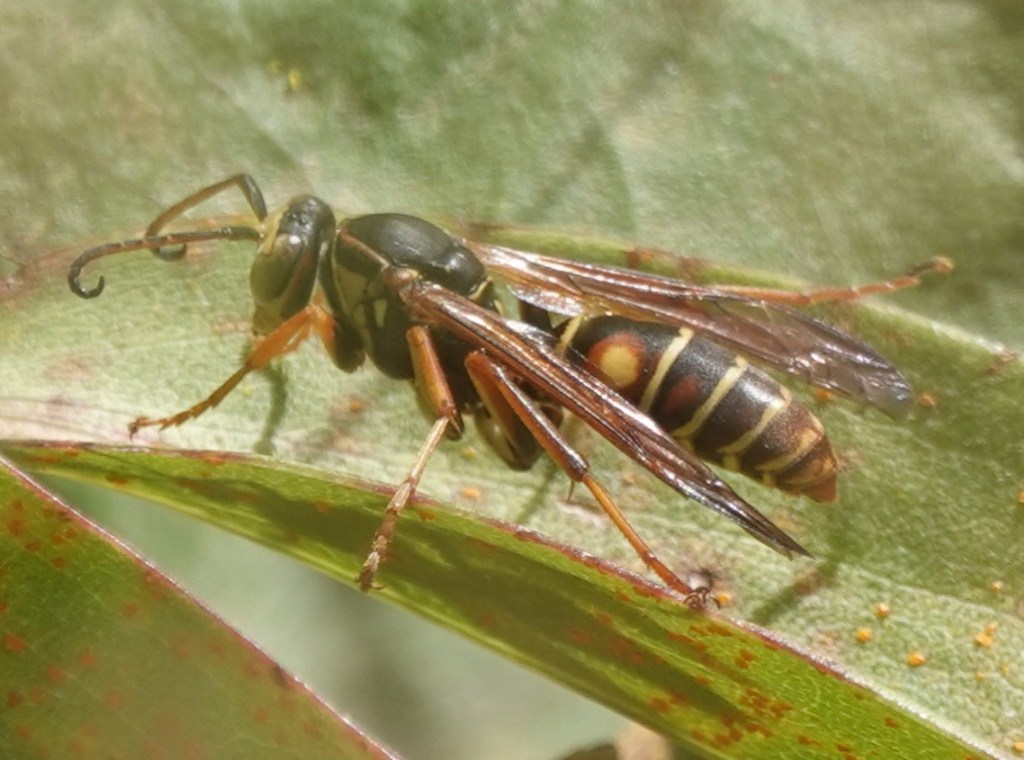
Northern Paper Wasp/Polistes fuscatus comes in several forms. The one on top is the most elaborate I’ve seen. C.A. Kratzer, who wrote the big book of social wasps, calls this the yellow-spot form. These make umbrella-like paper nests that hang from a short anchor and are not covered by surrounding paper, unlike: I didn’t notice…
-
Boardwalk Drama
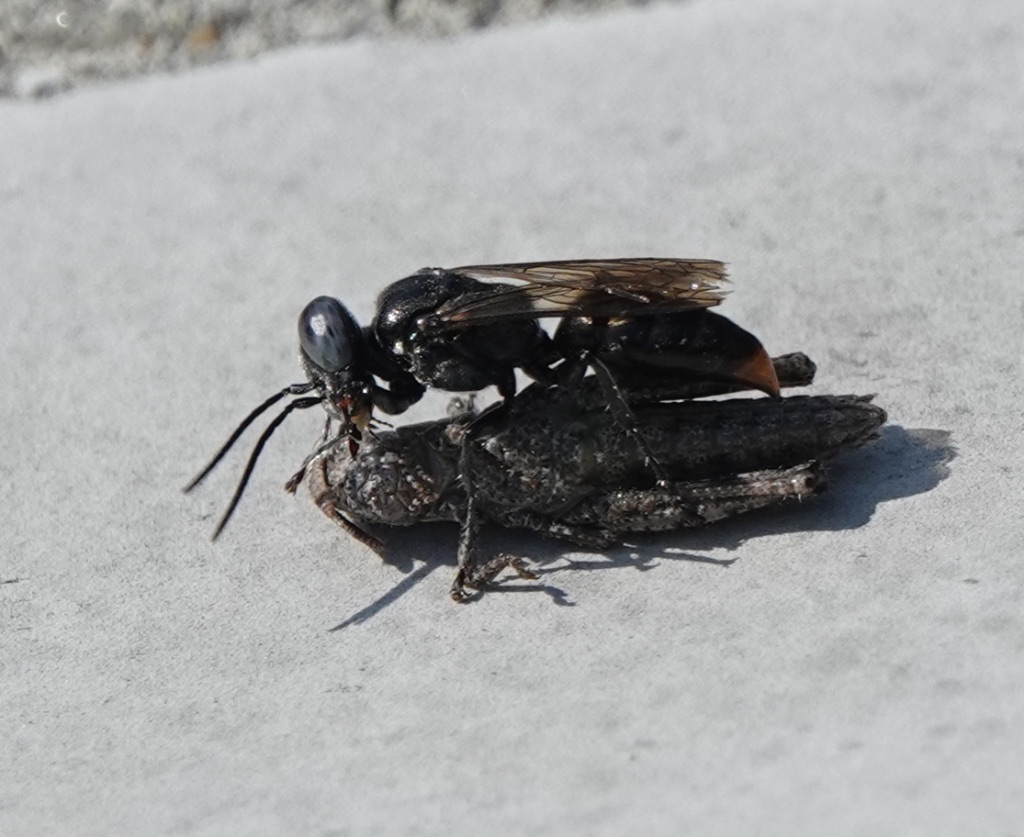
At Arverne East Nature Preserve in Queens, on the Rockaway Peninsula, I ran into a little drama. This little blue-eyed, red-tipped wasp was has caught a grasshopper nymph. I might have stepped on them both if I wasn’t scanning the concrete/boardwalk here. (The wasp was so intent on her prey that she’d didn’t bulge when…