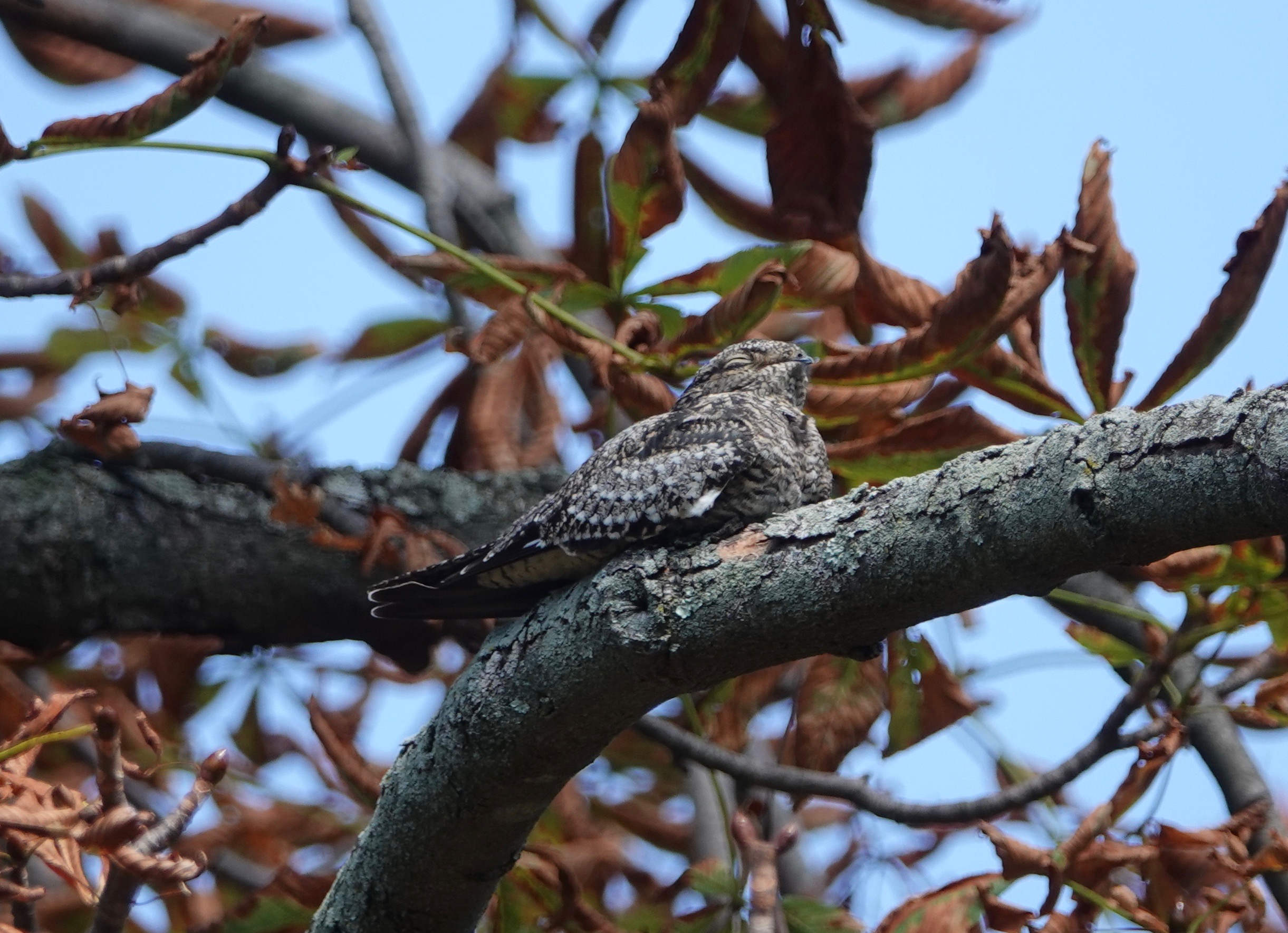
 Not quite Raptor Wednesday, but a good excuse to explore the nighthawks. They are not raptors, but their physical similarity in flight to hawks, specifically falcons, at dusk and dawn gives them their name. Perched, they look nothing like raptors. And perched is where you will find them during the day, if you find them.
 This is a Common Nighthawk, Chordeiles minor. The City Birder spotted this one in Green-Wood over the weekend. He gave me the location and description of the bird’s perch: three o’clock on the horse chestnut by the…. Trouble was, there were three horse chestnuts in the immediate area. Four pairs of eyes circled these trees slowly before I noticed the bird pretending to be a part of the branch.
 The white marks on the flanks is a tell in our parts, helping to separate these from the local nightjars.
Here’s Eastern Whip-poor-will in Brooklyn.
Here are a Common Pauraque and a Lesser Nighthawk in Texas.
Here’s a Chuck-will’s-widow in Manhattan.
Nine members of the nighthawk/nightjar or Caprimulgidae family are found in the U.S. and Canada, some only on the edges of Texas and Florida. “Nightjar” comes from the English name of a bird that sounded jarring. Choate wonders if the verb “jar” didn’t enter English because of the bird. The OED says the word is probably imitative in origin. (“Jar” the noun comes from the Arabic via the French.)
The family name harkens to another common name, goatsuckers, which stems from the very mistaken belief that they suckled at goats. Aristotle spread this slander, but he probably wasn’t the first.
 They actually eat insects. Our unrelenting chemical warfare against insects has contributed to a dive in Common Nighthawk numbers. Habitat loss and the demise of the flat gravel roof in urban areas, which they used to nest on, haven’t helped.
 Backyard and Beyond
Leave a reply to Paul Lamb Cancel reply