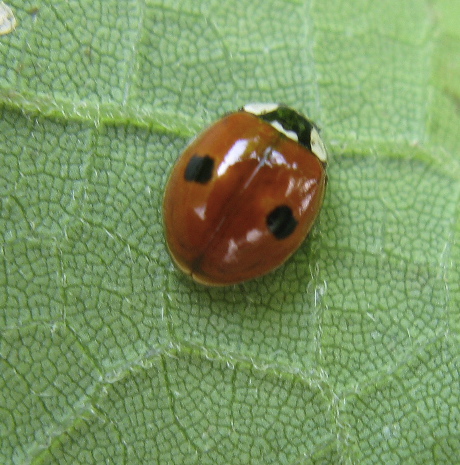
 The rare Two-spotted lady beetles (Adalia bipunctata) I discovered in July are still active in Brooklyn Bridge Park. In fact:
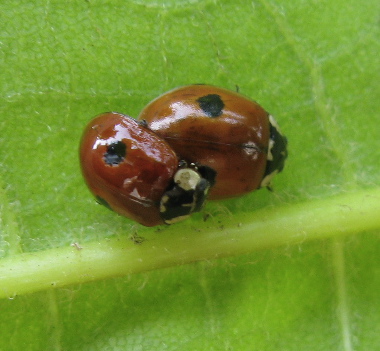 “Houston, we have coition.” Luckily, I didn’t learn about reproduction from Republicans, so I know that this kind of activity leads to:
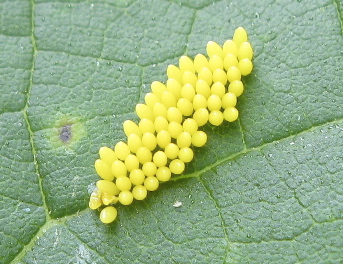 Lady beetle eggs. I assume Two-spotted, but don’t know for sure.
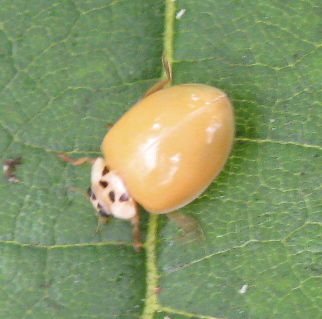 A recently emerged adult, whose markings and coloring will soon develop.
And continuing on the theme of life cycles: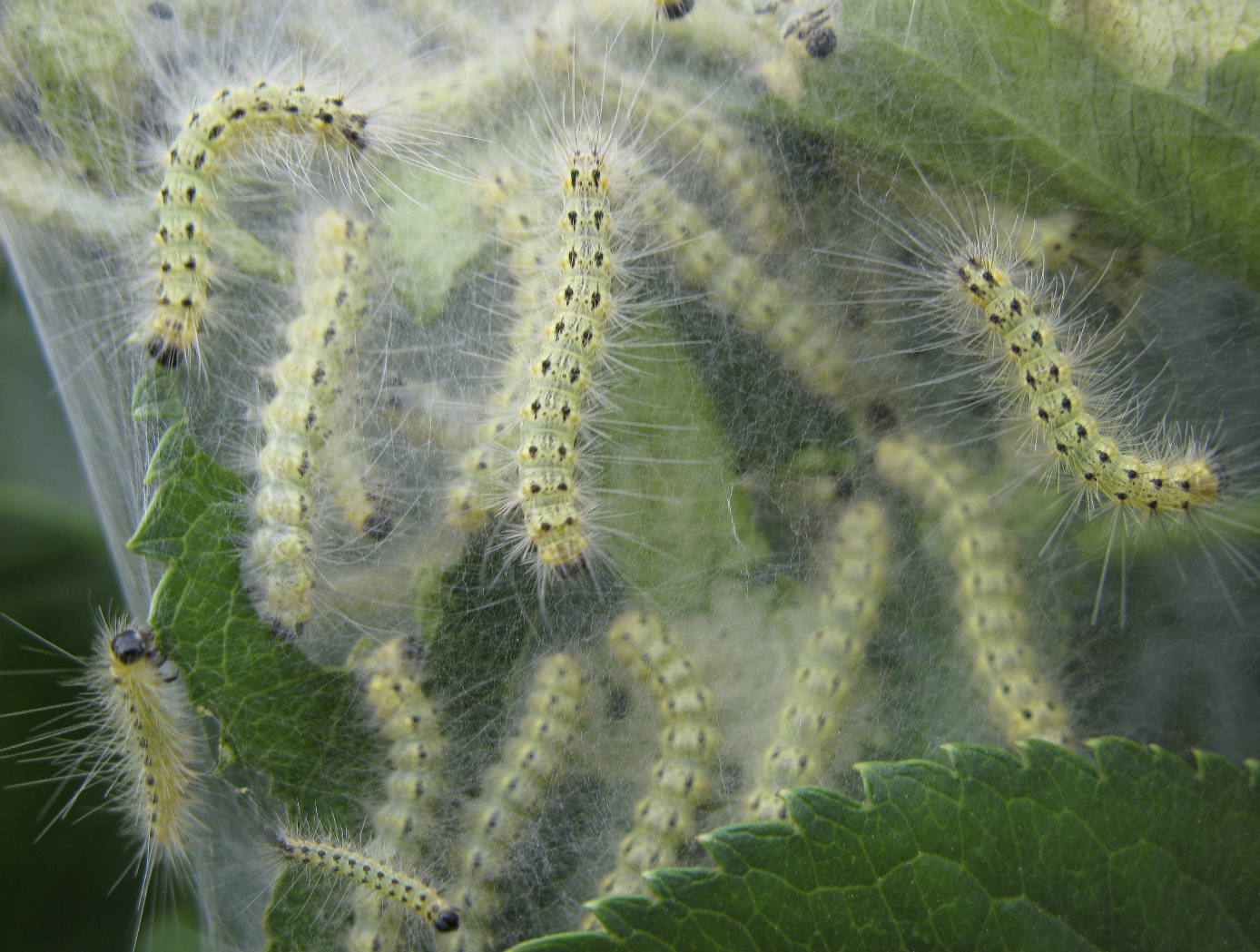 Fall Webworms (Hyphantria cunea) have broken out, formed silken webs, and are skeletonizing their hosts inside the webs.
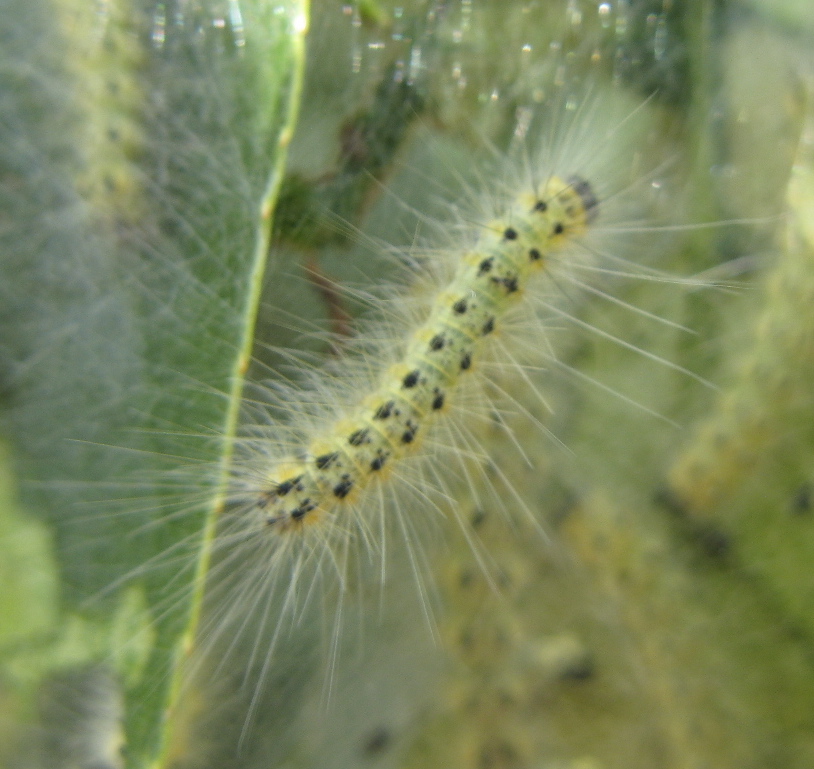 This defoliator is sometimes confused with Gypsy Moths and Eastern Tent caterpillars, who also make communal silk nests in trees. The Fall Webworm can make a tree look fairly ghastly but isn’t very dangerous because it strikes in the fall, when the trees are at the end of their leaf cycle. Brooklyn Bridge Park tends to leave “pests” like this alone because they will attract other species, including predators. Indeed, the aphid infestation on the catalpas probably lured in the Two-spotted lady beetles. H. cunea, meanwhile, has been called a “parasitoid hotel” because it is parasitized by more than fifty species of wasps and flies.
When I poked my camera lens in for the close-ups, the caterpillars outside the nest started wagging in unison, a characteristic of the species. It’s the dance sensation sweeping the nation: the “Funky Caterpillar.”
 Backyard and Beyond
Leave a reply to mthew Cancel reply