 The cold front that came through Saturday night practically snowed birds.
  There were so many in Green-Wood yesterday I thought it was the height of spring migration. There were several types of sparrows and warblers, both kinglets, thrushes, lots of Flickers, a couple of Red-winged Blackbirds, one or two Brown Creepers, one or more Woodcock, Jays, Mockingbirds, Phoebes, DC Cormorant, and on it went.
 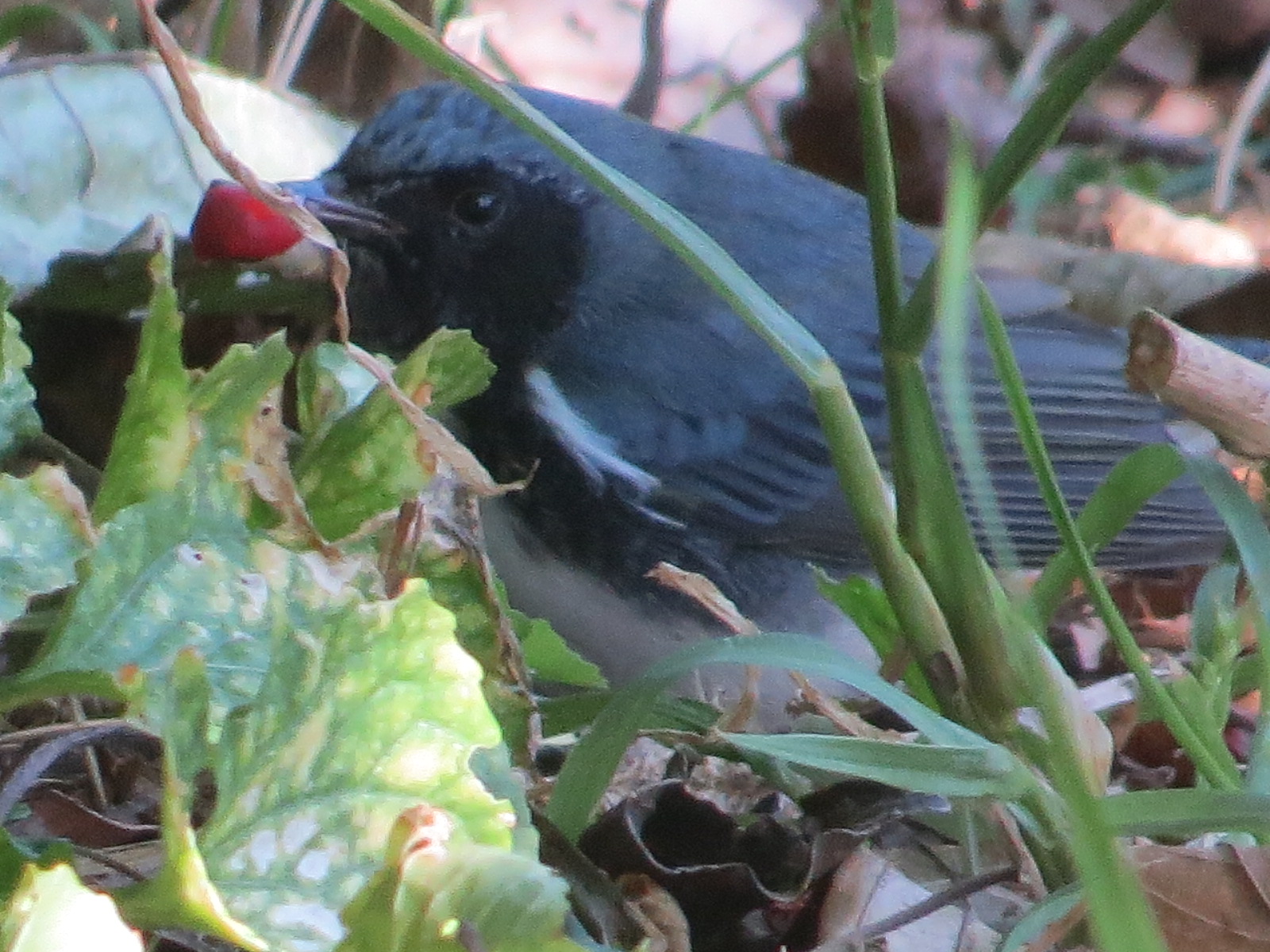 And where there were songbirds, there were raptors. While photographing a Great Blue Heron,
  I heard a falcon. It was a Kestrel and it had clawed a bird,
 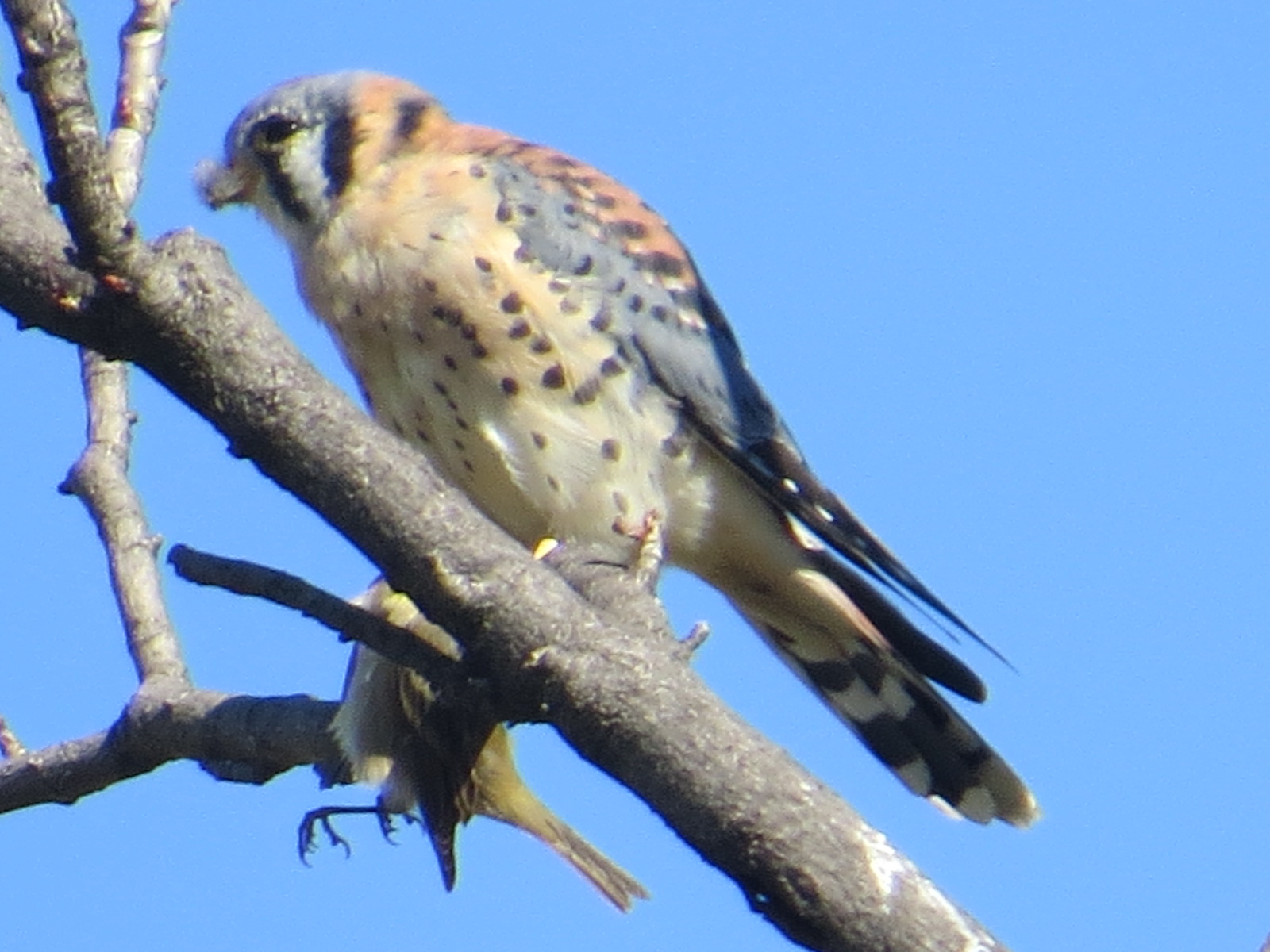 I think a Pine Warbler, and was plucking it in the bare branches.
  Barely seen through ground cover, another hawk, I think it was an Accipiter, was tearing at something on the ground. Later a Sharp-shinned Hawk caused wave after waver of birds to scatter. That Sharpie, or another, was seen three more times; each time it came up empty on chases. It’s tough being a raptor: you miss your target most of the time. A male Kestrel, perhaps the same one I’d seen hours earlier devouring the warbler, was on top of the gothic gate, up by the Monk Parakeet nests. No Monks at home; the Kestrel checked several holes even though I find it hard to imagine it could take one of the Monks.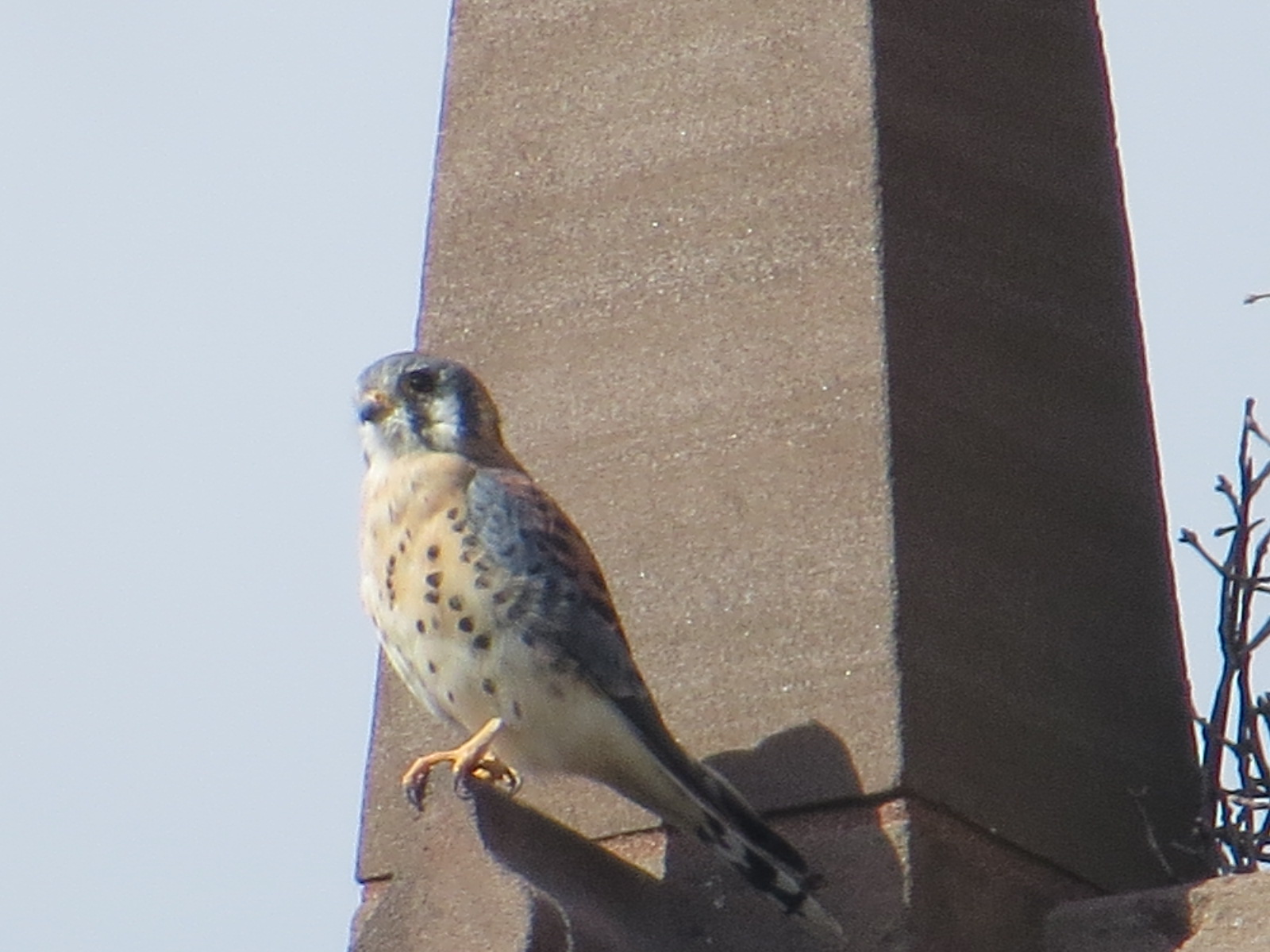
Green-Wood Was So Very Birdy
2 responses to “Green-Wood Was So Very Birdy”
-
[…] Then it made an unsuccessful dive at a Monk Parakeet, a bird roughly its own size. I’ve noted Kestrels up there before.This one found the lights and goal posts of the football field at Floyd Bennett […]
-
[…] Falco sparverius male. The blue wings sex the bird.Hunting amidst the strollers at the NYBG. Came up empty-taloned from a pass into the stubble, just some wisps of grass. With his head turned here, you can see the two black patches on the back of his head. These are ocelli, or false eyes. The standard line is that these are to psych-out larger birds of prey. A minority view holds that they may induce a mobbing reaction from songbirds, who are, after all, potential prey. Why not both? While Kestrels eat a lot of insects, they also hunt birds, as this warbler discovered in Green-Wood. […]
 Backyard and Beyond
Leave a comment