 Rothko sunrise on the big beach at Wildwood Crest on the Cape May peninsula, hanging down from New Jersey’s southeastern end like an appendix. I was on the beach about 50 minutes before sunrise, with a long row of mostly-empty-in-the-off-season motels behind me, and the Sanderlings already working the edge of the waves in the near-glooming dark.
 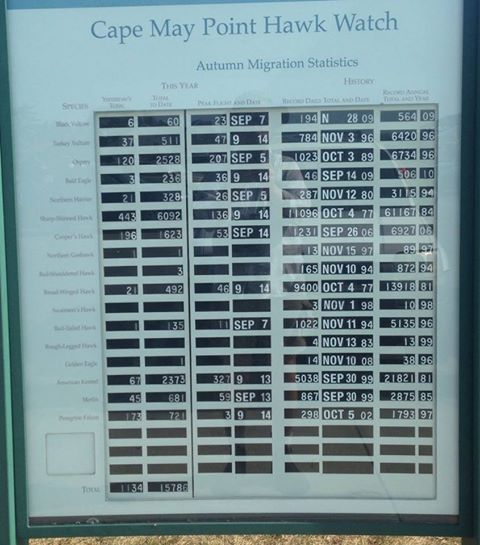 A migratory bottleneck, Cape May is renown for birding in the fall, when southbound birds funnel along the coast turn right at the end of the peninsular, continuing over the mouth of the Delaware Bay. The place was simply swarming with bird-watchers, showing, incidentally, their economic if not yet their full political potential. We — a NYC Audubon tour led by Joe Giunta — visited the famed hawk watch on Saturday and Sunday, both times under unusually hot and muggy conditions. That’s crappy weather for migration; birds want a tail-wind behind them, and in October that’s a cold wind from the north. Still, birds were moving: 443 Sharp-shinned Hawks were seen there on Saturday. Our highlights included a mature Bald Eagle passing overhead, as well as numerous accipiters and falcons, giving me an opportunity to refine my sense of the differences between Sharp-shinned and Cooper’s, as well as between Kestrels, Merlins, and Peregrines.
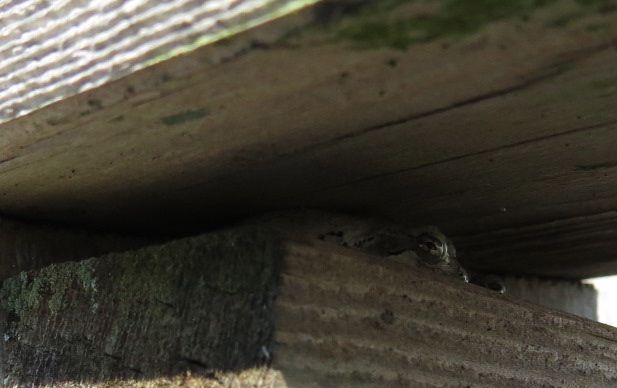 Hiding from the brutal sun, two Southern Gray Treefrogs (Hyla chrysoscelis) no bigger than my thumb joint, were tucked into the hawk watch’s woodwork. This is an endangered species in NJ. Elsewhere, we heard tree frogs and cicadas (and mosquitos!), giving a rather tropical feeling to the woods at Higbee Beach WMA, except for the masses of black walnuts going to rot and squirrels at our feet.
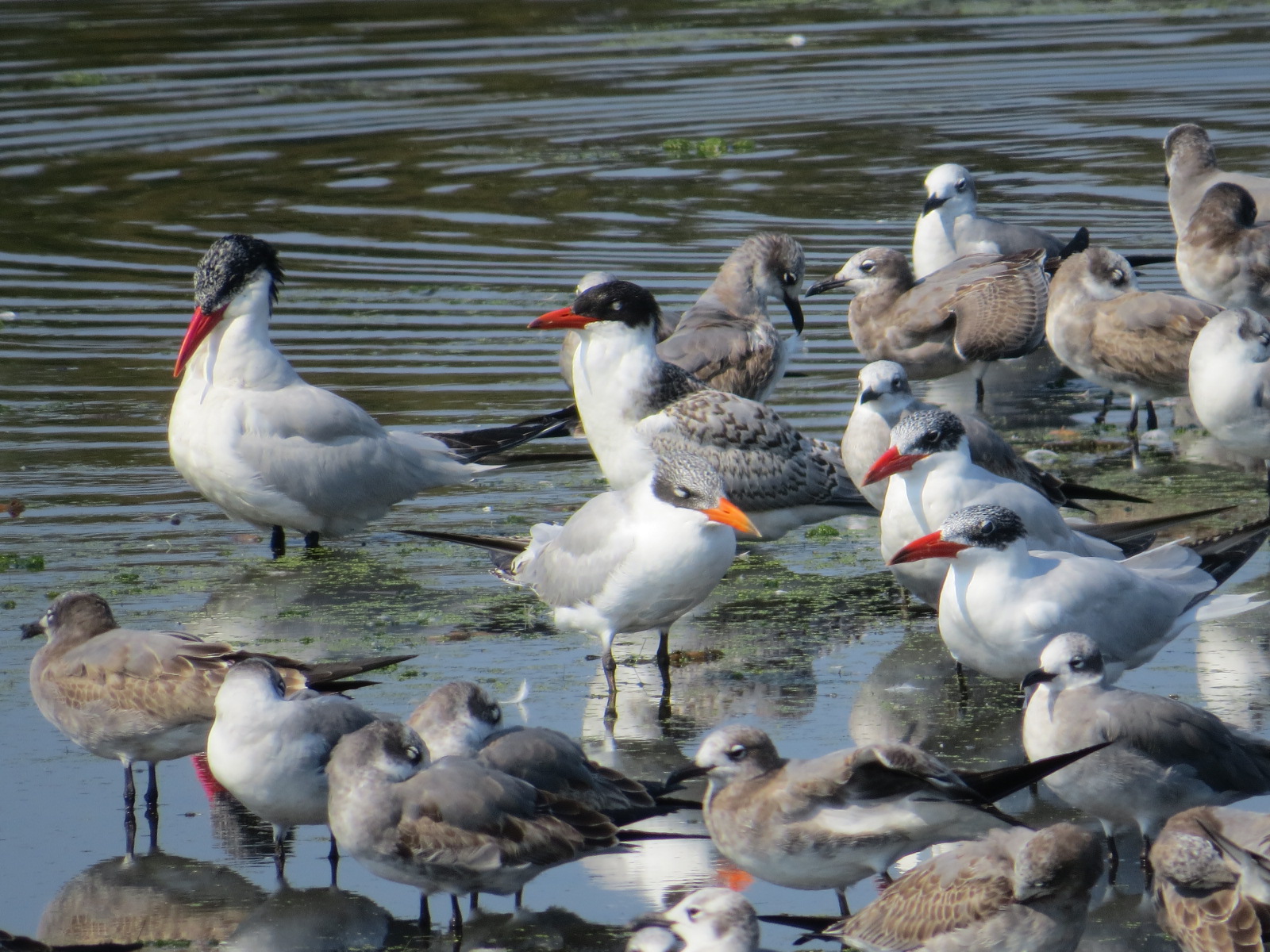 There are a number of ponds around the hawk watch, luring in ducks and waders (among many others, we saw Wood ducks, a Eurasian wigeon, Stilt Sandpipers, Black Skimmers, plenty of egrets). Here are some Caspian Terns (Sterna caspia), a new species for me, amid a scrum of immature Laughing Gulls (Larus atricilla).
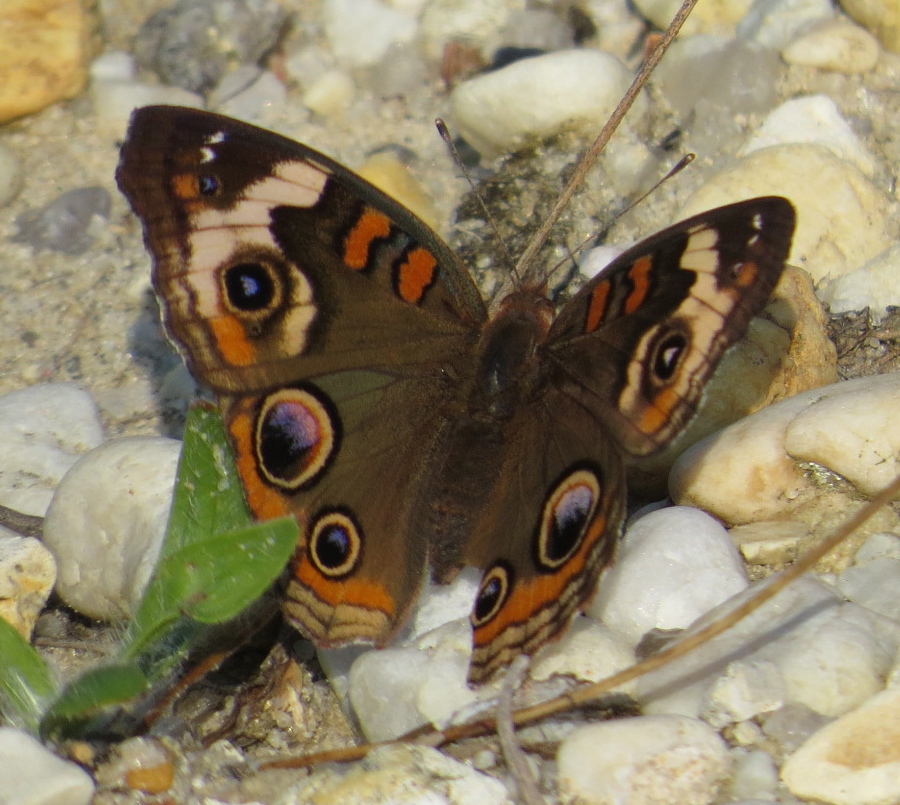 Buckeye butterfly (Junonia coenia). Cape May is also noted for its Monarch butterfly congregations, channeled down the peninsula during migration like the birds. A volunteer was capturing and tagging the distinctive orange and black fliers with tiny little stickers; but it was a slow day in bad year for Monarchs (beset as they are at both ends of their epic migrations: their Mexican habitat is ever more chopped down and we continue to mow and pave over our grasslands, including the all important milkweeds).
An especial highlight of the trip was at sunset in the heavy fog on Nummy Island. Black-crowned Night Herons were leaving their diurnal roosts. Their bark-like “kwok” calls echoed in the fog, then the birds began to take flight to their nocturnal feeding grounds in the marshes and tidal flats around us.
 Backyard and Beyond
Leave a reply to Out Walking the Dog Cancel reply