Before I began watching birds, I could identify a bare few of them: cardinals, robins, mourning doves, “sparrows,” things seen on bird feeders or everywhere. One day in the late 1990s when I lived on the top floor of a Park Slope rowhouse, I noticed a small dark bird moving quickly through the tree out back. We were almost eye-level, that bird and I. The bird looked blue-black on top and white underneath, and I’d never seen anything like it before. It was a very active animal, and I found it difficult to get a good clean view of it, yet it was quite distinctive. There were little patches of white on its blue wings. This was one dapper creature, with its own handkerchief accent. (I used to think I picked up that description from Roger Tory Peterson, but it isn’t in his classic field guide, so I don’t know where it came from.) I had no idea what it might be, but I eventually discovered it was a male Black-throated Blue Warbler (Setophaga caerulescens). I have seen a good number of them since. They are not uncommon, if you look, this time of year. The other day, though, I happened to see one through the binoculars from above, which isn’t the usual perspective on a warbler. There was a rusty purplish to the wings. I’d never seen this detail before.
And more recently, I found this corpse, a probable victim of a large sheet of glass. 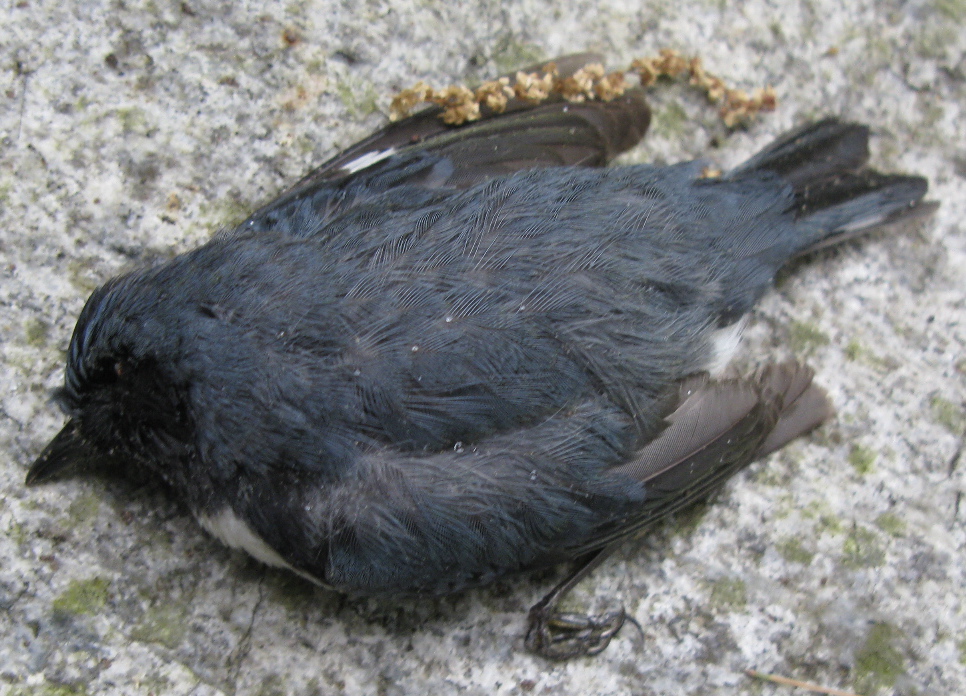 Every photograph is a picture of death, isn’t it?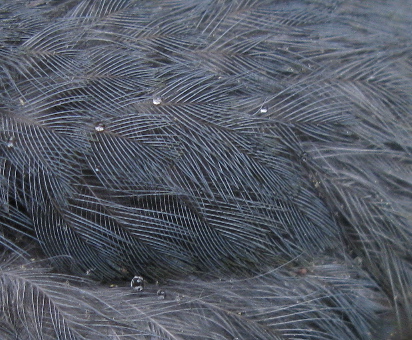
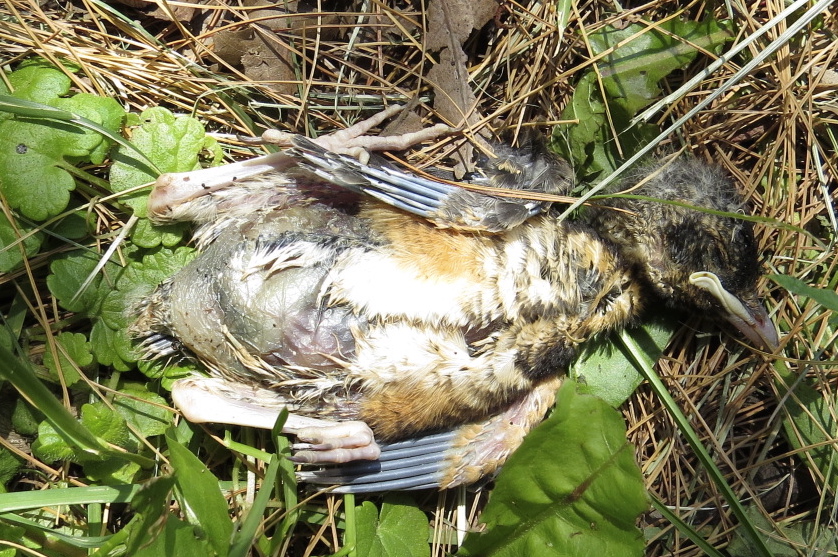 A baby Blue Jay (Cyanocitta cristata), I’d guess, from those blue wing feathers that were just pushing out. Falling from the nest is not uncommon these days.
 Is there anything less life-like than a dead song bird? Hard to say what happened to this female Baltimore Oriole (Icterus galbula), which was laying besides a tree, far from glass.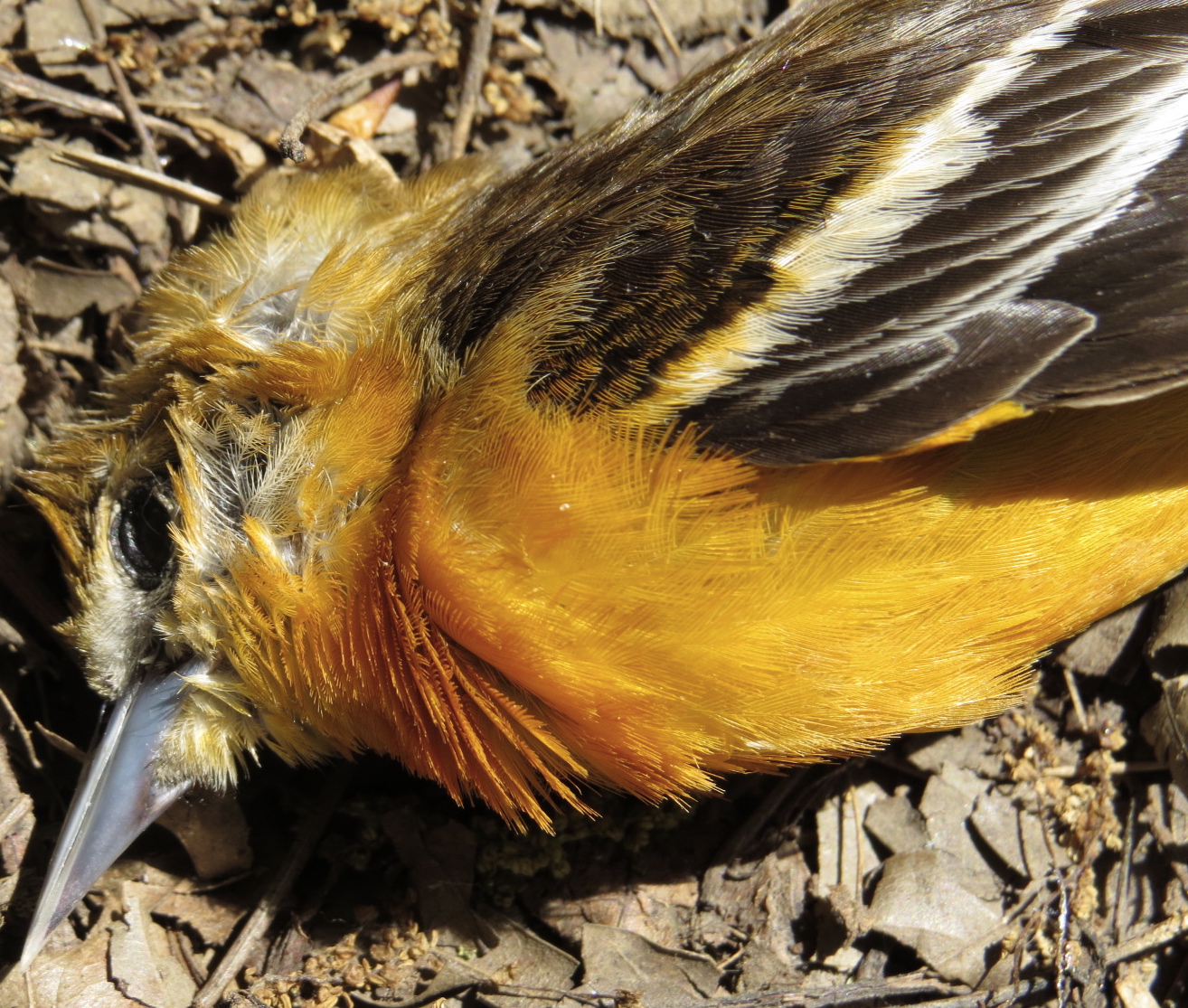
 Backyard and Beyond
Leave a reply to mthew Cancel reply