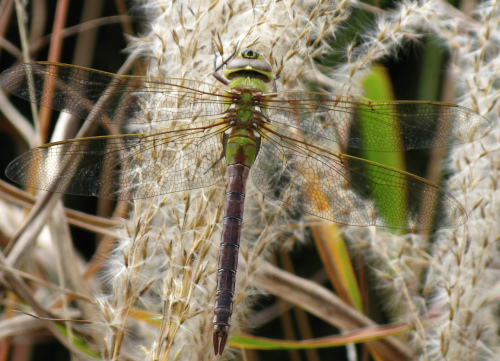
 This morning I joined Brooklyn Bridge Park staffers and volunteers for an orientation about the Dragonfly Pond Watch they are participating in this season. As part of the Migratory Dragonfly Partnership, the Watch is gathering data about five of the sixteen known migratory dragonfly species in North America:
Common Green Darner (Anax junius)
Black Saddlebags (Tramea lacerata)
Spot-winged Glider (Pantala hymenaea)
Wandering Glider (Pantala flavescens)
Variegated Meadowhawk (Sympetrum corruptum).
Two of the species, the Darner (a male; the female is picture above, from my archives) and Saddlebags, were present this morning, which was helpful. I’ve seen the Spot-winged Glider in the park, and got this picture last year: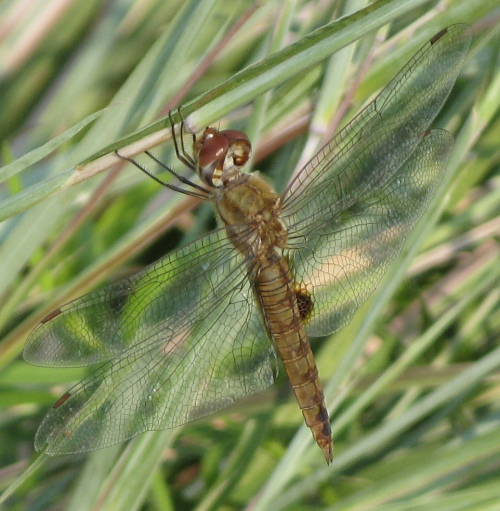
The Variegated Meadow is a Midwestern/Western species; it may sometimes show up on this coast in the fall. I am looking forward to the delightfully named Wandering Glider, a widely distributed species found in many parts of the world.
This morning we also saw a Blue Dasher, the most common of dragonflies in the park, and this 12-Spotted Skimmer (Libellula pulchella):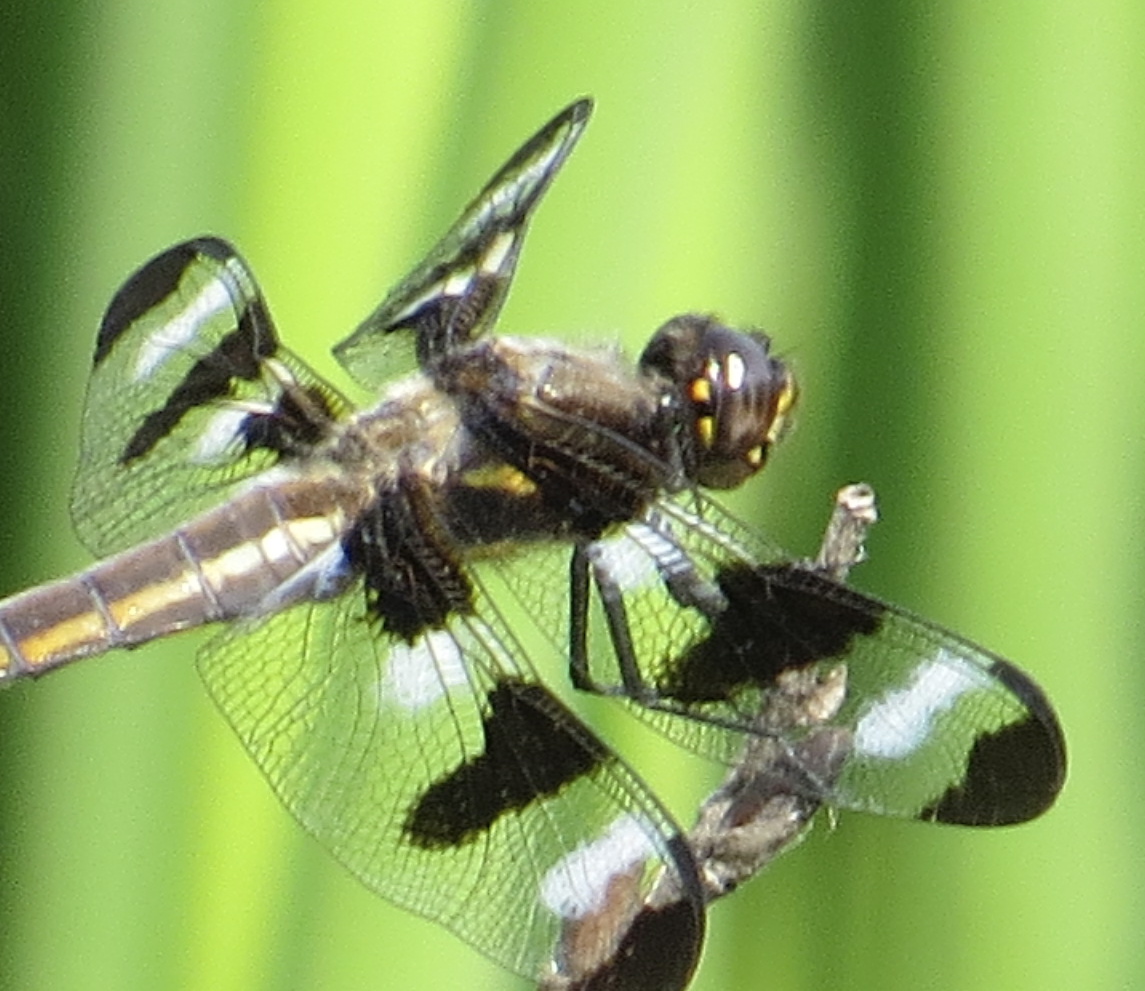 This is a male. Females don’t have the white spots on their wings. (The name count comes from the three dark marks per wing.)
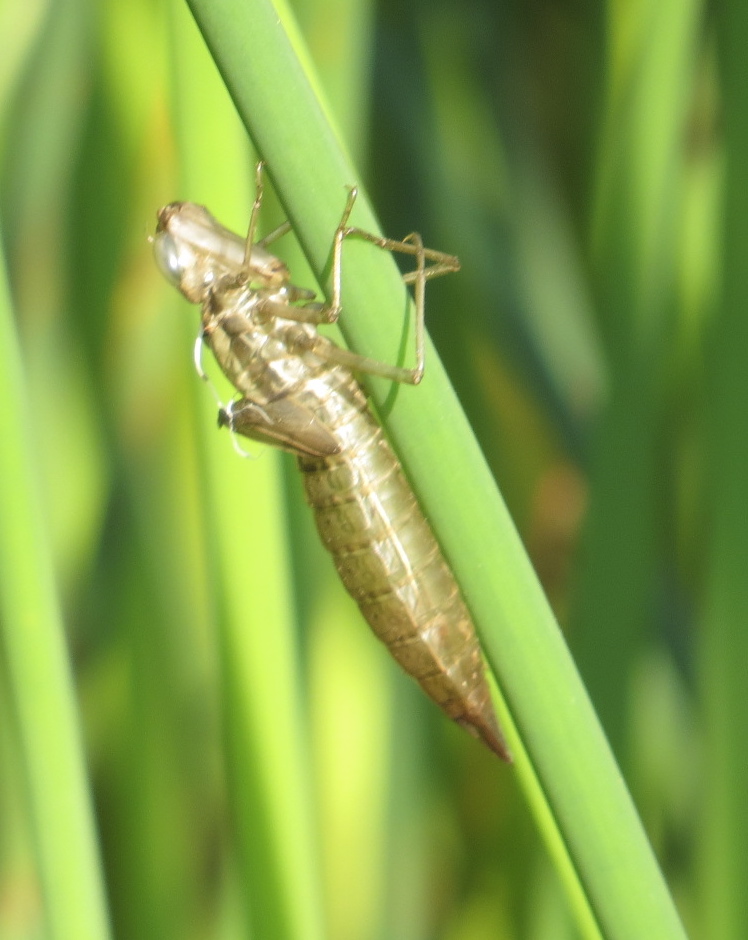 Both Dragonflies and Damselflies have aquatic larval stages; when they emerge, they shed their larval husks, unfurl their wings, and go. We were lucky to spot a single empty exoskeleton, known as an exuvia
Both dragonflies and damselflies are in the Odonata order. Damselflies are generally smaller, thinner, and when perched have wings closed over their abdomen; dragonflies hold their wings straight out. There were several species of damselflies about this morning, but these are rather harder to ID than the dragonflies: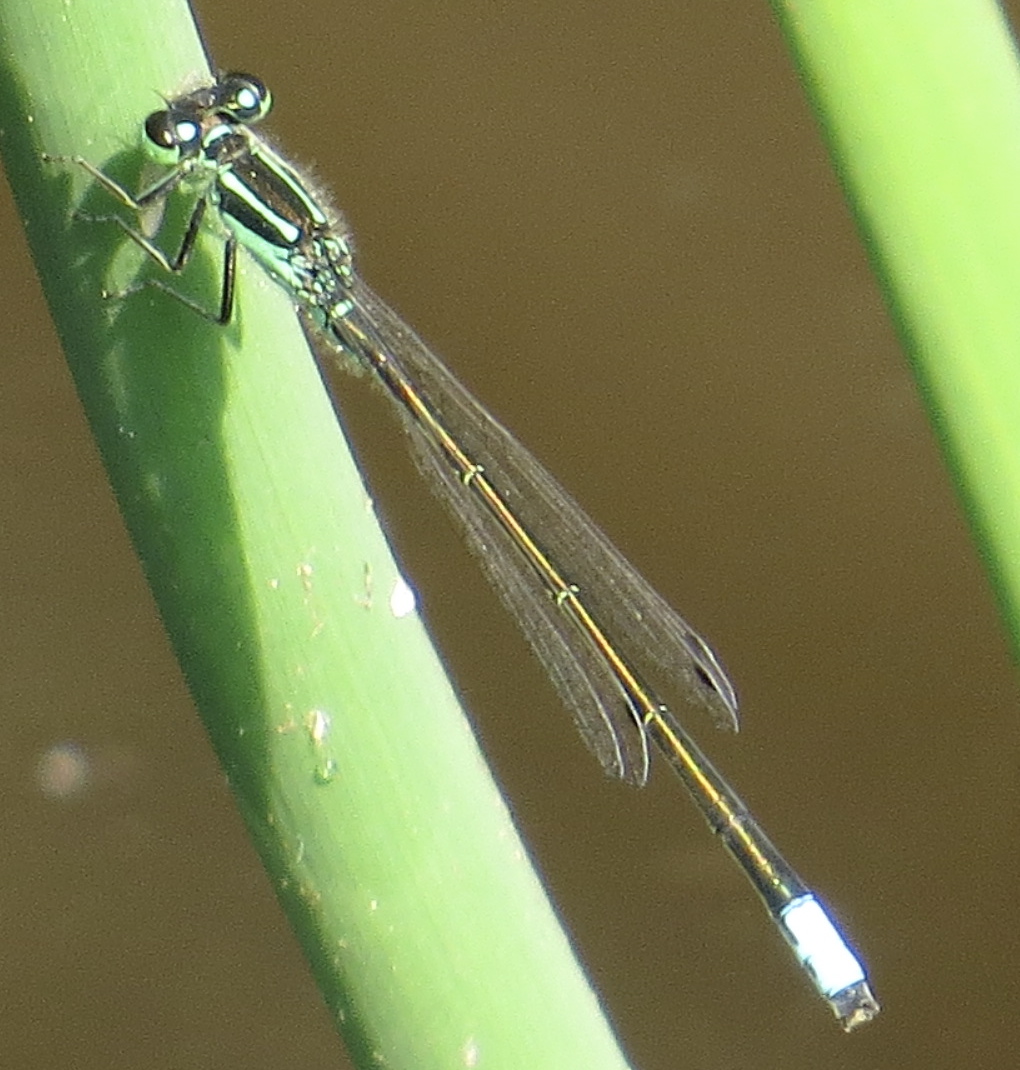 Note that it is munching on something with wings. The widely separated eyes are another marker of the damselflies.
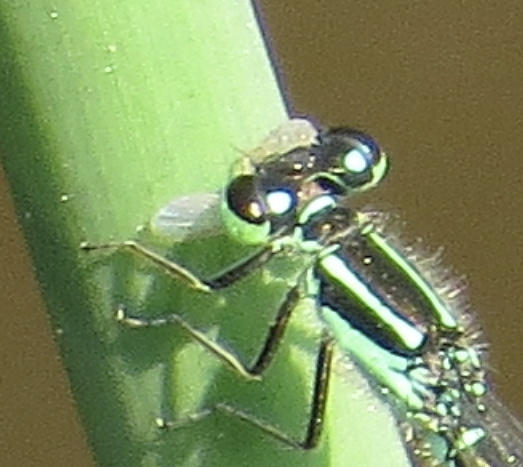 Both “odes” are voracious predators, in both aquatic nymph and airborne adult stages.
And then, there was this: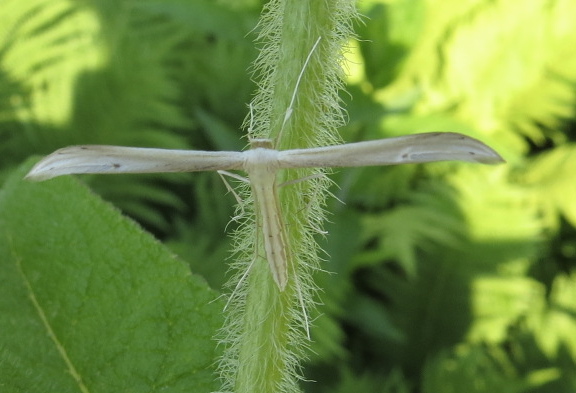 Spotted by Myra, park volunteer and reader of this blog. Looks like a Morning Glory Plume Moth (Emmelina monodactyla) resting after a long night of eating Joe-Pye Weed.
 Backyard and Beyond
Leave a comment