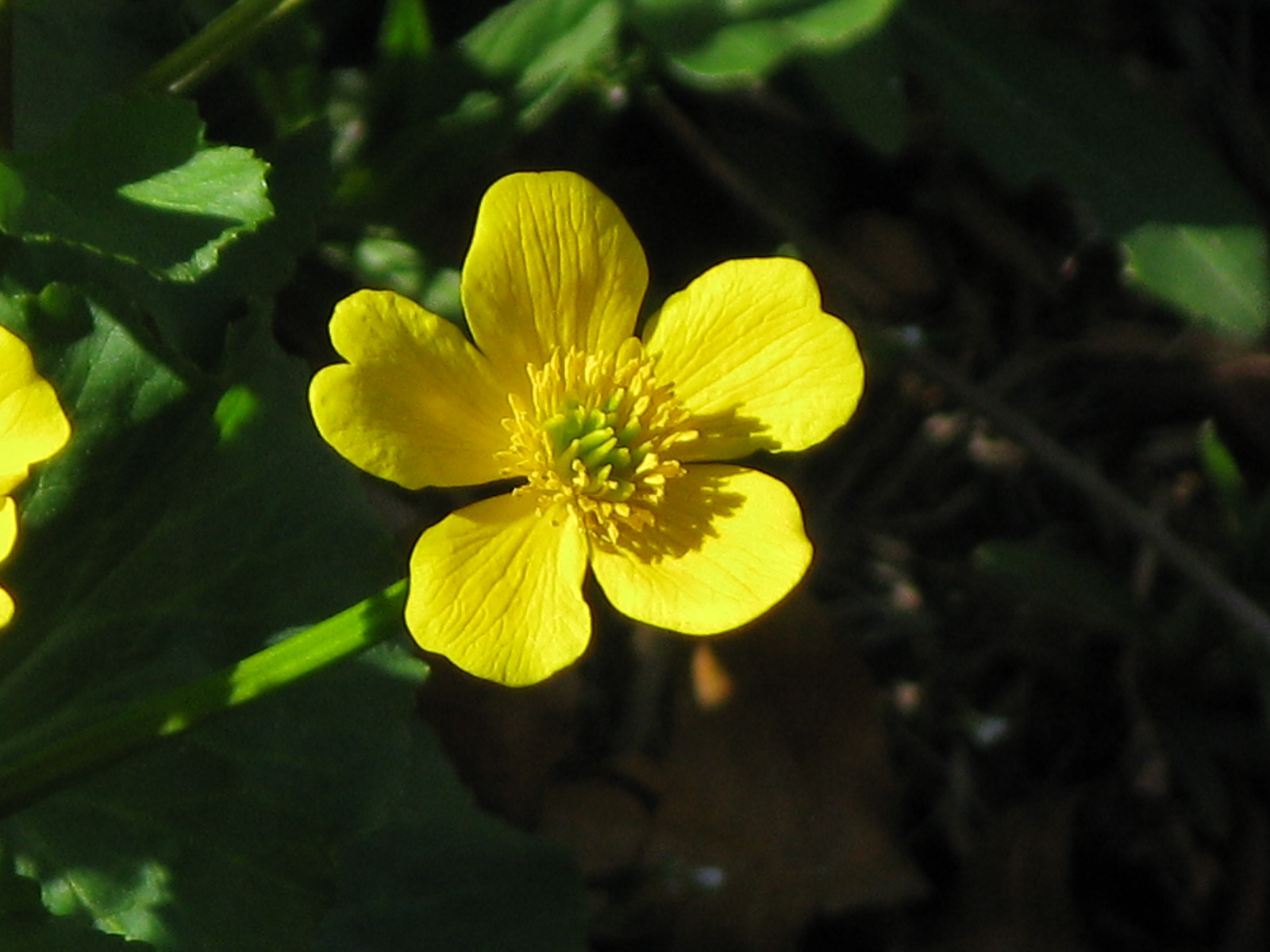
 Marsh Marigold (Caltha palustris), also known as Cowslip, at Brooklyn Bridge Park, where this perennial was planted along the freshwater gardens and continues to thrive, having survived the salty inundation of Sandy.
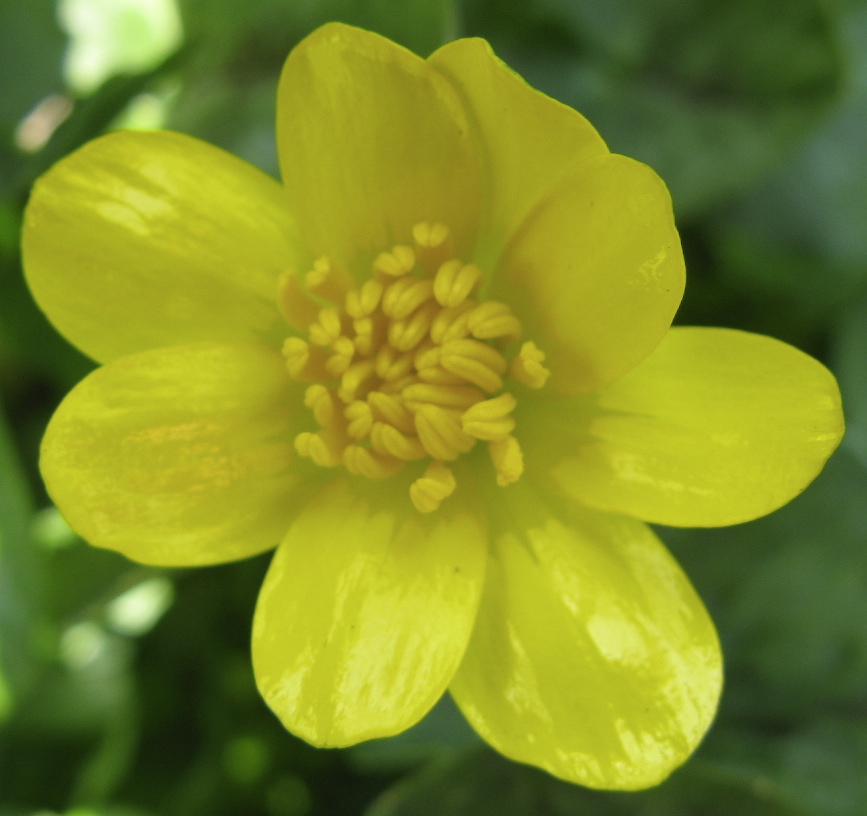 Lesser Celandine (Ranunculus ficaria), growing all over the place, in this case in Prospect Park, where it wasn’t planted but spreads like wildfire under its own invasive engine.
Both of these plants are in the Buttercup family, Ranunnculaceae, so it isn’t surprising that they should be similar, with long stems, heart-shaped leaves with some toothiness, and, most obviously, the shiny yellow buttercuppy flowers. The LC has 8-12 petals and smaller leaves. Technically, MM doesn’t have petals, but it does have 5-9 petal-like sepals, usually the star-like five as above; its leaves look twice as large as the LC’s.
 Backyard and Beyond
Leave a reply to mthew Cancel reply