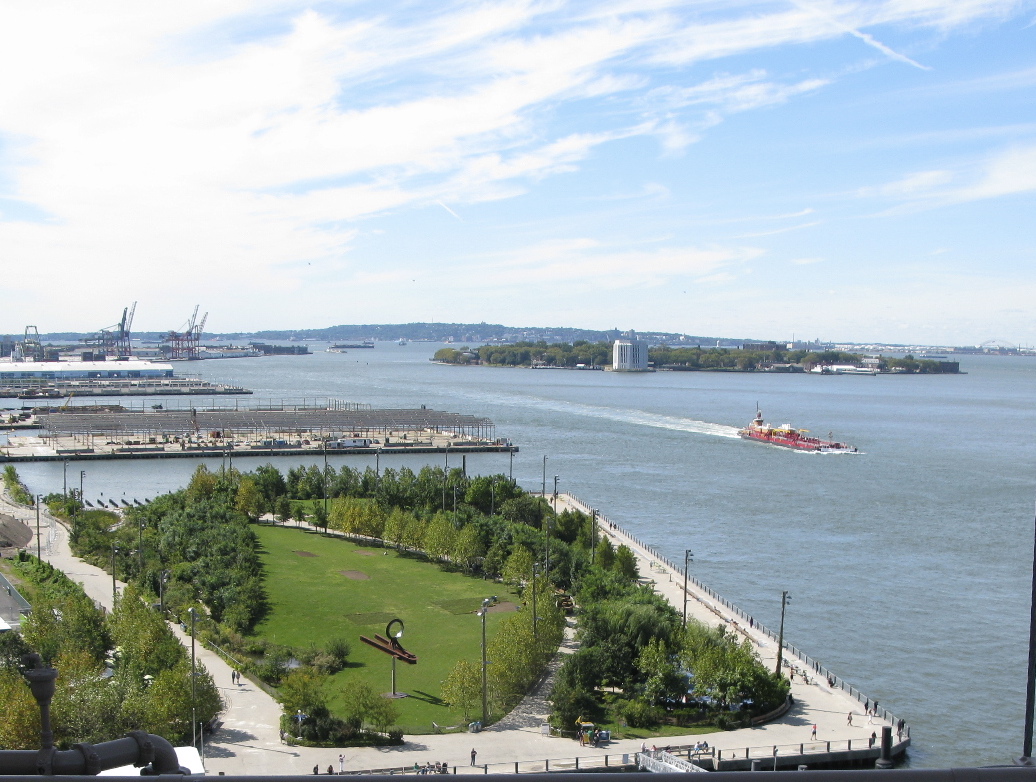
 From the air, or, as in this case, the great bridge, Brooklyn Bridge Park’s Pier 1 is an island of green. We’re not the only species that sees and enjoys this. Recently a migrating Eastern Red Bat was noticed resting through the daylight. Yesterday, I saw three species of warblers in the park. They’ve dropped out of the sky into the parks’ woods and thickets and pools, to rest, drink, bathe, and eat, between noctural legs of their voyage south. One was a Waterthrush; one was too quick to get much of a bead on, but was probably a Common Yellowthroat; and one was this fearless sliver of feathers: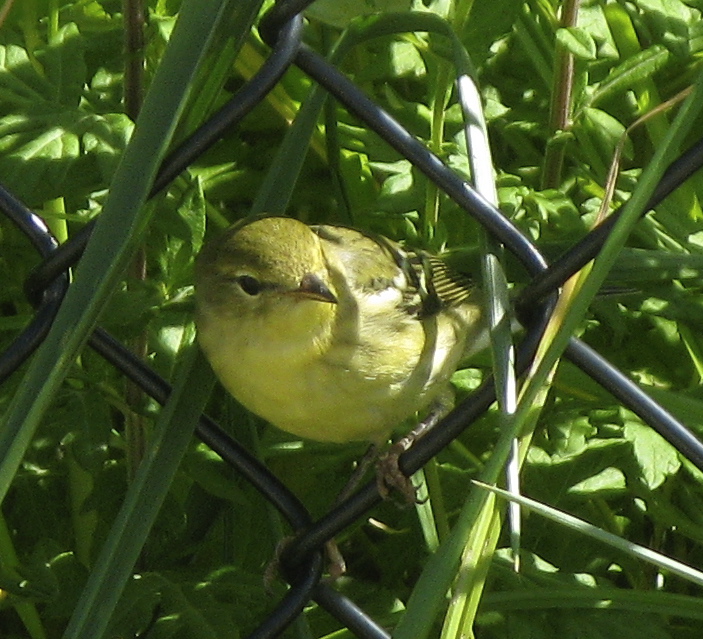
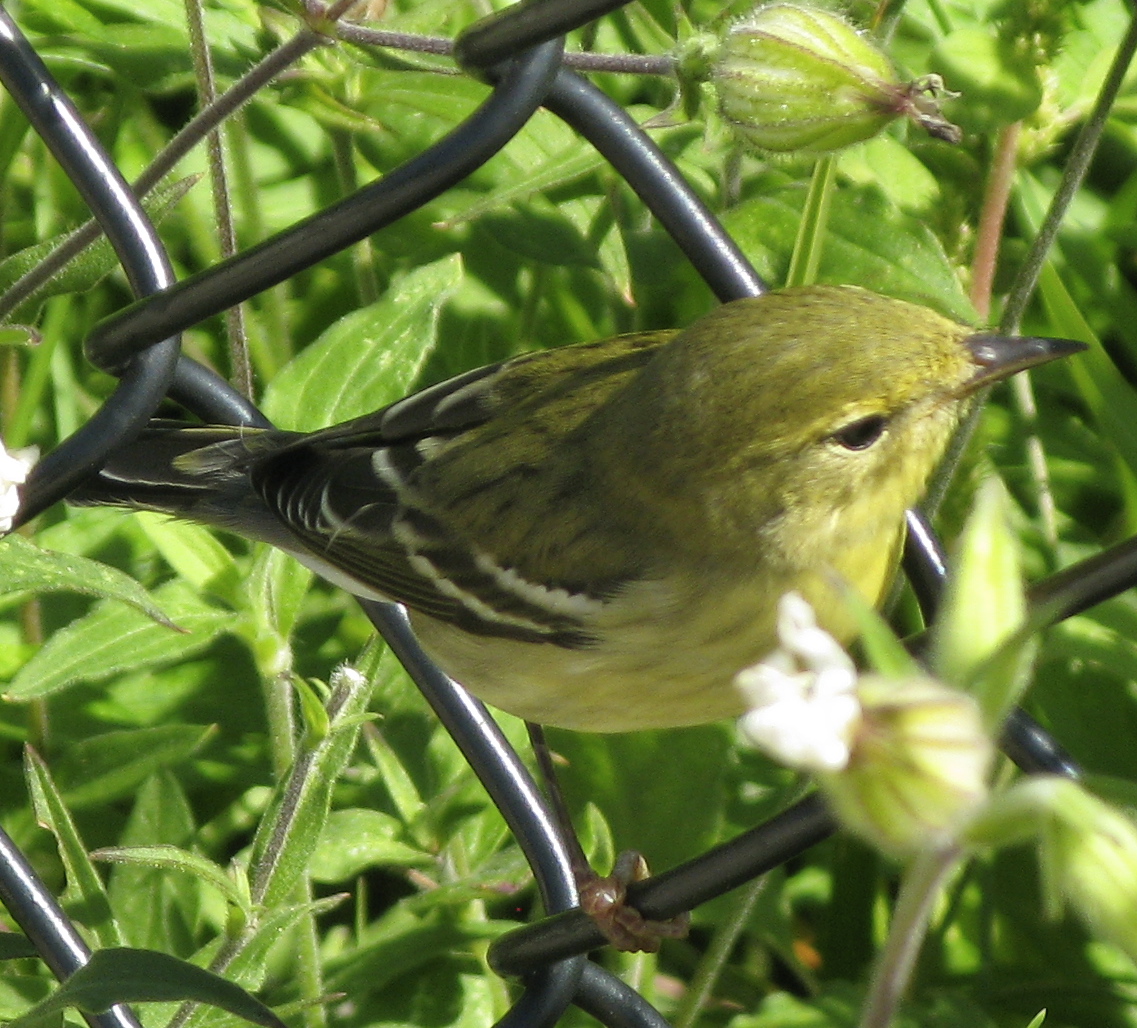 Blackpoll warbler, Setophaga striata (formerly Dendrocia striata). Sliver, because each ones weighs less than half an ounce. The species’ breeding plumage is quite distinctive (“poll” is an old fashioned word for head), but post-breeding and winter plumage puts them right into R.T. Peterson’s classic “confusing fall warblers, etc.” category. Look for the narrow dark eyeline, slightly streaky breast, and white under-tail coverts. Or just enjoy its gleaning of insects amongst the plants. The birds breeds in the boreal forests and spends our winter in northern South America, rushing to and fro in the spring and the fall. One single example of an ancient natural process that began long before humans looked into the skies.
Blackpoll in BBP
3 responses to “Blackpoll in BBP”
-
I’m glad your warblers are as difficult to ID as they are here. I’m told even experts sometimes can’t tell a willow warbler from a chiff-chaff from a dead specimen – the best identifier being their song.
As for migration, our father of natural observation Gilbert White (http://www.nhm.ac.uk/nature-online/science-of-natural-history/biographies/gilbert-white/index.html) was debating with contemporaries whether swallows hibernated at the bottom of ponds in the 1720s. Lucky for us that the latest tagging technology allows us to track the migration patterns of individual birds > http://www.bto.org/science/migration/tracking-studies/cuckoo-tracking -
Lovely bird, Matthew, and nice photos.
-
BBG is vital to ALL of us, winged and not. In inverse proportion to it size….tiny!
 Backyard and Beyond
Leave a reply to Out Walking the Dog Cancel reply