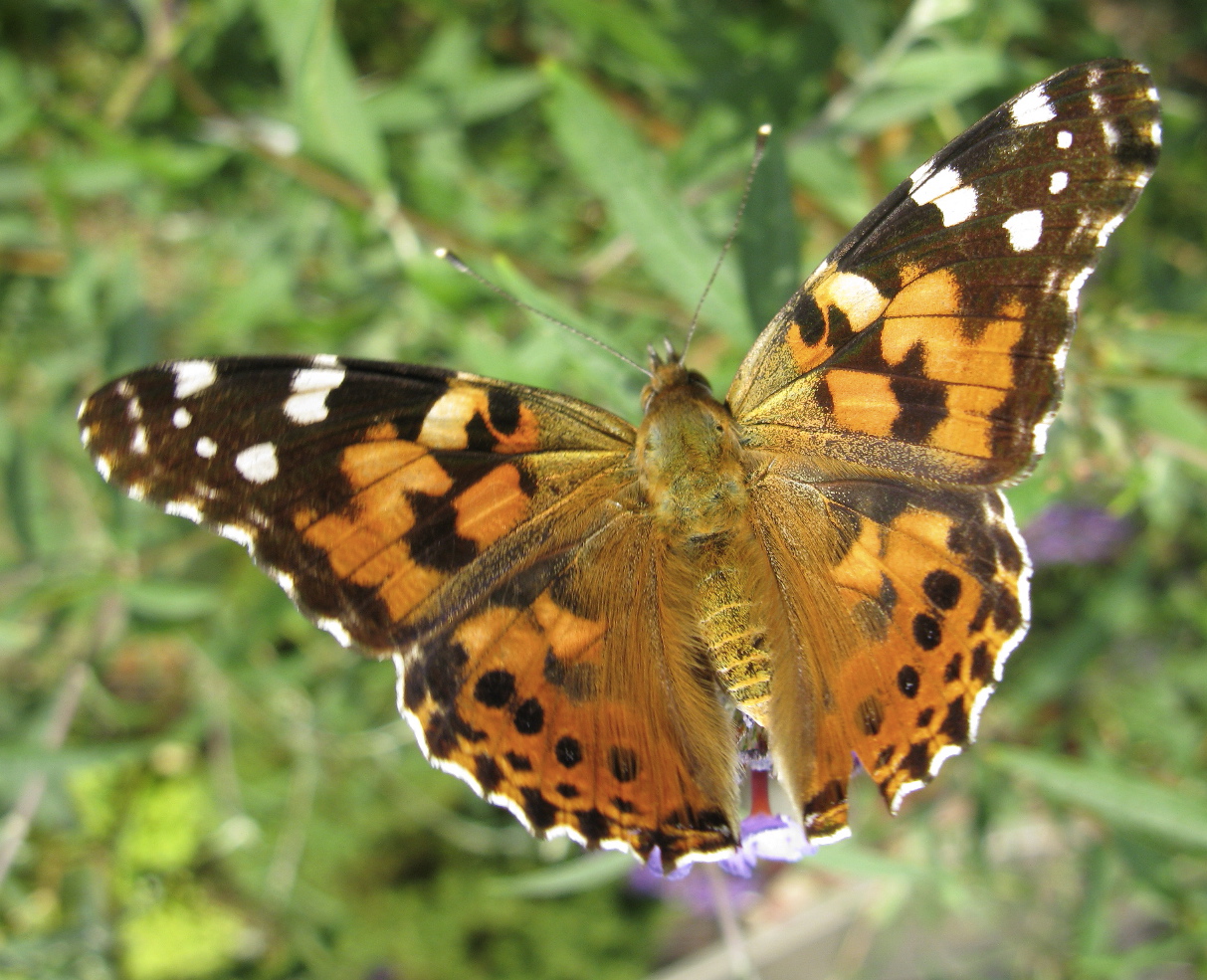
 Painted Lady butterflies (Vanessa cardui) are all over the city. Yesterday I counted a dozen at one flowery corner in Gowanus, and another dozen around a couple of butterfly bushes in Brooklyn Heights. This species is similar to the American Lady butterfly (Vanessa virginiensis), as you might expect for a genus-mate. Here’s an American Lady I photographed back in April:
 See what I mean? And when they are moving, which they do a lot, fanning their wings while feeding, it’s even harder. But as always, the more you see of them, the better you’ll get. One major, although subtle, difference is the extra white spot on the American’s forewings. See it?
The spots on the hindwings are also different. The American’s are blurrier. But these are easier to see when the insect has its wings closed. There are two large “eyespots” on the American’s hindwing (sorry, no picture) and four smaller ones on the Painted’s: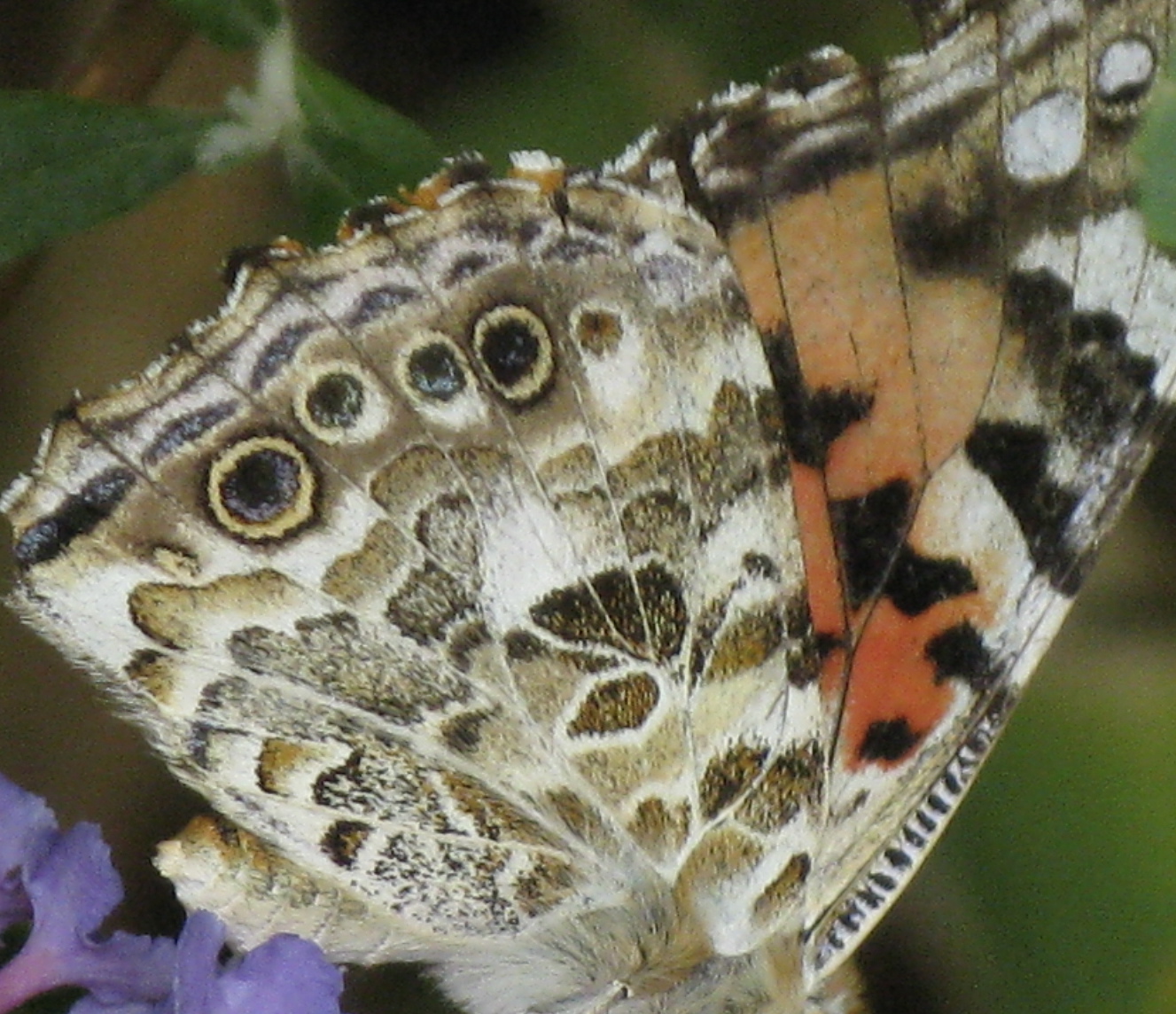
Painted Ladies are a migratory species, moving northwards by the millions during the spring. They are sensitive to cold winters, so we should be seeing more and more of them in the future, barring other factors (not that other factors can be barred). They can have more than one brood during the year in our region, and one has obviously just emerged from its metamorphosis. Find some more data and photos of their caterpillar stage here.
I was interested to discover that the name “Vanessa” was coined by Jonathan Swift to immortalize his lover Esther van Homreigh. He did this before this genus was named. It is sometimes said that Vanessa is Greek for butterfly, but this is incorrect. The modern Greek for butterfly is petalouda. The ancient Greek word for butterfly was pysche, which also meant soul or breath, and now, in English, means mind.
 Backyard and Beyond
Leave a reply to auroramere Cancel reply