
 Now, I know some people will freak out over a lot of bees flying around at ankle-height in the spring sun, but if you make sure you don’t step on any of these mounds, you’ll be fine.
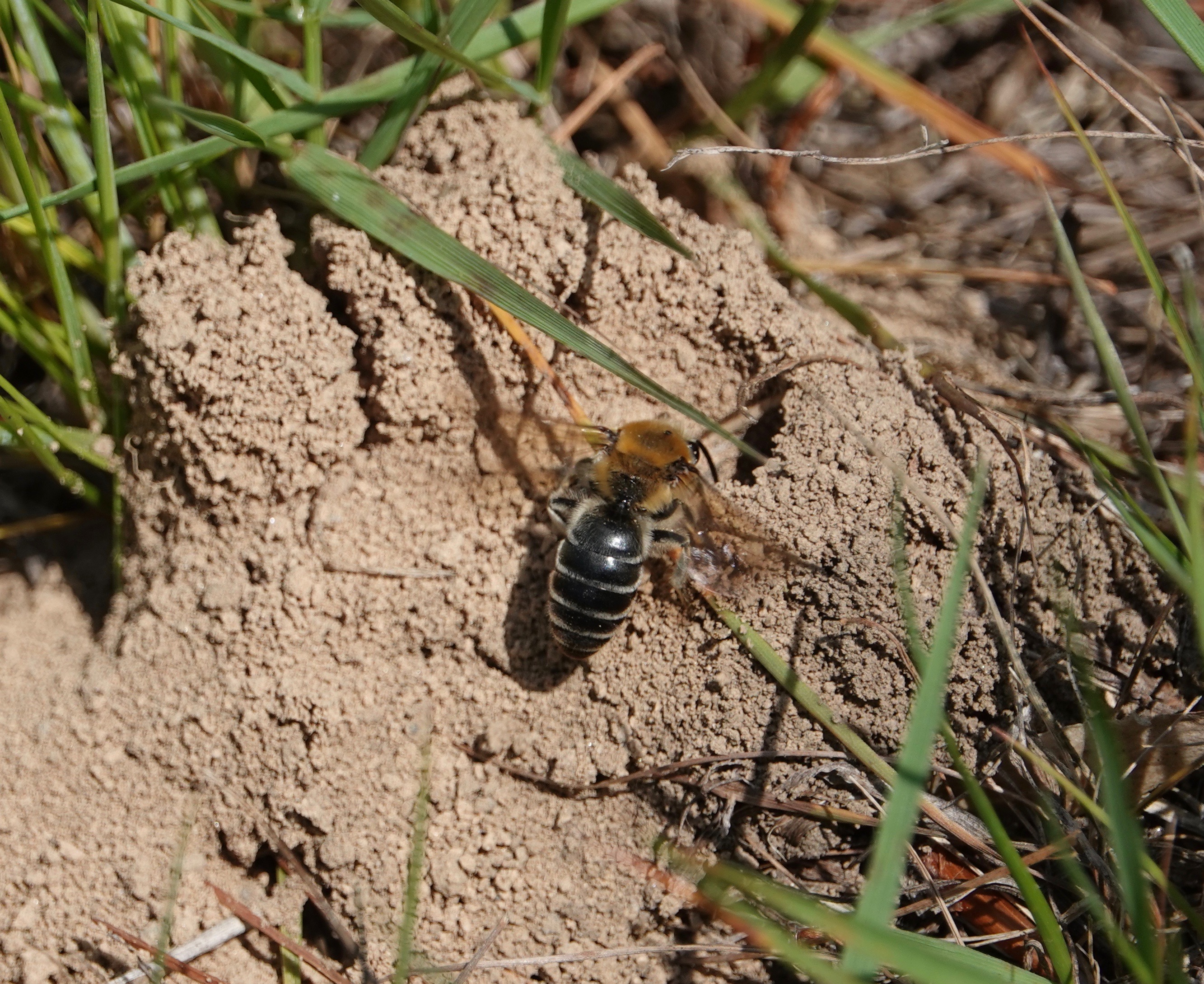
 Not because they’re going to attack you, but because it’s quite rude to stomp on somebody’s nest. (More on ground-nesting bees.)
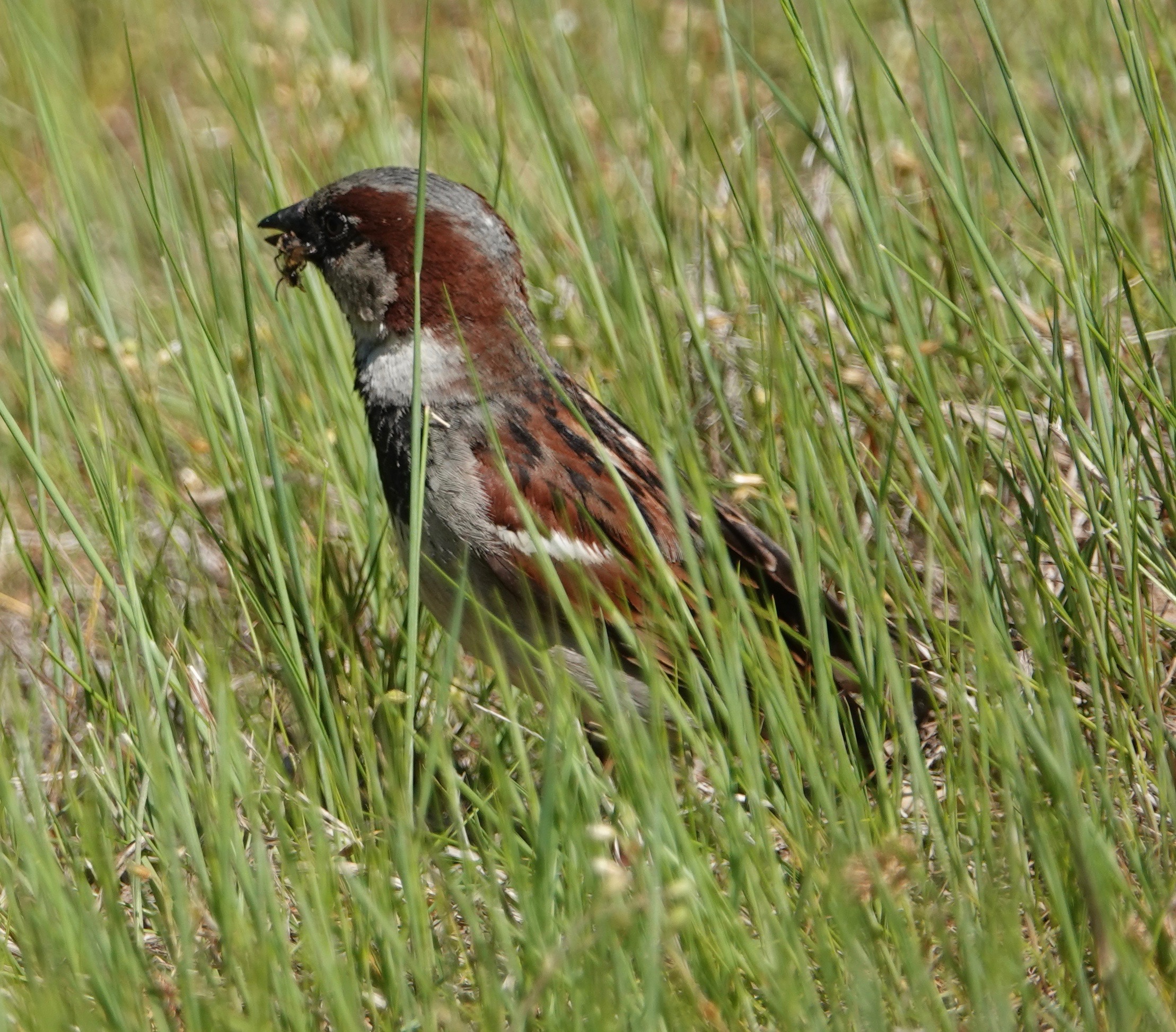 This male House Sparrow kept swooping in to grab bees. Possible feeding these Rufus-backed Cellophane bees to his young?

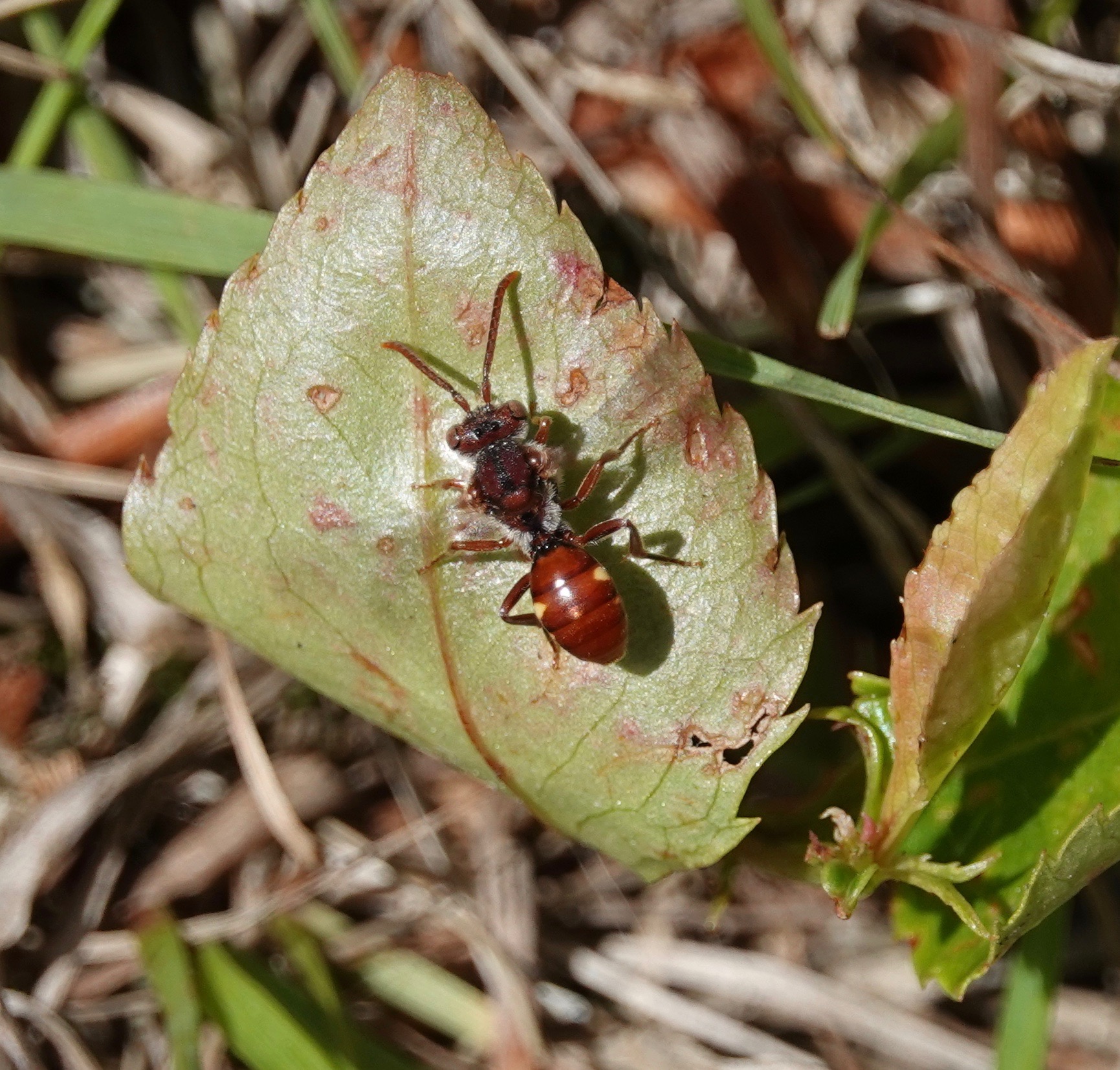 In the same patch, I found these Nomada genus cuckoo bees. Suspect they were looking to lay their eggs inside their cellophane bee host’s nests. First time I’ve ever seen these. Turns out the taxonomy of this genus is confusing. Genus level is the best even the bee mavens of iNaturalist can get to with a picture. They’re smaller than their honeybee-sized hosts.
 There were also some flies hanging out here. This one is perched above a nest. Pretty suspicious; doing some further research to find out what they’re up to.
 Not a typical bee fly, though.
A Bee-y Slope
3 responses to “A Bee-y Slope”
-
[…] May, this little hillock was abuzz with cellophane bees. Their dirt mound nests were all over the place, and the bees themselves were thick in the air. The […]
-
[…] farm animals were out of the hives the other day in temps in the mid 40s, albeit in bright sun. The cellophane bee slope under snow. Come back in […]
-
[…] Published August 11, 2022 Uncategorized Leave a Comment None too elegant is the crash landing of a fully laden Cicada-killer Wasp. And down into the lair goes this cicada. Each of the wasp’s eggs will get from one to three cicadas. The number is sex-dependent, evidently: one cicada is enough for a smaller male wasp; two for a female. Seeing so many of these big wasps this year. Here’s another nest area. They must have had a very good year last year. This location, by the way, is the same place favored by the Rufous-backed Cellophane Bees. […]
 Backyard and Beyond
Leave a comment