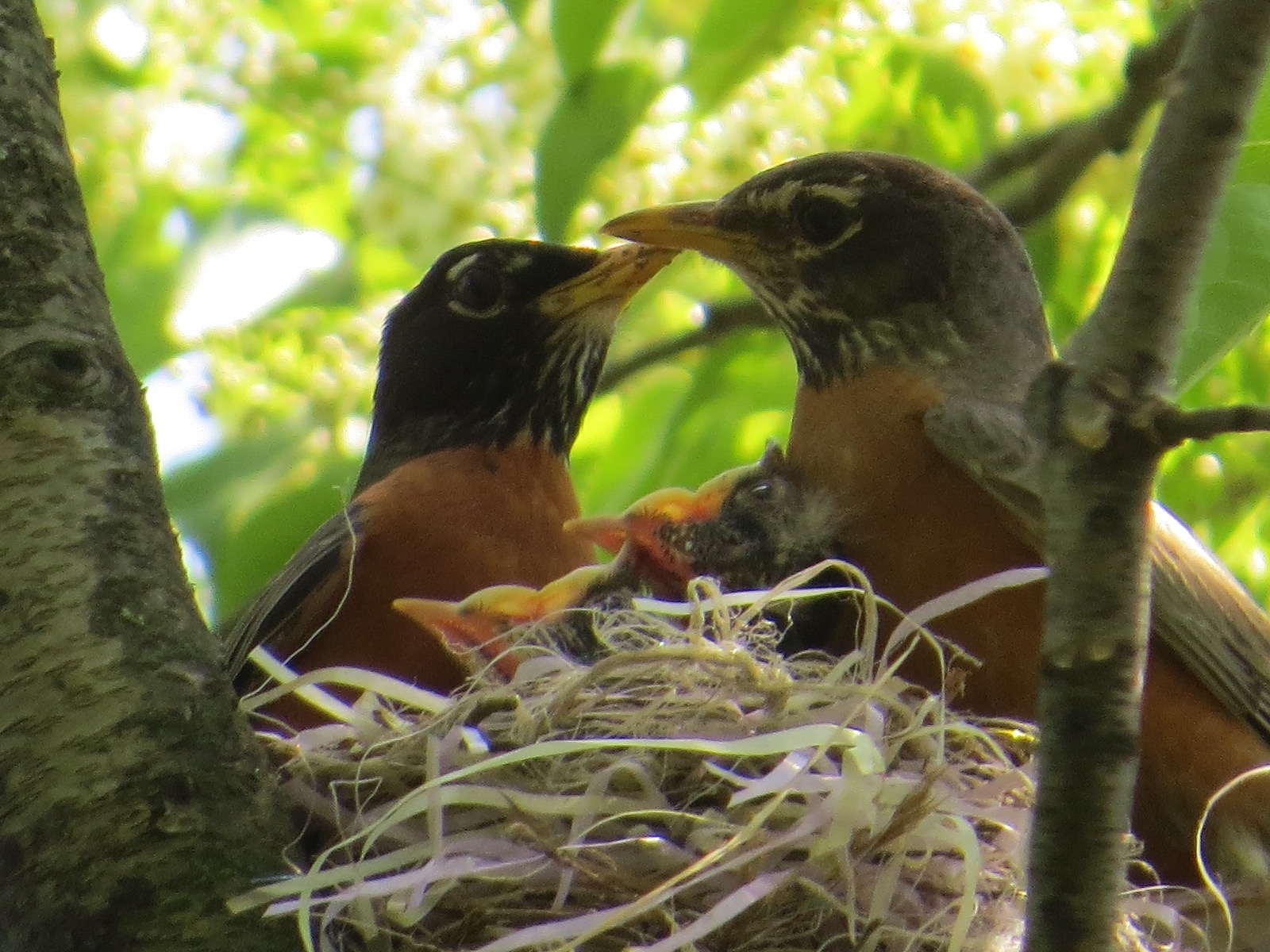
 American Robins (Turdus migratorius) arrive early, or they never go very far, especially in a mild winter. Last week, they were already feeding their young. There’s plenty of time for a second brood this season.
 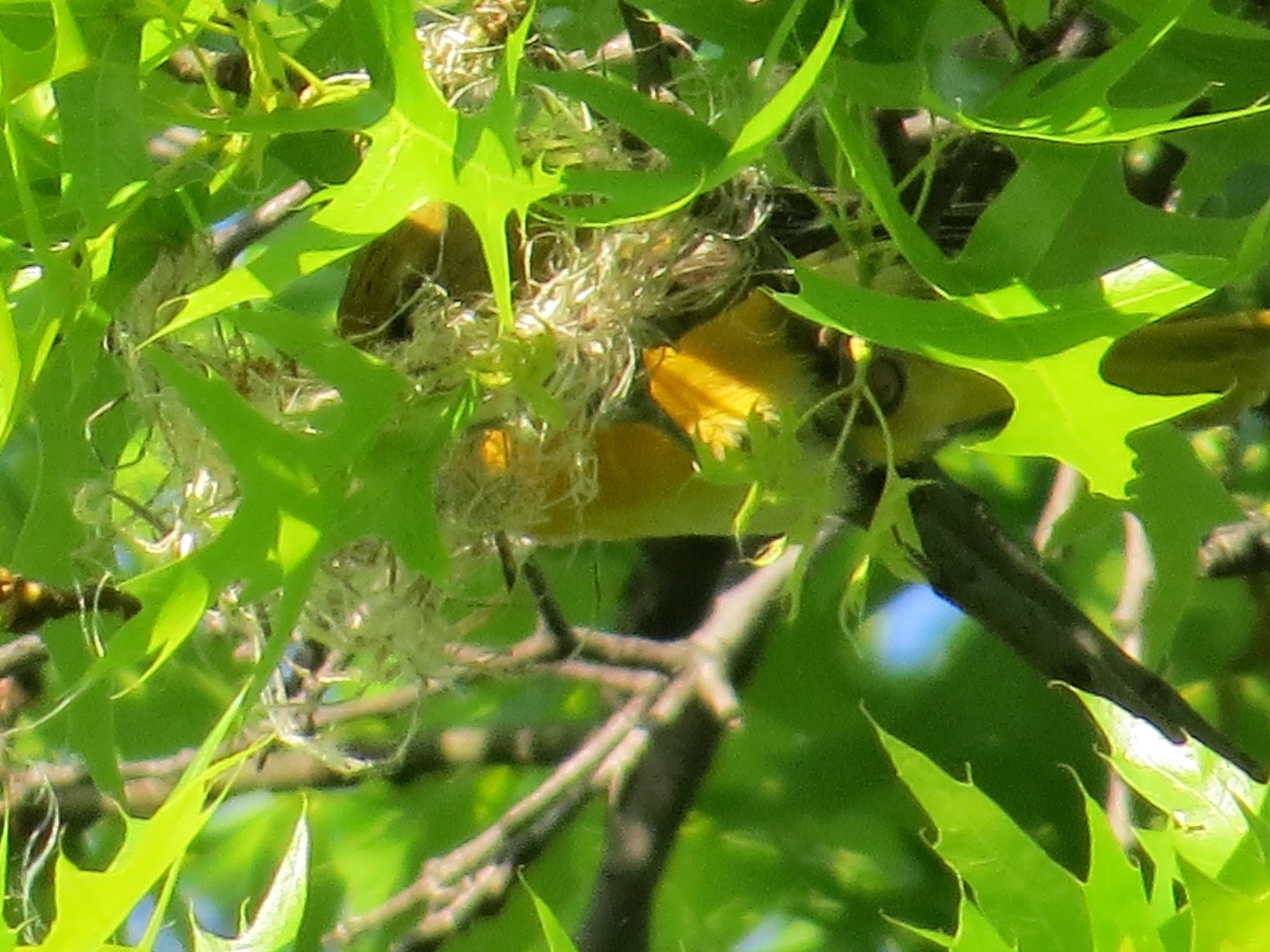 Baltimore Orioles (Icterus galbula), on the other wing, are late arrivals. Last week, this one was only then weaving her hanging nest.
 Here’s another (there are a good number of them in Prospect; fall will reveal nests in trees you’ve passed everyday). Here the bird is gathering material from what looks like… a Robins’ nest.
Here’s how Peterson’s describes B Oriole nests, which are open at the top, rarely at the side: woven of plant fibers like milkweed and Indian hemp, hair, yarn, string, grapevine, bark; Spanish moss in the South; lined with hair, wool, fine grasses, cottony materials. Cornell adds: horsehair, fishing line, cellophane. Males help gather material, but don’t weave (got to save some energy for all that belting of song?). The nest can take a week to complete, longer in rainy weather. It looks precarious and improbable, especially when bulging with 4-5 eggs (on average) and a bird on top of those.
 Backyard and Beyond
Leave a comment