 Last year, I noticed an American Kestrel nest in a building on Van Brunt Street in Red Hook, Brooklyn. I learned from locals that it had been there for a few years. Last week, I got some really nice views of the pair in the late afternoon.
 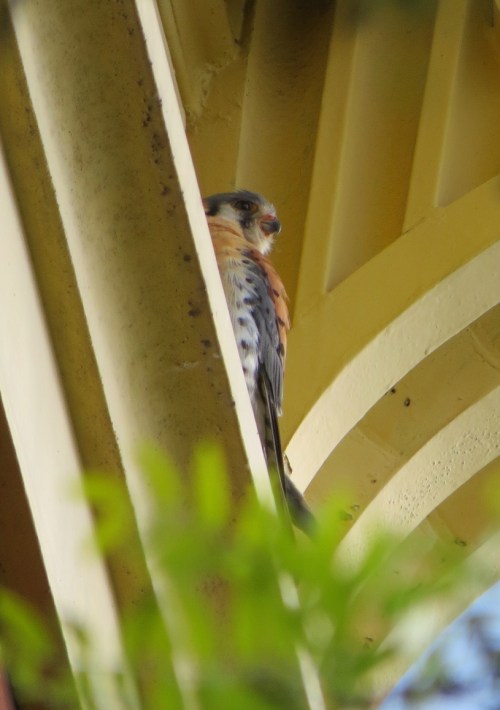 This is the colorful male.
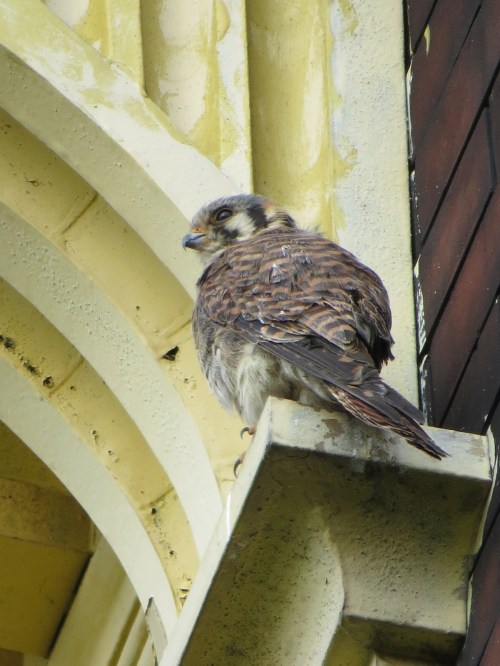 And this is the less vibrantly plumaged female.
 Kestrels make their nests in cavities, so they don’t really “build” a nest: they move into a hole and evidently add little to no nesting material. (Falcons are rather Spartan: recall that a Peregrine scrap is simple in the extreme.) Old tree trunks, old woodpecker holes, the eaves of buildings, even special nest boxes are all used. Here in the NYC, where they are undoubtedly the most numerous species of raptor (but little noticed because of their small size), they take very well to old, crumbling cornices. They are connoisseurs of 19th-century architecture. The featureless glass boxes we build now just kill them via collisions.
 So, both birds out and about; what does that mean for the nest? Assuming their brood was successful, young near fledging don’t need the parents on top of them all the time, especially if they’ve just been fed. Time for some grooming.
- Comment
- Reblog
-
Subscribe
Subscribed
Already have a WordPress.com account? Log in now.
 Backyard and Beyond
Leave a comment