 A Sharp-shinned Hawk (Accipiter striatus), eyeballing everything that moves above, before, behind, below. Waves of song-birds were stirred up by this slim raptor, the smallest hawk species in North America. This may have been the same bird I saw on three more separate encounters that day, racing after prey.
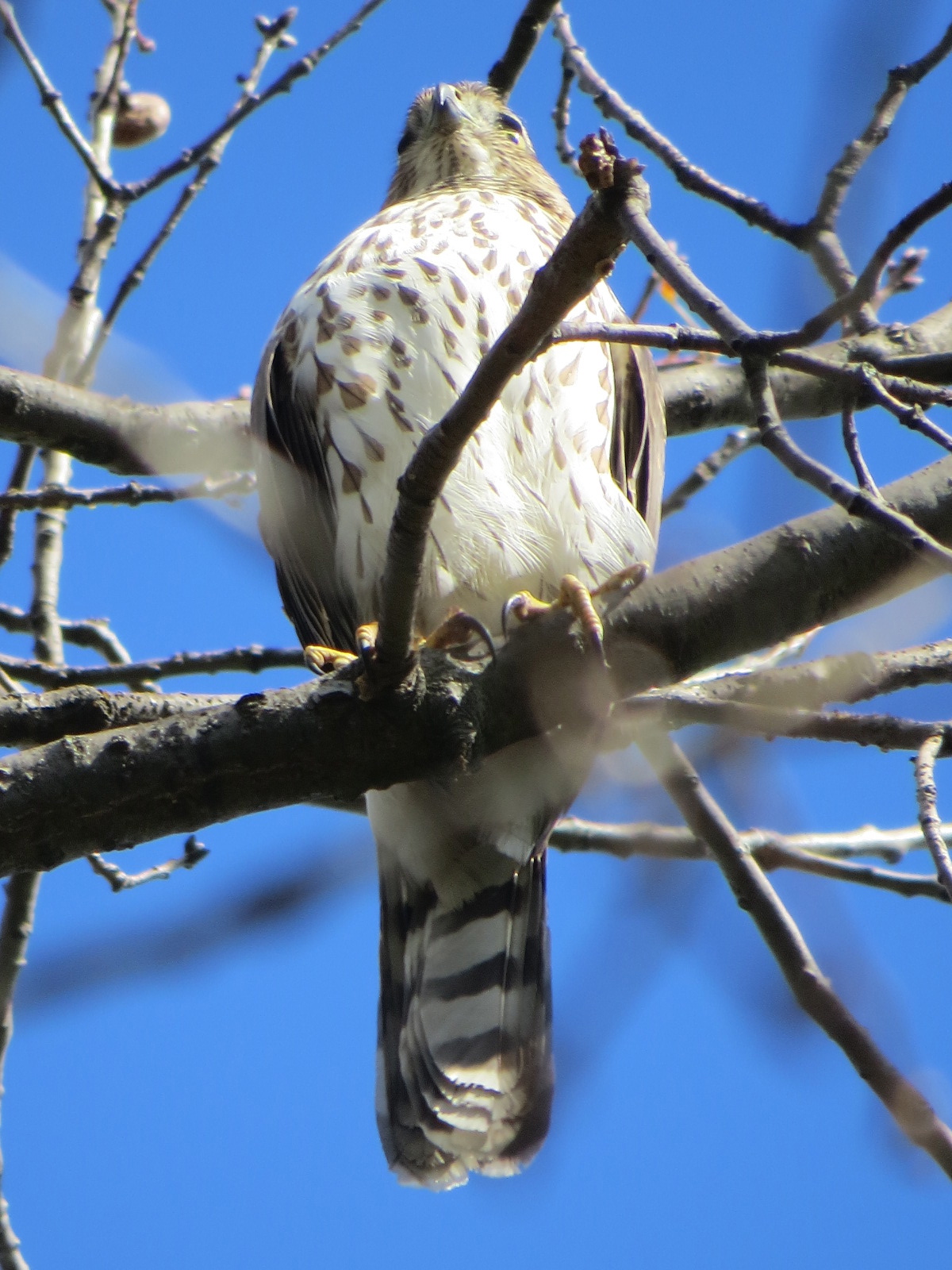 Sharpies, as they are affectionately known, are one of the more unfortunately-named birds. Sharp shins?
 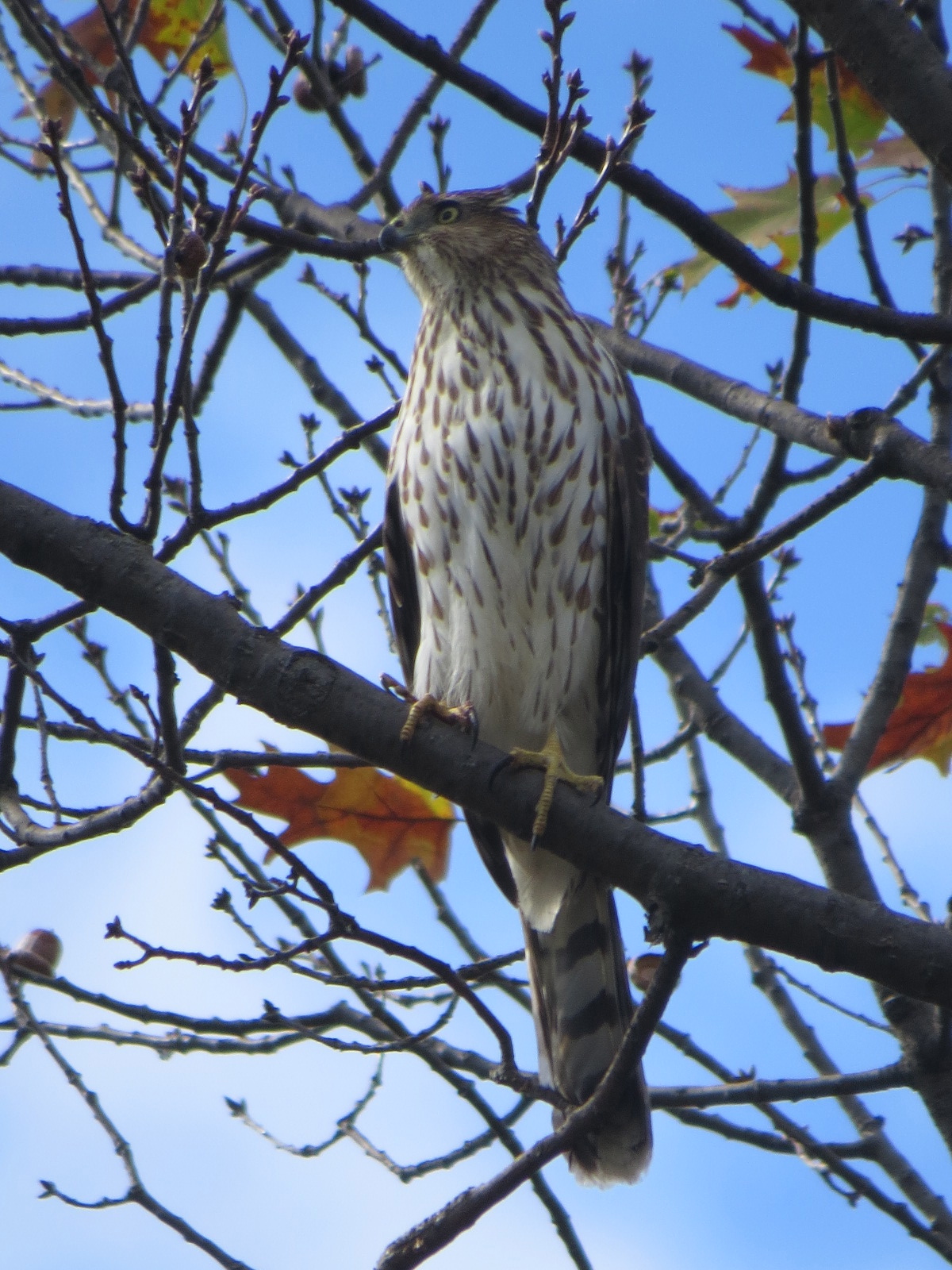 These hawks migrate in large numbers (11,000 were recorded on a single October day in Cape May, NJ) and aren’t resident in the city, preferring forests and forest edges. Their larger genus-mates, the Cooper’s Hawks, are more likely to be found in the city and suburbs. You will notice that both this bird and the cited Cooper’s are juveniles: the mature birds will have blue-grey wings, red eyes, and reddish-orange breast feathers. I rarely see adults of either species in the city.
Size is often hard to scale with these birds. There is extreme sexual dimorphism in Accipiters, the females being as much as a third larger than the males. Cooper’s are larger than Sharpies, but the male Cooper’s is not much bigger than the female Sharp-shinned. They are one of the classic identification challenges in bird-watching. I once saw a male Sharp-shinned perched on a spike in a yard and was struck how very petite it was, slightly larger than a Blue Jay or Kestrel. Based on that, I’d say this was a female.
 Backyard and Beyond
Leave a comment