One hundred years ago today, Martha died of old age in Cincinnati. She was 29 years old and had been raised since birth in captivity. She never reproduced.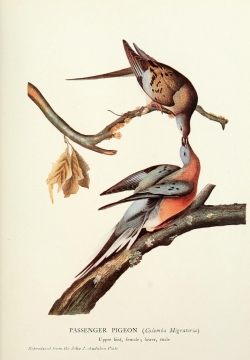 Martha was the last of her species, the Passenger Pigeons (Ectopistes migratorius). Of course, by the time of her demise, the species was already functionally extinct in the wild. She was the coda, the famous last one perching. From billions to one to none in a century. Just thirty years previously, hunters were killing 50,000 Passenger Pigeons a day at one of the last big breeding sites, in Michigan. And further back, in 1813 Kentucky, J.J. Audubon and company famously saw them darken the sky for three days running. There were more Passenger Pigeons, it has been estimated, then there are now birds of all migratory species in North America.
 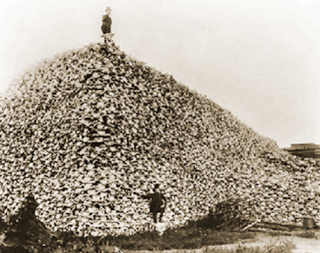 But isn’t there something wrong with those numbers? They don’t seem right: how could that kind of population be sustained? It probably couldn’t have, and may very well have been a result of the radical transformation of the colonial American landscape in the first place. European settlers quickly reduced the pigeon’s competitors — mice, squirrel, turkey, deer, etc., and of course the local humans — for mast — acorns, beechnuts, chestnuts, walnuts, etc. — setting the stage for an astonishing boom. The inevitable bust, however, was driven to extremity by a combination of forest clearance and unparalleled slaughter. The photo above is from late in the game, the late 1880s, after a slaughter for this cheap source of protein.
So when you remember this lonely caged pigeon today, think of the whole continent, the whole world, behind her. That’s what is gone.

 Backyard and Beyond
Leave a reply to maryjocee Cancel reply