I have been asked more than once if I have ever seen a baby pigeon. If I’m feeling snarky, I say “no, they reproduce via parthenogenesis.”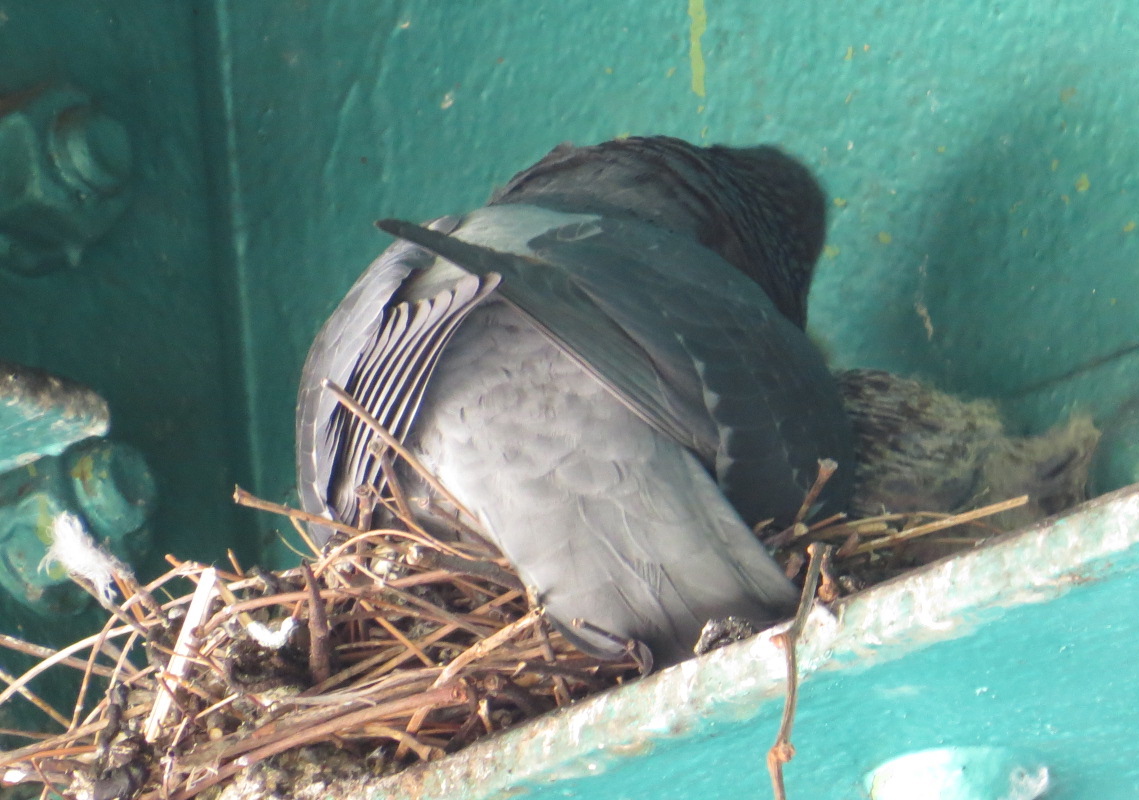 Here’s a pigeon chick, to the right of the parent; it’s so young it can’t even hold itself upright yet.
  Here it’s being fed by one of the parents, both of whom brood and feed: Columba livia produces a “milk” from their crops which they regurgitate for the youngsters. The pictures aren’t great, because it’s difficult to see a baby bird of any species. Pigeons are defenseless at birth — not quite “naked as a jay bird,” since they are covered with a yellowish down, but still a tempting tasty morsel to rats, chipmunks, raccoons, cats, other birds. They’re aren’t supposed to be seen, which is why nests are usually hidden away. Rock pigeons have been intimately tied to humans for at least 5000 years, domesticated at least since the Egyptians, and of course they are the quintessential urban bird, cleaning up after us, everywhere around us. Still, their simple twig nests are not always as visible as this one, which is underneath a bridge. The parent is being sure to keep the bird away from the edge, protected by his/her body, since it’s a busy road below, and sure death.
Rock doves can have from one to three eggs. In optimum conditions, they can have up to six broods during the year. Incubation lasts 18 days. Nesting period is 25-32 days. Pictures above taken May 1st. 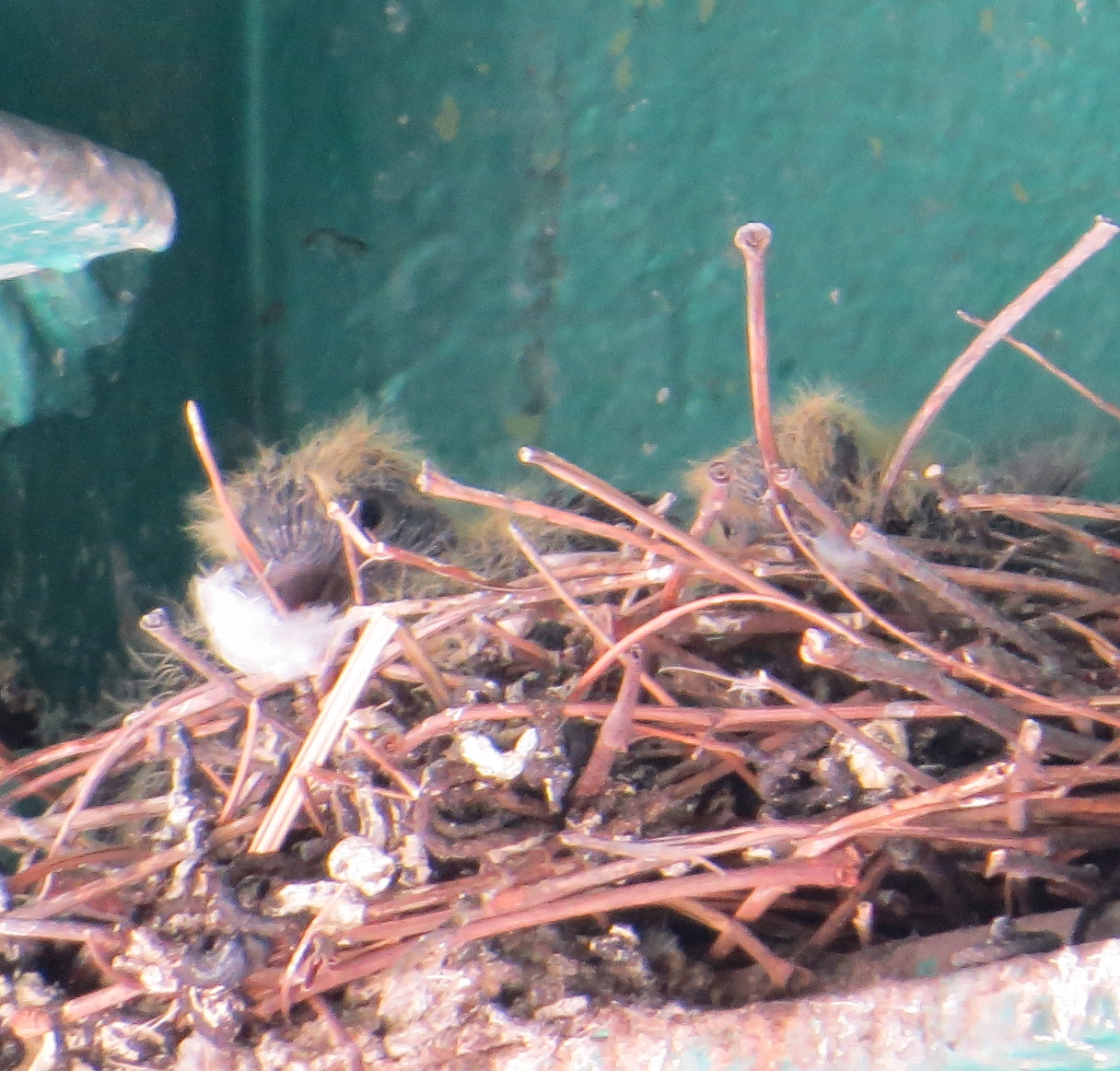 May 5. There are two chicks, still fuzzy.
 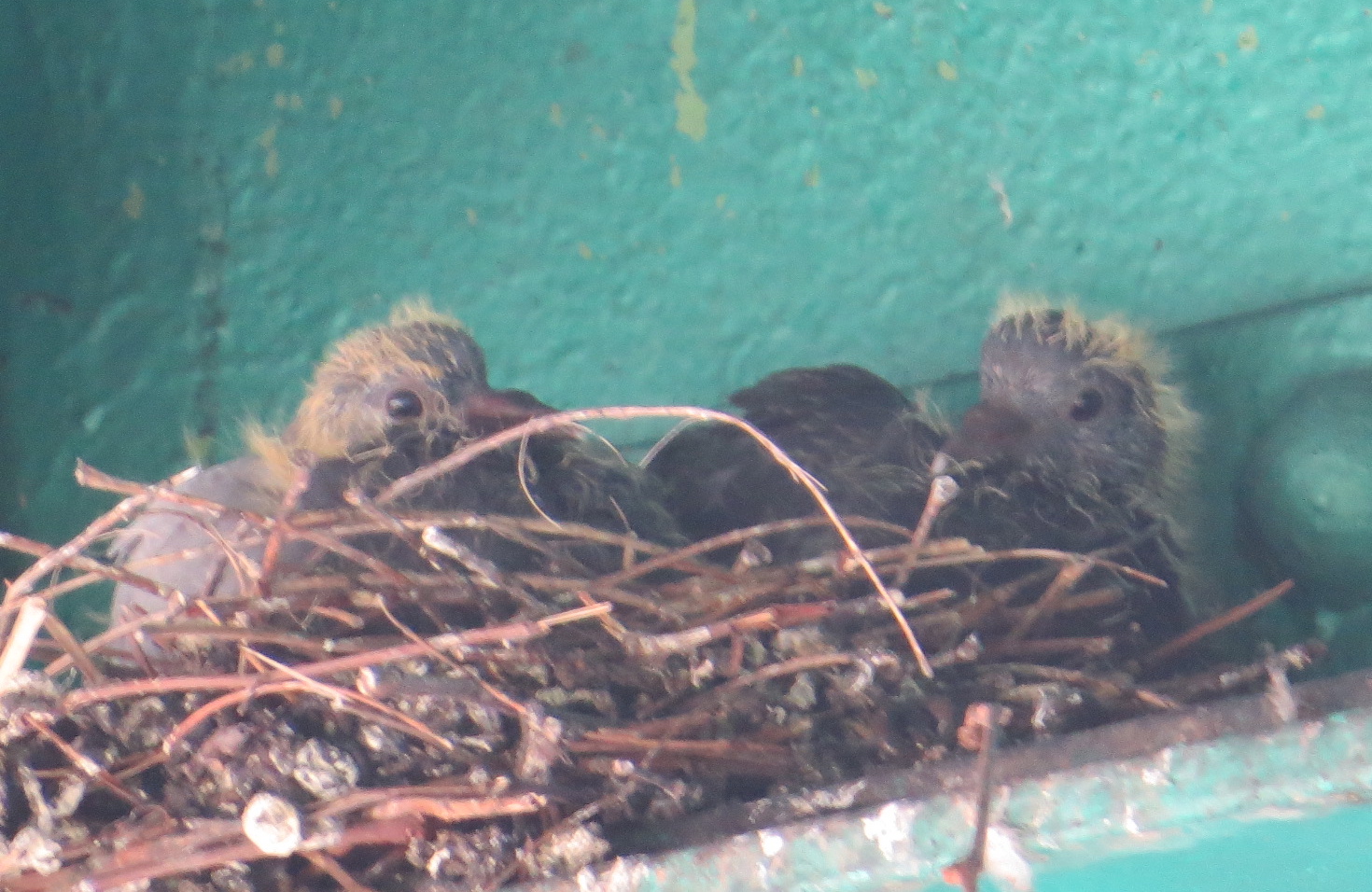 May 9. Getting bigger.
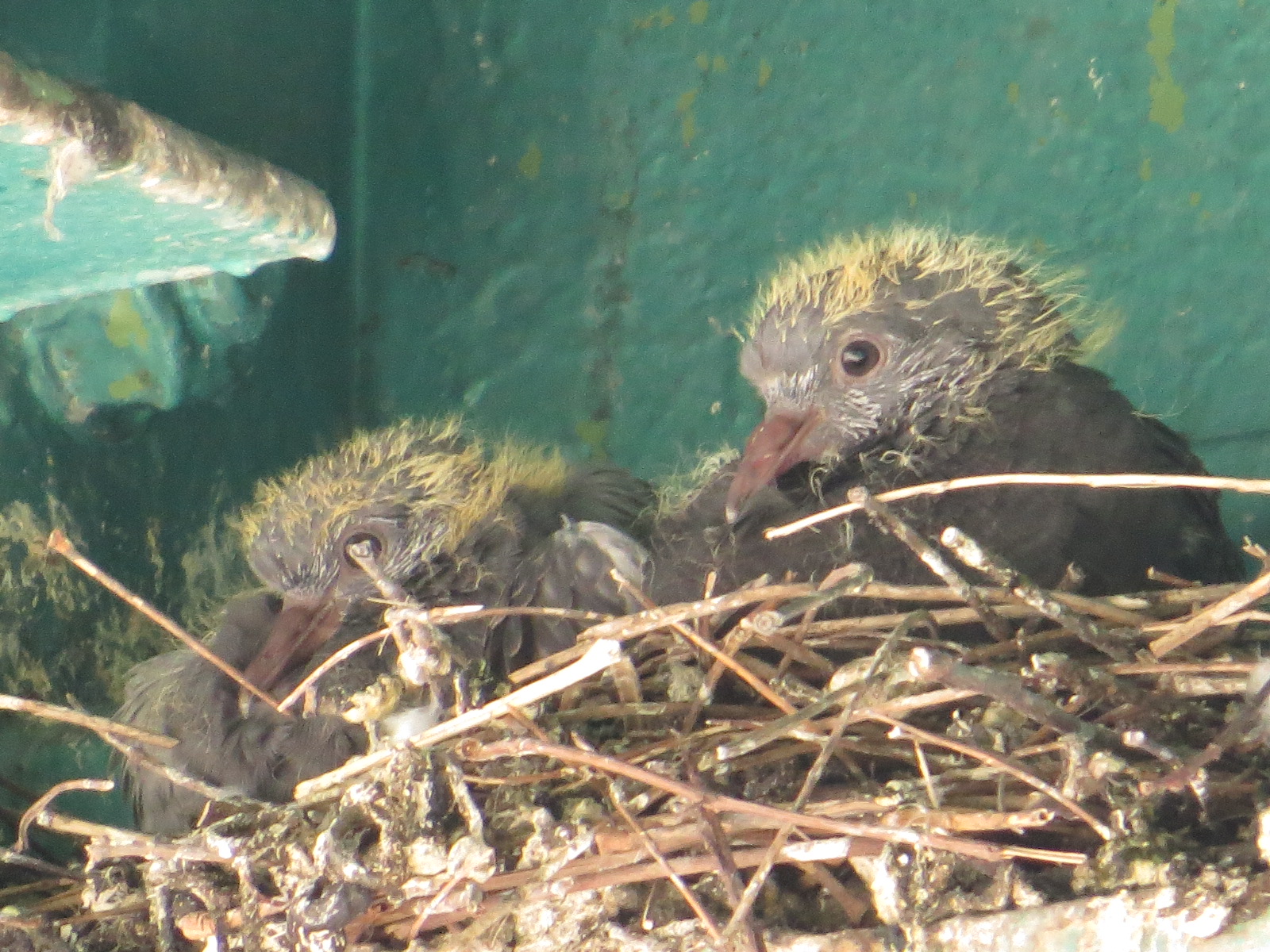 May 12. The nest is getting progressively more bespattered.
 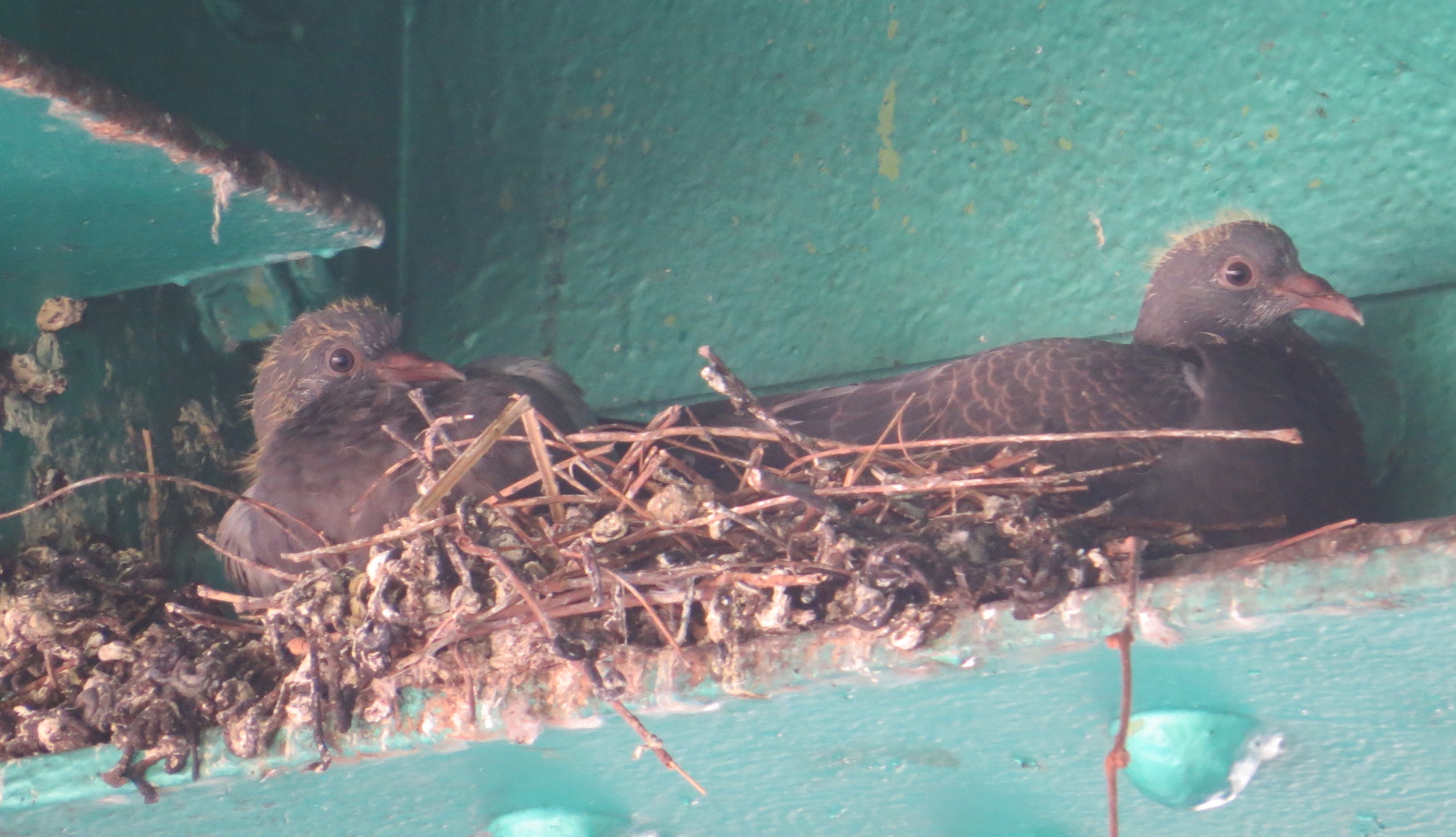 May 15. The nest is getting progressively smaller and the birds are getting more pigeony.
 Backyard and Beyond
Leave a comment