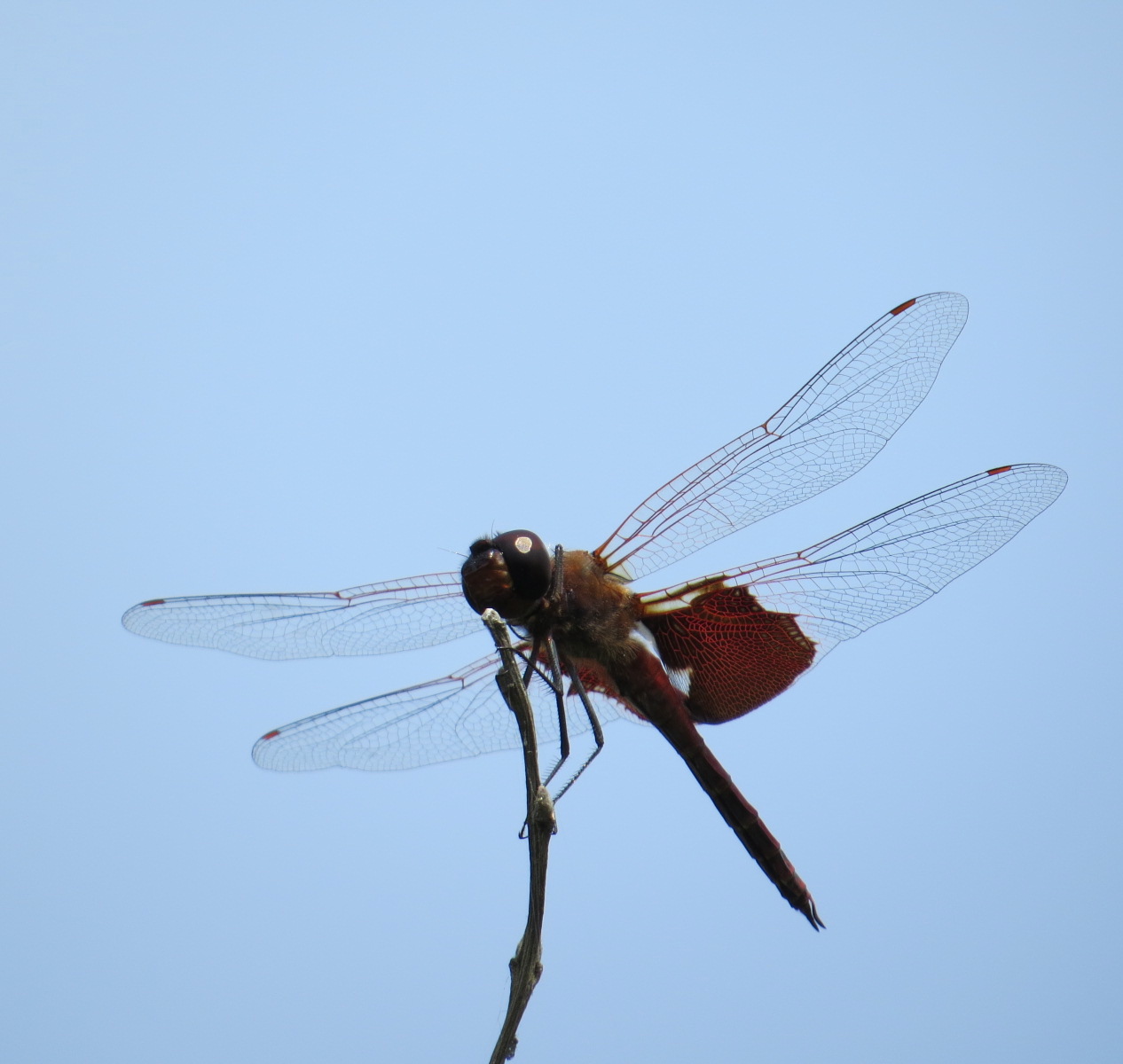
 Carolina Saddlebags (Tramea carolina). The abdomen is red all the way to the black tip, but that’s impossible to see in this light. Two of these were patrolling the pond aggressively and charging at each other over and over to maintain dominance. They were about 12-15 feet up, and overhead they can easily be mistaken for genus-mate Black Saddlebags (T. lacerata). These shots were from a couple of brief moments of perching.
 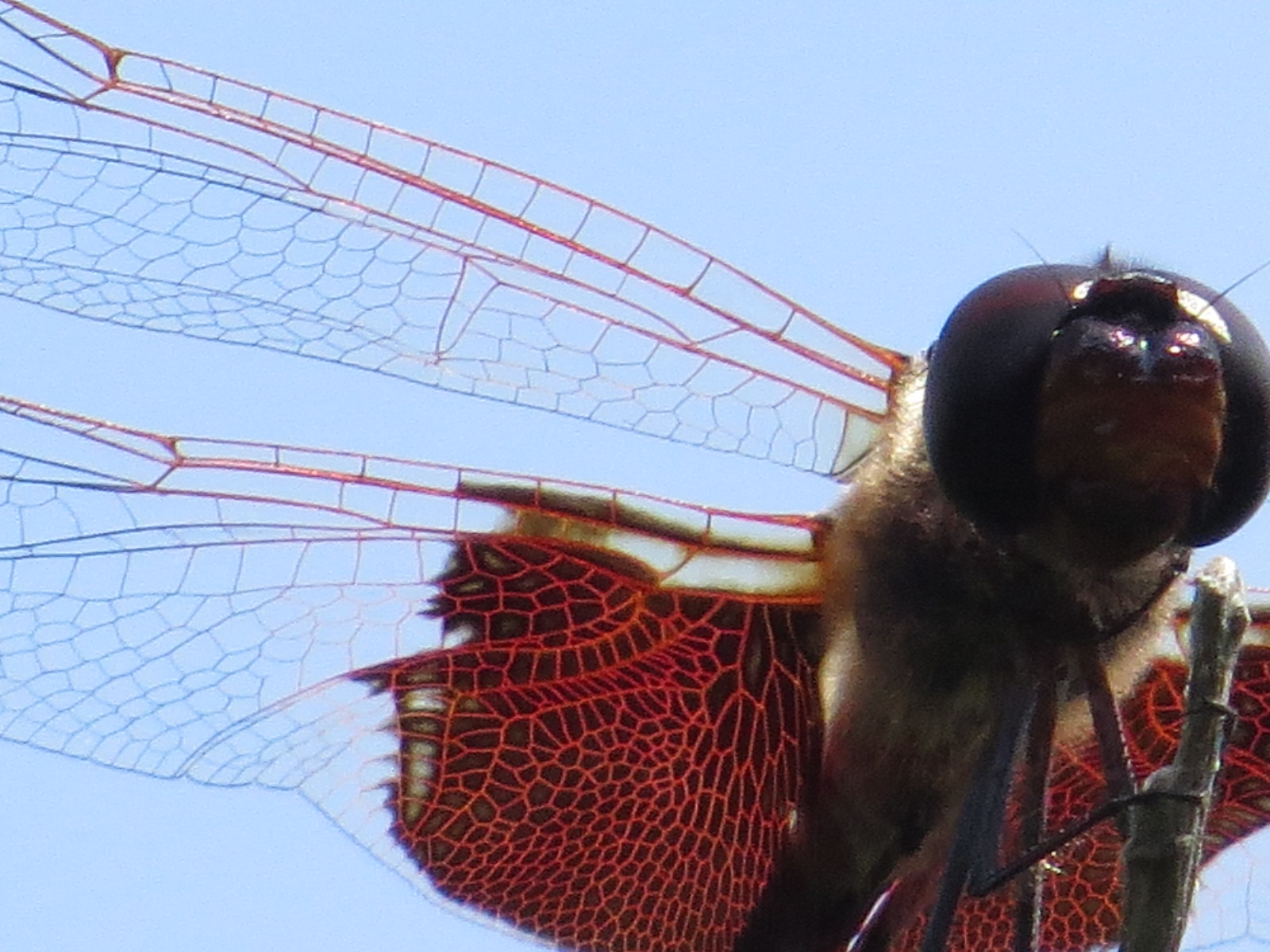 Detail of the amazing color and venation of the wings.
 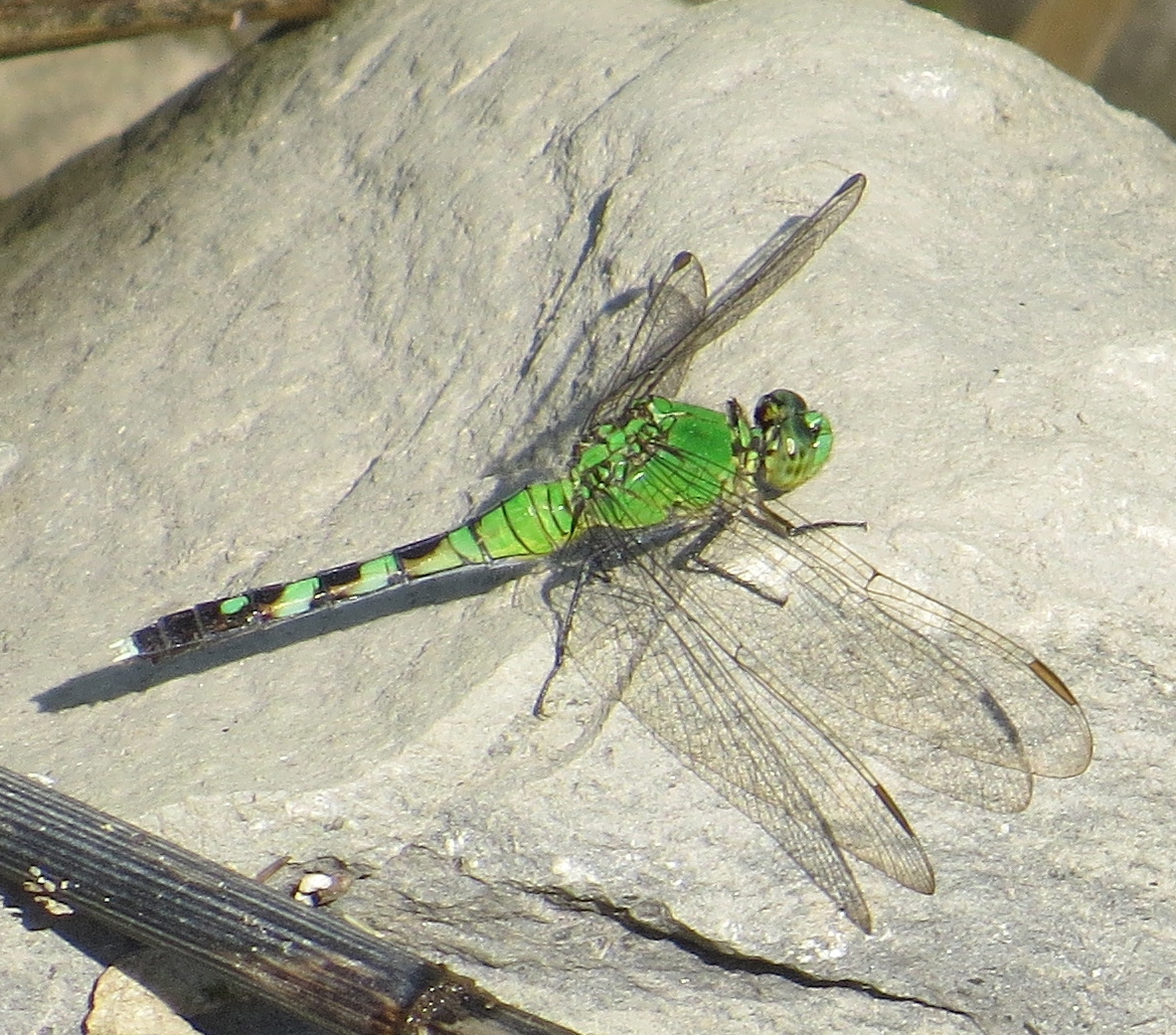 How many wings? Shadow play with a female Common/Eastern Pondhawk (Erythemis simpliciollis). My loose list of dragonfly species seen at Brooklyn Bridge Park now includes: Common Green Darner, Great Blue Skimmer, Blue Dasher, 12-Spotted Skimmer, Common (Eastern) Pondhawk, Black Saddlebags, Carolina Saddlebags, Painted Skimmer, Spot-winged Glider, and Eastern Amberwing. Those red meadowhawks, who never seem to stop flying, still elude me as to their identity (genus Sympetrum are “an intractable field problem” notes my guide).
 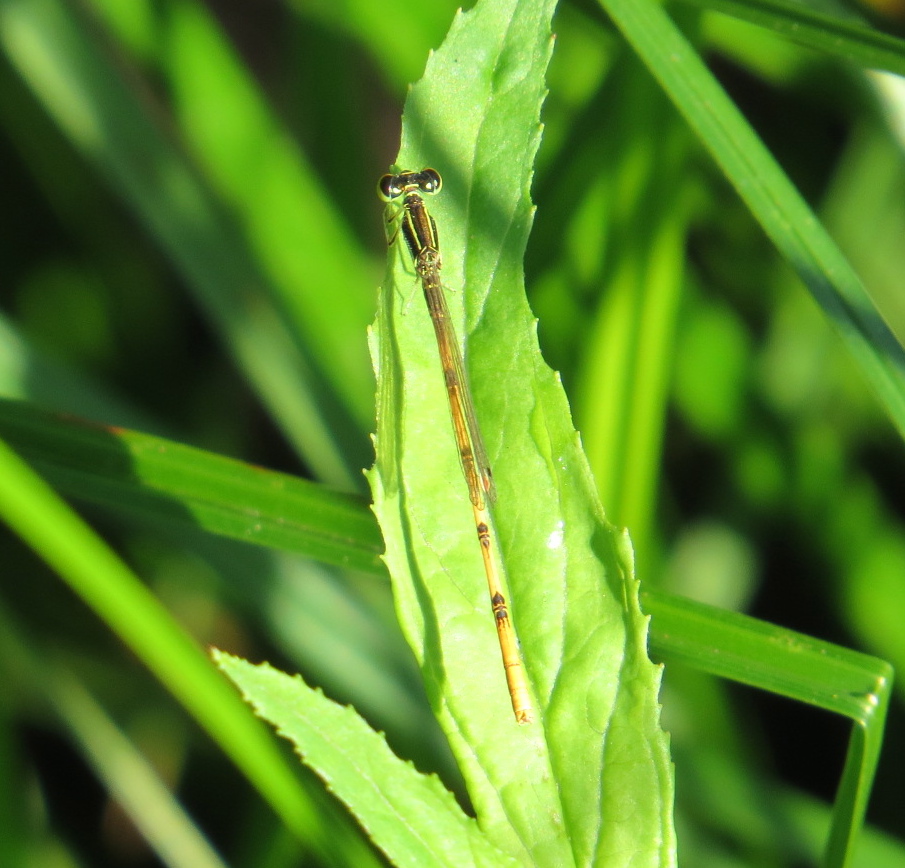 Damselflies, however, are still a work in progress. I mean that both for my own ID skills and the damage done by Sandy, which I think really reduced the damselfly population this season at Brooklyn Bridge Park. I saw four individual damselflies on this walk. This is a male Citrine Forktail (Ishnura hastata), just about an inch long. Even though it flew slowly and perched frequently, it never got out of the sedges so was a moving needle in a green haystack to photograph. You can just barely see the red stigmas in the forewings (click image to see larger version). The male of the species is unique in the world of damselflies: their red-orange forewing stigmas (or ptereostigma) are not on the leading edge of the wing, but rather one level of venation in. Stigmas are single cells that differ in color and texture from the rest of the wing. Not all damsels have stigmas. And some species have pseudostigmas, which are multicellular areas of contrasting color but otherwise similar in structure to the rest of the wing. I better stop while I’m ahead….
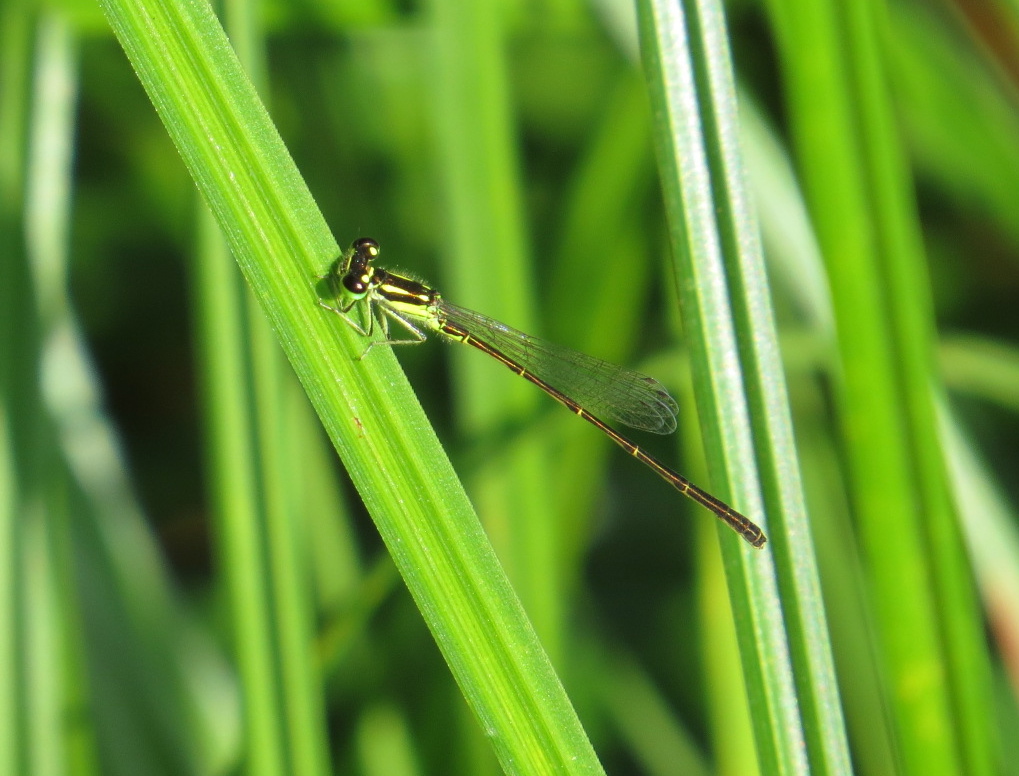 The Fragile Forktail (Ischnura posits), at just under an inch long.
(Dragonflies and Damselflies are both members of the order Odonata, from the Greek for “toothed,” known as “odes” for short to admirers.)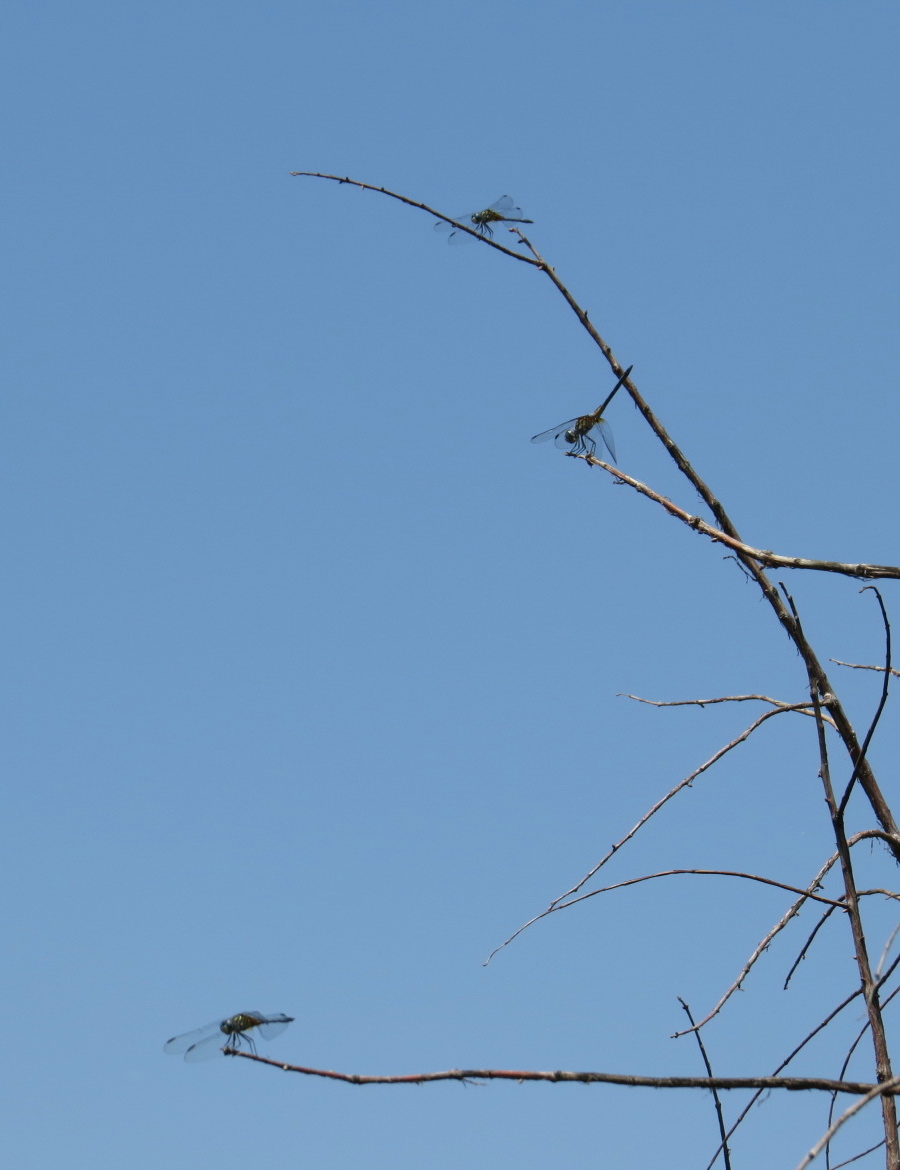 Blue Dashers characteristically “teed up” on bare branches. Car antenna will work also, and so will the cables connecting lamp posts at Atlantic and Henry Streets; in fact, I’m seeing these things everywhere lately now that I know what to look for.
 Backyard and Beyond
Leave a comment