 A female Swamp Darner (Epiaeschna heros), one of the largest dragonflies in the east. A migratory species, averaging 3.4″ long. This is my first sighting.
 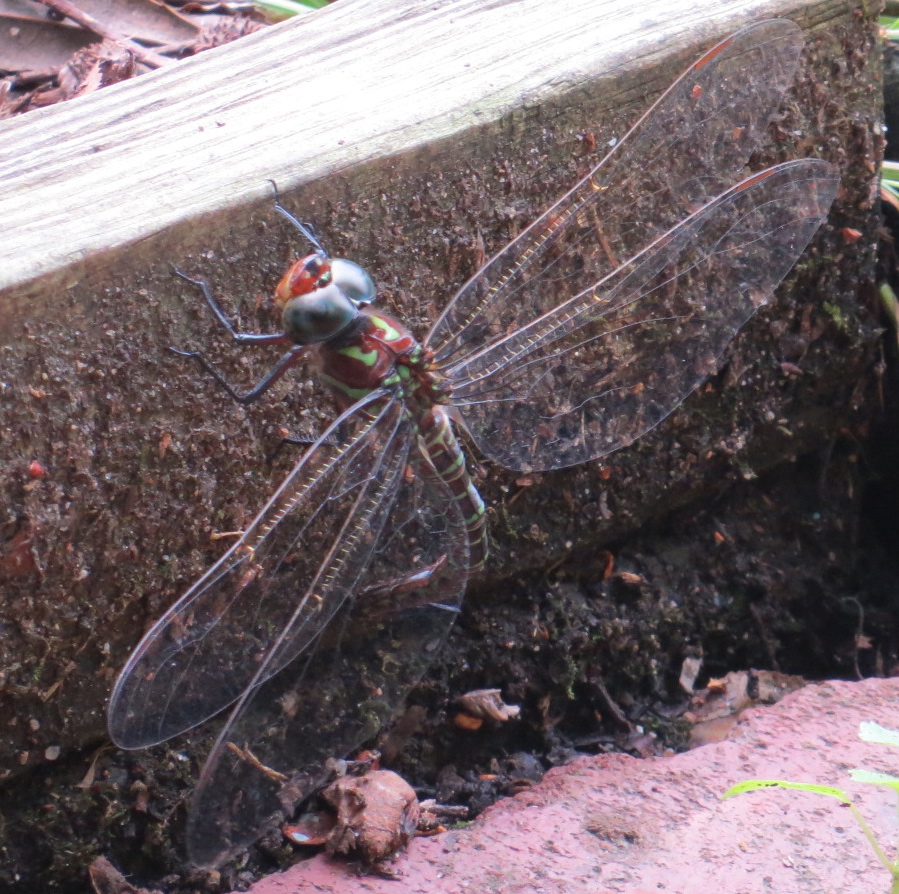 I watched her deposit eggs into pieces of lumber that edged a portion of the Vale of Cashmere. All the other species of dragonflies I’ve seen deposit their eggs in water. The first picture posted above was taken during a pause between deposits. When she returned to planting eggs, she was attached by a Cat Bird who zoomed out of the bushes. Something of a dog-fight ensued, on the ground and in the air. The dragonfly escaped, twice, but the bird suddenly hopped into the bushes and then emerged, flying off with the long insect. A big meal for the bird; when it flew off it looked like the prey had been de-winged. Extraordinary to be so close to the scene. Luckily for E. heros in general, though, a good number of eggs had been planted.
 A few minutes later, I noticed another depositing her eggs into a piece of water-logged rotten wood on the bottom of the Vale’s erstwhile pool.
 Here’s a close-up of the thorn-like ovipositor cutting in. (Still wowing myself over this action shot, btw.) The wing-like structures are the cerci, or anal appendages. I don’t know what their function is. When I first saw them — huge dragonfly, huge cerci, at least on this species — I thought some other insect was biting the dragonfly’s terminal appendage.
 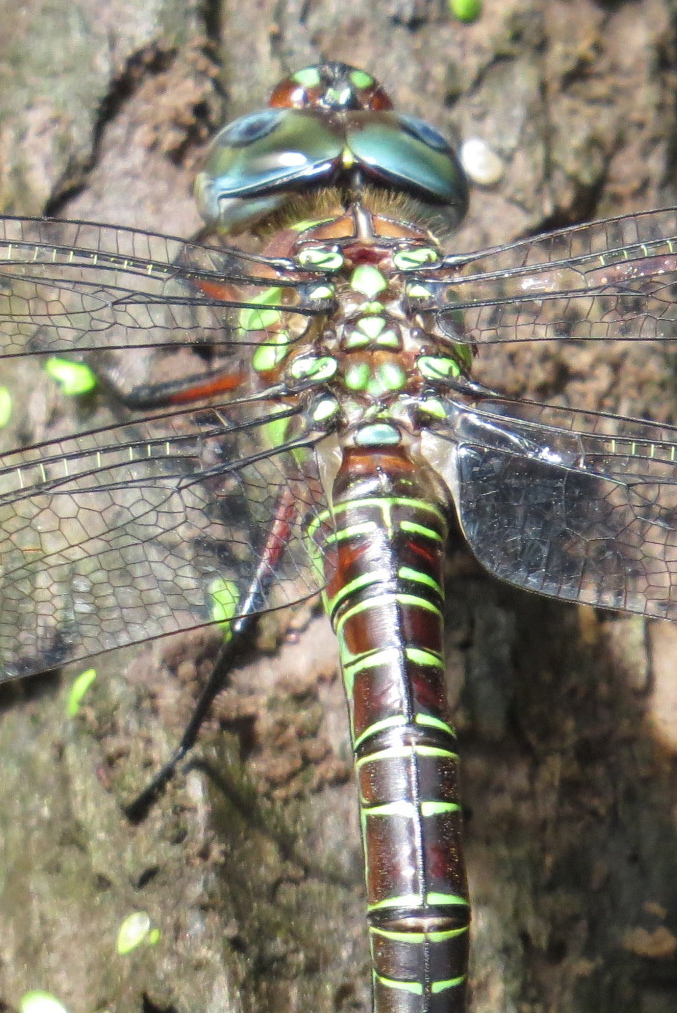 Dragonfly sex makes the birds, bees, and Weiners all look like amateurs. In the latter case, of course…
Swamp Darner
10 responses to “Swamp Darner”
-
Great pictures!
-
I love the photos. We have Swamp Darners here in Middle Tennessee, but I’ve never been able to get good photos of them – they NEVER want to land on anything! 🙂
-
Like Common Darners, rarely ever still. But breeding season means they have to slow down a bit, making them vulnerable to photographers and Catbirds.
-
-
Thanks for the pictures — just saw a swamp darner trying to get into my office window on the 50th floor, downtown Manhattan! Beautiful animal, thanks for helping me identify it.
-
50th! Cool. Insects fly to remarkable heights.
-
-
Fabulous shots. And I LOVE the idea of using “terminal appendage” for a WAY more polite way to refer to someone being, shall we say, less than their best self. =)
-
Reblogged this on Backyard and Beyond and commented:
In celebration of Prospect Park’s 150th year, I’m reposting some discoveries from the archives. Unexpected dragonflies:
-
I’m enjoying seeing this all over again!
-
[…] our biggest darner is the 3.4″ Swamp Darner (Epiaeschna heros). That link is to the time I watched one lay her eggs in rotting wood in Prospect […]
-
[…] sodden piece of old wood in the Vale of Cashmere. I’d seen the same thing happening… eight years ago (!) At that time, the darner was attacked by a Catbird once she’d finished her ovipositing, […]
 Backyard and Beyond
Leave a comment