“The air here is filled with their din. They come out of the ground at first in an imperfect state, and crawling up the shrubs and plants the perfect insects burst out through the back…. Their din is heard by those who sail along the shore from the distant woods. Phar-r-r-oh. Phar-r-oh.” ~ Henry David Thoreau, during the 1843 emergence of Brood II on Staten Island, where he was living at the time.
There are three species of periodical cicadas on Staten Island, our local epicenter for Brood II’s emergence this year: Magicicada septendecim, the most common and widespread species; M. cassinii; and M. septendecula, first recognized on the island in 1979. Staten Island is a hot spot for cicadas in more ways than one. Local naturalist William T. Davis was one of the world’s premier cicada specialists, naming many new species and building up one of the great world collection of cicadas: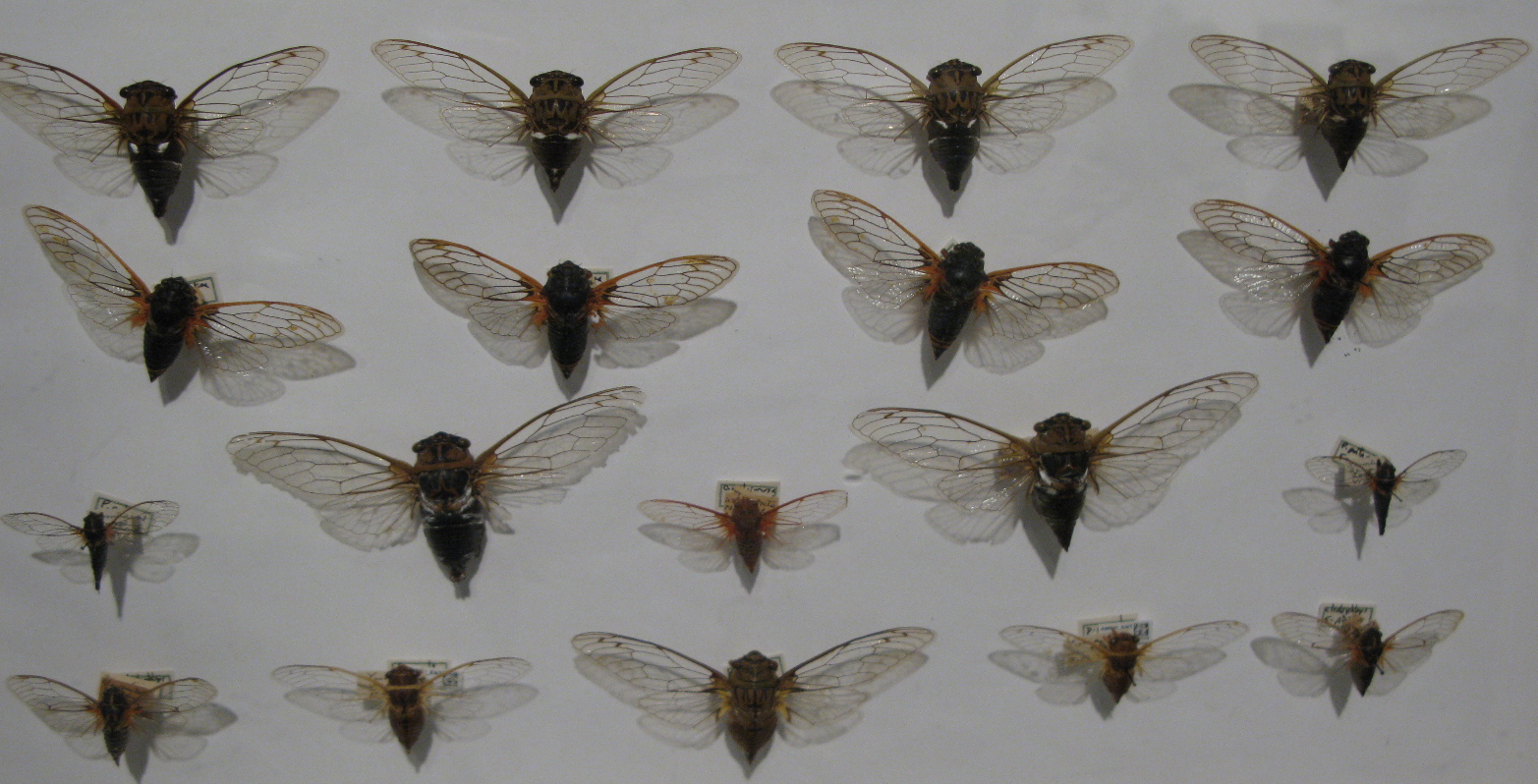 A selection of North American cicadas from the Staten Island Museum‘s collection. Visit the museum’s cicada blog for more information.
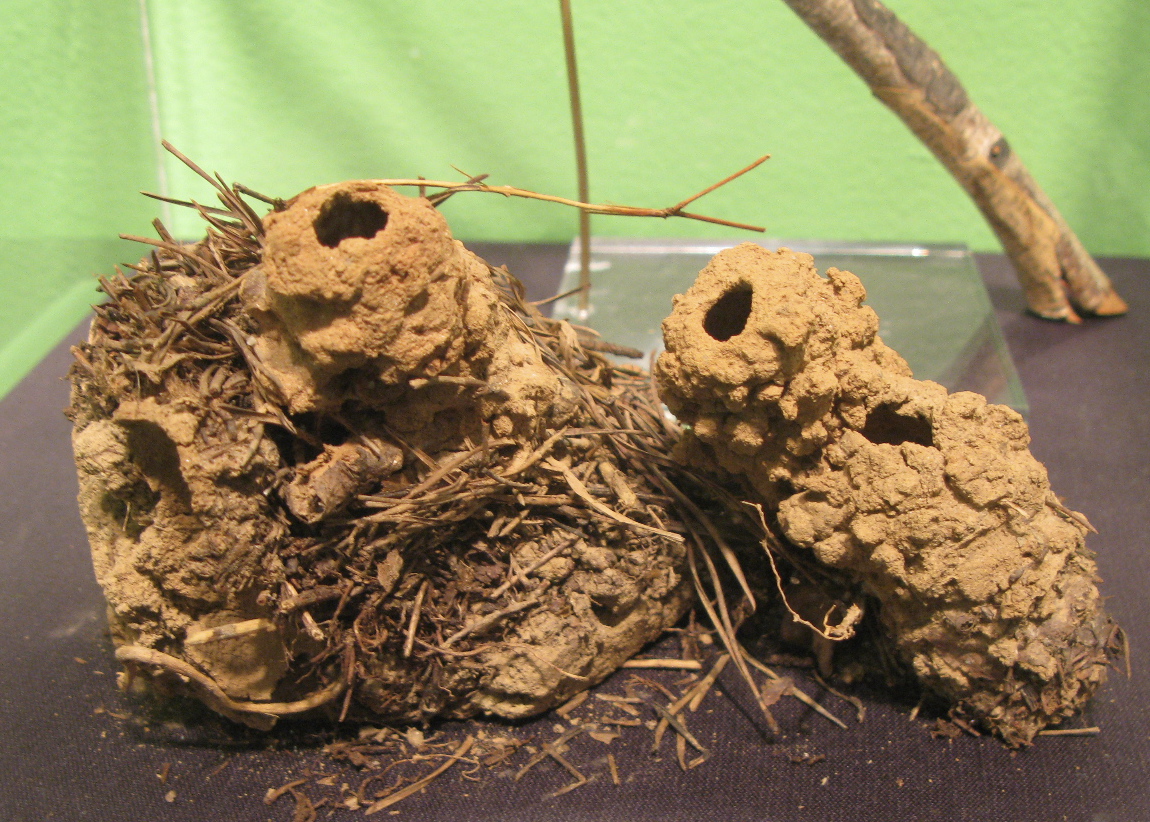 These are some samples of the mud chimneys the Magicicada nymphs build as they prepare to emerge from their long subterranean portion of their lives.
But what’s up with the periodicalness of periodical cicadas? They come in two flavors: 13 and 17 year. (Annual cicadas are also periodical, emerging every 3-7 years or so, depending on the species; one brood or another is emerging every year, though, so these are always with us.) Brood II is a 17-year emergence. But the animals may switch back and forth, alternating between 13 and 17 years, depending on climate and other cues. Also, the genetic difference between broods/species is notable, meaning they have been doing this for millions of years. Check out this link for some interesting thoughts and research on the subject. Insects that emerge every year can prime the pump of predators; i.e. a good year of prey will most likely lead to a good year of reproduction for predators, so that in the following year, there will be even more predators for the prey. Staggering reproductive years by such time spans is a way of completely out-foxing the fox. Prime number intervals, btw, like the components of today’s date 5/1/13, which works better Euro-style: 1/5/13 — although, of course, 1 isn’t a prime.
Happy May Day, citizens.
 Backyard and Beyond
Leave a reply to McMackin, Rebecca (BBP) Cancel reply