 Checker Spot ladybug (Propylea quatuordecimpunctata) munching on an aphid wing.
  Laval-stage lady beetles are also great aphid-devourers. This is why a number of different species of lady bugs have been introduced into North America over the years: to attack the real destruction aphids can cause. The Checker Spots were one such introduction.
 The Multi-colored Asian lady beetle (Harmonia axyridis) were another. Above and below are two examples of this species. These, and numerous other examples of the species, which is quite varied in color and spot number, were found, in both adult and pupal stages, almost exclusively on widely separated Catalpa trees in the park.
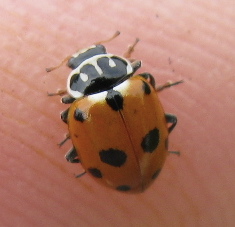 Variegated lady beetle (Hippodamia variegata), another introduced species, pictured above and below.
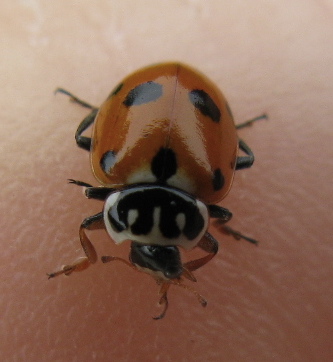 Same species, different individual:
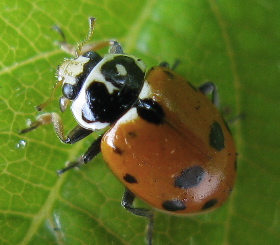 Three species of lady beetles noted in Brooklyn Bridge Park on the same day, all originally introduced species. In fact, I’m hard pressed to find any native species of lady bugs locally, and I’m not the only one. For instance, New York State’s state insect, the 9-Spotted Lady Beetle (Coccinella novemnotata), is extremely rare now — it was thought absent from the state until one was found last year on Long Island. Check out the Lost Lady Bug Project for more details.
What is the connection between the introduction and spreading of non-native to dwindling numbers of native species? Unknown. Habitat destruction — native insects have spent millions of years developing relationships with native plants — and poisons may be the reason, or some combination of all these things.
 Backyard and Beyond
Leave a comment