Probably the most common bird nest come across is the American Robin’s, which is big for a song bird’s, and characteristically made with a mud base and a lining of grasses. Of course, birds don’t want you, or any other predator, to find their nests, so the leafless season is best for discovering them. Of course, months after being abandoned, nests are usually in a bedraggled way, and many don’t survive the winter. But this mild winter seems to have been gentle on last spring’s nests. I found these three woven cups on Nantucket last week. Help me to identify them. 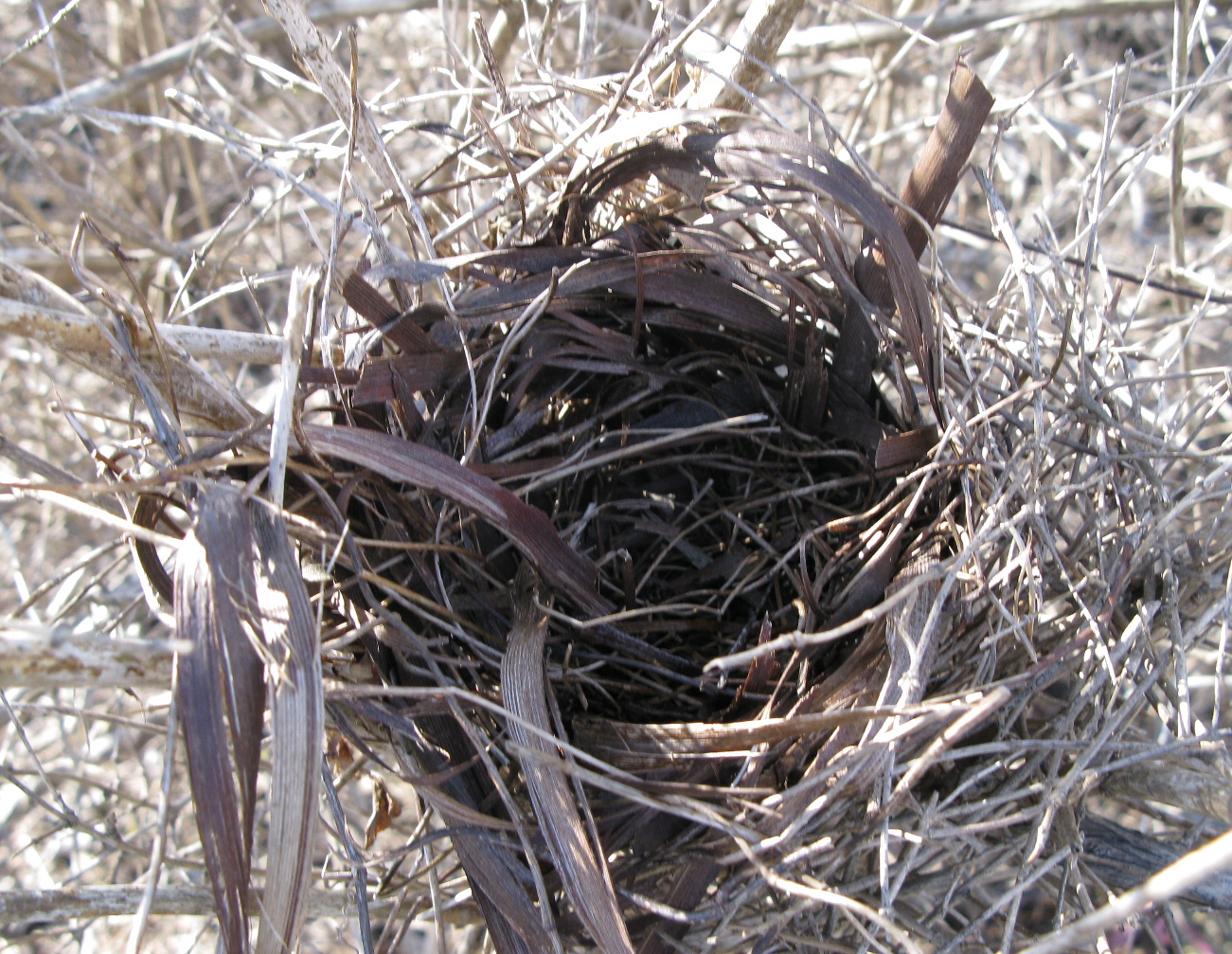
The next three are different views of the same nest: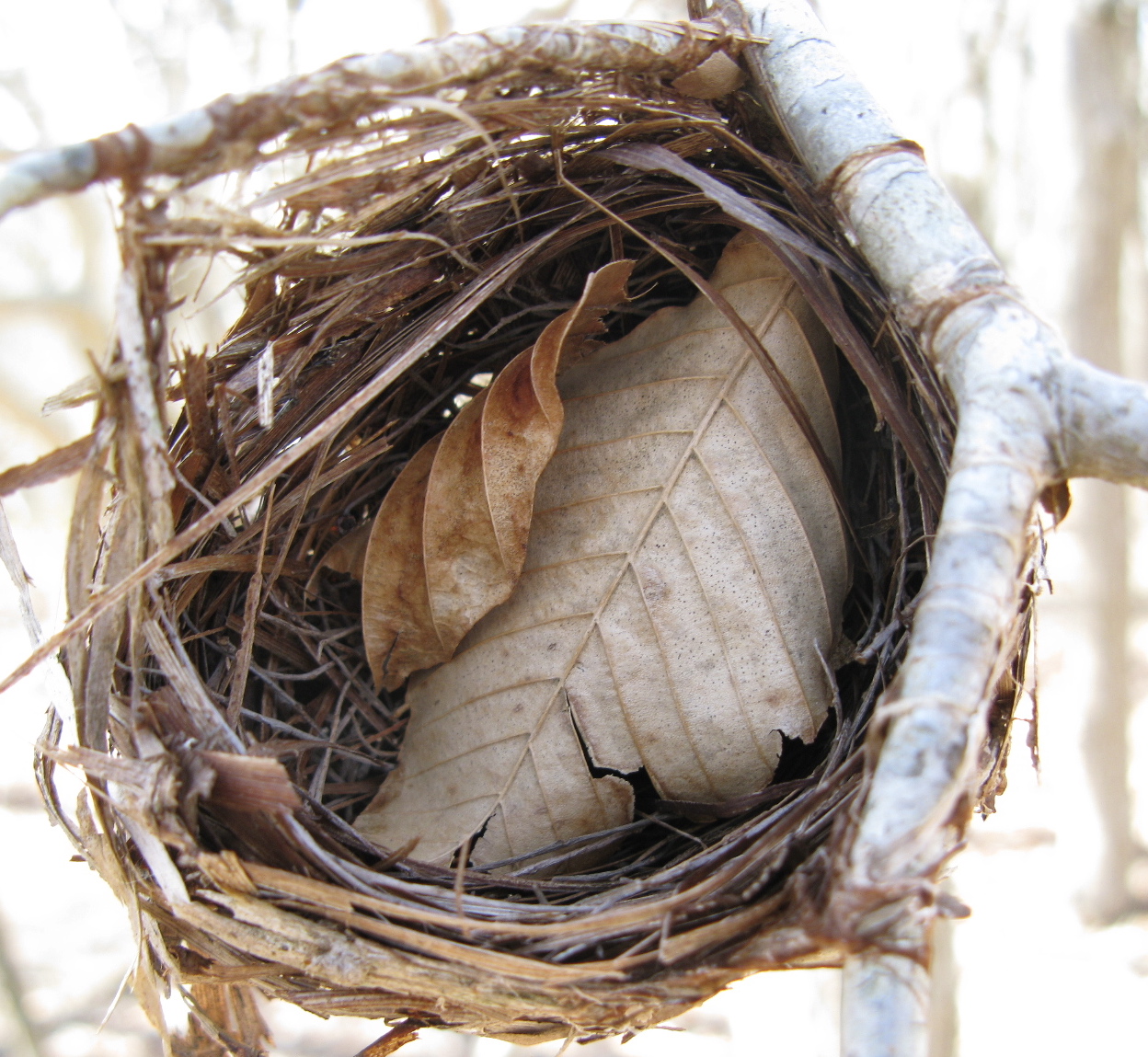
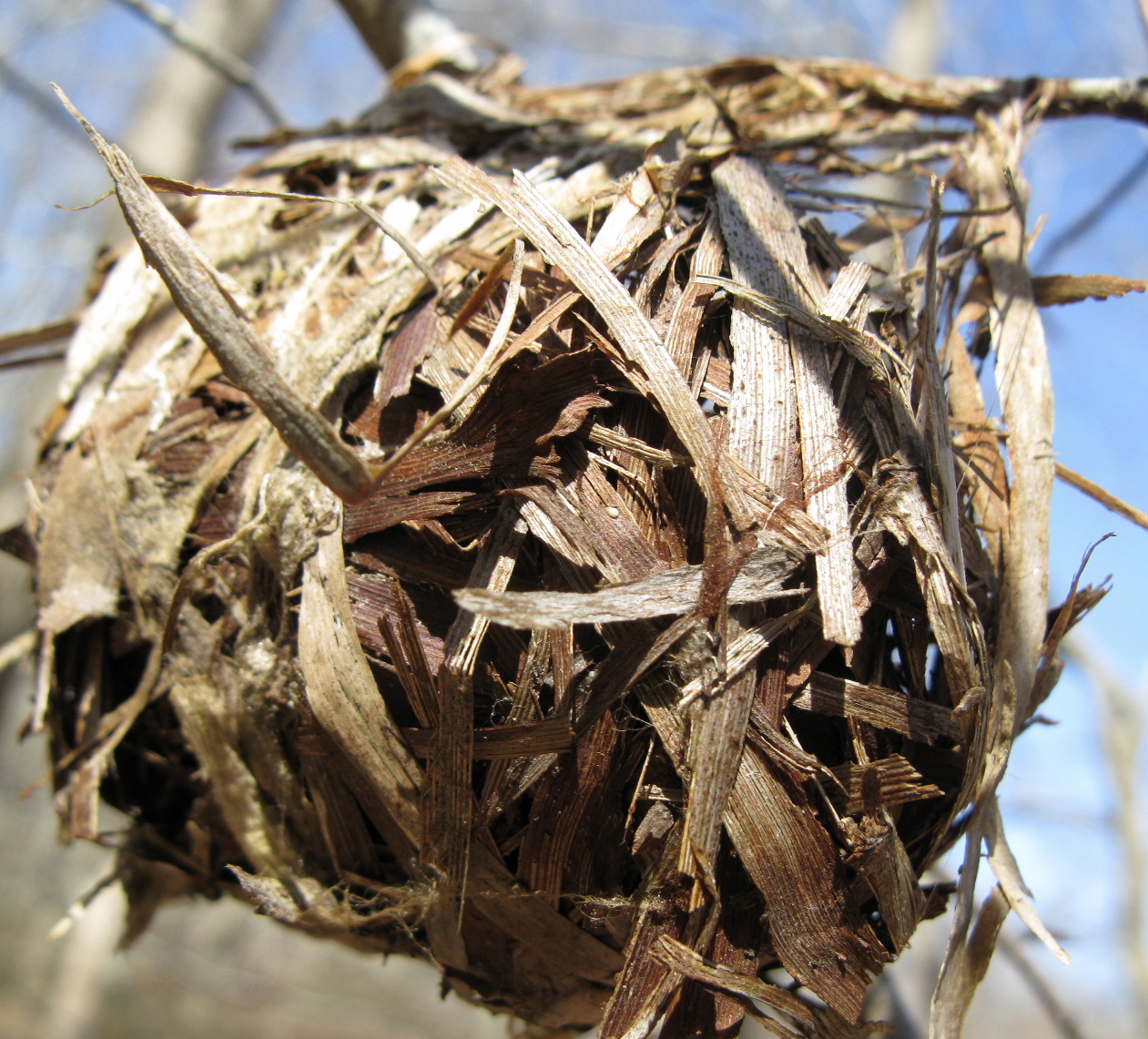
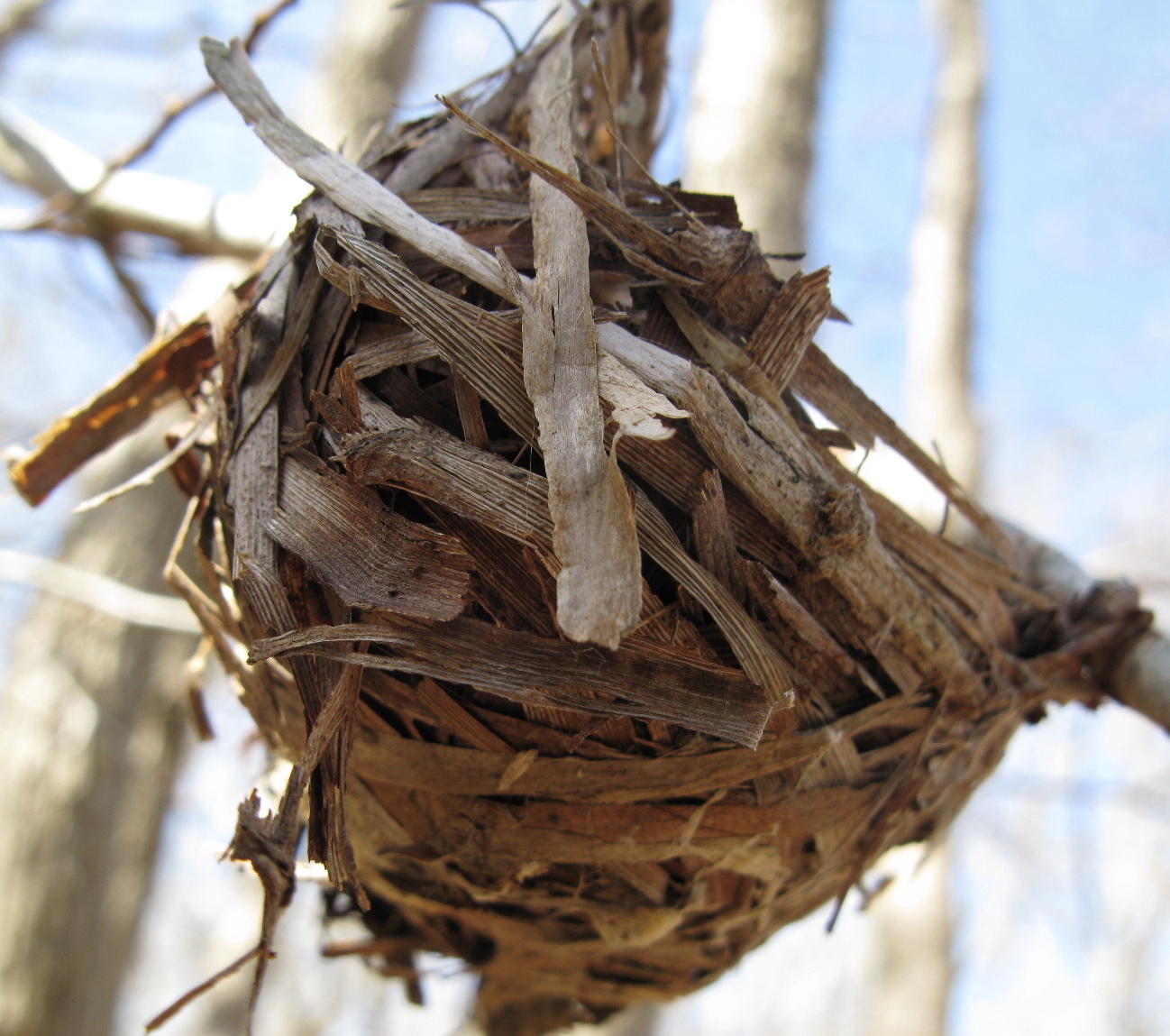 Here’s one that had been recycled by another animal, probably a mouse, as a place to cache food.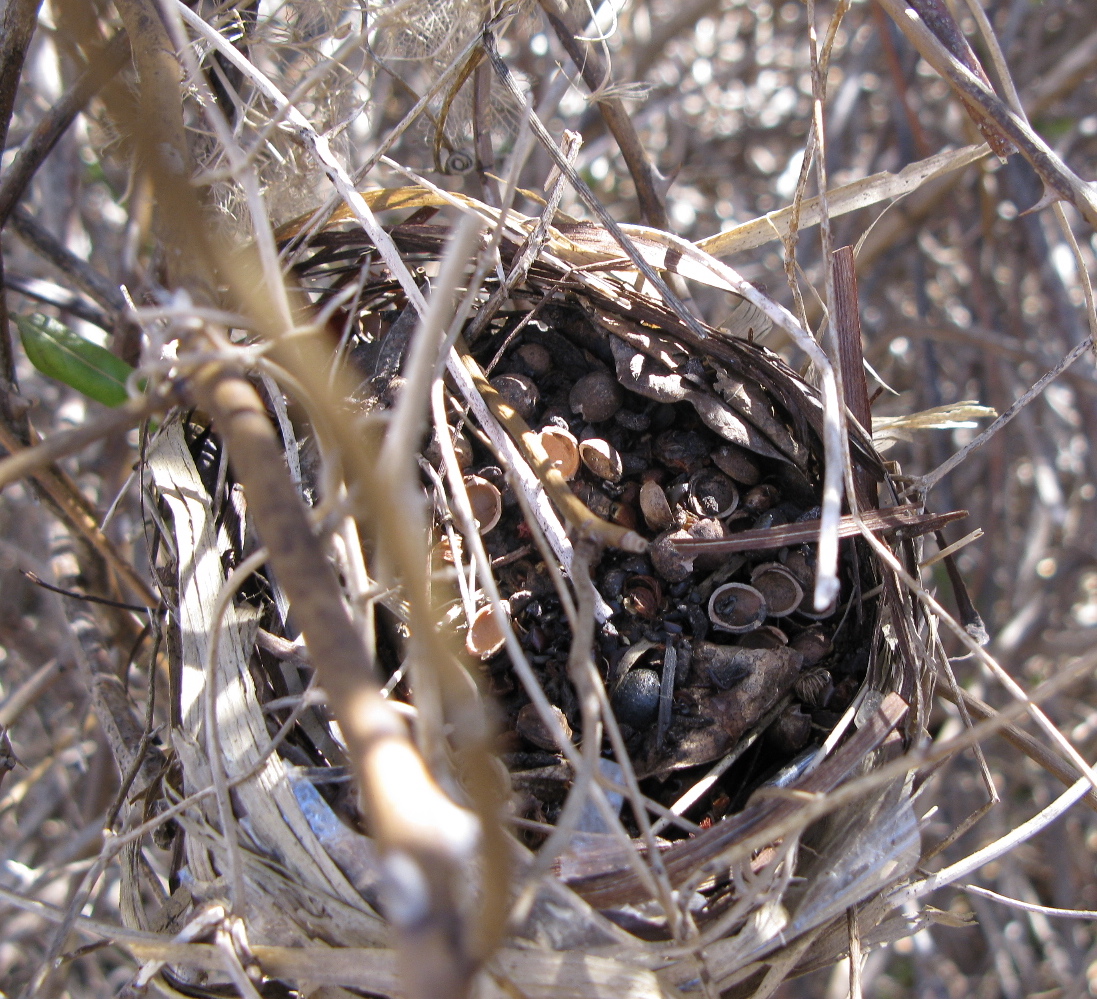
Woven Nests
6 responses to “Woven Nests”
-
Is the one that looks like a ball a marsh wren’s? Or was that the bottom of the nest? Size would be a clue.
-
This is one of those cases where a good old fashioned book would be helpful, since the internet is just a sea of stuff. This site says marsh wren nests are softball-sized, and these nests were roughly tennis ball-sized.
-
-
No clue whose nests they are, but they are beautiful objects.
-
Like a split-reed basket.
-
-
You don’t mention the height of the nests, or habitat. Also be good to have a ruler or a coin or something to get an idea of size.
Possibilities include Northern Cardinal and Gray Catbird, possibly Eastern Towhee.
Marsh Wren doesn’t nest here.
-
Thanks, Ken. Good points on height and size. These were from 3-6 feet off the ground. Top and bottom nests were located in thickets next to roads, middle one (three pictures worth) on a beech sapling in the woods. Middle one (x3) roughly 3 wide by 3 deep.
-
 Backyard and Beyond
Leave a reply to Ken Blackshaw Cancel reply