 Off the Reef Bay Trail is a short sidetrack to a waterfall and pool with petrogylphs carved into the water-smoothed rock. The carvings are thought to be 1100 years old, the work of the Tainos who originally inhabited the Caribbean before the twin plagues of Caribs and Columbus.
Another invader is the mongoose, introduced to the island in a misguided attempt to control the rat population, which munched away at sugar cane and hence profits. The rats, of course, were also introduced to the island, accidently and inevitably. The problem with the idea was that mongooses turn out to be diurnal, rats nocturnal. Rats can also climb trees, mongooses don’t. So instead of rats, the mongooses multiplied and ate most of the island’s snakes and put a good dent into bird populations, particularly those that ground nest, and settled into the lizards and frogs. O, they love eggs. Turtle eggs are another mongoose delicacy, meaning yet another insult to already overburdened sea turtle populations. Like squirrels, they also scavenge human garbage and thus thrive, predator-less.
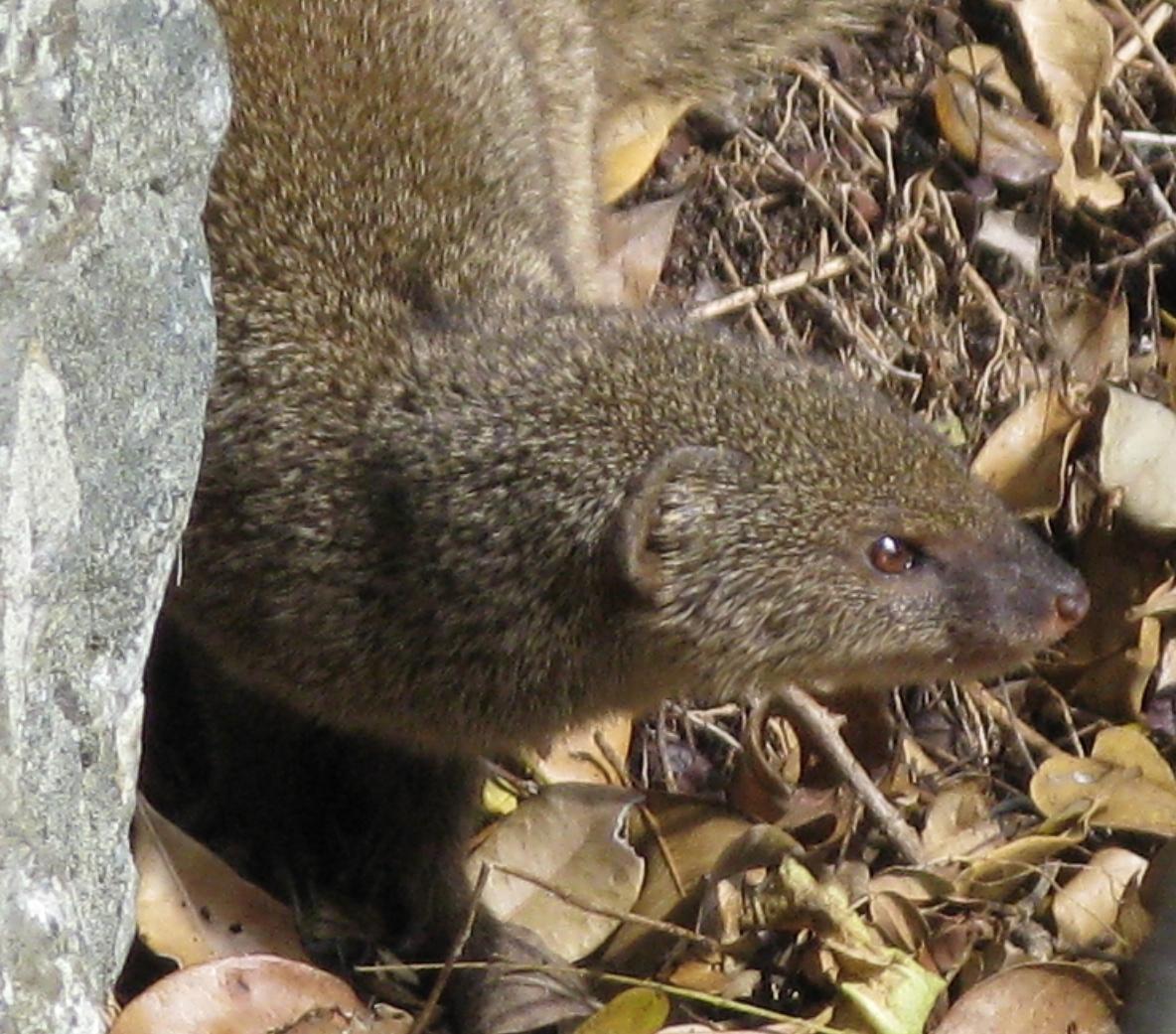 So what is a mongoose? Rikki-Tikki-Tavi is probably remembered by children who read Kipling’s story, although all week I kept saying “Rikki-Tikki-Taki.” They’re dead ringers for ferrets, but are unrelated to the weasel family, and come from Africa and southern Eurasia; there are over 30 species. I don’t know which species it is on St. John and the other USVI. We were five days there before we saw one rather boldly approach our party having lunch at the Petroglyphs during the National Park’s jitney in/boat out Reef Bay hike.
 The smell of snacks.
 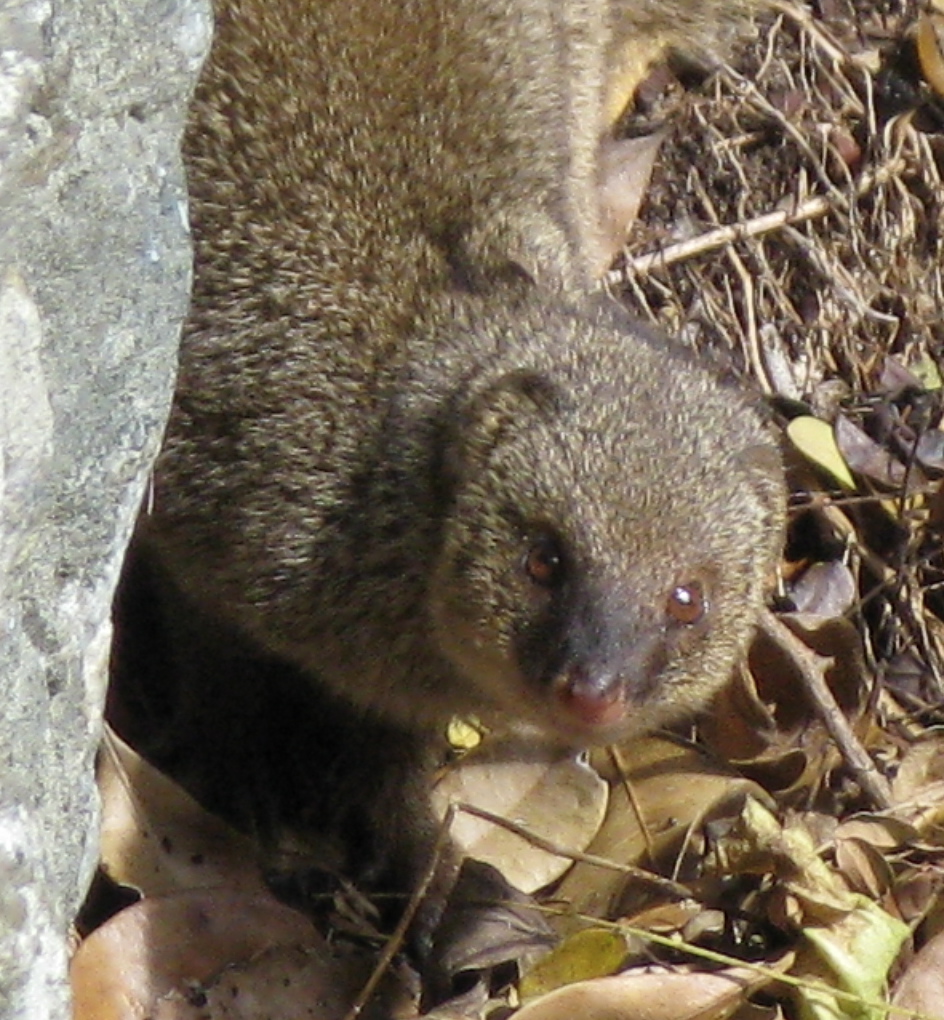 “Mongoose dem,” by the way, is the St. Johnian plural for mongoose. For more information, including efforts to reduce the population, see here.
 Backyard and Beyond
Leave a reply to St John Birds I « Backyard and Beyond Cancel reply