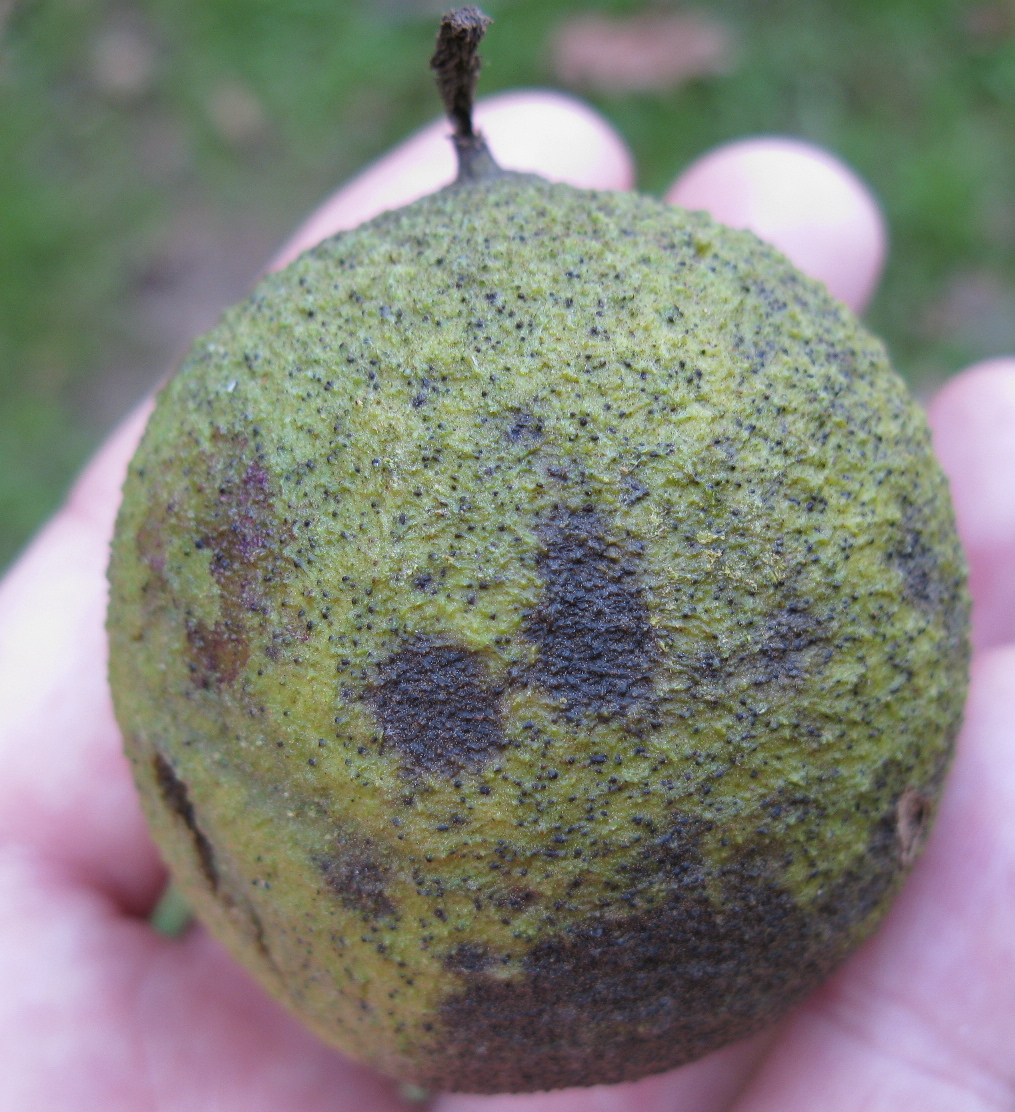
 This is the fruit of the Black walnut, Juglans nigra. Edible, but hard to extract, since first you have to get through this husk, which stains you yellowish green. It was in fact once used as a dye. Then, once the flesh is gone (squirrels will sometimes help you) you are presented with the hard shell, which cracks nutcrackers. Is it any wonder that the English walnut, also known as the Persian walnut, J. regia, is our source of commercial walnuts? Black walnuts, by the way, have a richer, funkier taste than the king of walnuts, and many folks don’t favor it.
Nuts! Walnuts
3 responses to “Nuts! Walnuts”
-
Hi Matt,
I love your blog. I live in Northern Vermont and I found out about it from a friend in Brooklyn. Black Walnut is still extensively used as a dye. I am a Waldorf handwork teacher and I use it to dye all my brown yarn. I can assure you that the handwork teachers at the Brooklyn Waldorf School do as well. Thanks for the feather identification website.-
This is wonderful to know, thanks, Nicandra. I suspected it’s still being used, along with many another traditional natural product. Glad you like the blog,. ~ Matthew
-
-
I found a few piles of this tough fruit as I hiked in a park yesterday. Unfortunately, most of the Black Walnut leaves, which were a bright yellow, have fallen to the ground. I think the squirrels have an easier time with the acorns!
 Backyard and Beyond
Leave a reply to Nicandra Galper Cancel reply