I know there’s plenty of gnashing of teeth over the end of the space shuttle program, a sort of a low-earth-orbit FedEx, but I invite the star-crossed to look around them down here with more attention. There’s so much yet to be discovered here on Earth.
For instance, I was going through some photos, and this one, posted here earlier this month, caught my eye again. 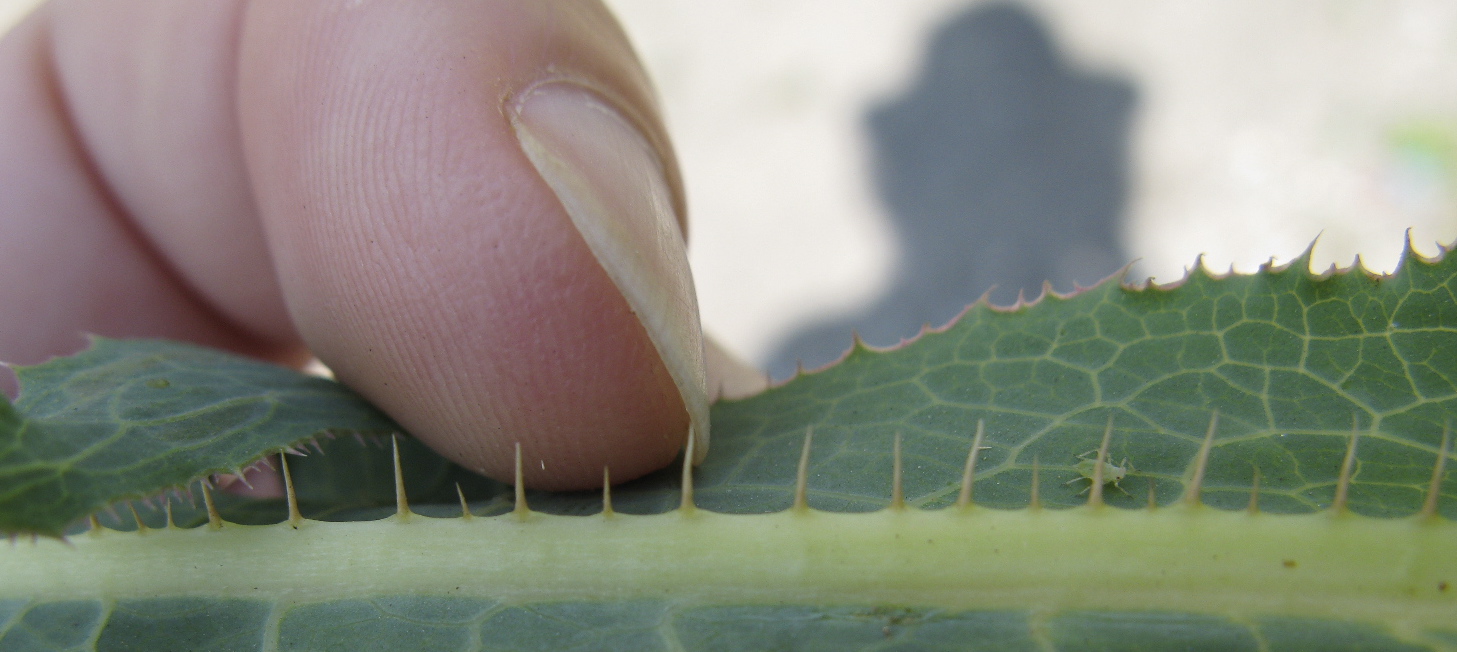 Follow the bristles to the right…
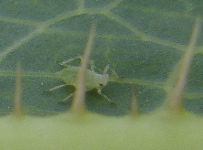 Eureka! I didn’t notice this initially. As I didn’t see a similar leaf-toned critter when I took this shot of mating ladybugs. Judging from Bugguide.net, these are aphids. They’re so damn small. But those dark eyes really stick out
I was also recently thinking about the 1966 film Blow Up, in which an oh-so-Mod British photographer keeps magnifying a photo because… well, I don’t want to spoil it for you (if you can handle the Art Cinema pretension of the thing). Things are not often as they seem, to be sure — but things are often just not seen at all.
Memo to self: Look!
 Backyard and Beyond
Leave a comment