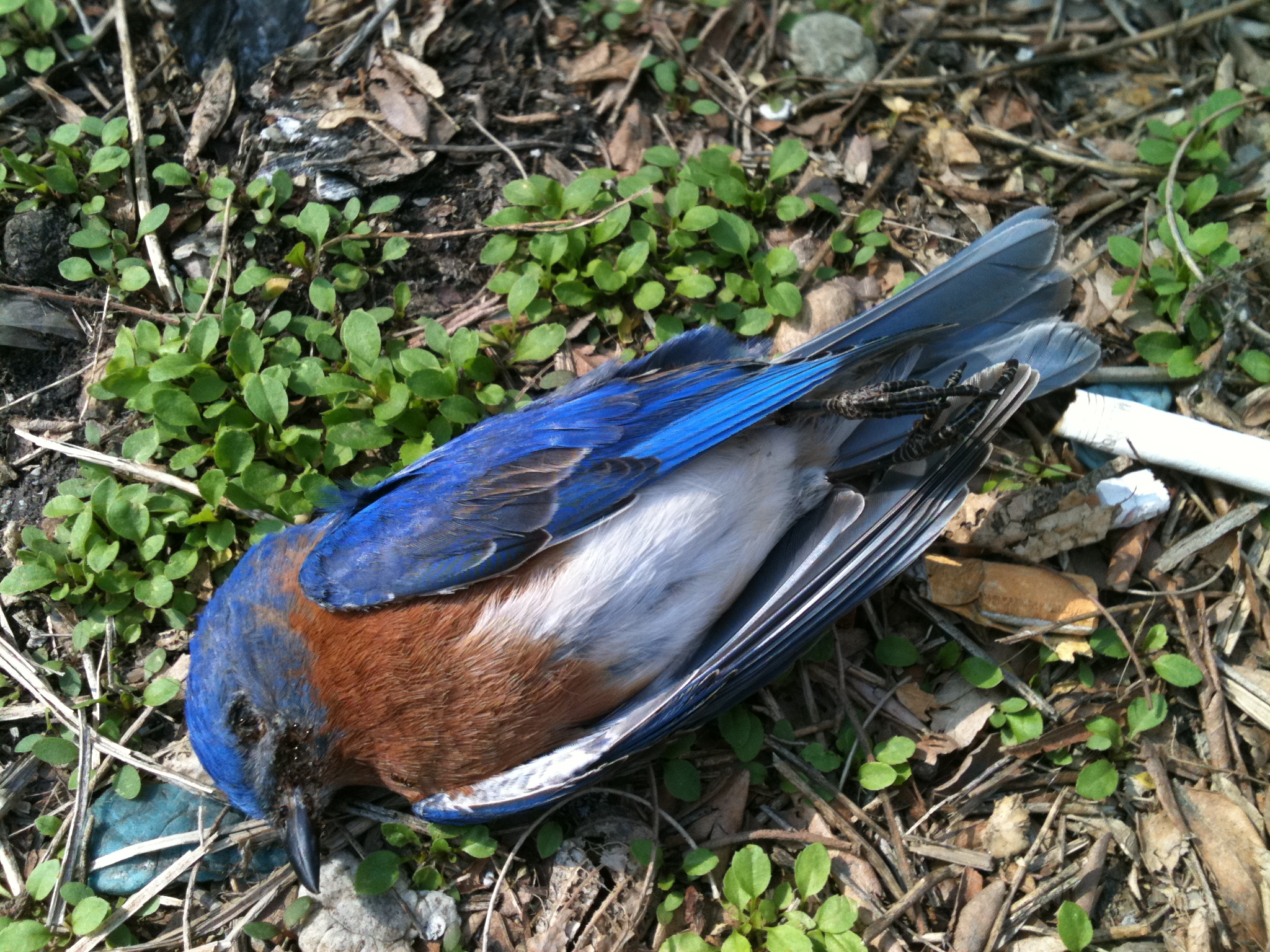
 My friend Cathy has been finding dead birds in the Windy City, victims of high-rise glass towers and bright lights. The migration seasons in particular takes an enormous toll. Here’s some more information about how skyscrapers kill and what can be done about it. This is a picture she sent me: it’s an Eastern bluebird, Sialia sialis – to my mind one of the most beautiful birds in North America.
Ornithology was predicated on the bird in hand, usually dead. Collections are filled with “skins,” as they are called, or stuffed specimens. The essence of a bird, however, must surely be its motion, its elusiveness to us plodding humans. Still, this a rare opportunity to contemplate the millions of years of evolution that made this creature.
And perhaps we can also contemplate the stillness.
*
Update: Another friend, Karen, who lives in New York State, alerts me to this fine essay by Verlyn Klinkenborg on light pollution’s other effects.
 Backyard and Beyond
Leave a reply to mthew Cancel reply