They leave a trail of slime and eat your plants, or at least some of them do, but gastropods, with their shells, love darts (!), and hermaphroditism, are as remarkable as any other life-form. (Until you’ve seen slugs mating, my friend, you have not lived. A future post will get sluggy. )
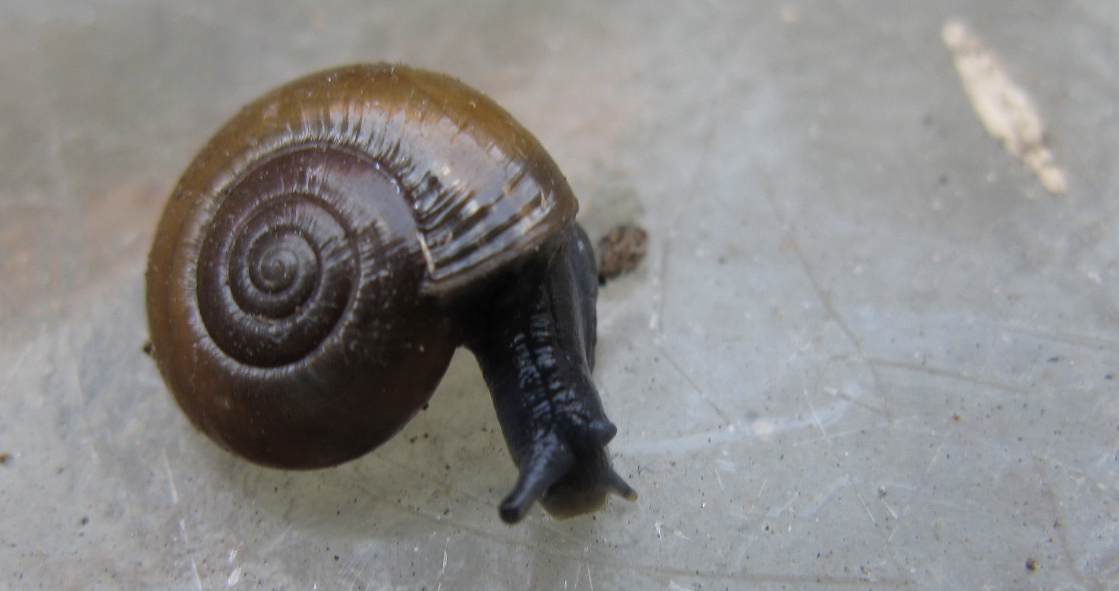 Last autumn, while cleaning up the Back 40 in preparation for winter, I found this snail underneath one of my pots. It’s posing on a glass topped table. 3/8ths inch long shell, with a deep umbilicus. I’m not sure what species it is.
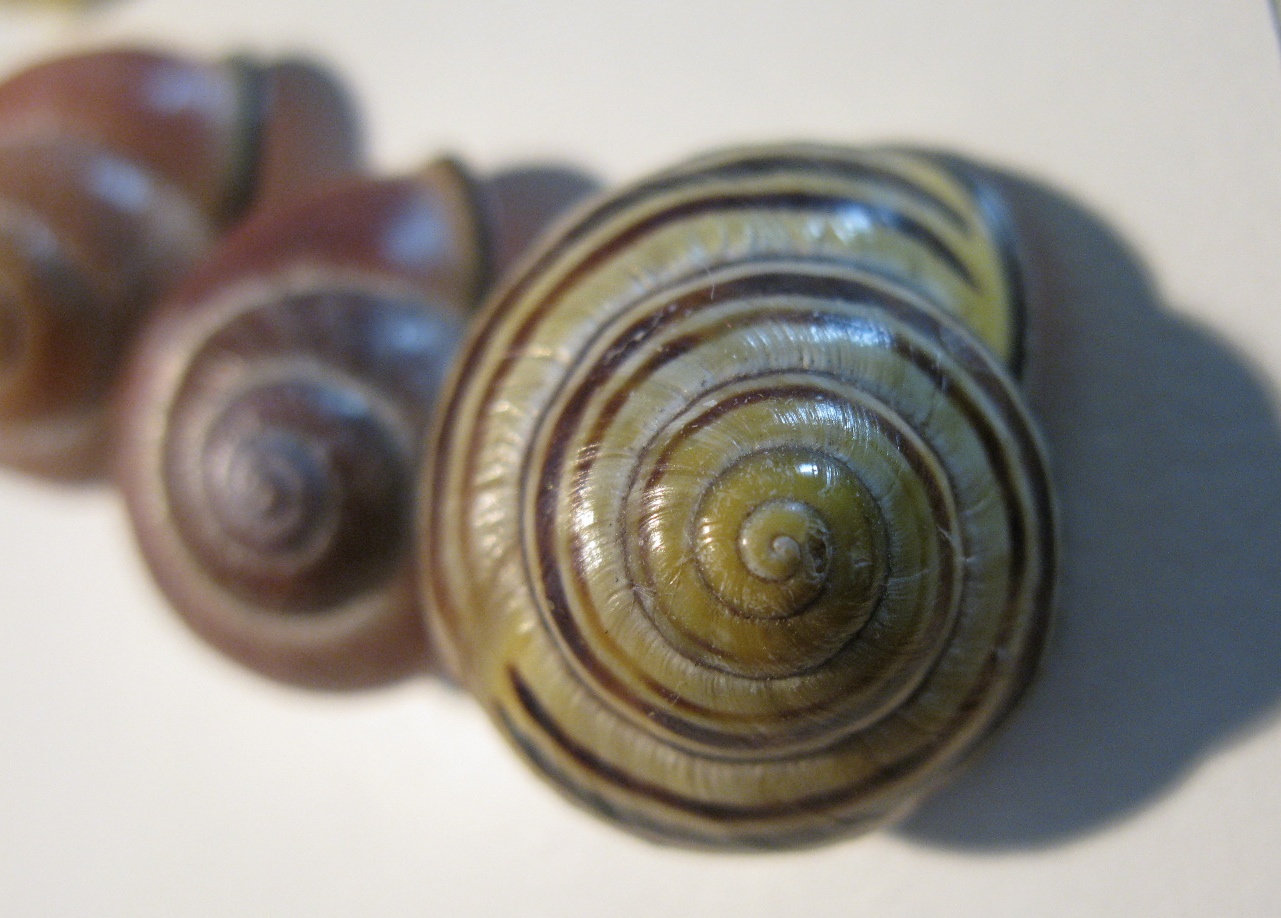
This stripped specimen was also found in the Back 40.
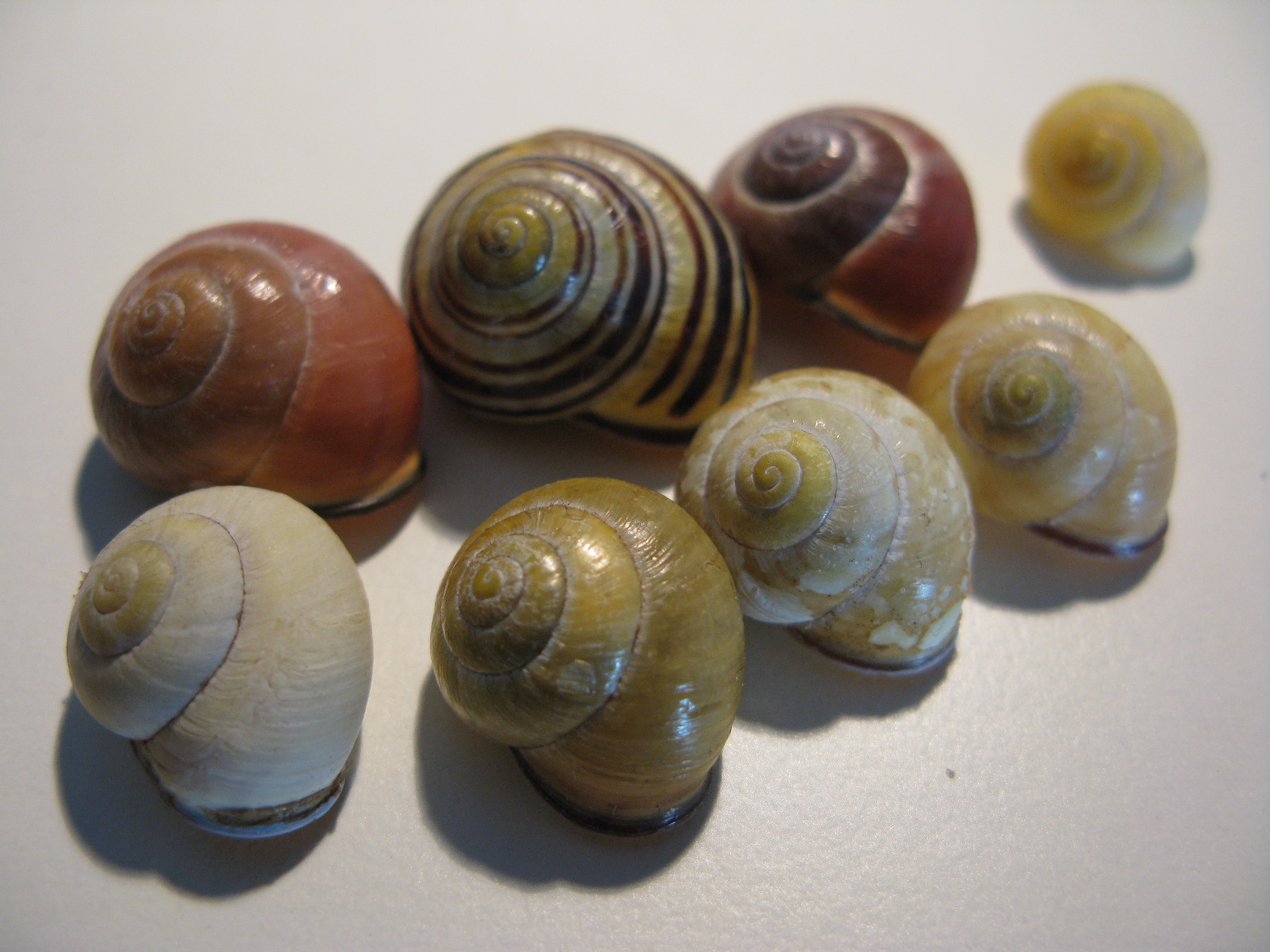
Here it is surrounded by other examples of its species, Cepaea nemoralis, the rest of which were found at Dead Horse Bay or Jamaica Bay or here or there. The species is obviously pretty polymorphic in coloration, but all have the brown lip that gives them one of their common names, the brown-lipped snail. Except for that one on the unfocused right, which isn’t like the others:
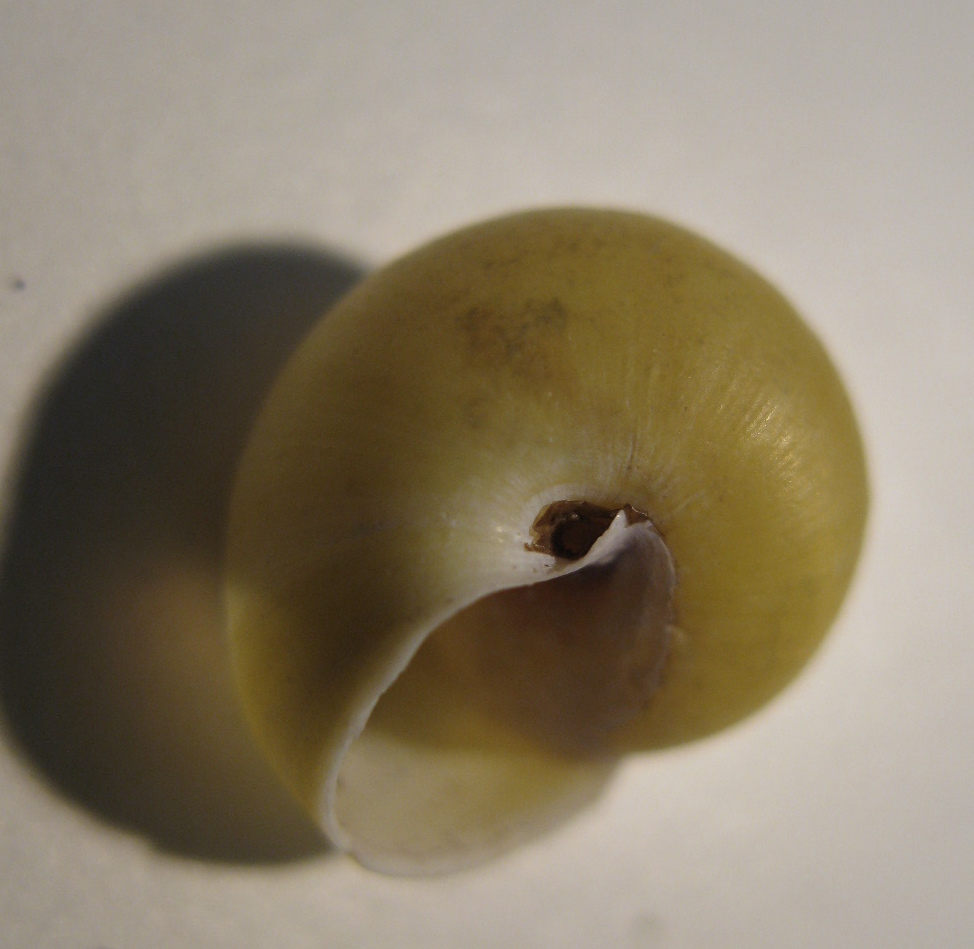 This one I’m also not sure of. It doesn’t have a brown lip but definitely does have an umbilicus, which C. nemoralis lacks. (D’uh! and I also don’t remember where I found it.) Oh, well, it’s here for comparing and contrasting.
To recap: the unknown species in the first image above; the C. lubrica in the previous post; the stripped C. nemoralis; and the tiny D. rotundatus that I found last month, make for four different species of snail in the Back 40.
 Backyard and Beyond

Leave a reply to Marie Cancel reply