-
-
Even More Mud….
I’ve mentioned before how I don’t ever find any current Organ-pipe Mud-dauber nests in Green-Wood, whose mausoleum exteriors, with all their nooks and crannies, are full of evidence of old nests. But here’s a trio I found on Saturday. Hurrah! Any haunter of mausoleums is bound to see metallic blue-green cuckoo wasps (Chrysididae) like these…

-
Constructing with Mud
From somewhere nearby, the female Organ-pipe Mud-Dauber gathers a ball of mud. She flies back to the nest, where the male can just glimpsed inside the developing tube. Rather unusually, the male of this species stick around to protect the young. There are parasitic flies and wasps eager to get into the spider-stocked chambers within…

-
Organ-pipes
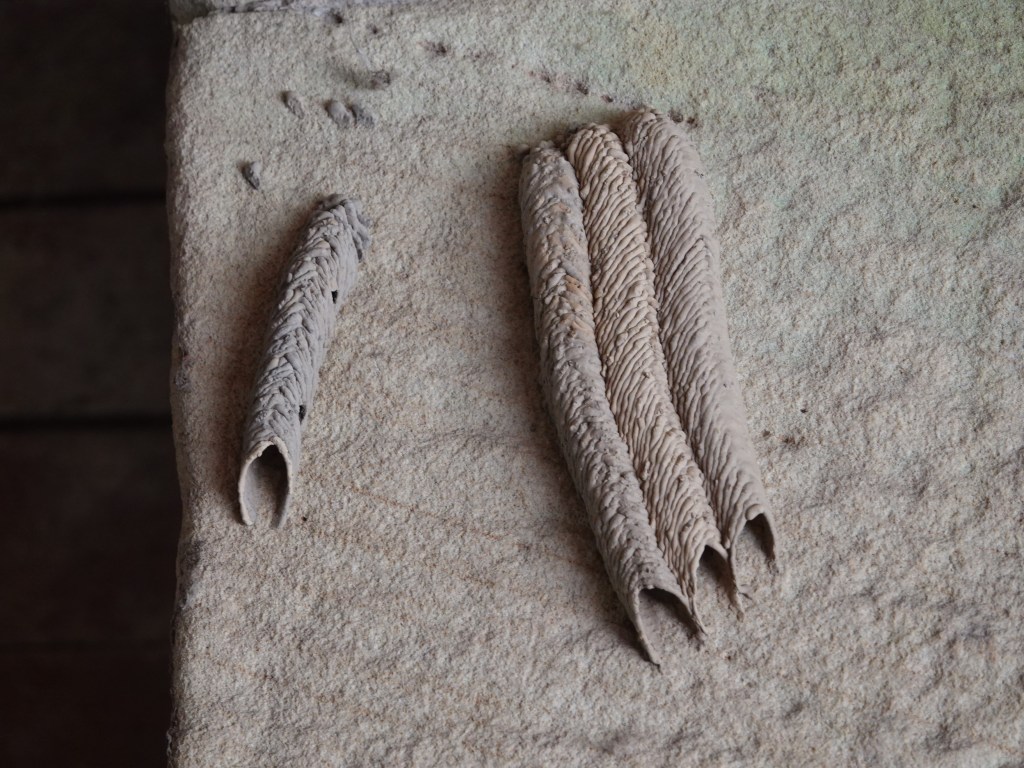
The very distinctive organ-pipe like mud tubes built by Trypoxylon politum, the Orang-pipe Mud-dauber Wasp. The ones with holes are previous years. These are this year’s. In fact, the darker mud on the top shows it’s still in the works. I see these tubes much more often then I see the actual wasps. In fact,…
-
Mausoleum of the Wasps
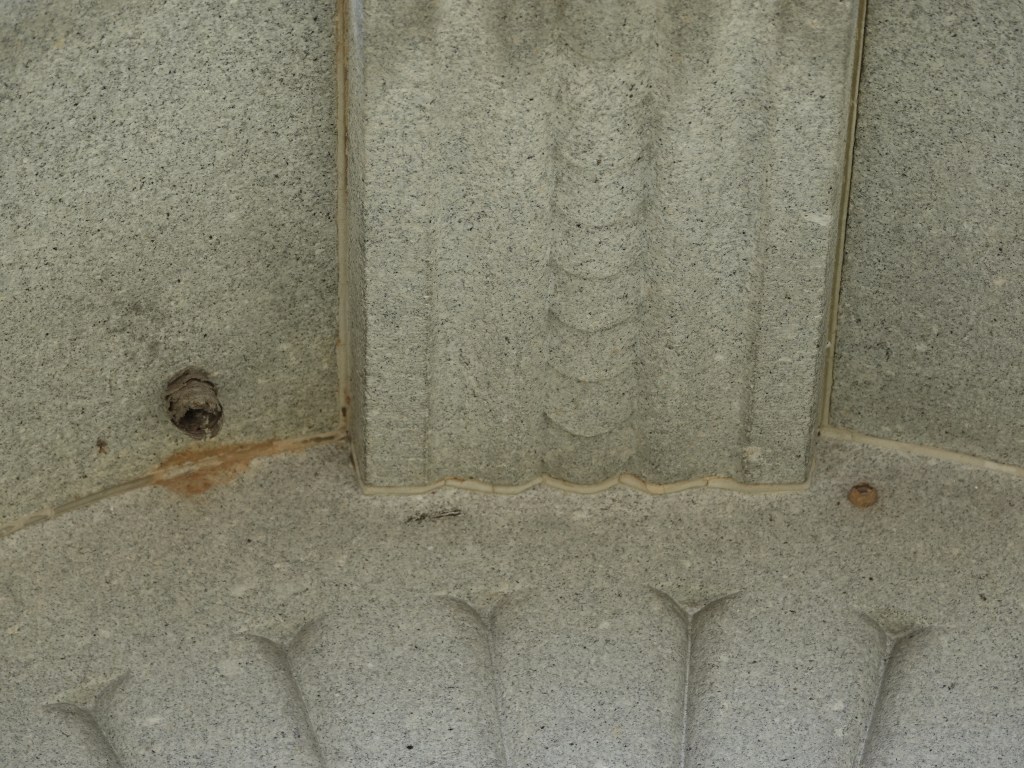
Paper. Looks the aborted nest of a Dolichovespula wasp, probably a Bald-faced Hornet. Mud. Looks like the work of an Eumenes genus potter wasp. Paper. Polistes, probably the ubiquitous European Paper Wasp. Mud. The bare leftovers of the mud tubes built by Organ-pipe Mud-daubers/Trypoxylon politum. Looks like some even older ones above the two in…
-
Raptor Wednesday
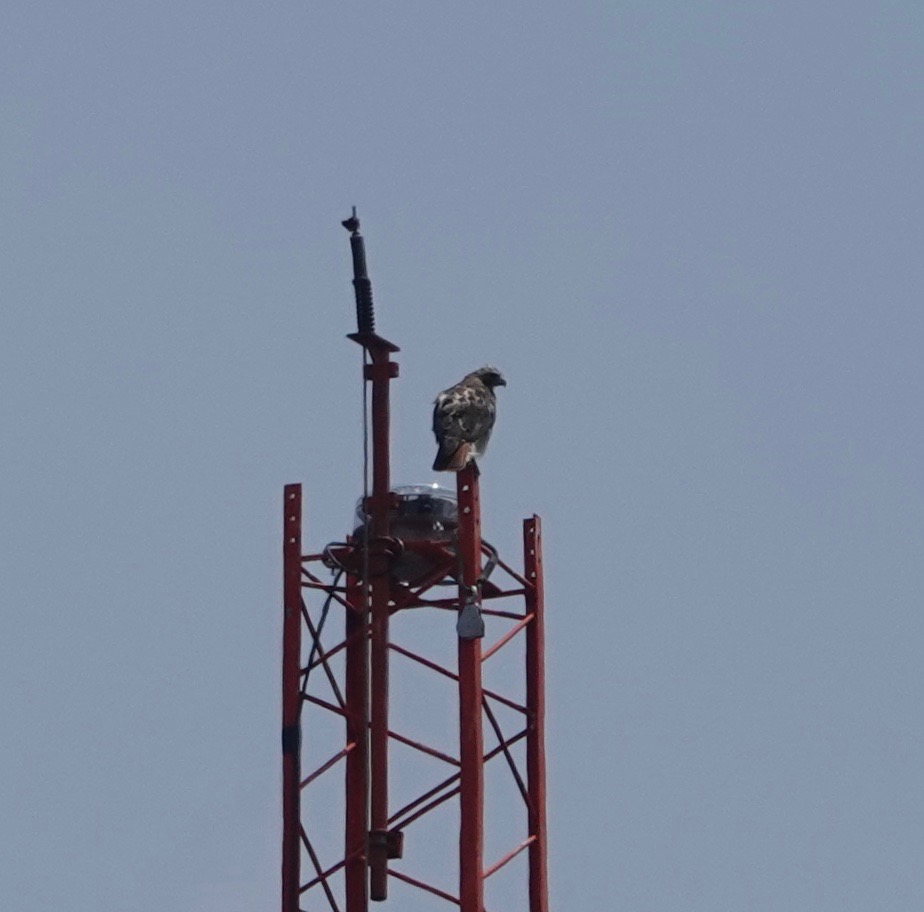
One month ago. Three days ago. This huge antenna at 10th Ave and 20th street is across the street from Green-Wood and a few blocks from Prospect Park. The tallest thing around, it commands the raptor heights.
-
Monarch Monday
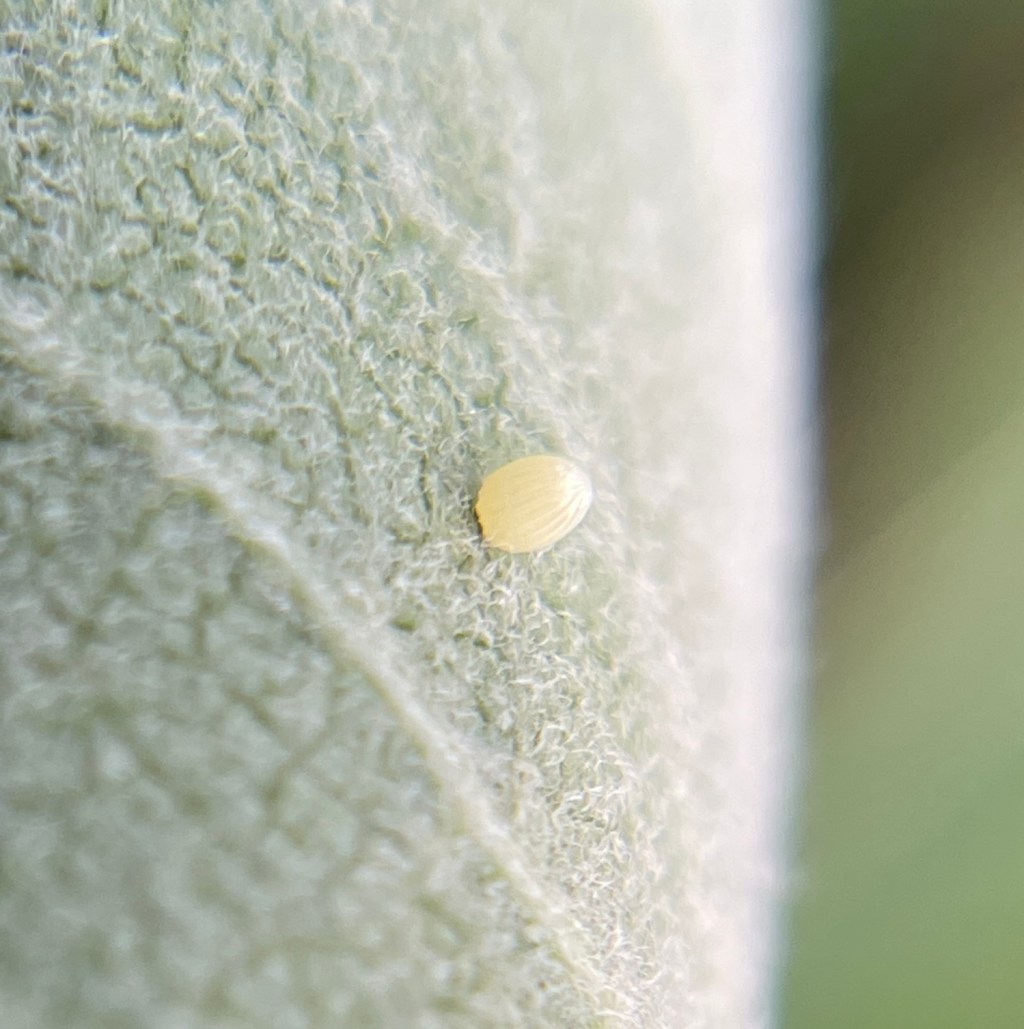
Foraging and depositing eggs on Swamp Milkweed. A week later, another (?– it wasn’t so far away) depositing eggs on Common Milkweed.
-
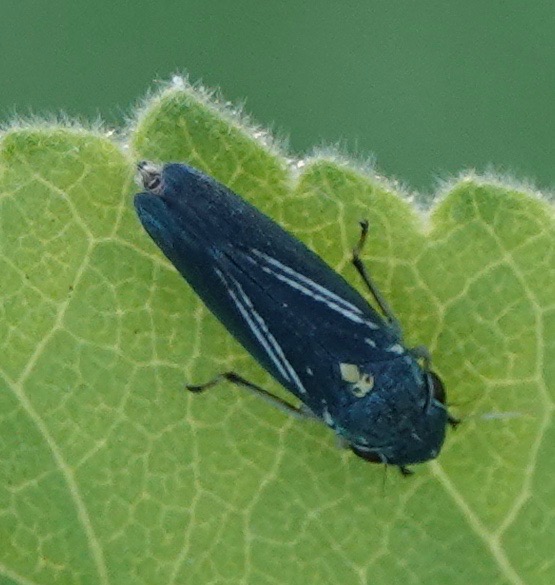
Graphocephala hieroglyphica
A month ago in Ohio, I spotted this boldly indigo sharpshooter. This week I saw one here in Brooklyn. This turned out to be what seems to be the first iNaturalist observation of this species in New York state.
-
Two More Mountain Minters
One of the Ammophila thread-waisted sand wasps. Perhaps A. nigricans. (There are some 62 species in this genus in North America according to bugguide.net.) These are caterpillar and sawfly larvae hunters. Now, this surprised me. I mean, look at this beast: everything here says wasp. It is, however, a Two-banded Cellophane-cuckoo Bee/Epeolus bifasciatus. Family Apidae…

-
Return to the Mountain Mint
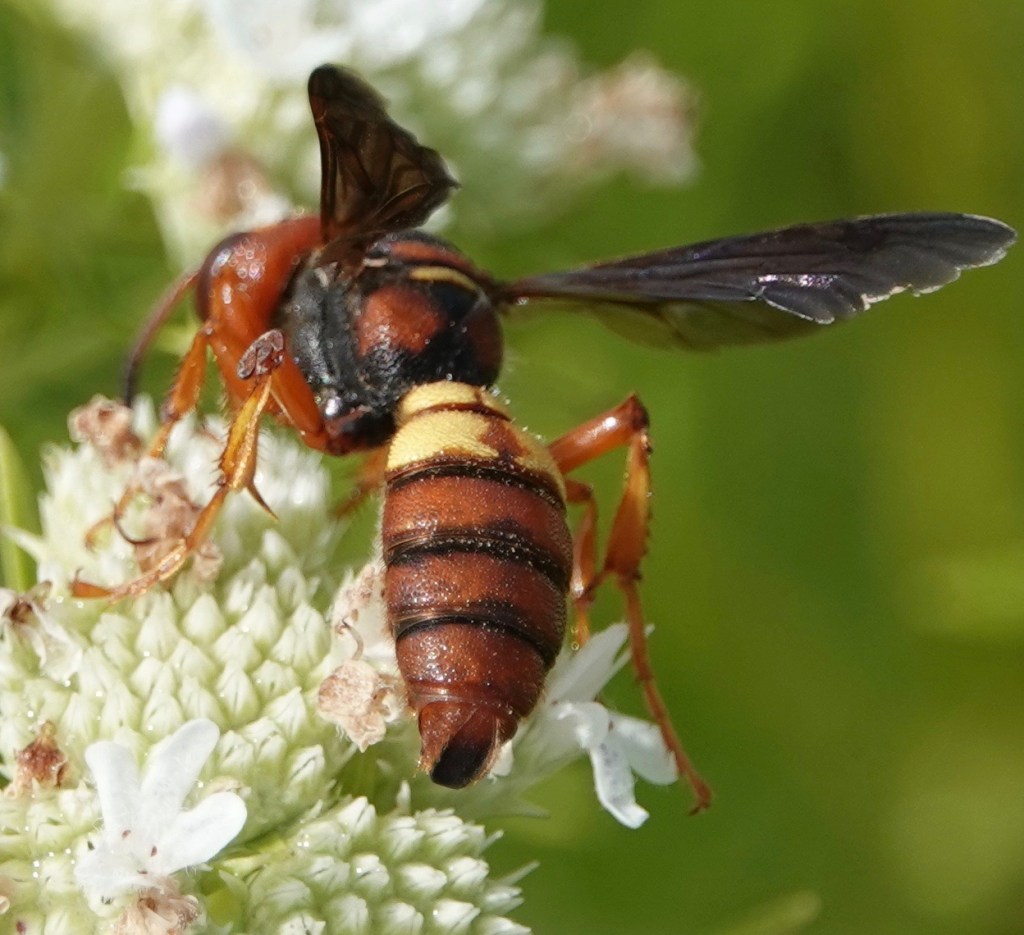
Above are two images each of the three major color variations I observed of female Cercis bicornuta. Below are a couple of variations on the male:
-
Subscribe
Subscribed
Already have a WordPress.com account? Log in now.
 Backyard and Beyond