-
Raptor Wednesday
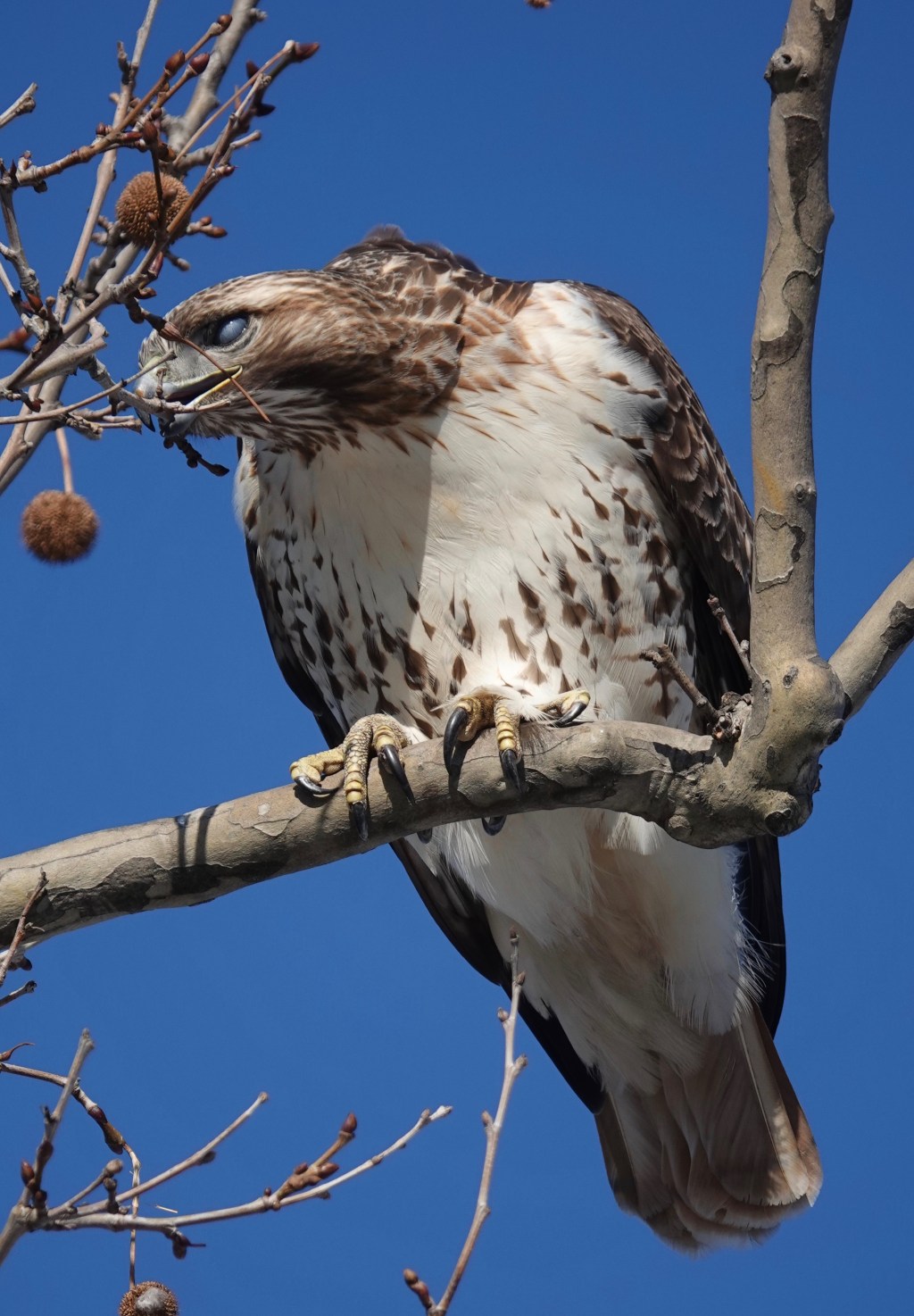
Trying a few branches…. This is something I’ve learned from observation: the wood they collect for nests is not off the ground, which is perhaps too suspect, but snapped from trees. This adult Red-tailed Hawk was right overhead in a couple of the London Planes lining 5th Avenue at the edge of Sunset Park.
-
Waterfowl
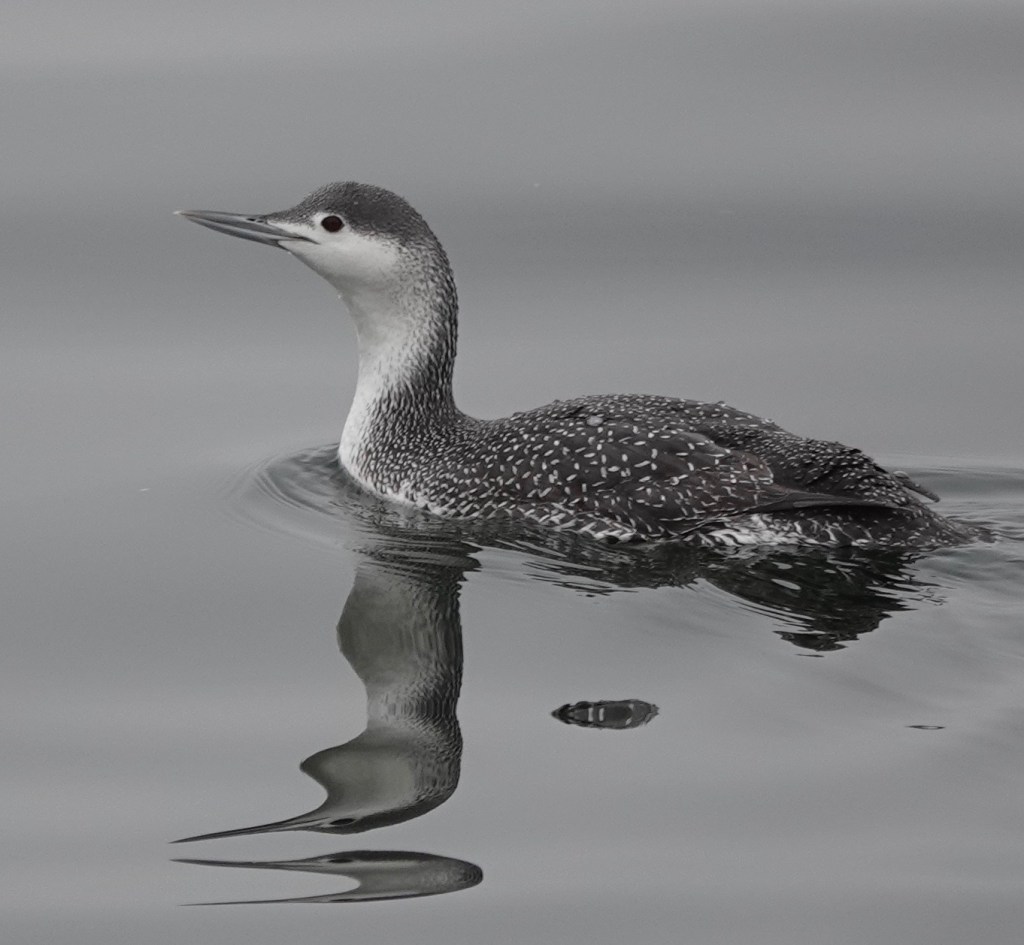
Common Loon/Gavia immer off Murre Point, as I’ll call this spot. Red-throated Loon/Gavia stellata. Love those still water reflections. Red-breasted Merganser/Mergus serrator Double-crested Cormorant/Nannopterum auritum One of the Scaup/Aythya; Greater, I think. Further out in the bay, a Surf Scoter/Melanitta perspicillata. The male’s colorful bill and back-of-the-neck white patch helps with ID from a distance.…
-
Murre Monday
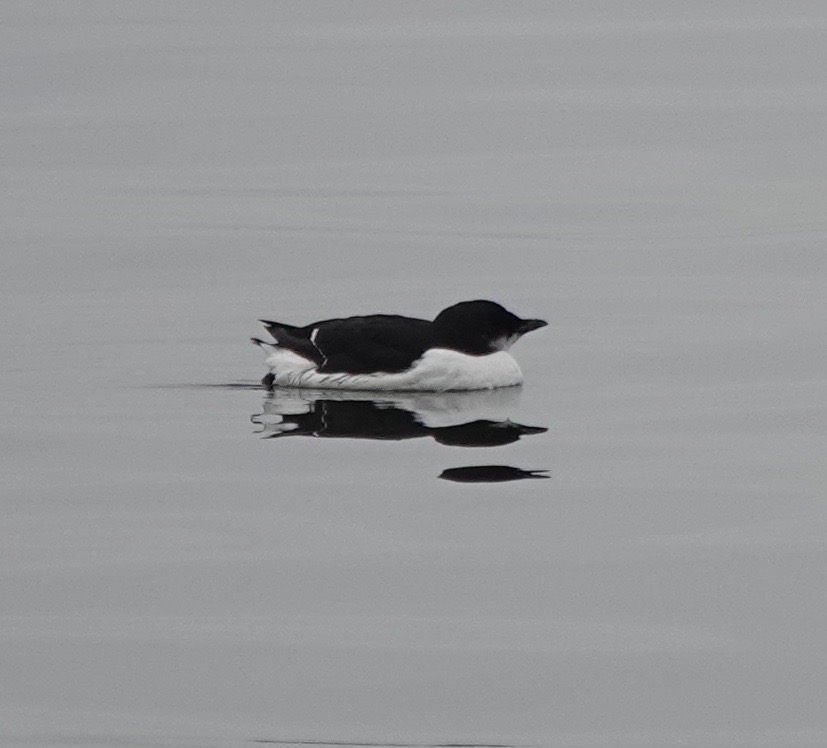
A Thick-billed Murre/Uria lomvia was floating off the tip of… well, I’m not even sure what to call it, the small corporate amenity park behind the BJ’s parking garage on Gravesend Bay. This is a very rare bird for Brooklyn/Kings Co. Several have suggest this individual is ill, because none of the observers have seen…
-
Aways Bee Feasting
I’d heard and seen a few reports of the lingering Baltimore Orioles in the Dell Water eating dead Honeybees scattered around the hives. The day I visited, it was in the mid 40sF and some bees were out and about. This Oriole was grabbing live ones. Picking them off at the hive entrances, sometimes reaching…

-
Tufted vs. Cocoon
Tufted Titmouse finds a big Polyphemus moth cocoon. And starts excavating. After the bird flew off. There was still a lot of stuff in there, and I thought the bird might return. I looked again the next day, but the pale green interior seemed intact, but was it still viable?

-
Raptor Wednesday
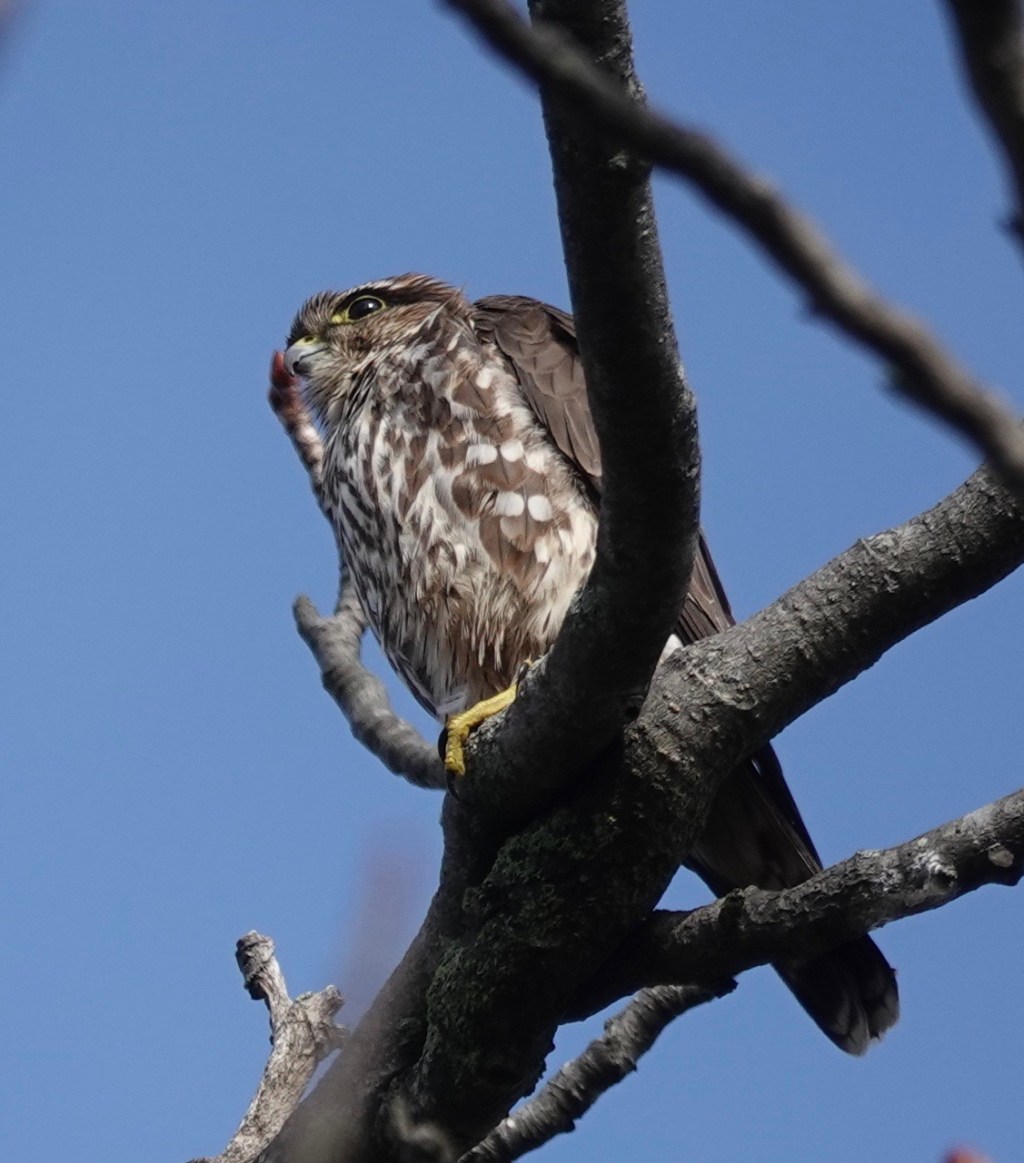
Since December, I’ve seen a Merlin perched on the antenna at 40th and 5th Avenue four or five times. Each time has been between 7:20-7:45. Merlins are known to perch for a long time on the same spot, but these are brief stops. Photos of these sightings have been awful. The warm lens indoors doesn’t…
-
Flash [Fish Crow] Mob
Two of many at this corner of 4th Avenue where the air is filled with grease, for some reason. At least 60 crows. They were mostly silent, but finally a couple started sounding like Fish Crows. They generally patrol the shoreline, four avenue blocks from this location, but they also seem to roost inland. Many…

-
Subscribe
Subscribed
Have a WordPress.com account? Log in now.

