mthew
-
Two More Mountain Minters
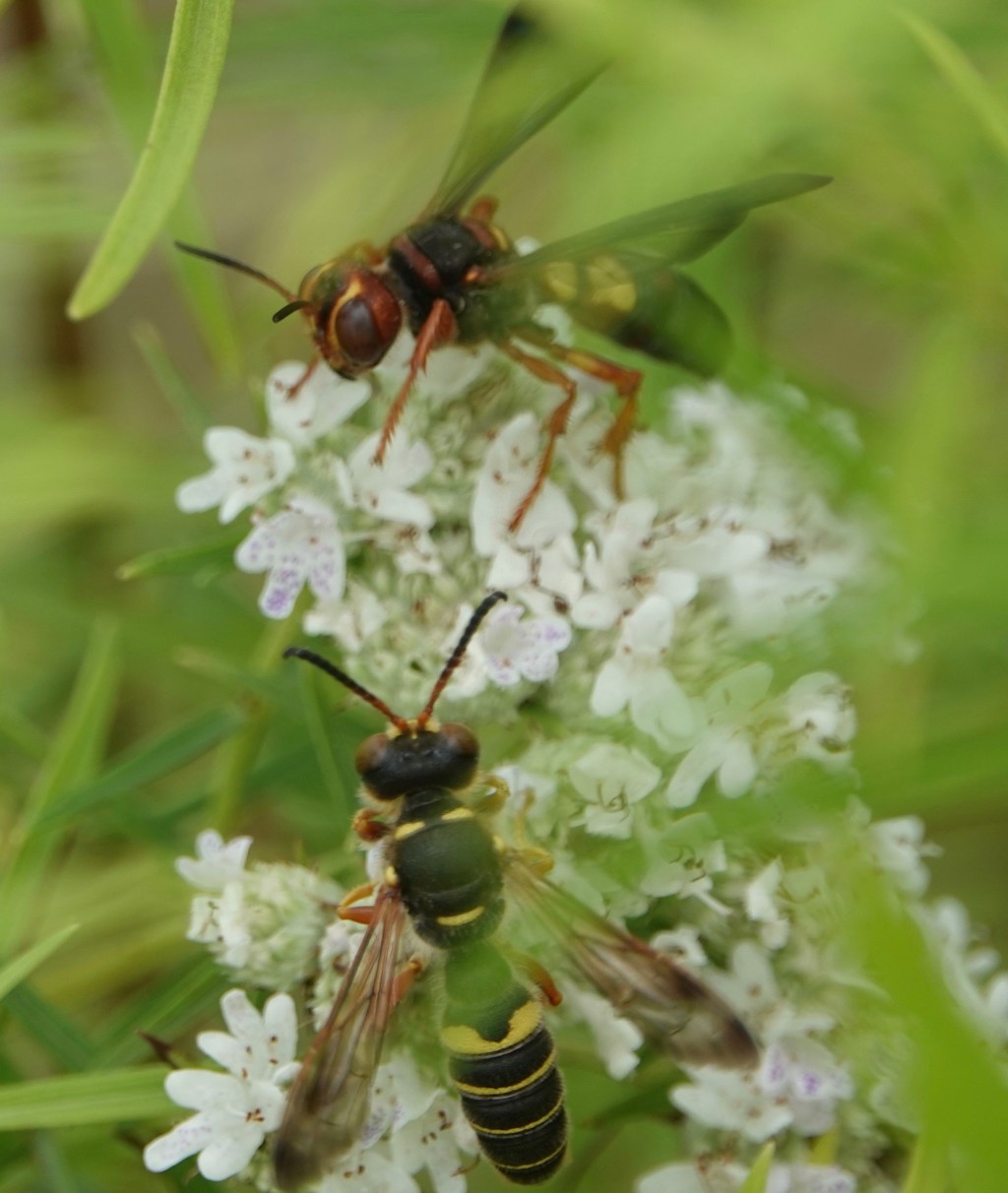
One of the Ammophila thread-waisted sand wasps. Perhaps A. nigricans. (There are some 62 species in this genus in North America according to bugguide.net.) These are caterpillar and sawfly larvae hunters. Now, this surprised me. I mean, look at this beast: everything here says wasp. It is, however, a Two-banded Cellophane-cuckoo Bee/Epeolus bifasciatus. Family Apidae…

-
Return to the Mountain Mint
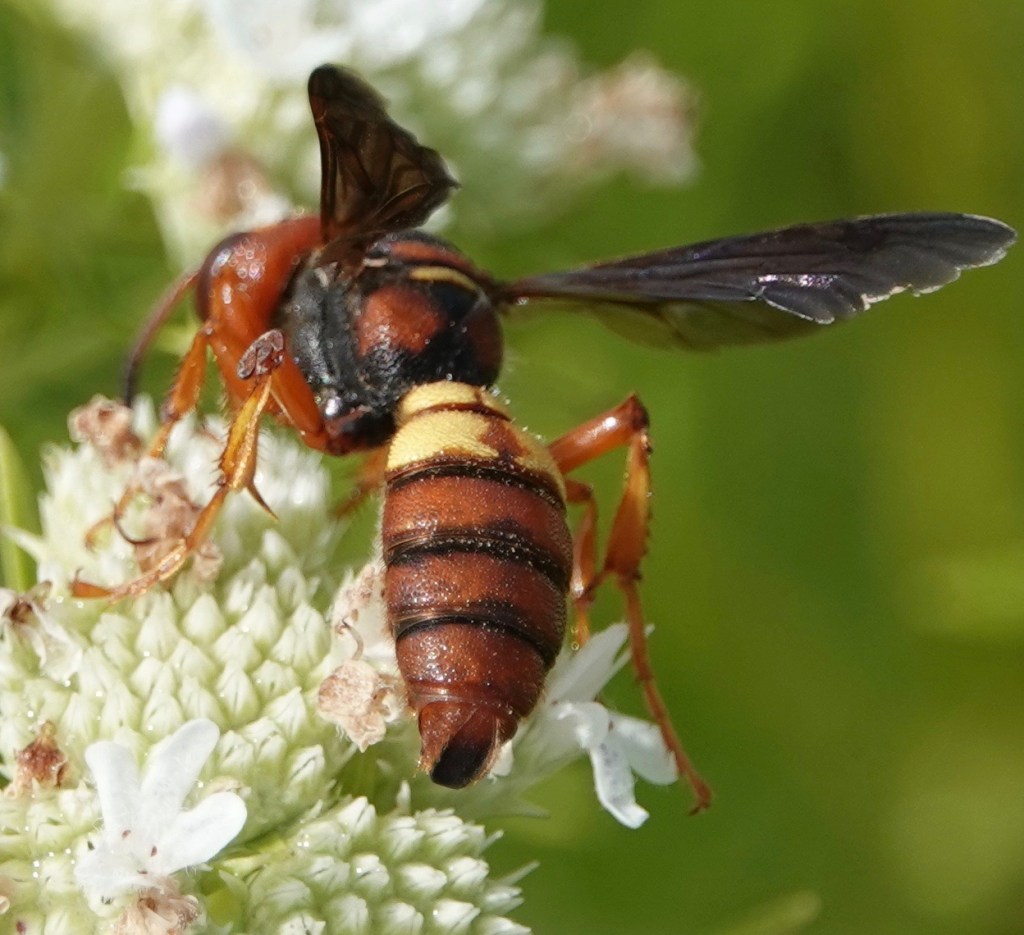
Above are two images each of the three major color variations I observed of female Cercis bicornuta. Below are a couple of variations on the male:
-
End of an Era
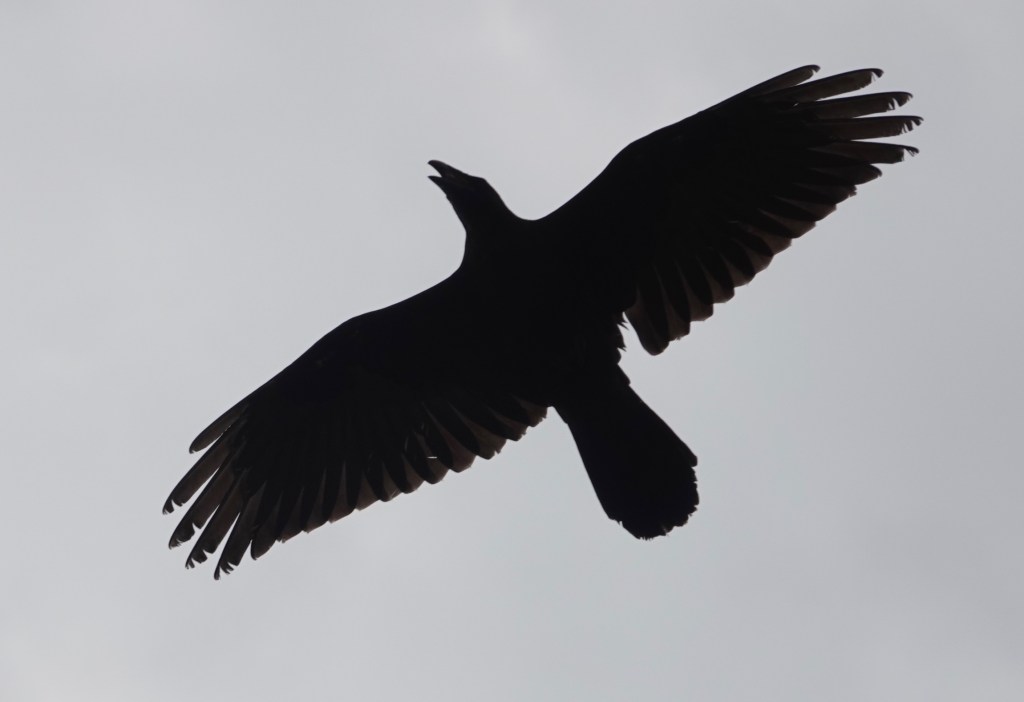
Last week, they took down the old warehouse at South Brooklyn Marine Terminal. With it went the long-time Common Raven nest. Ten days earlier, I saw two Ravens from nearby Bush Terminal Park. The area between the park and 1st Avenue is also slated for big developments, in this case a move/TV studio. Early yesterday…
-
Mountain Mint Wasps Continued
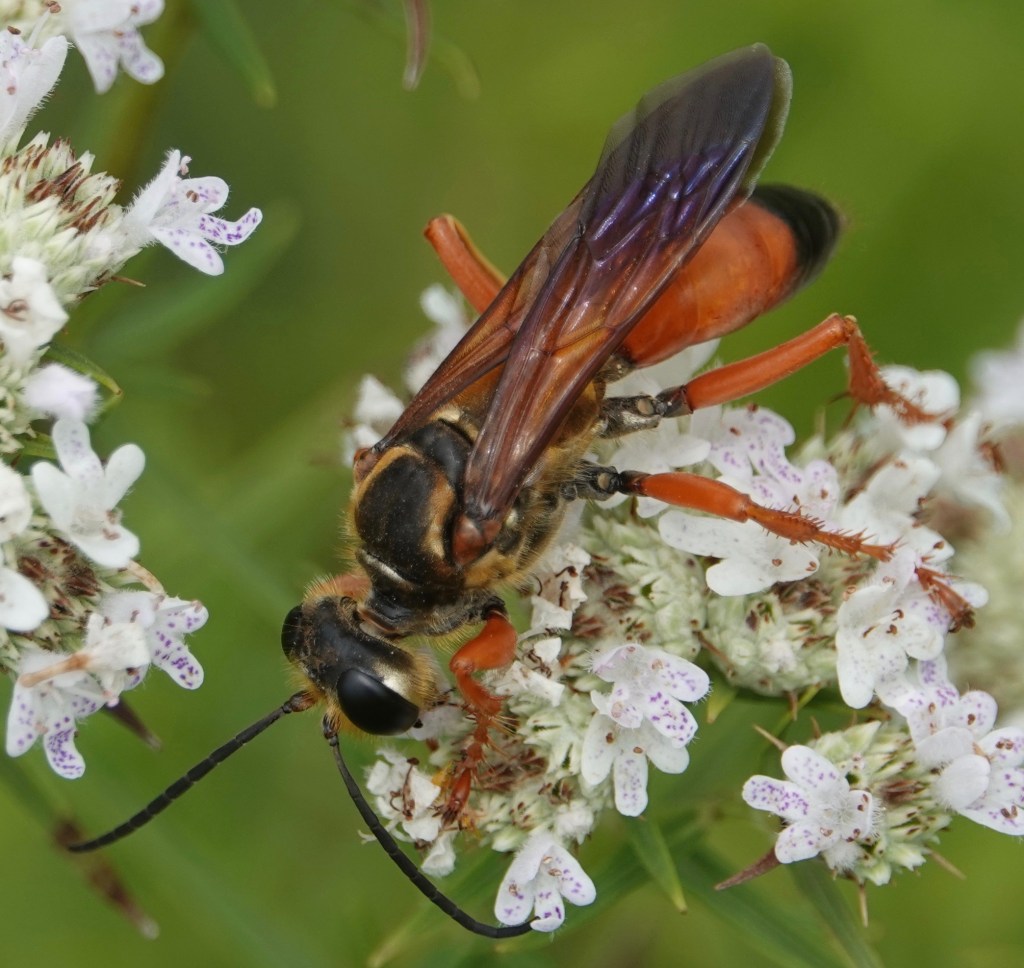
Four-toothed Mason Was/Monobia quadridens. Prey: small moth caterpillars. Great Black Digger Wasp/Sphex pensylvanicus. Katydids. Great Golden Digger Wasp/Sphex ichneumoneus. Katydids. Parker’s Thread-waisted Wasp/Prionyx parkeri. Grasshoppers. Yellow-legged Mud-dauber Wasp/Sceliphron caementarium. Spiders. Hump-backed Beowulf/Philanthus gibbosus. Ground-nesting bees. Hidalgo Mason Wasp/Euodynerus hidalgo. Moth caterpillars. Ammophila pictipennis. Moth and skipper caterpillars. Noble Scold Wasp/Scolia nobilitata. Scarab beetle larvae.
-
Wasps On Mountain Mint
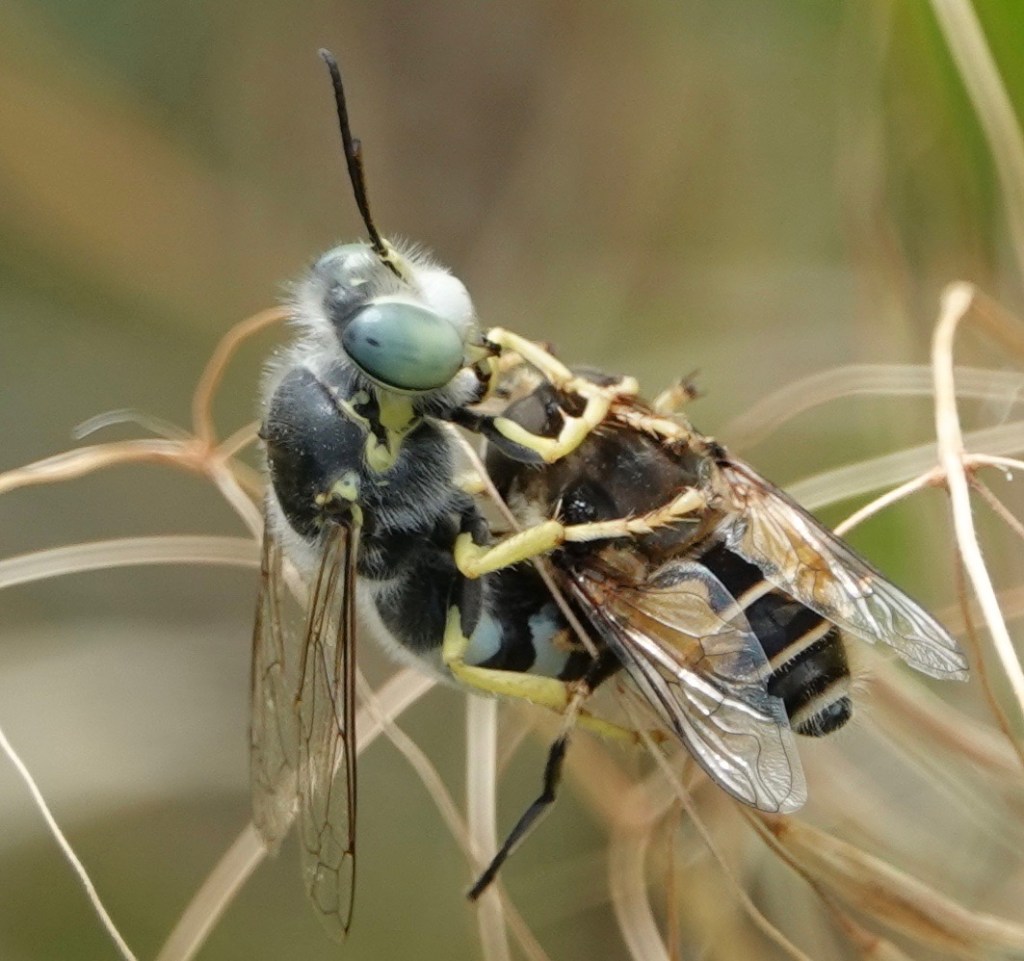
American Sand Wasp/Bembix americana. Here’s another. The most frequently seen wasp on these flowers at Bush Terminal. There’s a good bit of sandy soil around, which is what these nest in. They feed their young flower flies. Not maggots, adult flies. Bicyrtes ventralis. This is another sand wasp (Bembicinae), a hunter of true bugs. First…
-
A Swath of Mountain Mint
Amidst the general chaos and despair of Bush Terminal Park, ecologically speaking, this strip of Pycnanthemum has been bringing all the pollinators to the yard. I think it’s Narrowleaf Mountainmint/P. tenuifolium, one of a several species of this pollinator-magnet, and this is its first year. Various bee and butterfly species were feasting on these tiny…
-


 Backyard and Beyond