




Starting out from Brooklyn, an amateur naturalist explores our world.
As John Burroughs said, “The place to observe nature is where you are.”
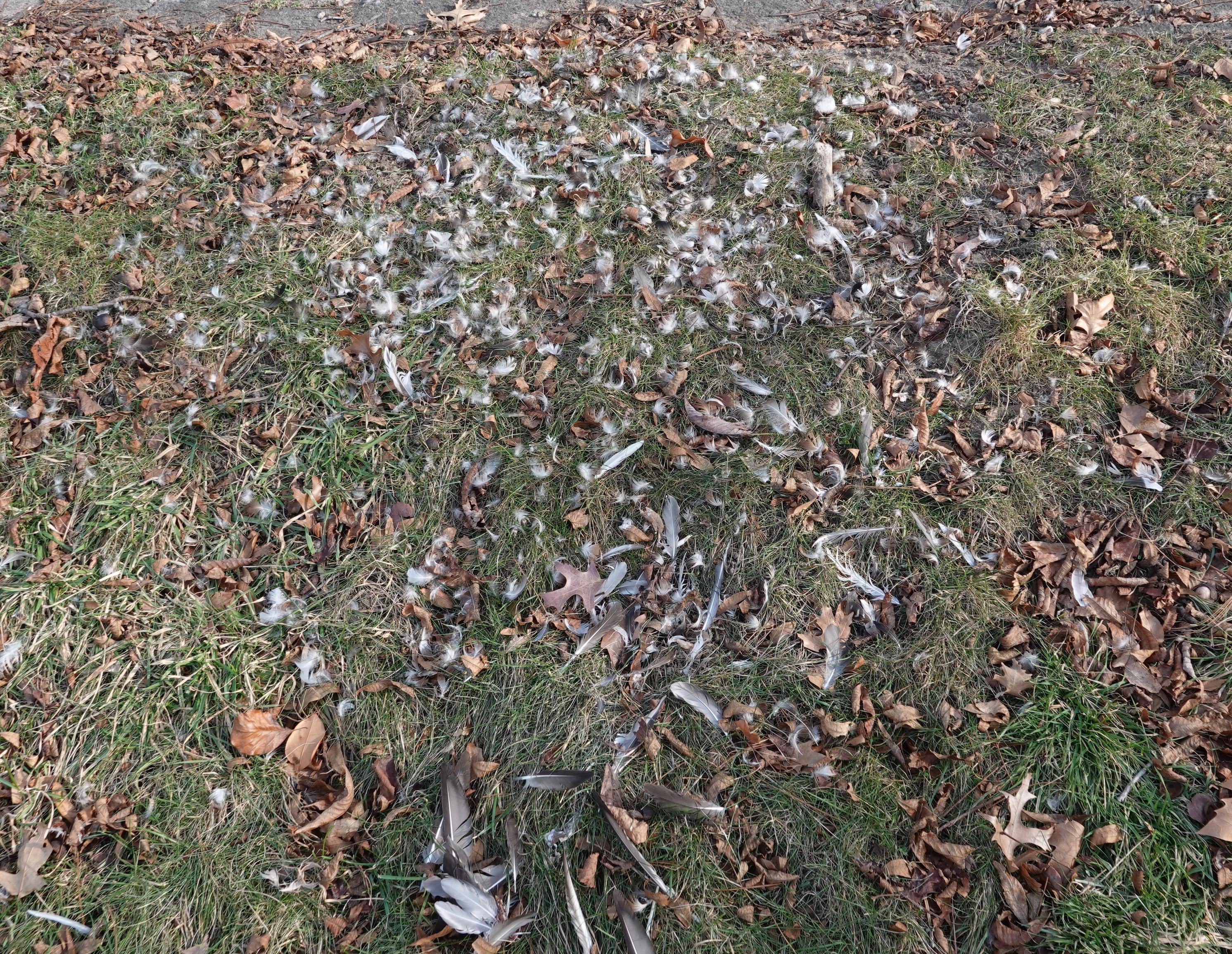
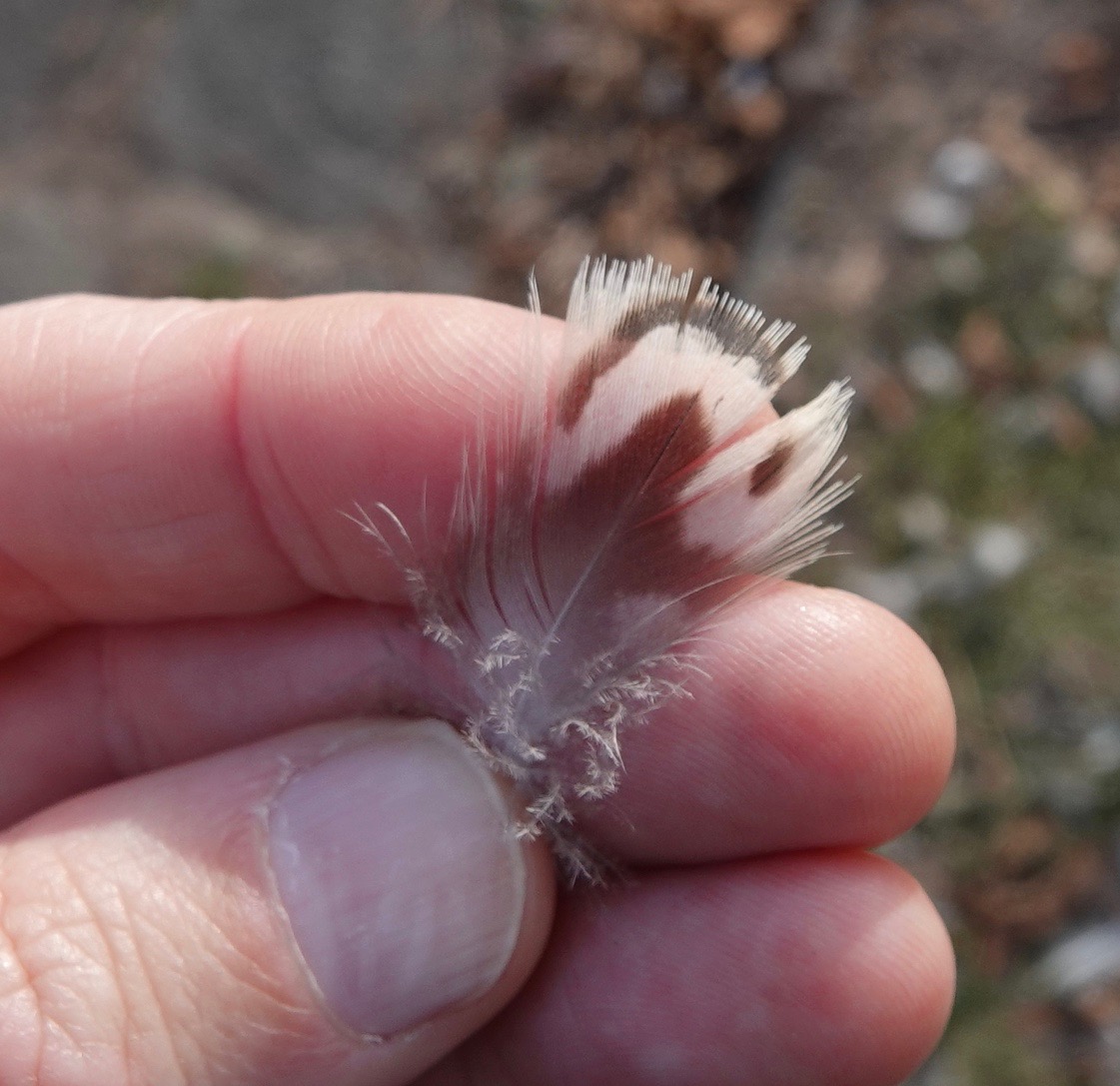
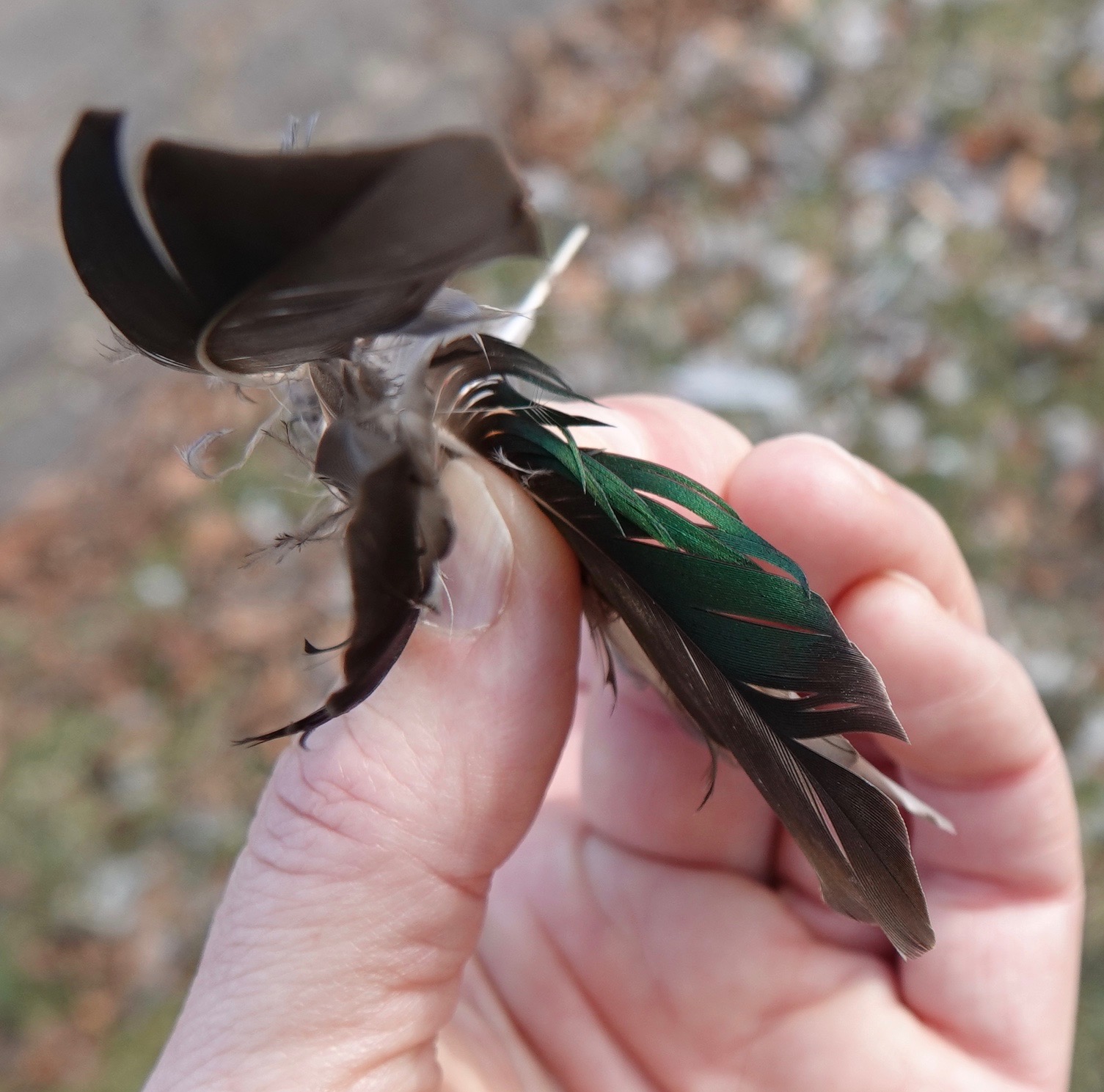
Unless it spontaneously exploded we have to assume it was intercepted en route. It would take a peregrine or larger raptor to down the duck, but we can’t tell from the debris field which species had lunch. However, successful capture locations tend to be reused, so a repeat performance is possible. Maybe somebody will get lucky.
Interesting. Your deduction sounds plausible.
Look at City Birder post yesterday and see the Shoveler sitting in a field.
Great blog mthew. I need to learn lot actually have not given any time for this even I see and finds the feathers along the way
We see a lot of Coopers and Red Tail hawks picking-up-dinner from our yard. We call it a “feather bomb”. Most of the time the hawk takes his prey to-go, but I’ve seen them sit at the “bomb site” and devour it there, picking-off as many feathers as she can in the process. Not a pretty sight!
Not pretty, but impressive. I have watched American Kestrels capture, kill and shuck all kinds of smaller birds. They have a routine they follow for all their prey, even dragonflies! An adept adult can prepare a meal for young in a little over a minute. A beginner can take over ten minutes to even kill the prey species. This can get pretty ugly, but they eventually learn the drill.
 Backyard and Beyond
Leave a reply to Monica M Cancel reply