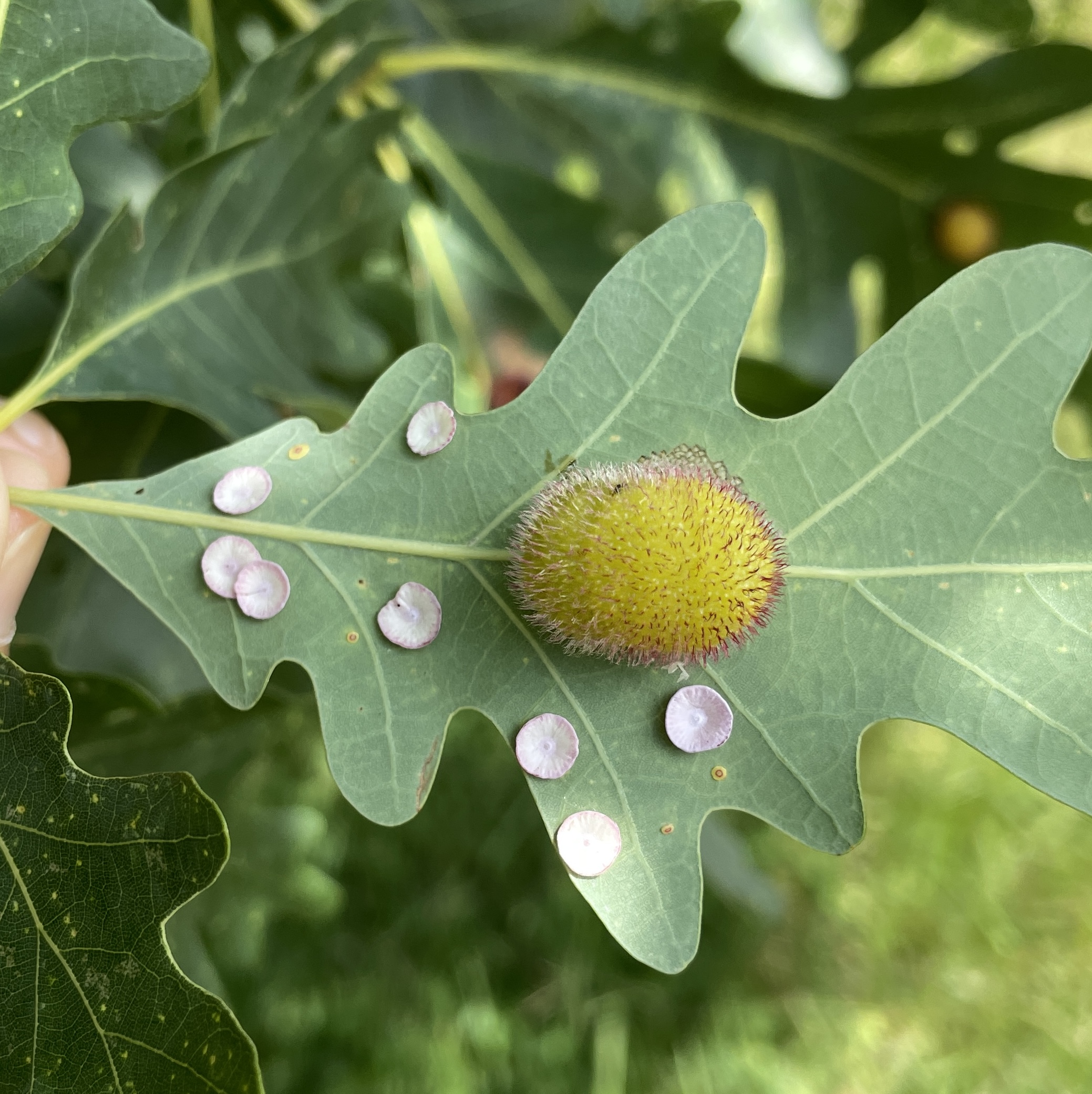
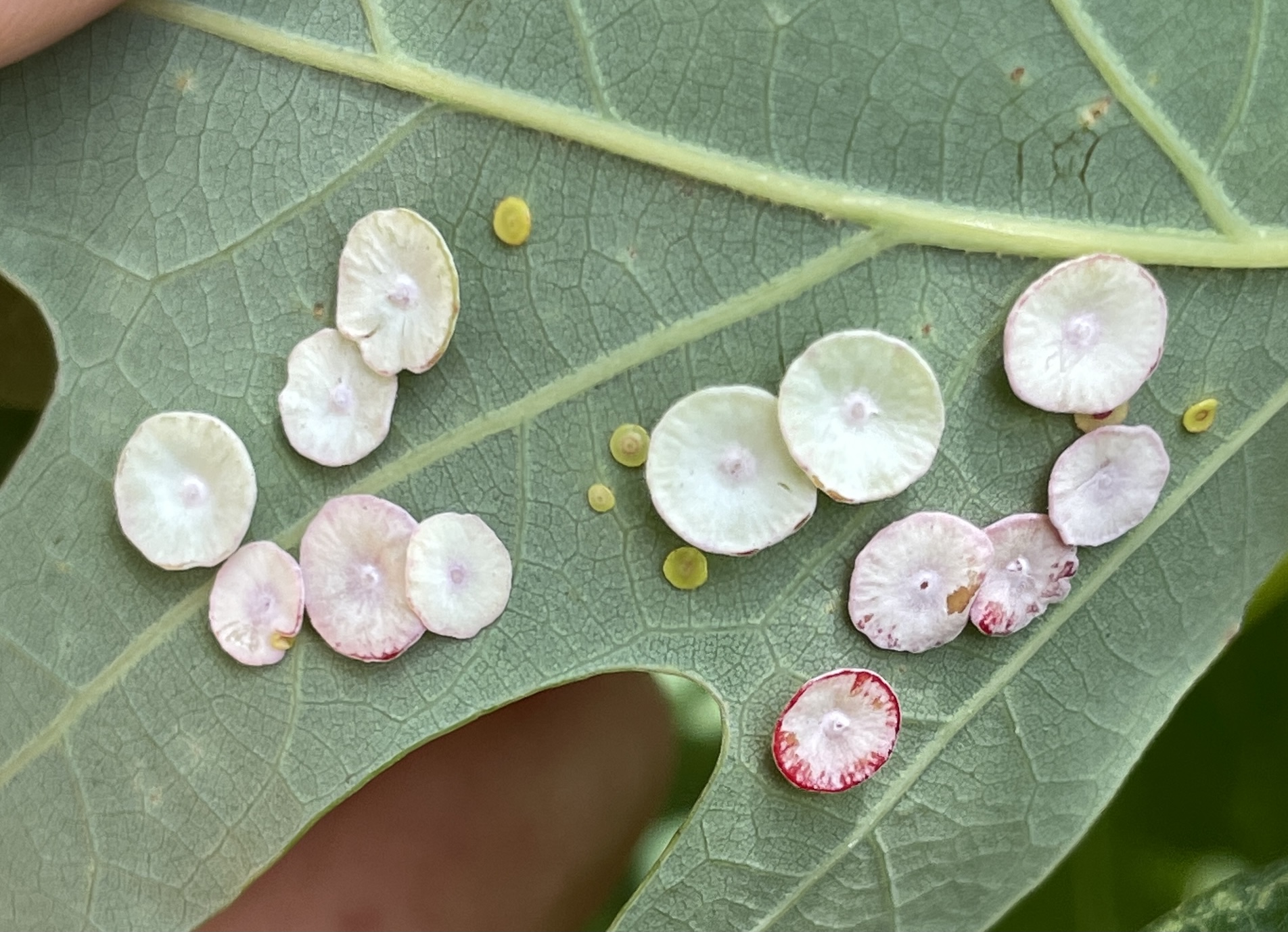
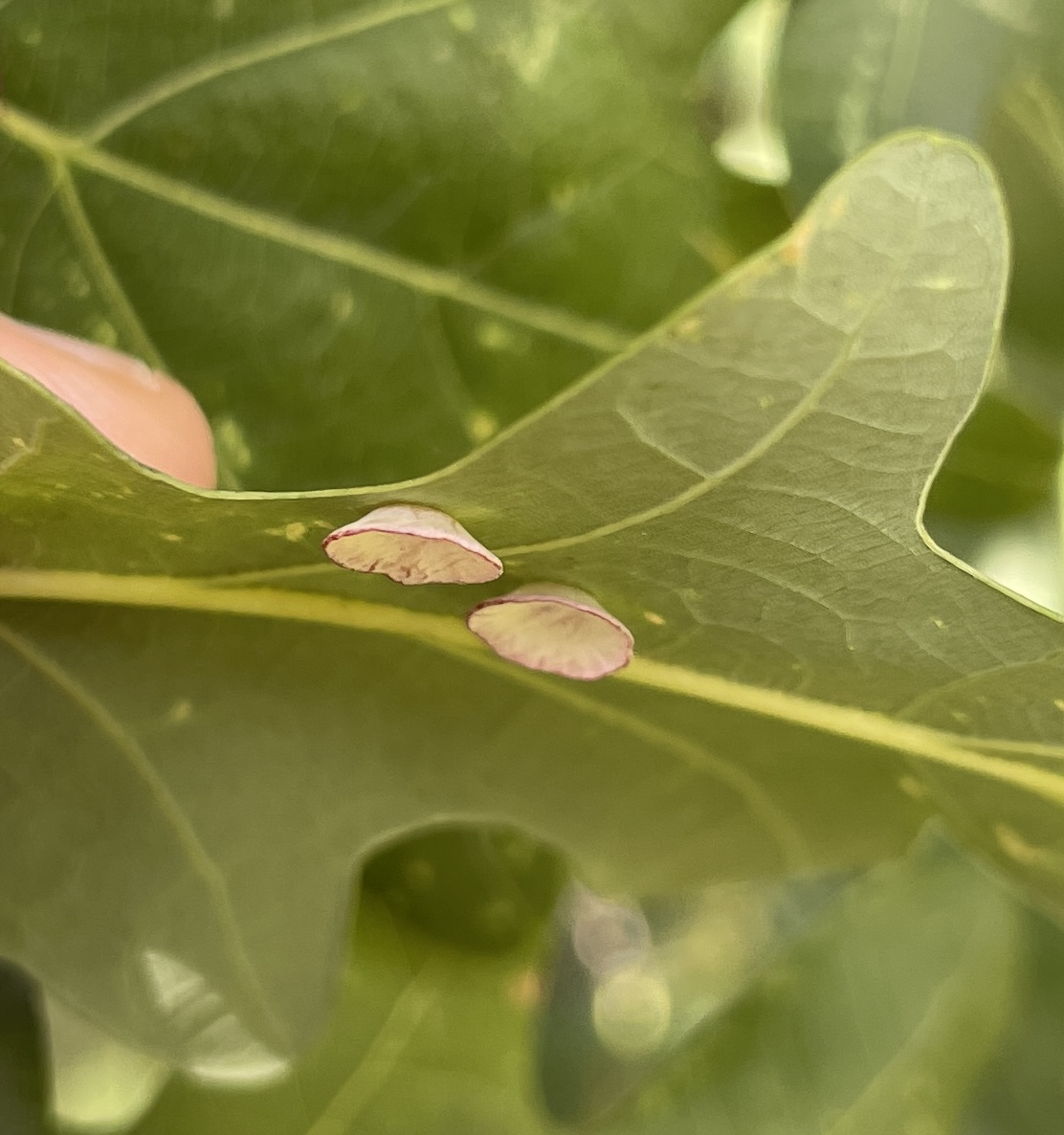
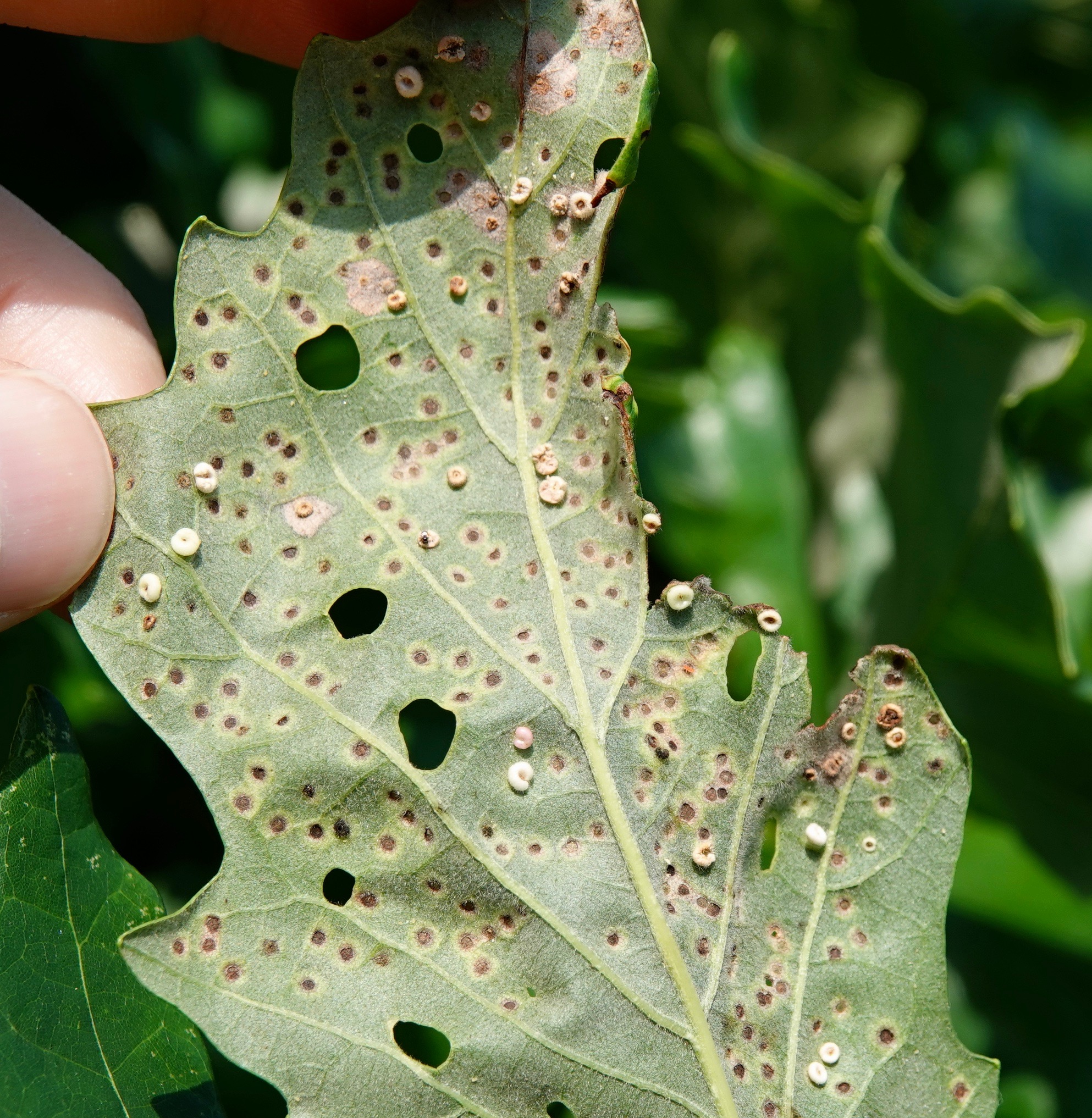
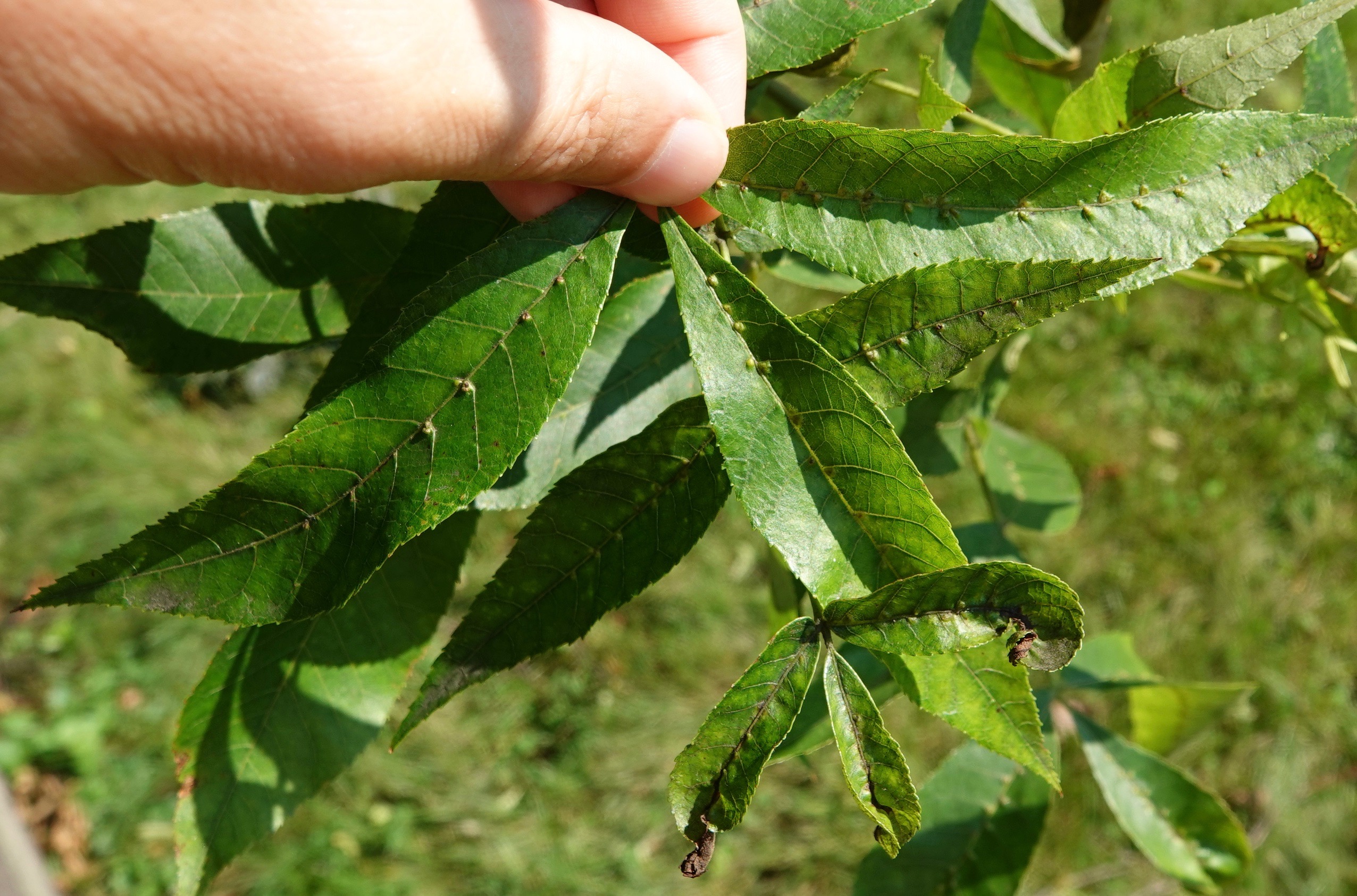
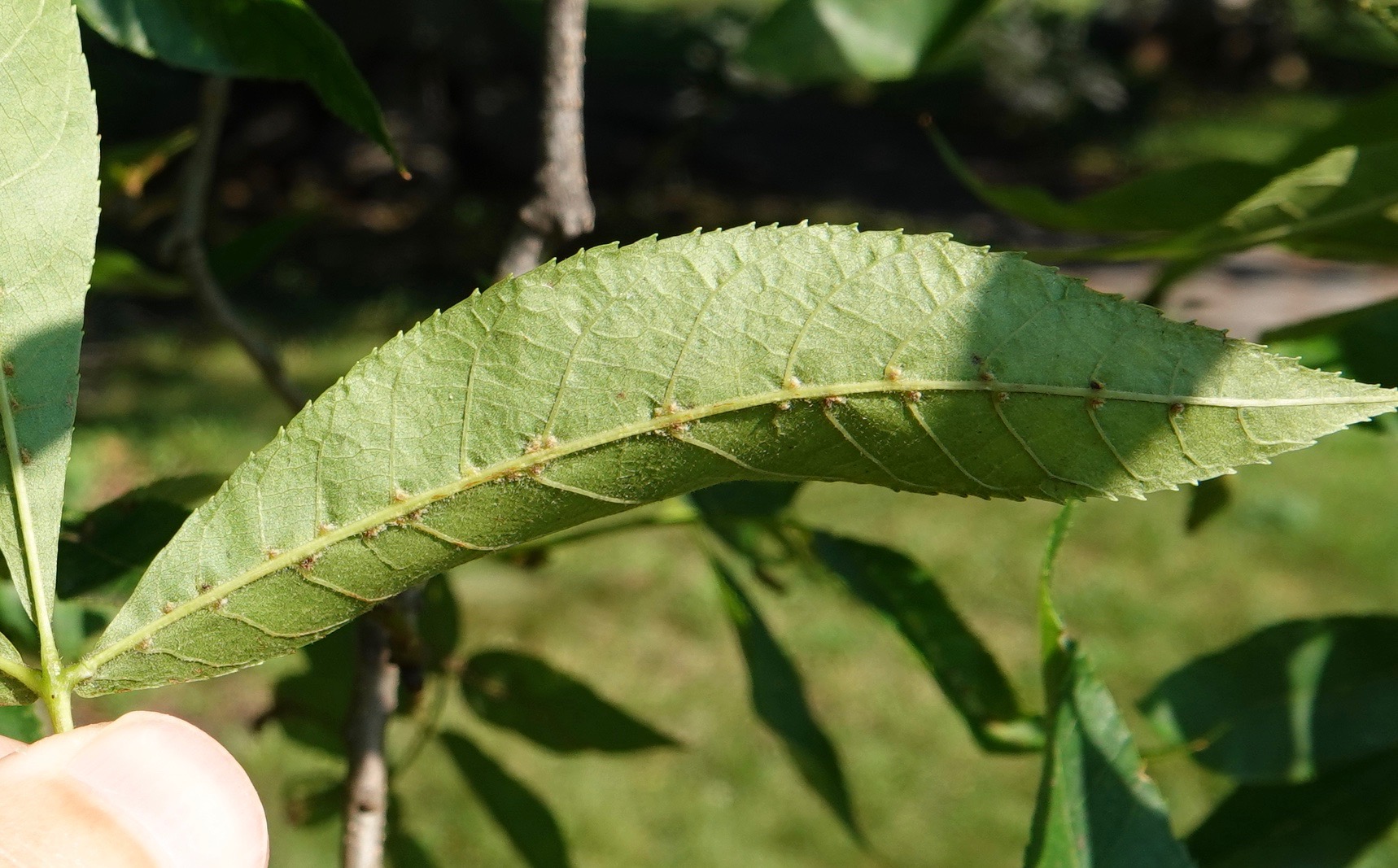
By rough count, I have 77 wasp, midge, mite, and aphid gall-inducers logged on iNaturalist, most of them in Brooklyn, and most of these in Green-Wood Cemetery.
Starting out from Brooklyn, an amateur naturalist explores our world.
As John Burroughs said, “The place to observe nature is where you are.”
By rough count, I have 77 wasp, midge, mite, and aphid gall-inducers logged on iNaturalist, most of them in Brooklyn, and most of these in Green-Wood Cemetery.
So, where are the swarms of ladybeetles and other such predators that should be feeding on these galls?
The galls themselves are plant material which serve to both shelter and feed the inducer larvae within. Not a lot of things eat the actual galls. I’ve seen holes on woodsy bullet galls that suggest woodpeckers have been at work. The lifeforms within is juicy, of course, but it’s relatively protected. There are some parasitic wasps who lay their eggs inside the galls, the resulting larva eating the original gall-inducer larva.
To quote my brother, “everybody is on somebody’s menu at dome time”. I expected there to be a long list of predators and parasites taking advantage of this food source. Go figure.
 Backyard and Beyond
Leave a reply to mthew Cancel reply