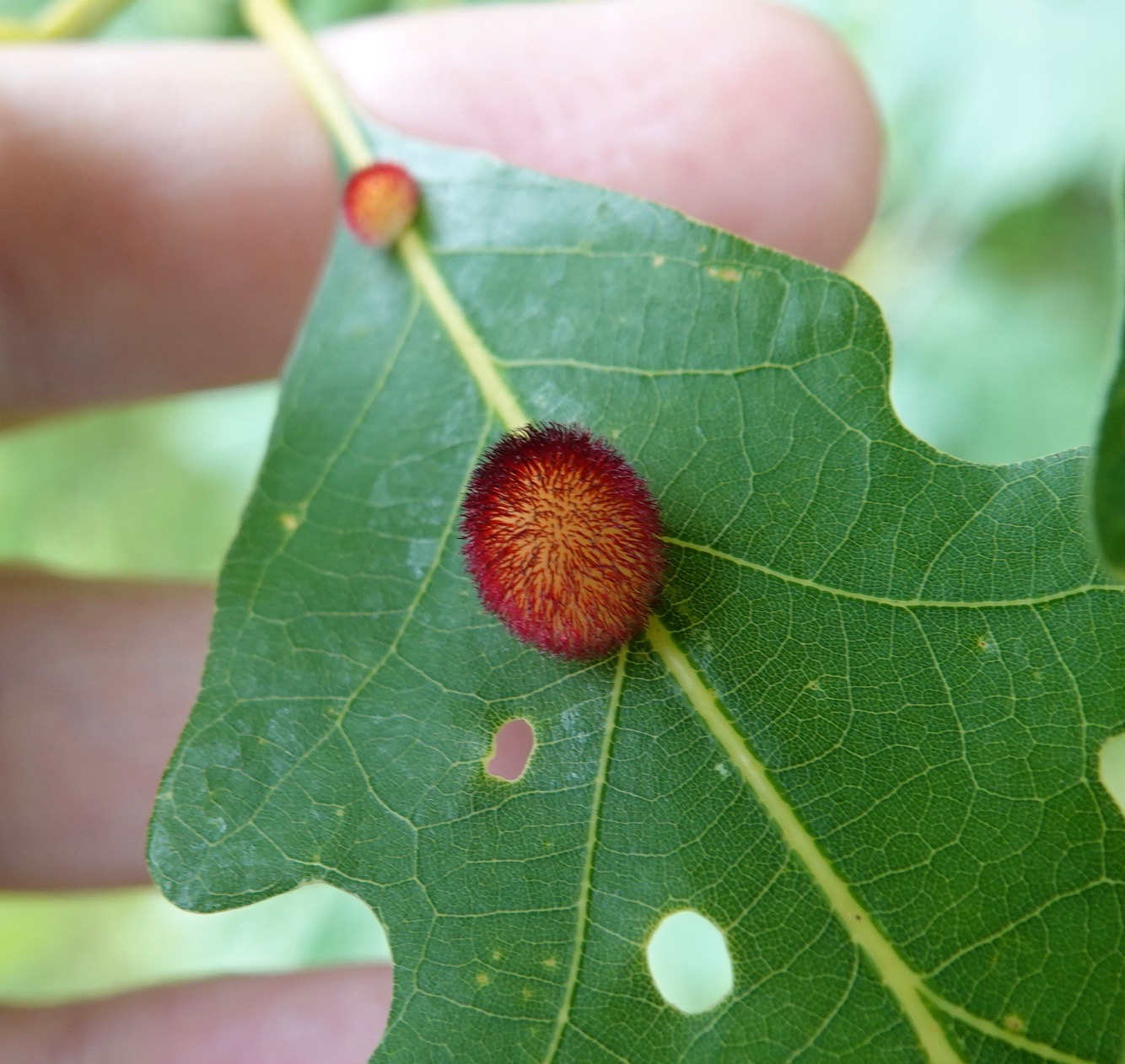
 Why, they’re miniature Tribbles! This white oak has been hosting these structures for years now on its leaves. But this is the first time I’ve seen them so fresh. They’ll brown up over the summer.
 A tiny wasp, Acraspis erinacei, known as the Hedgehog Gall Wasp, creates these in conspiracy with the tree. Essentially the wasp hijacks the tree’s chemistry to protect its young. The tree is not harmed. Come the fall, females will emerge from these and lay their eggs on the oak’s buds. Those bud gall wasps will emerge next year and start the process all over again by moving to the leaf.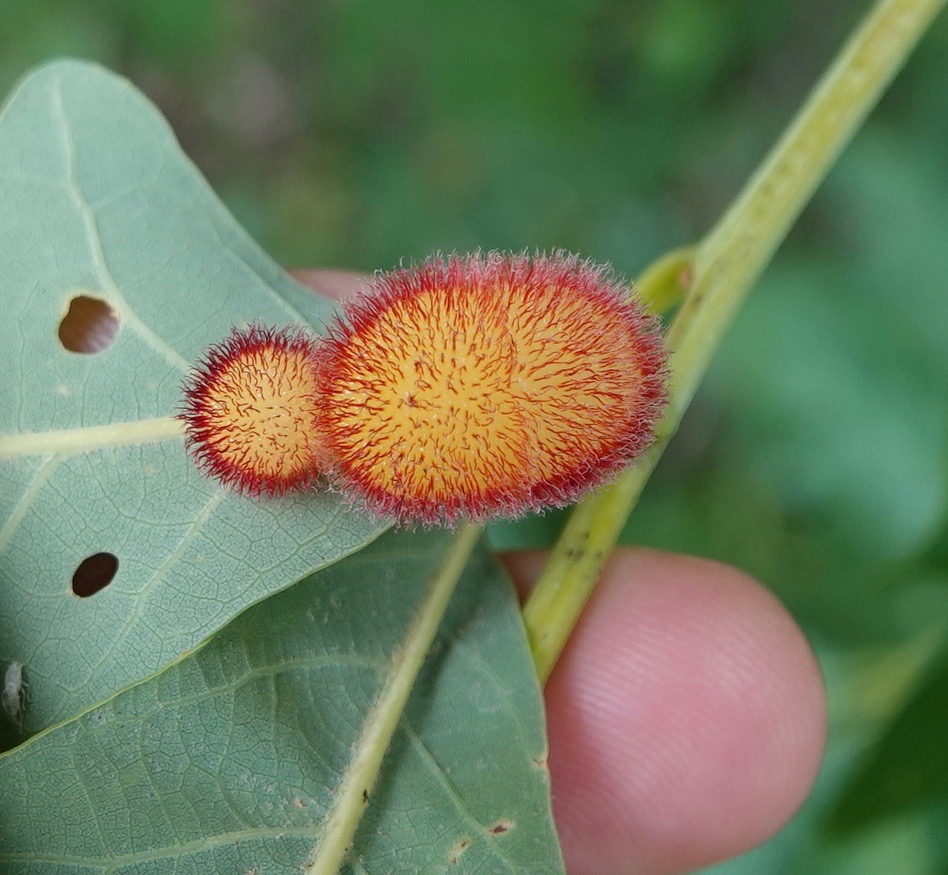
Hedgehog Galls
6 responses to “Hedgehog Galls”
-
gee now i know! thanks.
-
[…] in response to insects (in these cases) who lay their eggs on the tree. This one is, I think, a Hedgehog Gall. Not sure on this species. Nor this. This one was much smaller and looked like […]
-
Found one yesterday in NW Sussex County, NJ. Have never observed them before – lived here 35+ years. (But I remember seeing brown galls later in the year, maybe ‘mature’ hedgehog galls?). Thanks for being here – learned something entirely new today!
-
Once you start looking at oaks, the galls will show themselves. The hedgehog galls do tend to brown/tan out into the fall, losing this wild red.
-
-
Spectacular info…I just spent my entire lunch hour researching the Acraspis’s, one prinoides and one erinacei, both galling the same oak leaf. thank you.
-
https://www.gallformers.org is a great source if you don’t know of it.
-
 Backyard and Beyond
Leave a comment