 One of several Eastern Newts (Notophthalmus viridescens) in the high reservoir at Black Rock Forest recently. The red-spots are telling here, identifying the animal (another common name is Red-spotted Newt) and warning predators to lay off. This is the mature, aquatic stage of the animal’s life-cycle. They can live more than a dozen years. As juveniles, a.k.a. Red Efts, they are bright orange and live on land. Wet, soggy land.
 The vertically flattened tail is fin-like.
It’s hard to shoot life underwater without the proper filter, even in shallow water. But I did manage to catch these two: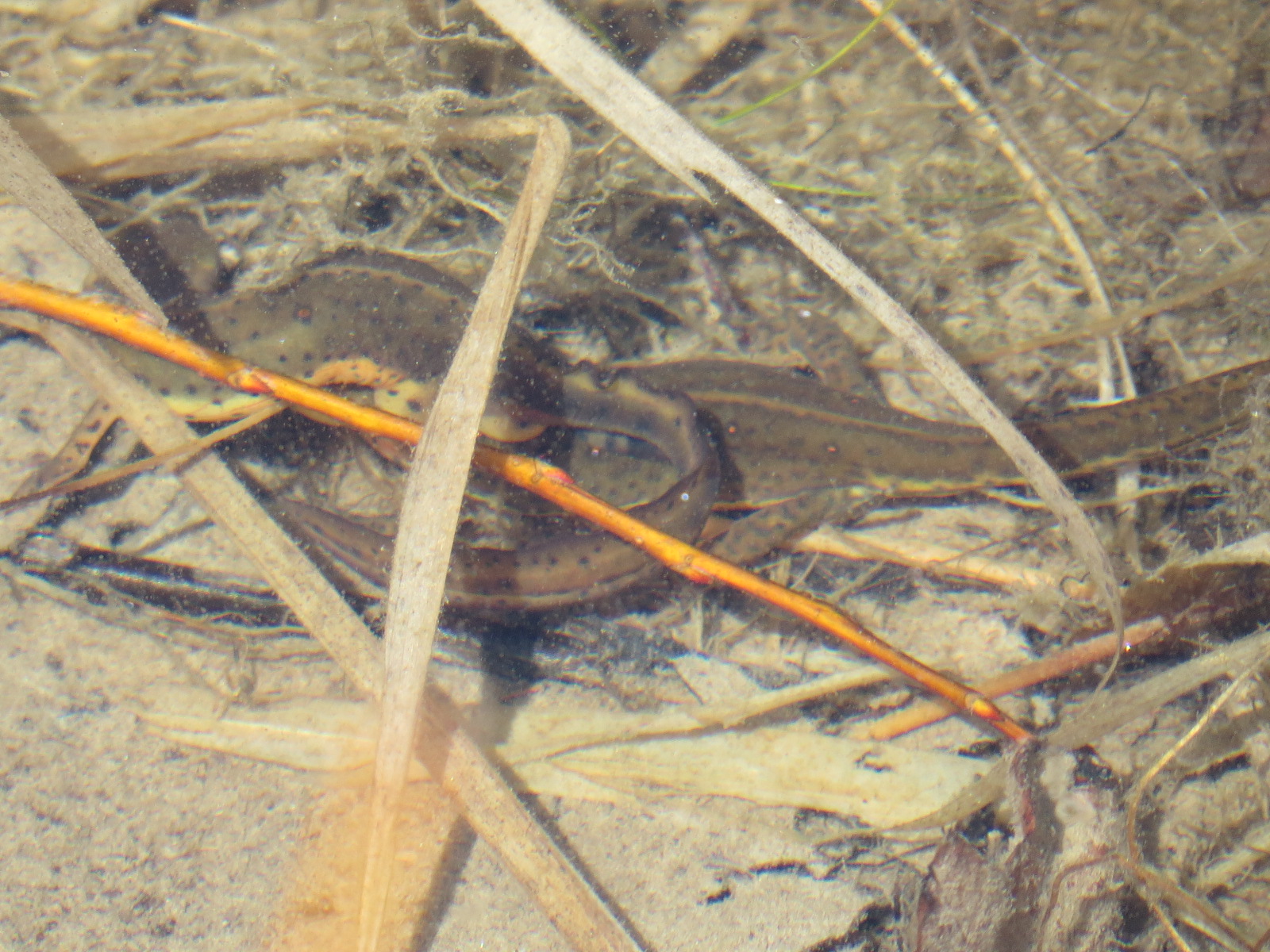 This is a pair in amplexus, a term of amphibian art.
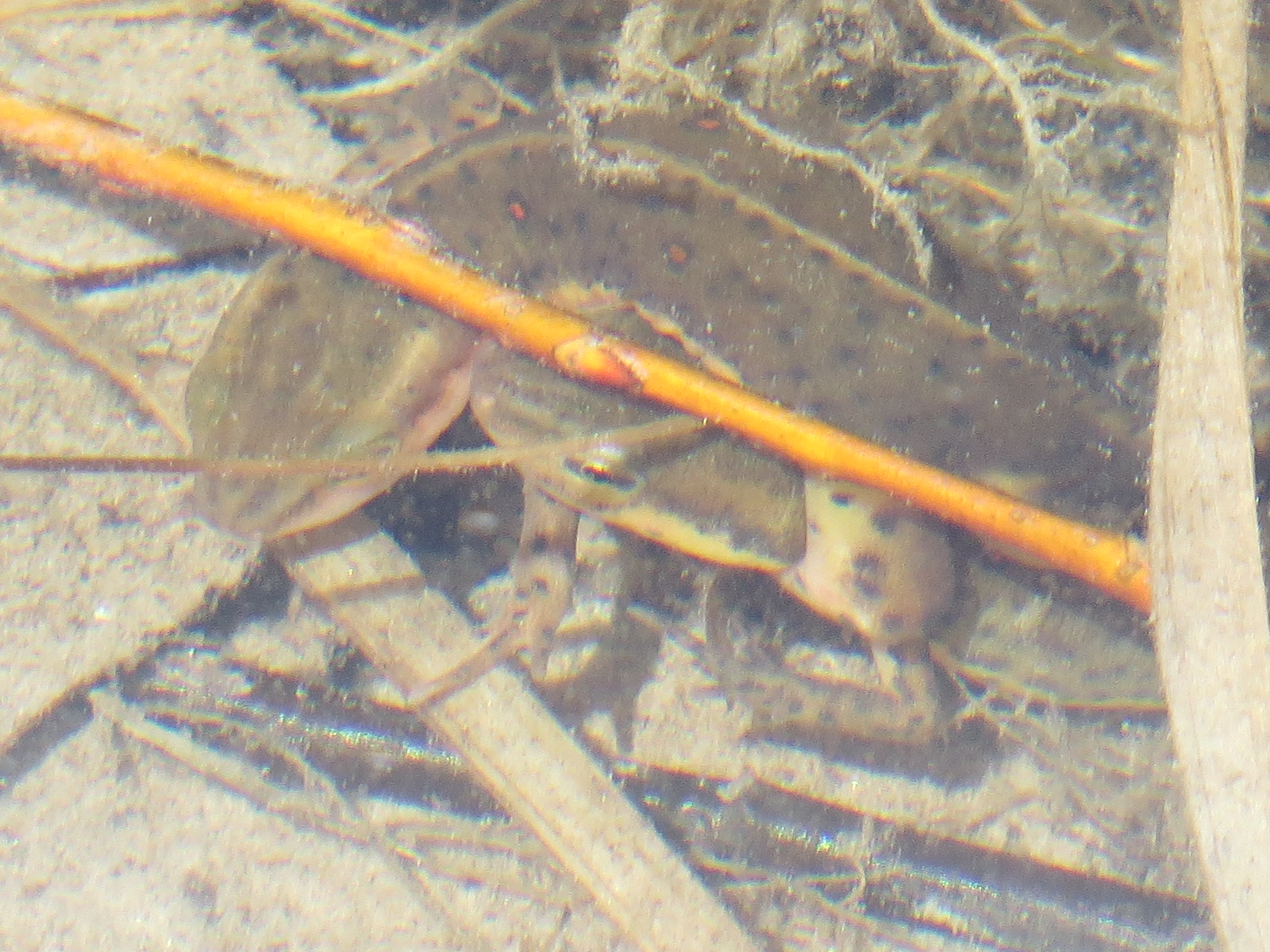 Amplexus is from the Lain for “embrace.” They fertilize externally, but this grasping and caressing by the male is something akin to human foreplay.
I had no idea some people keep these as pets. I don’t think wild animals should be taken from their environment for such uses. One pet guide recommends not handling them much because the salts and oils on human skin can be bad for them. Indeed. How about just leaving them alone?
 Backyard and Beyond
Leave a reply to mthew Cancel reply