 The buck stopped here in what is now Brooklyn; indeed, the buck of glacial ice made Brooklyn and the rest of Long Island, depositing the rubble of rock and soil it had scraped forward until it stopped and retreated and left the jumble behind. Two pulses of glacial activity formed Long Island, leaving ridges that extend out through the North and South Forks; these are called terminal moraines. In Brooklyn the later moraine sort of smeared out the earlier one, so we’ve only one: it has a name — Harbor Hill, capped by Green-Wood and part of Prospect — known to few but geologists, and is best marked by neighborhoods with ridge, heights, hill, and slope as part of their name. Runoff of smaller particles from the moraines made the flatlands to the south, the outwash plain. Rising seawaters then sculpted the Island’s outline.
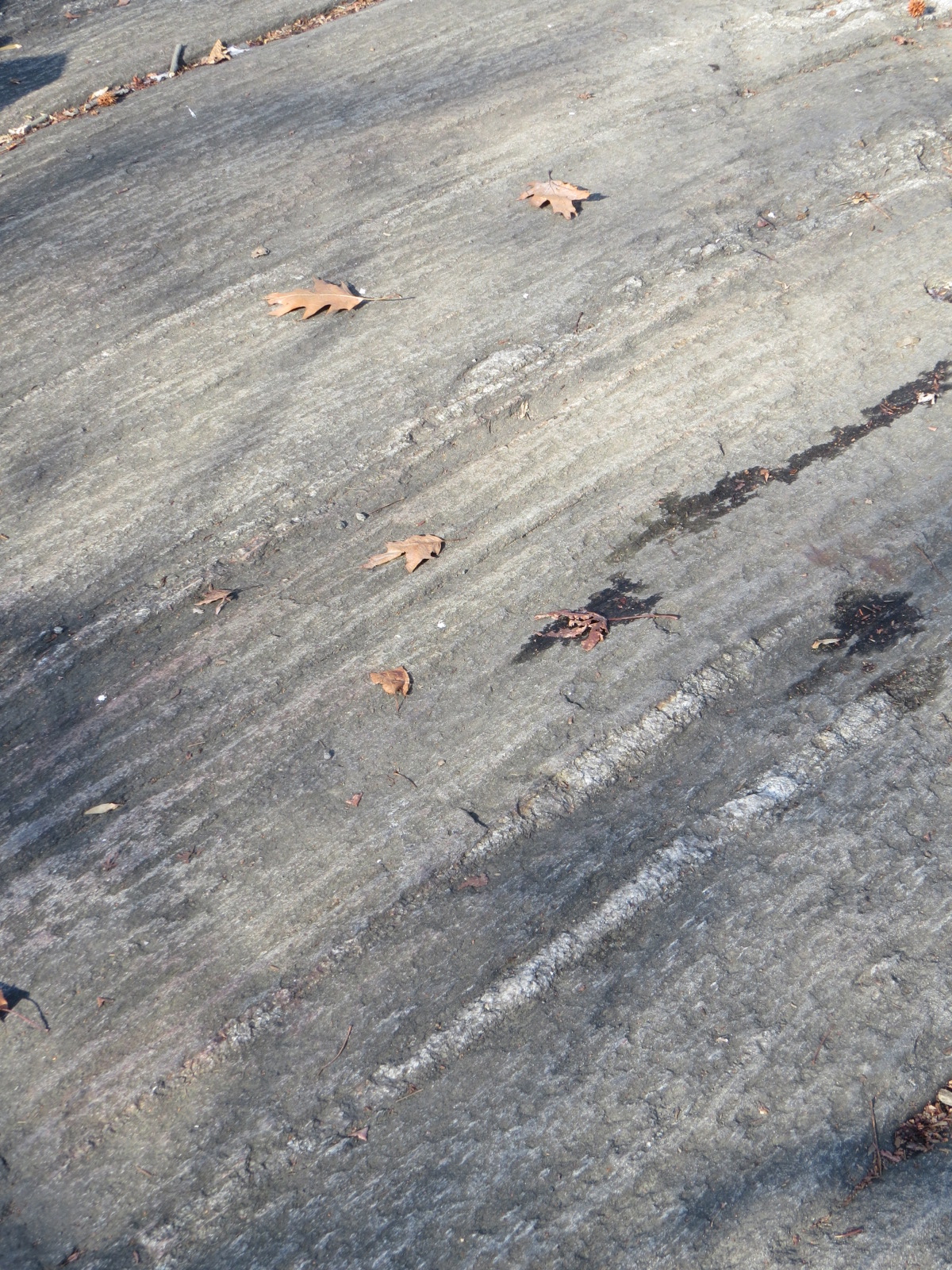
All this to say that you have to go to Central Park and the Bronx to find glacial striations, the grooves ground into exposed rock by the gritty underside of the glaciers. Here’s a patch of schist in the New York Botanical Garden’s forest. The groves run NW-SE, the direction of the ice. 10,000 or so years of erosion have softened them a bit.
 Backyard and Beyond
Leave a reply to Lisa Cancel reply