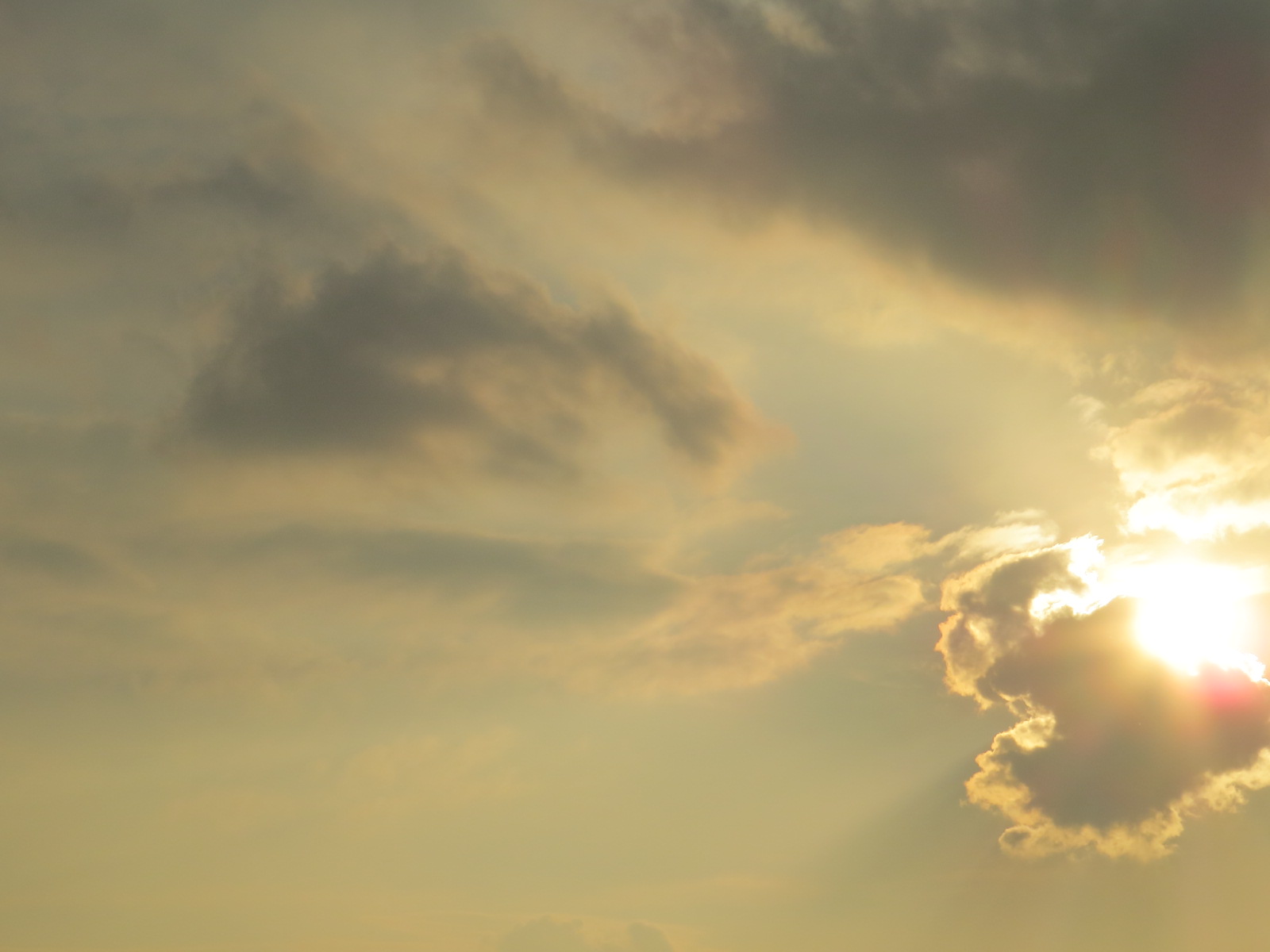
 What could be better than being on the water of the NYC archipelago on a summer twilight? NYC Audubon’s Harbor Heron Cruises go up the East River tidal strait, passing under the Brooklyn, Manhattan, Williamsburg, 59th Street, Triboro/RFK, and Hell Gate bridges to check out the local rookeries. (A century and more ago, a rookery in the city would have meant something else indeed.)
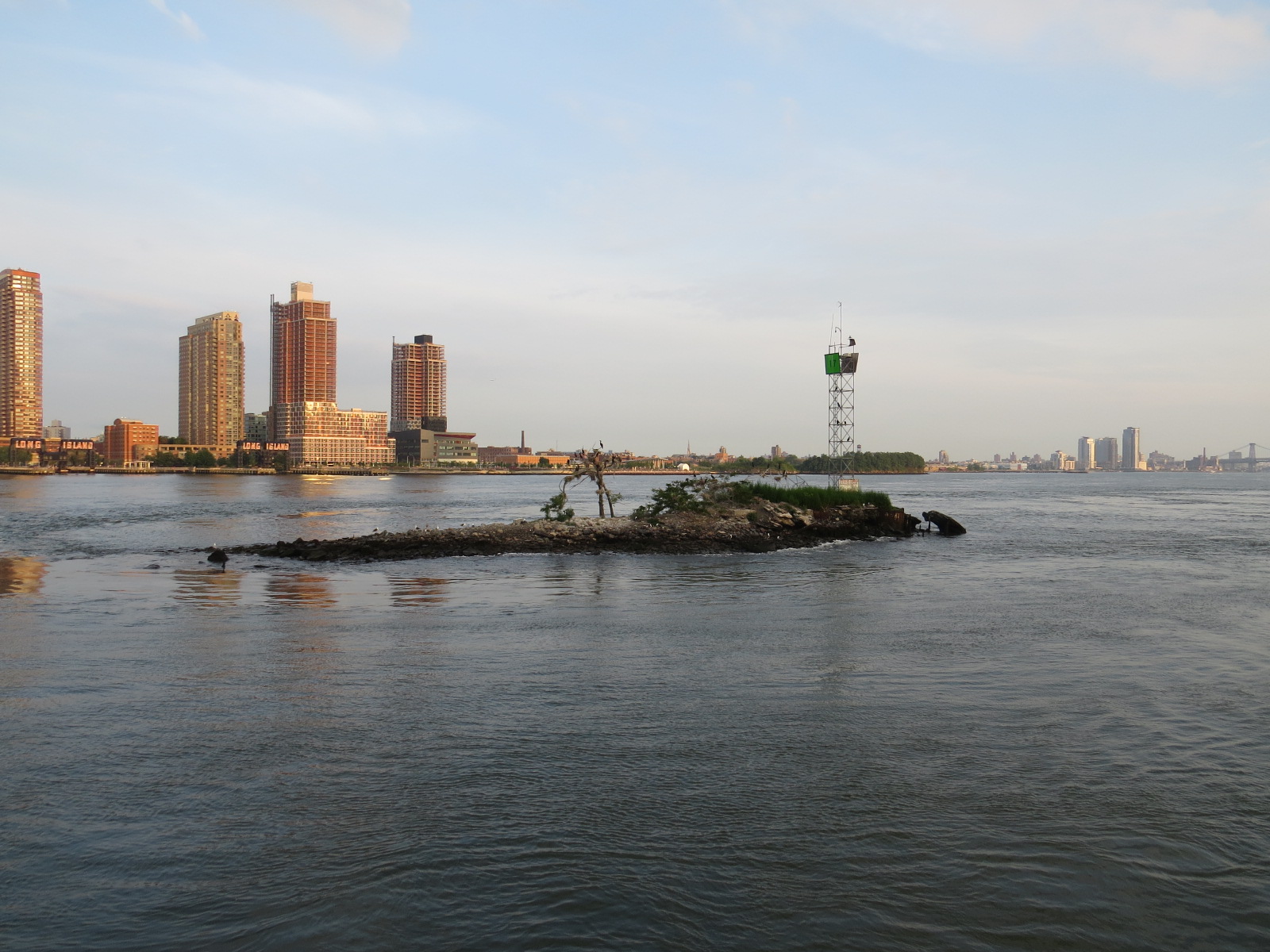 Naturalist Gabriel Willow was our guide, exemplary as always, but a bit under the weather because of a savage attack by caterpillars earlier in the day (it’s rough out there in the field). The first “stop” was U Thant Island, a little cluster of rocks offshore of the UN, named after that institution’s third Secretary-General.
 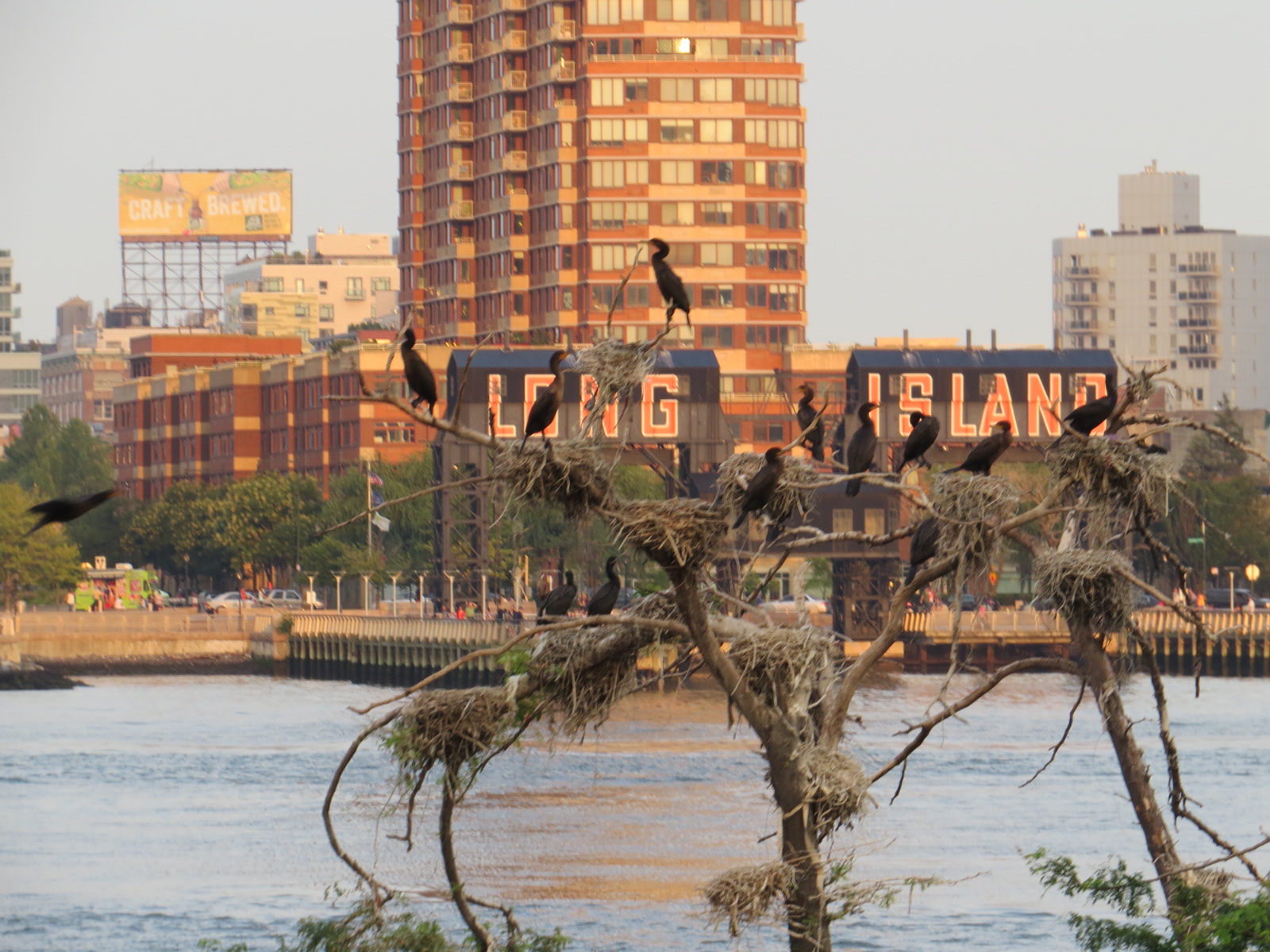 Double-creasted Cormorants and Great Black-backed Gulls nest there, Cormorants up, the gulls down, on the rocks.
 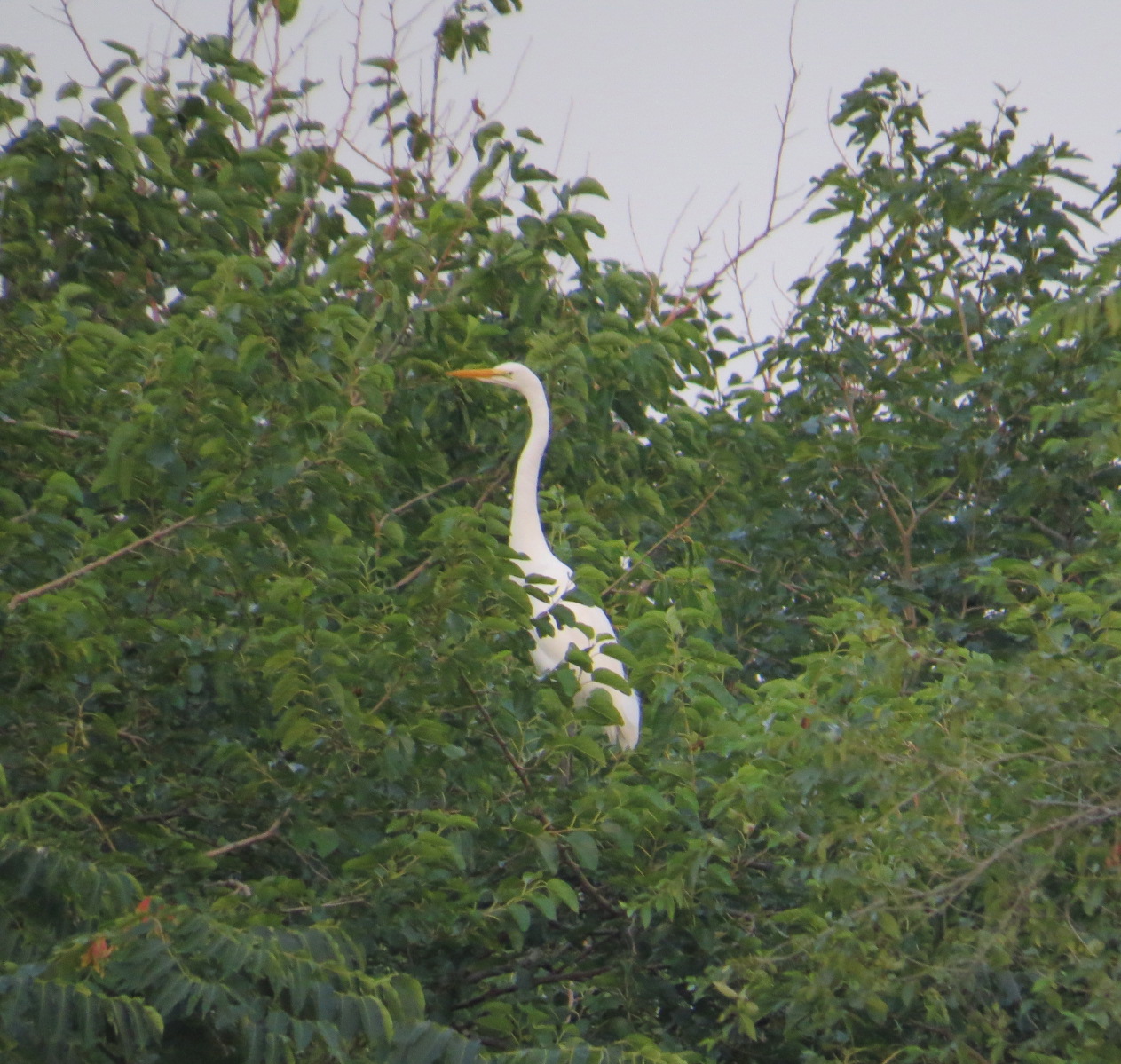 Mill Rock, south of Ward/Randalls Island, is nesting and roosting home to Great Egrets, Snowy Egrets, Black-crowned Night-herons, more Cormorants…
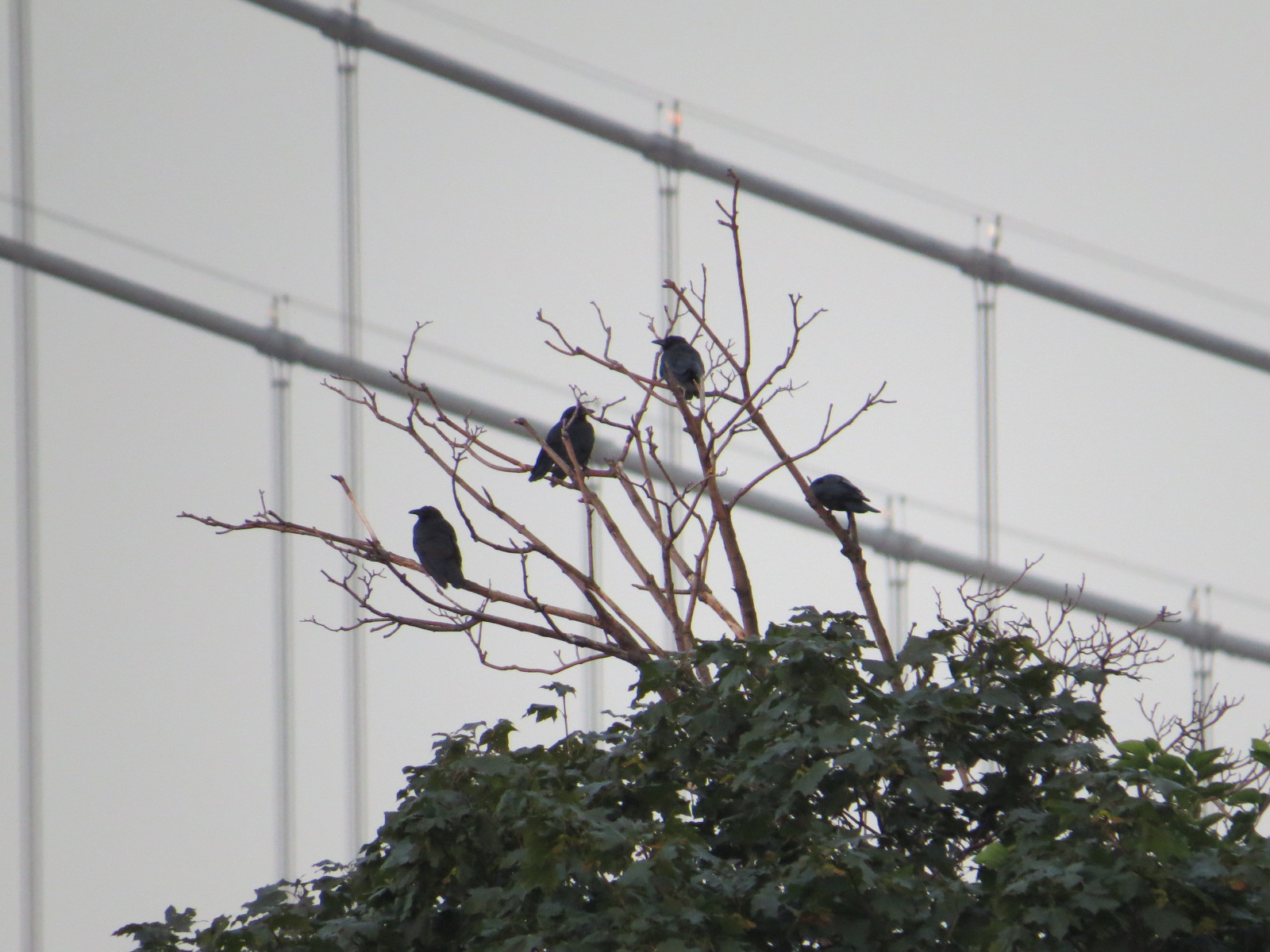 And Fish Crows (Corvus ossifragus). These coastal cousins of the American Crow are slightly smaller, but are really only distinguishable by their voice. While both species can make a lot of different sounds, the American has its classic “caw” call and the Fish a two-toned “cah-ah.” As it was evening, flocks of them were flying to roost for the night.
 Hell Gate Bridge, a rail-road only crossing. When my father worked summers for the Nantucket ferry in late 1940s, steamer trunks came “Via Hell Gate” by train to New Bedford. The Dutch Hellegat has nothing to do with hell or gate and was originally applied to the whole East River, which is awkwardly named since it isn’t a river, and meant a clear passage. That too was a misnomer, since the Hell Gate was hellish on boats until it was blasted out by the Corps of Engineers in the late 19th century.
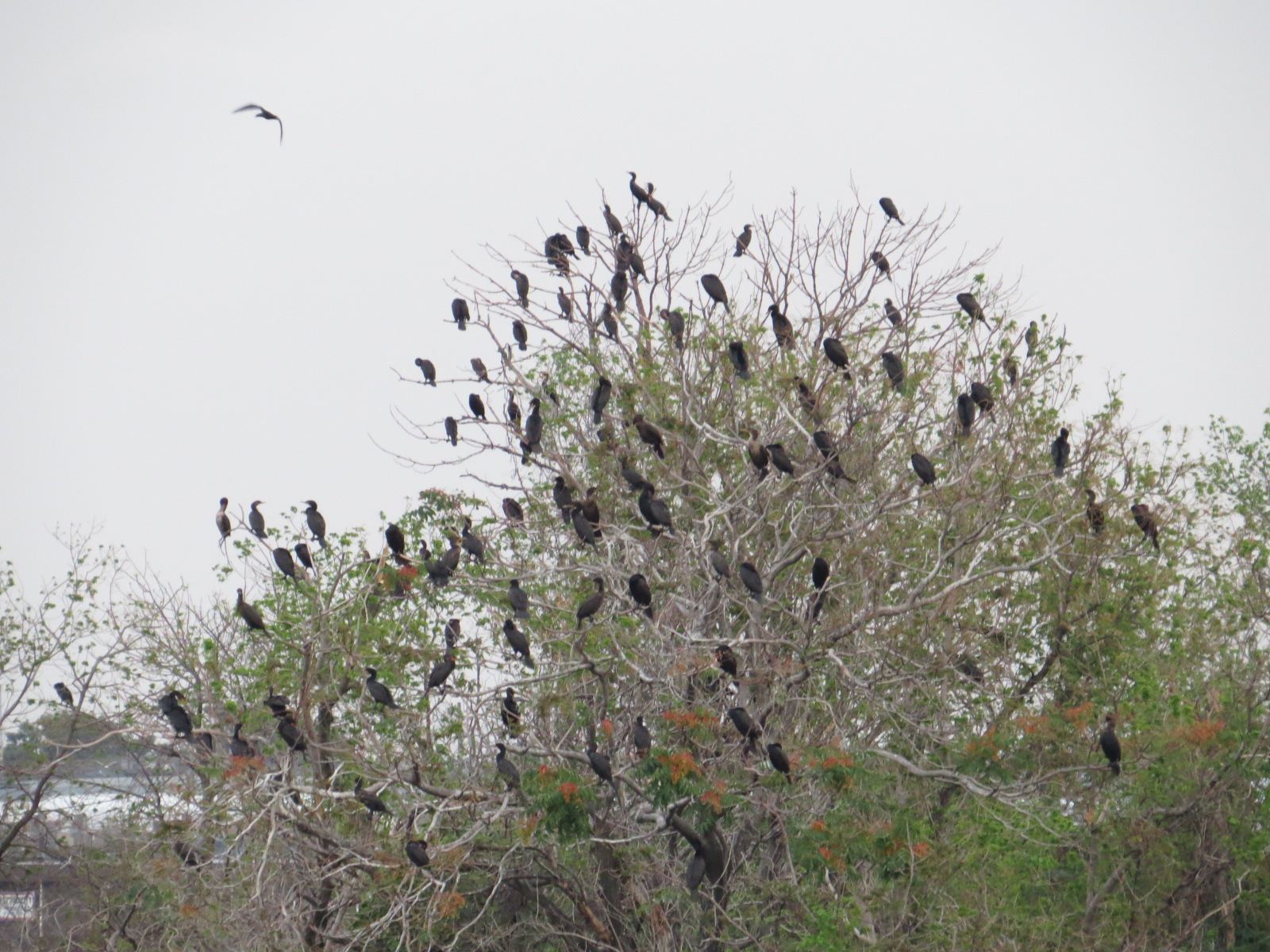 By the time we got to North and South Brother Islands, between the Bronx and Queens, the sun had sunk between Manhattan’s street valleys. Both islands are full of birds now, the Cormorants most especially visible, but have long histories of other uses. North Brother, like Blackwell’s/Welfare/Roosevelt Island, was once used as a place of punishment, asylum, and quarantine (“Typhoid Mary” Mallon died there); it’s abandoned institutional buildings are now completely overrun by green. Nearby was the vast penal colony known as Riker’s Island, reminding us we still attempt to isolate the unwelcome on islands (the DOJ is investigating official brutality and torture there).
Gabriel reminded us that a century ago, there would have been no harbor herons. Indeed, the fashion industry, which still has much to answer for, had reduced heron populations to such low numbers that organizations like Audubon were formed to save the last birds before extinction. Half a century ago, too, there would have been no herons, the harbor/estuary being too polluted to sustain them. While the week bought the terrible news of that study that showed 45% drop in invertebrate populations, we know we can do better, can coexist with other creatures, can foster the habitats in which they thrive, can enrich our own lives by recognizing the vital necessity of planet Earth.
 Backyard and Beyond
Leave a reply to Sally Wehner Cancel reply