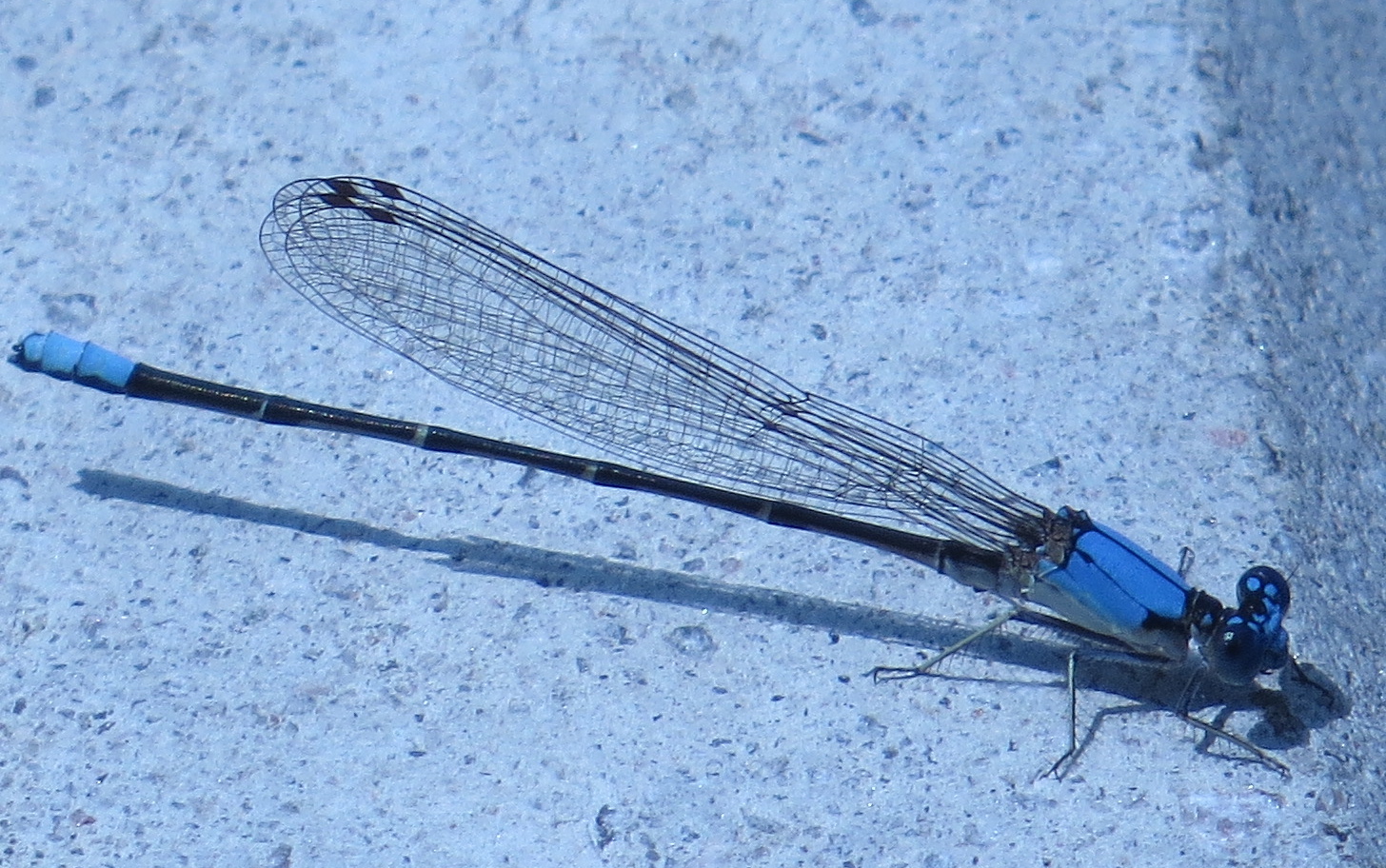
 The Blue-fronted Dancer (Argia apicalis). One and half inches long, found along the Bronx River and further away on woodland paths. I’m getting better at distinguished these wee things, which means getting closer with lens of varying sorts. This is a male. Species IDs include the black hair-line markings on the thorax and the blue of the last three segments of the abdomen (compare with the slightly smaller Azure Bluet below). I saw two other damsels on the same paths and figured I had at least two species between the three different types, but it turned out that there are two variations for the female:
 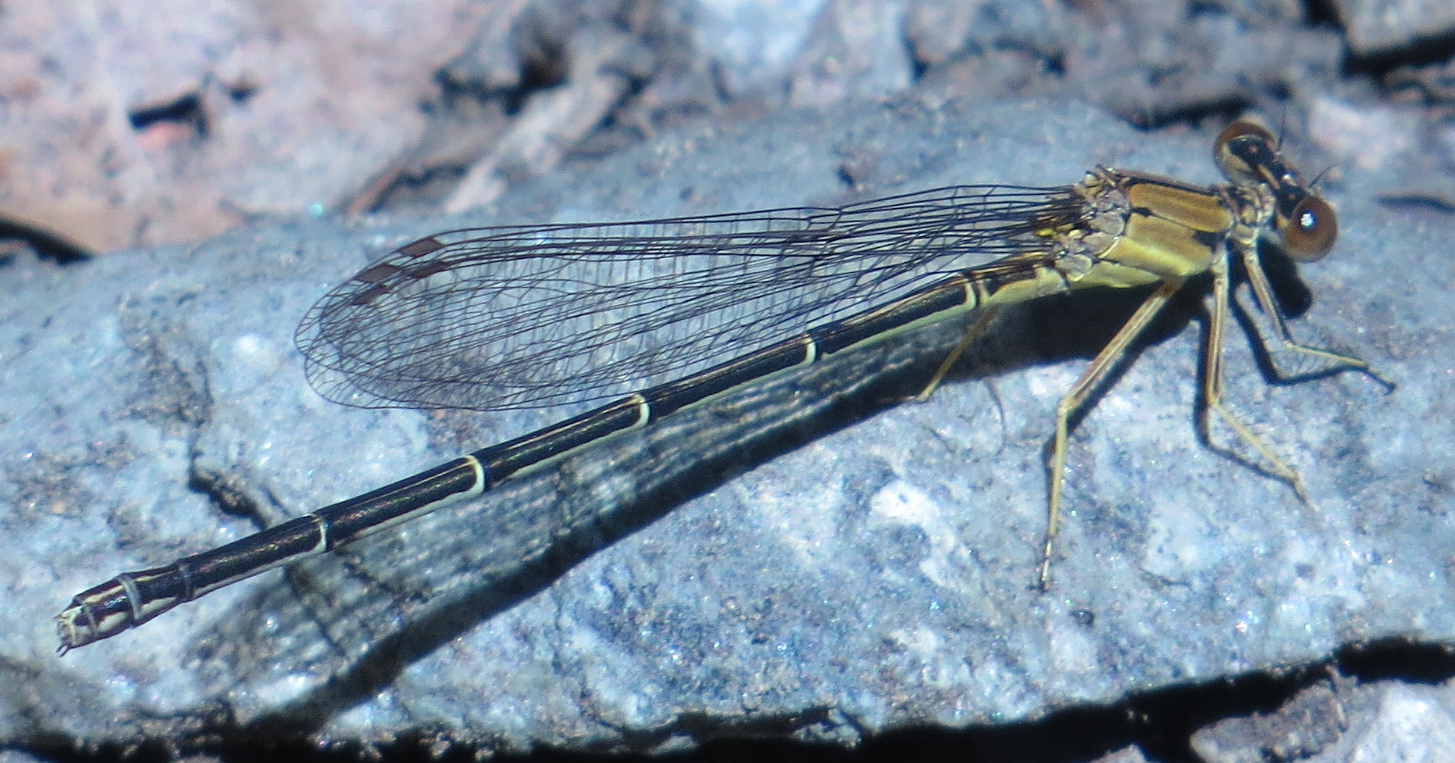 a brown form;
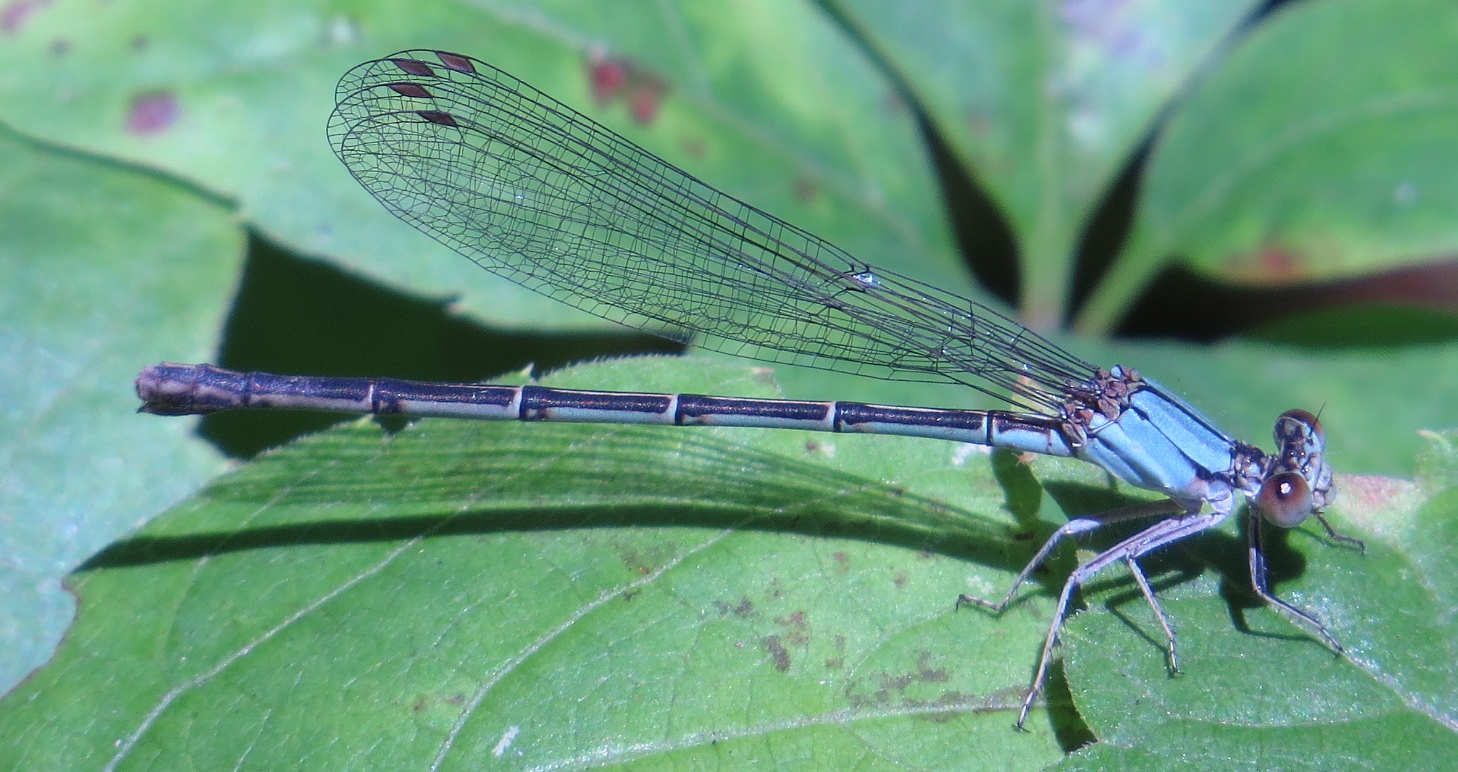 and a blue form. Note the absence of a colorful final trio of segments on the abdomen; there are instead tan lines on top and side of segments 8 and 9. Ed Lam’s Damselflies of the Northeast remains the single best source for nailing the identity of these slender flying jewels.
Single click on these images to get larger versions for more detail.
The Odonata, the order of insects that is made up by damselflies and dragonflies, have ten segments to their abdomens, counting from the thorax. Here’s a male Azure Bluet (Enallagma aspersum): In this species, segment 7 is extensively blue, a tell-tale mark. Note also the much wider mid dorsal stripe on the thorax and the large eye spots.
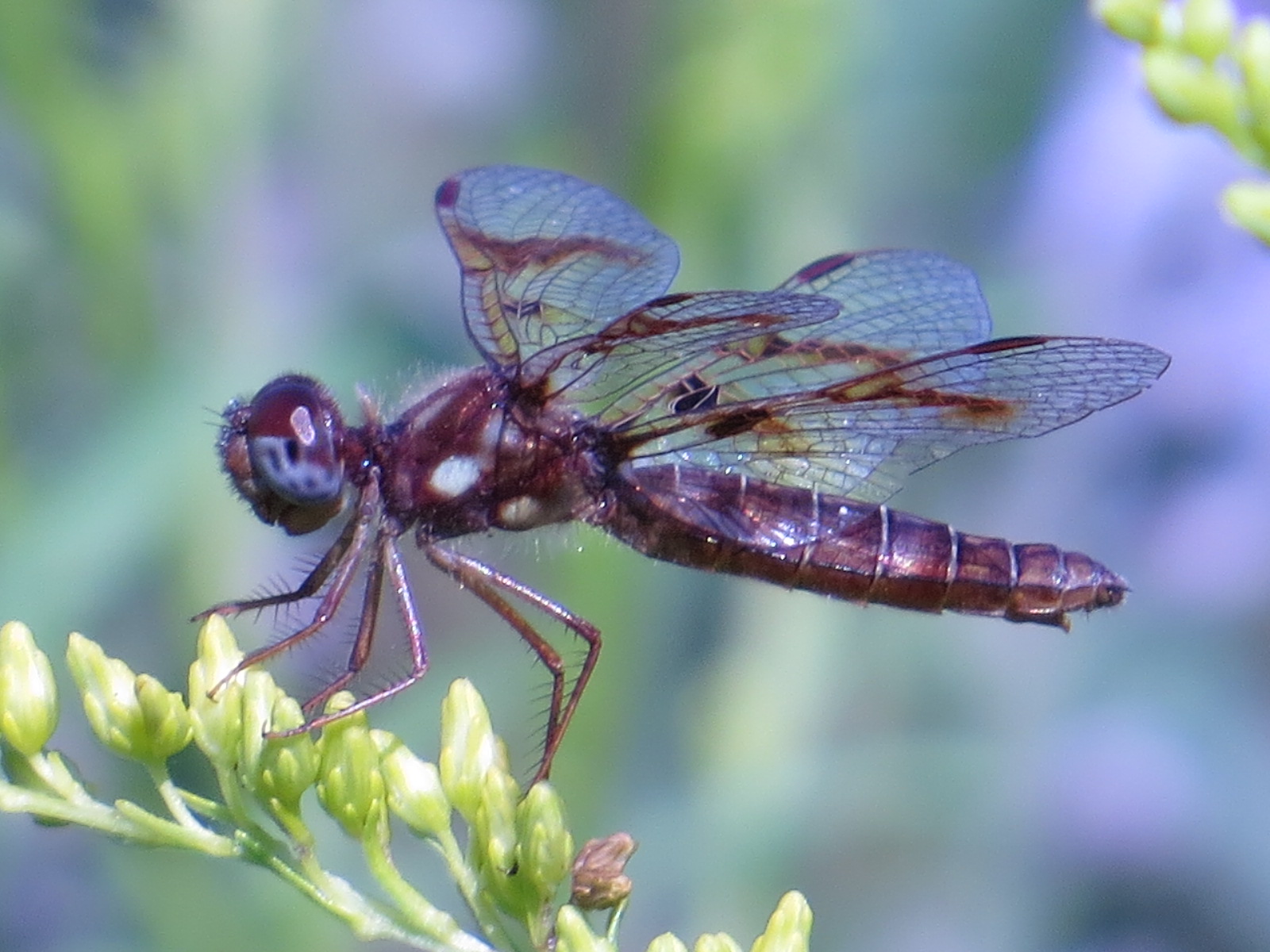 Our smallest dragonfly is the Eastern Amberwing (Perithemis tenera), which is actually smaller, length-wise, than many species of damselflies. But note this thick, thick abdomen: very dragonfly, that, and especially so in the females, as here. This seems like a boom year for the species. Notice, though, that almost all the ones flying low over the edges of local waterbodies are male, staking out their territory and defending it. Their territory: good egg-laying sites. The females, who have splotchy instead of amber wings, are usually found elsewhere, for instance, up in the meadows as in this case, until they venture down for a bout of the ol’ oingo-boingo.
 Backyard and Beyond
Leave a comment