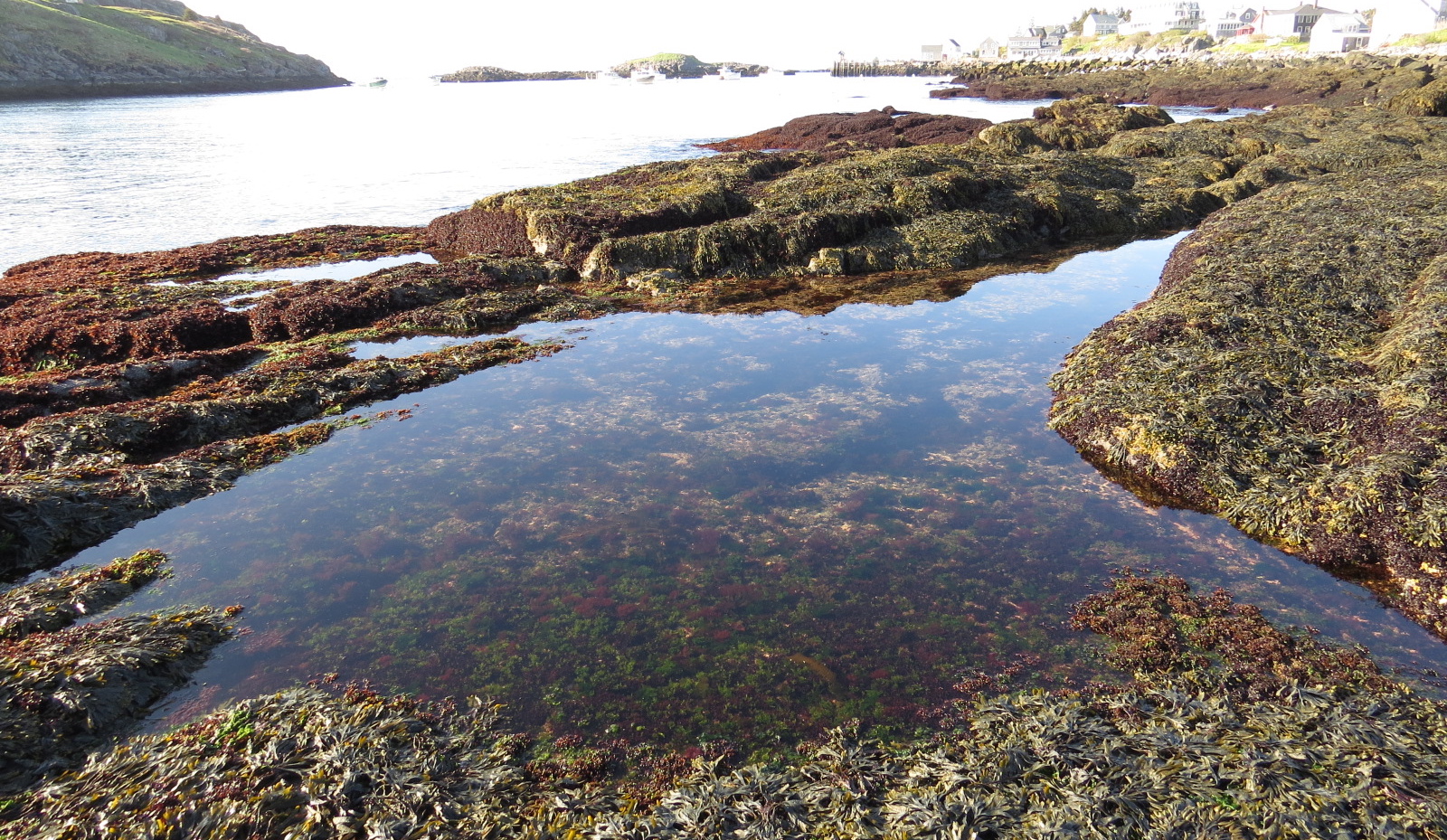
 The tides increase as you approach the Bay of Fundy. While the average difference between high and low is five feet here in NYC, it’s 10 feet in Maine. This means the state’s rocky shore is full of tidal pools, pockets of water temporarily abandoned as the tide pulls away. Such places are ripe with life. I must give all credit here to guide Gabriel Willow, who rolled over rocks, poked around, and fished up specimens as I snapped photographs.
 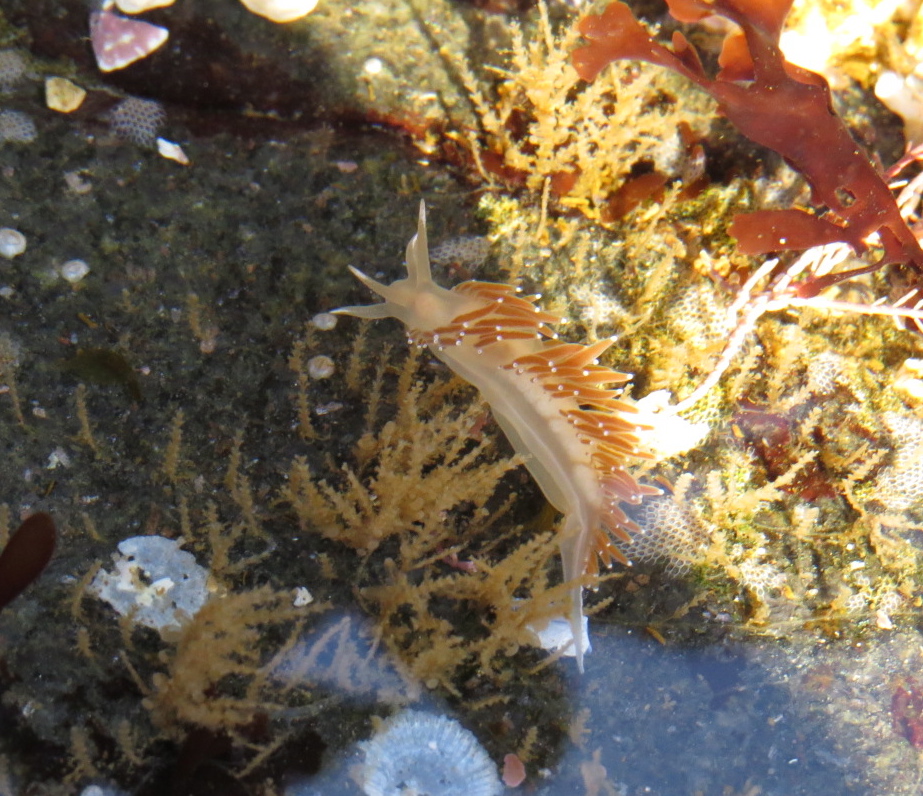 Here’s a Nudibranch. These marine gastropods have a shell in their larval stage, but as adults look more like slugs, albeit remarkable colorful and patterned ones. This looks like the a Red-gilled nudibranch, Flabellina pellucida, to me. Size is about 15mm. I’d never seen one in the wild before.
 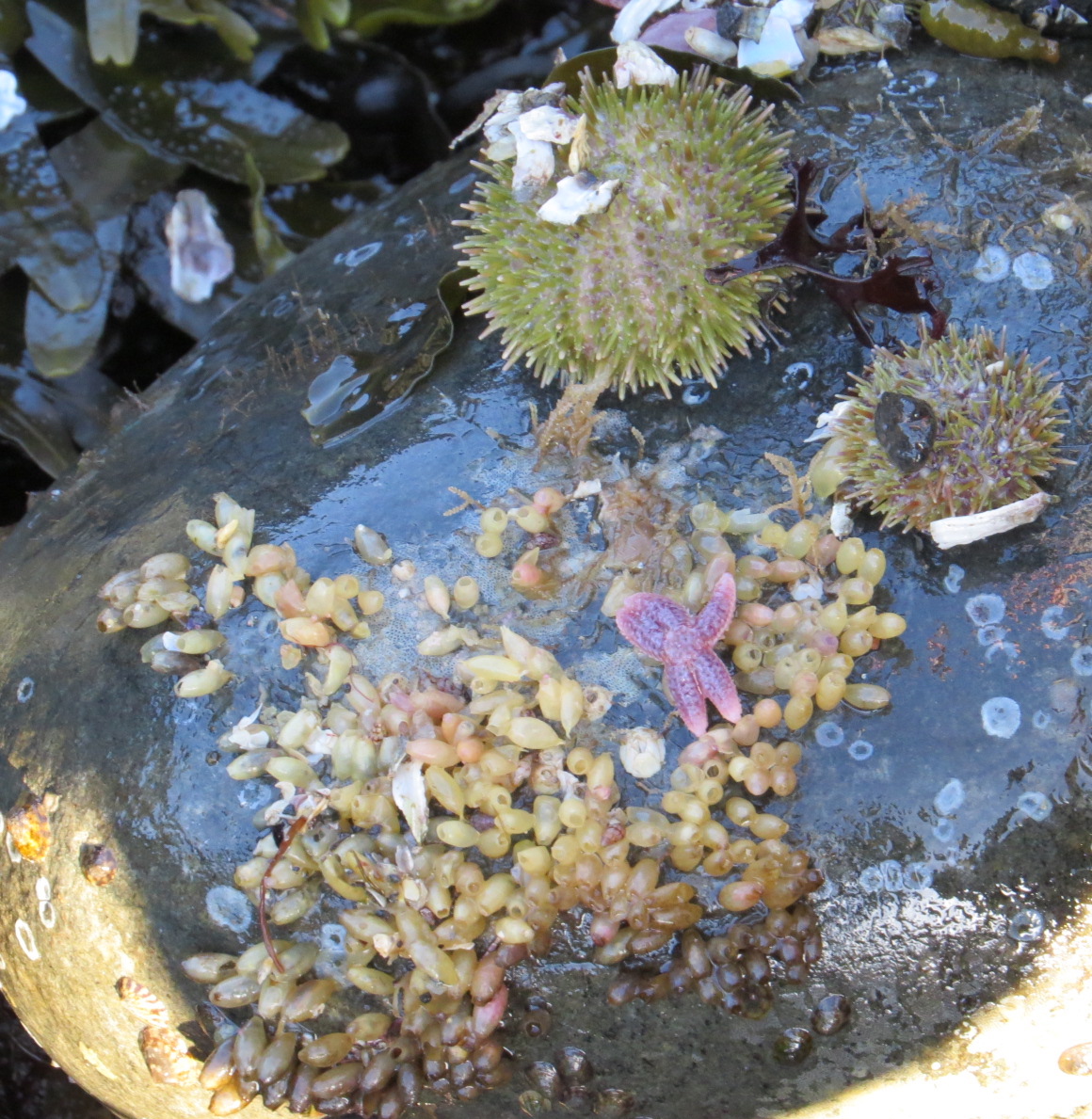 Two sea urchins, a thumbnail-sized sea star/starfish, and the eggs (?) of something or other.
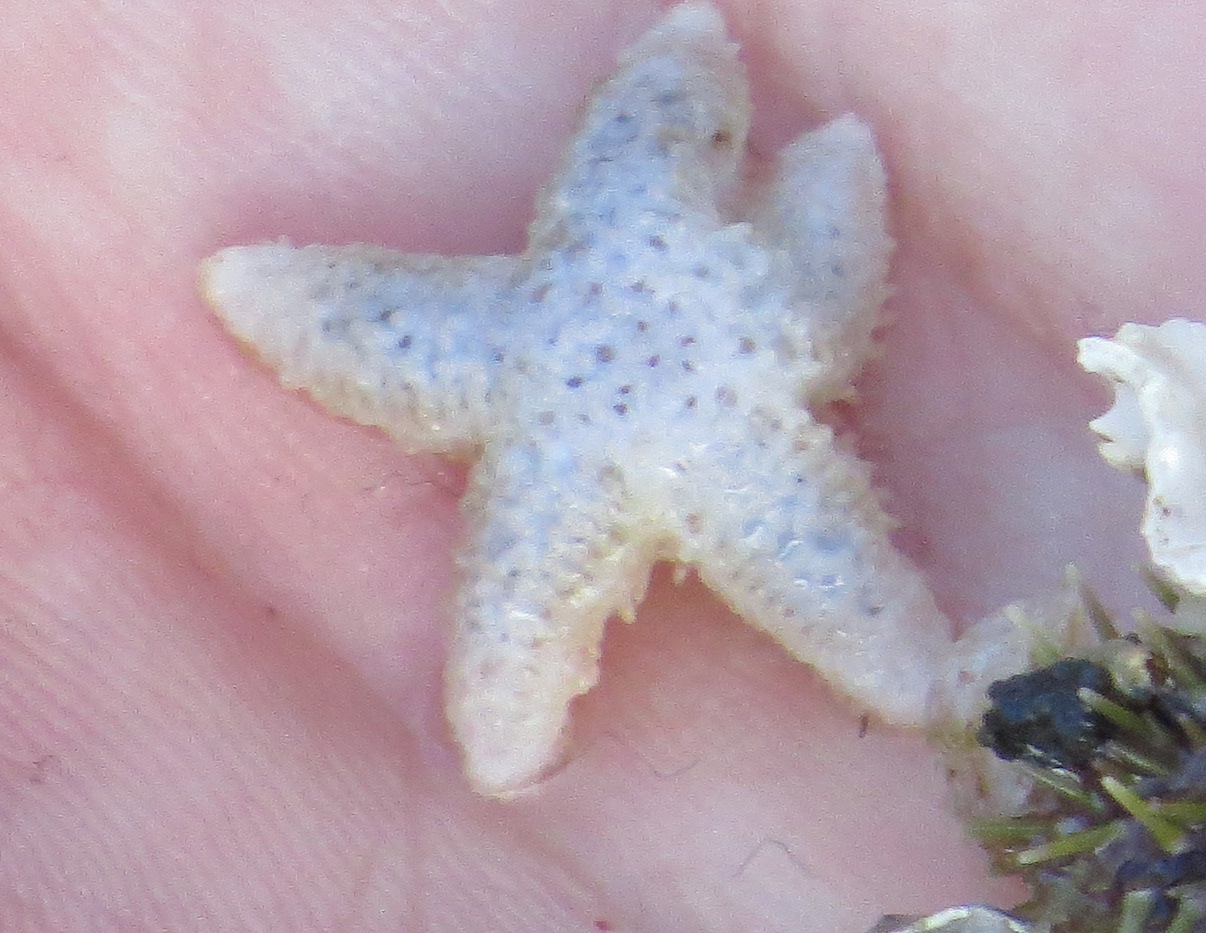 Another sea star. The Northern Sea Star, Asterias vulgaris, is the most common in these waters, but I don’t know what this particular one, or the one in the group shot, is.
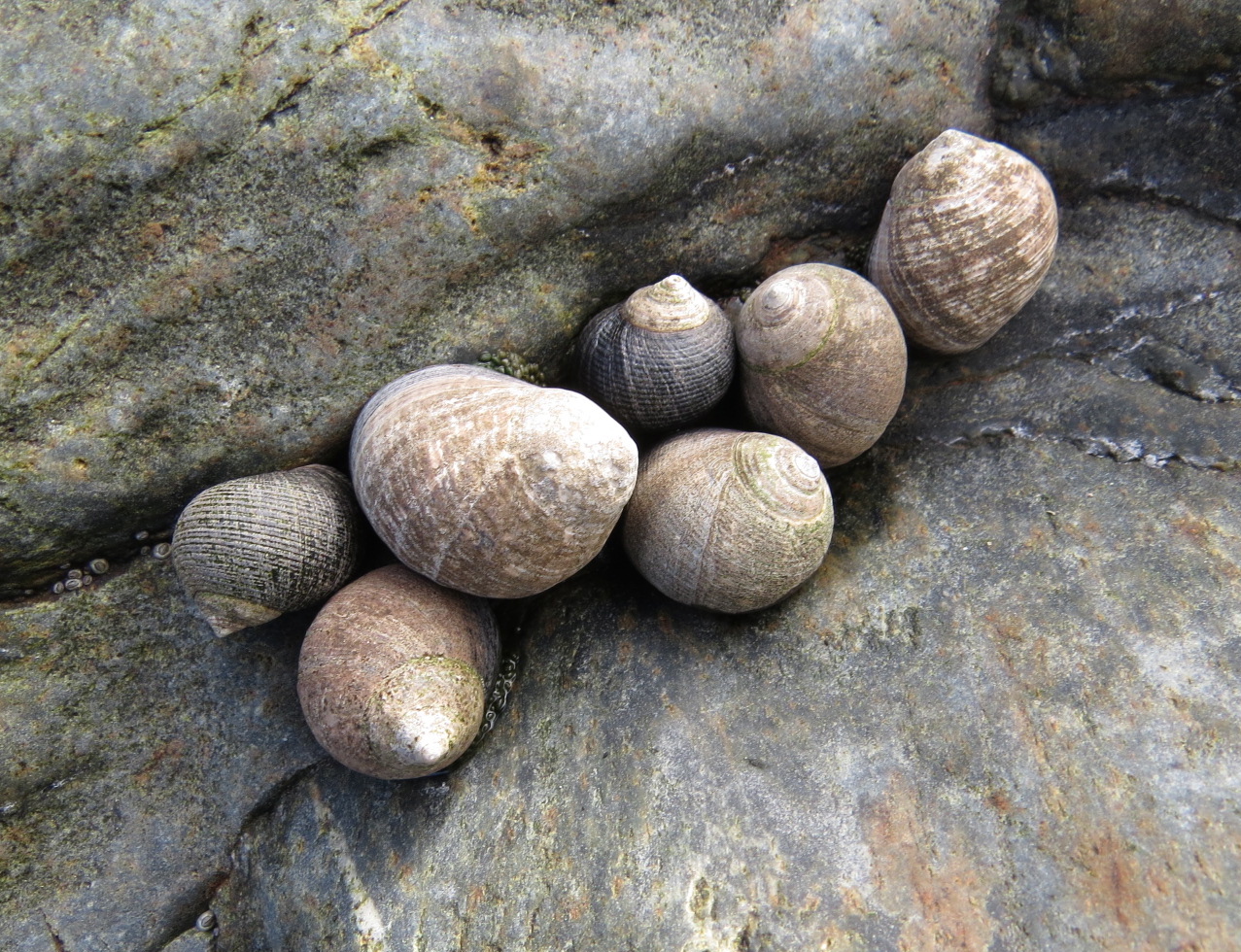 Maine’s coast is absolutely inundated with the Common Periwinkle (Littorina littorea). Here’s a small cluster waiting for the tide to return. These are an invasive species of European origin that, like earthworms in our northern forests, have radically transformed habitat. They are edible — although each one is tiny and requires a winkle-pick — so we should be devouring them to beat back their, uh, tide.
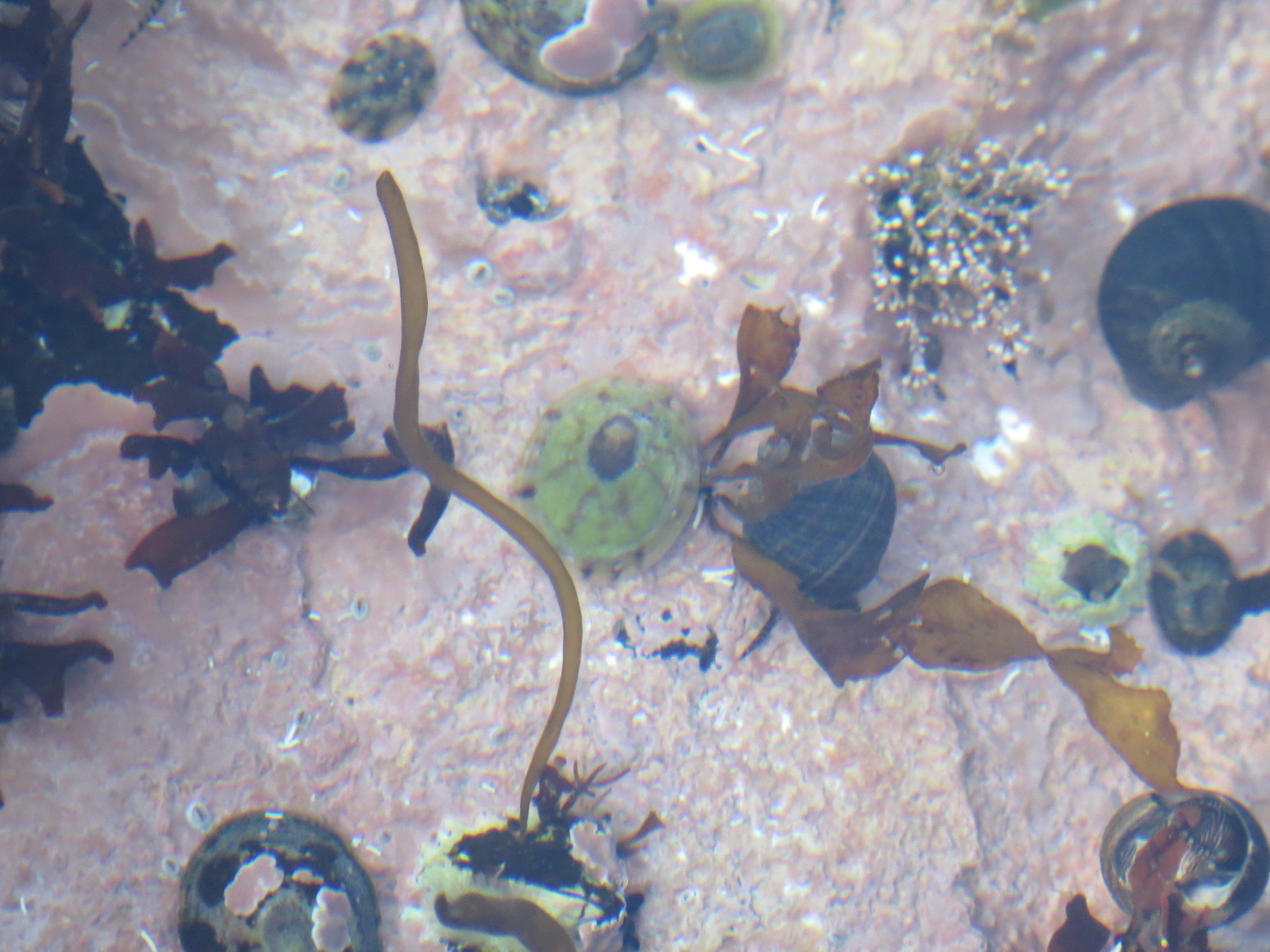 Underwater, Periwinkles are the dark, snail-like shells. The conical ones, like tiny volcanoes, are limpets. There’s a single barnacle here as well, looking like a spent volcano.
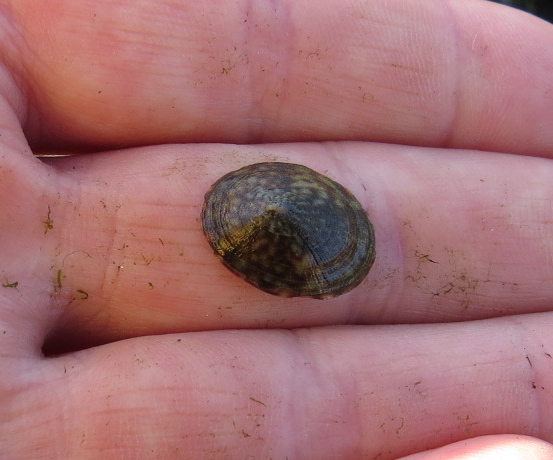 Assuming that this is the Atlantic Plate/Common Tortoiseshell Limpet (N. testudinalis in one source, T. testudinalis in another). Couldn’t find a single abandoned shell of one of these.
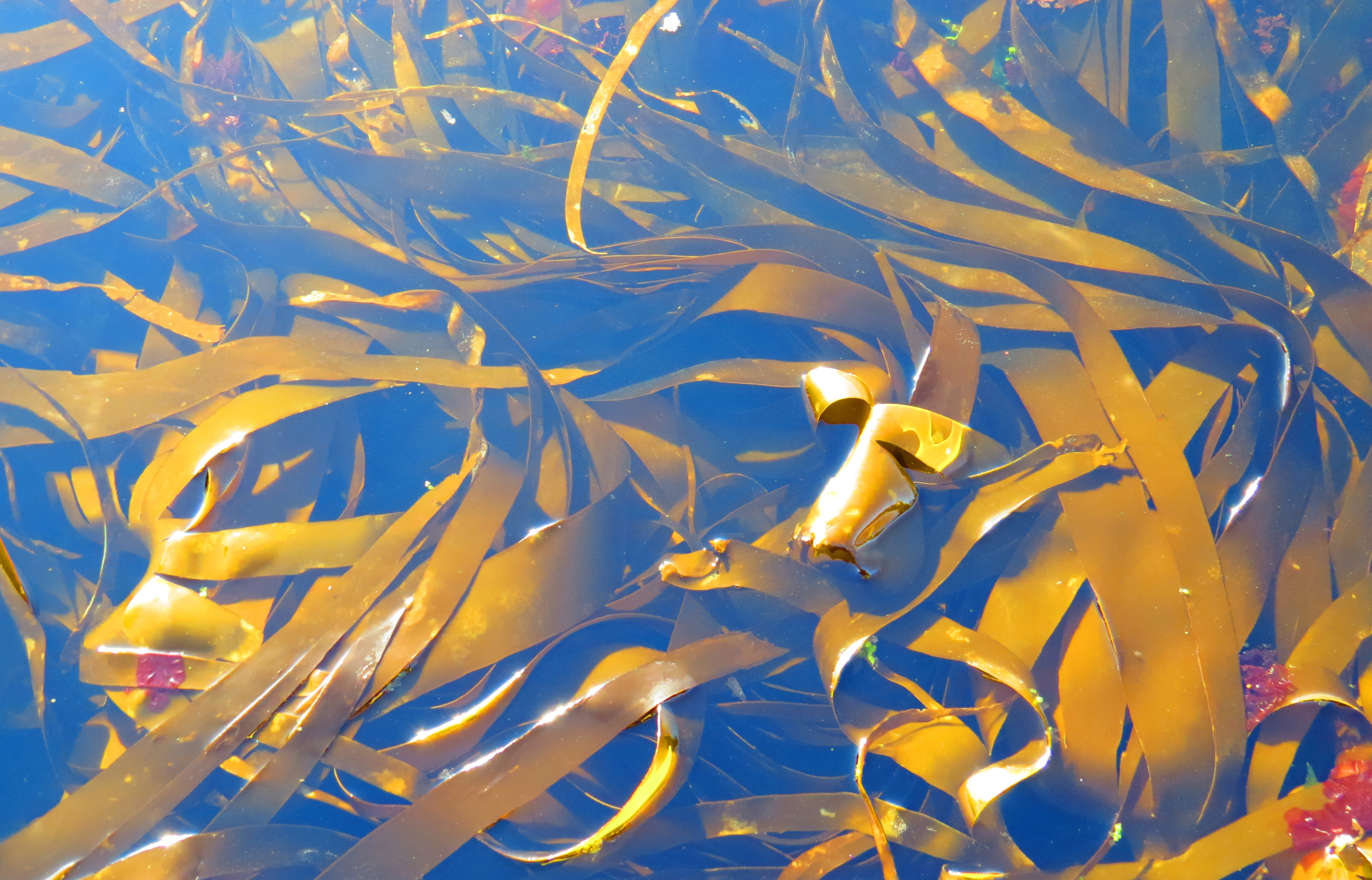 As you can see in the first picture above, the rocks are carpeted in seaweeds, including Knotted and Bladder Wracks and Irish Moss. These streamer-like ribbons of kelp were filling a pool.
Intertidal Zone
4 responses to “Intertidal Zone”
-
Beautiful and fascianting.
-
Reblogged this on Backyard and Beyond and commented:
Diving into the archives…
-
Wonderful photography. Nice work!!
Where did you take a picture of that ribbon like Kelp? I have never seen that before. It must be beautiful in motion.
-
Low tide on Mohegan Island off the coast of Maine. The rocky shore creates tidal pools full of wonder for a few hours.
-
 Backyard and Beyond
Leave a reply to Edward Olivera Cancel reply