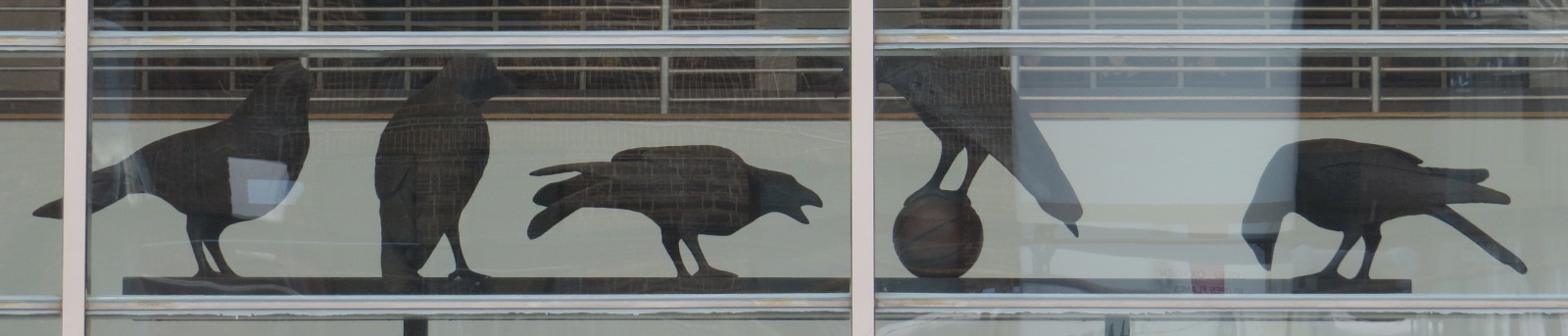
 Right inside the “wellness center” at LIU Brooklyn’s campus. I assume it used to be a “gym,” short of gymnasium, which was where ancient Greeks played naked (Putin would plotz); gymnós meaning naked. Moving right along: those are pretty good corvid forms, if massively oversized. But what the hell is this on the corner of the same building?
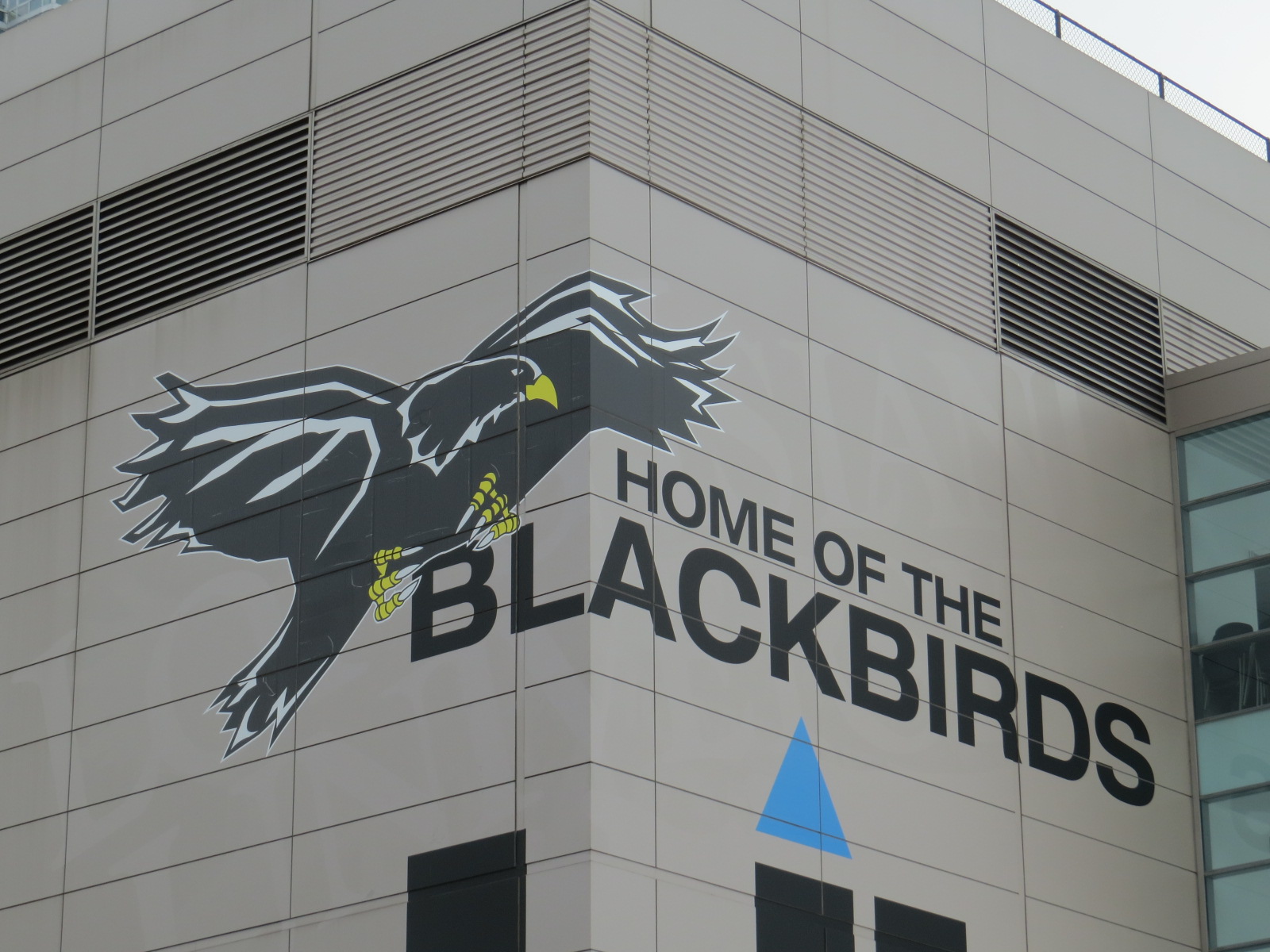 Suddenly the crow has turned hawkish. (There are black hawks, but not in this part of the world.) But of course crows — smart, family-oriented, beautiful, not nearly the nest-robbers that o-so-cute chipmunks are — get very little respect. How many other sports teams are named after them? LIU’s name evidently comes from their switch from blue to black uniforms in the 1930s. Note how they evidently feel the need to raptor-up the mascot today in our overly militarized culture.
Meanwhile 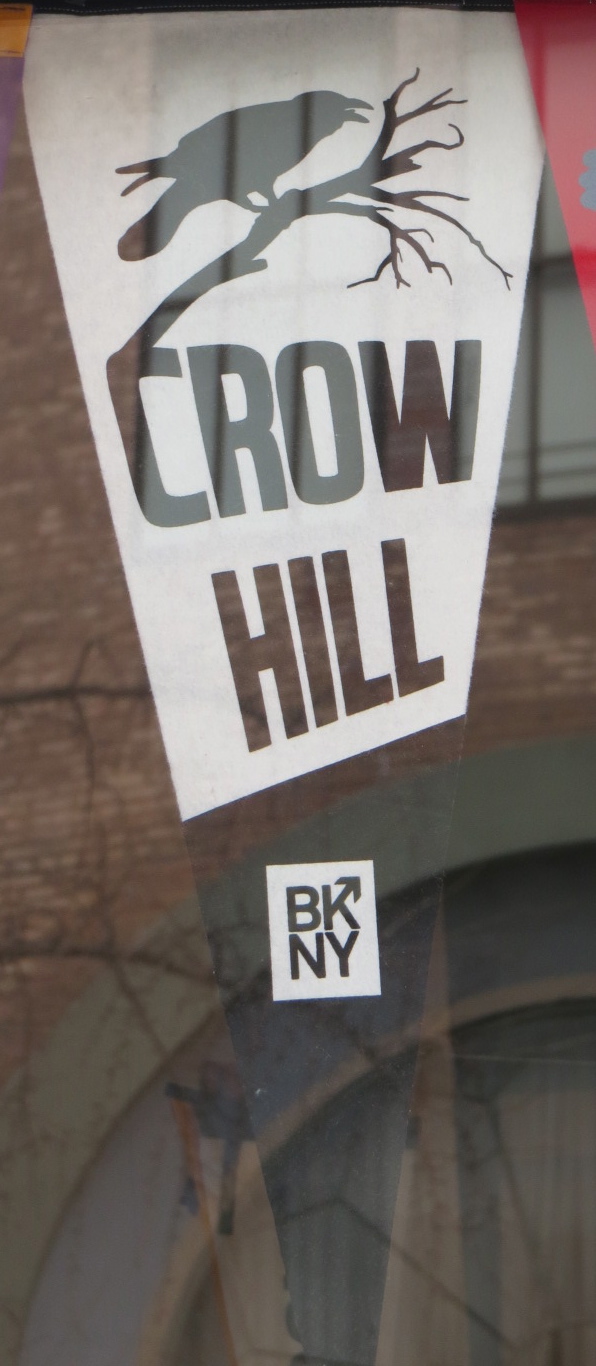 “Crow Hill” is an old name for the section of Brooklyn that was christened Crown Heights in the early 20th century. Folklore suggests that the treed hills east of Prospect Park — the moraine above the flatlands to the sea — were happy crow grounds, but historians note that the “crow” comes from the free blacks who settled in the area, in communities they named Weeksville and Carrville. The black bird/black people association, made by whites, is most infamous in “Jim Crow,” the short-hand term for the near-century of legal and customary apartheid that ruled the American South after the defeat of Reconstruction. Jim Crow was a character created by white performer T.D. Rice, who “blacked up” in minstrelsy in the 1830s-40s. He was so popular nationally, other minstrels copied his act, even his character name. And so, by the late 1830s, “Jim Crow” had become a derogatory name for African Americans, about par with “coon” and “darkie.” From there, it was only a nightmarish step for the power-base of the Slave Power, and their cracker myrmidons, defeated but not destroyed, to give their Black Codes a folksy name.
 Backyard and Beyond
Leave a comment