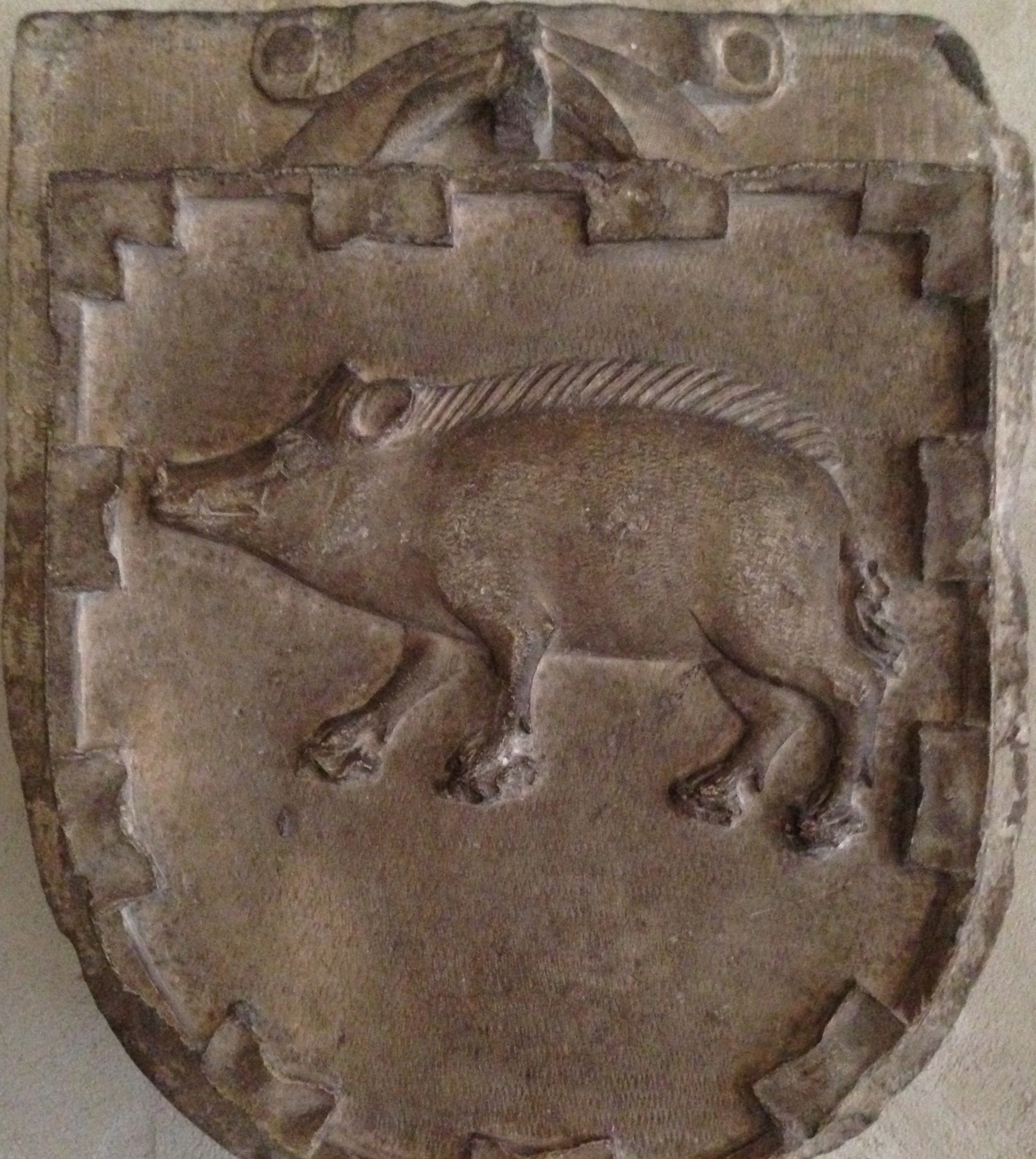
 Or boars to be more exact. This is an early 14th Century coat of arms from the Porcelet family of Provence. The family Piglet! I would guess they changed their name and emblem by the time the Renaissance showed up in the form of Caterina de Medici, who brought the fork, for sticking into Huguenots, and some couth, from Firenze. This coat of arms was at the Cloisters, where I went to hear the astonishing Forty Part Motet of Janet Cardiff and Thomas Tallis; it is playing until early December. While I was there, I heard a guard say he could take listening to the performance all day long; I listened five times and whole-heartedly agreed with him. Sublime.
 Four rows of striding boars: one of the amazing Mesopotamian seals at the Morgan Library & Museum. This is one from late in the game, c. 550-330BC; the peoples between the rivers had been making them for nearly three millennia before this. The seal here in the left hand top corner is just over an inch tall, and made of rock crystal. Others were marble, lapis lazuli, chalcedony, serpentine, etc., and they depict hosts of animals real and mythological (including the serpent-necked feline!). I was privileged to be given a tour by the curator, Sidney Babcock, who was also responsible for rolling out each of the clay impressions set up alongside the actual seal. (The photographs below are for revealing greater detail of these often minute objects). After many years of being mostly behind the scenes, the seals now have a permanent exhibit in the Librarian’s Office, part of the McKim, Mead, & White building, the original library. Another astonishing experience. (Ah, New York!) Thank you, Sidney!
 Backyard and Beyond
Leave a reply to Paul Lamb Cancel reply