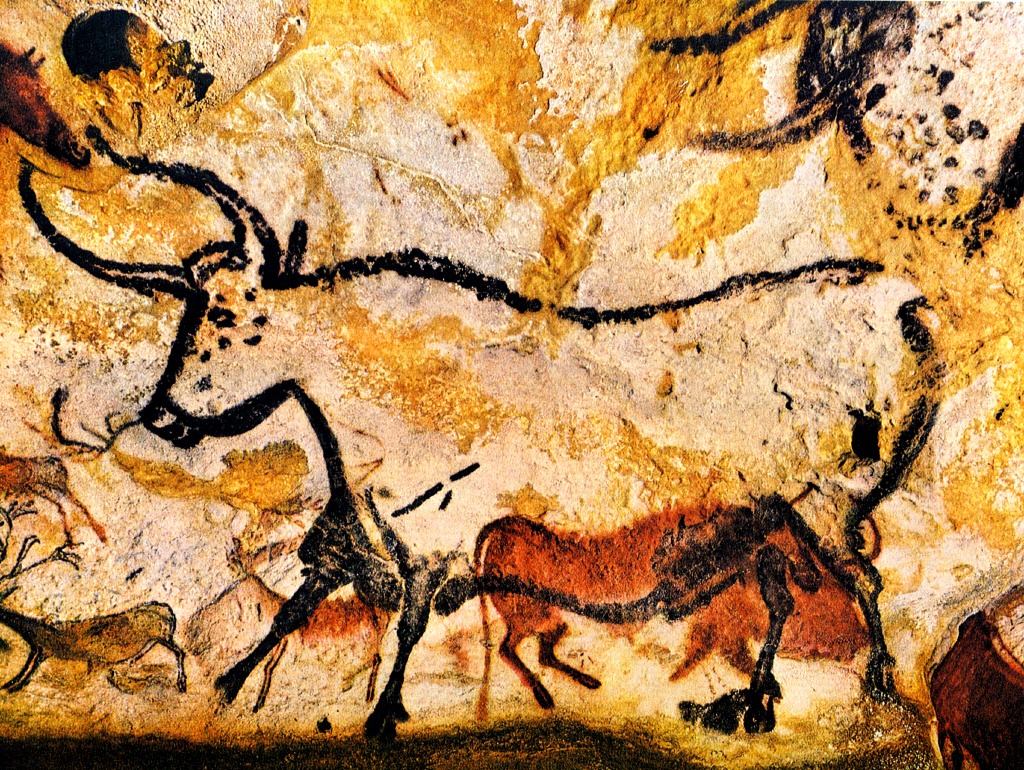
 I am inordinately moved by the fate of the Aurochsen. Bos primigenius were the wild ox of Eurasia, painted by their hunters at Lascaux and elsewhere tens of thousands of years ago. These big beeves with the great horns were the ancestors of domesticated cattle, of which there are many breeds, including some with Aurochsen characteristics still, like the Maremmana, Pajuna, Maronesa, and Sayaguesa. The last Auroch died in Poland in the 17th century, tantalizingly close to the present day, at least in comparison to the other megafauna of Eurasia (and the Americas).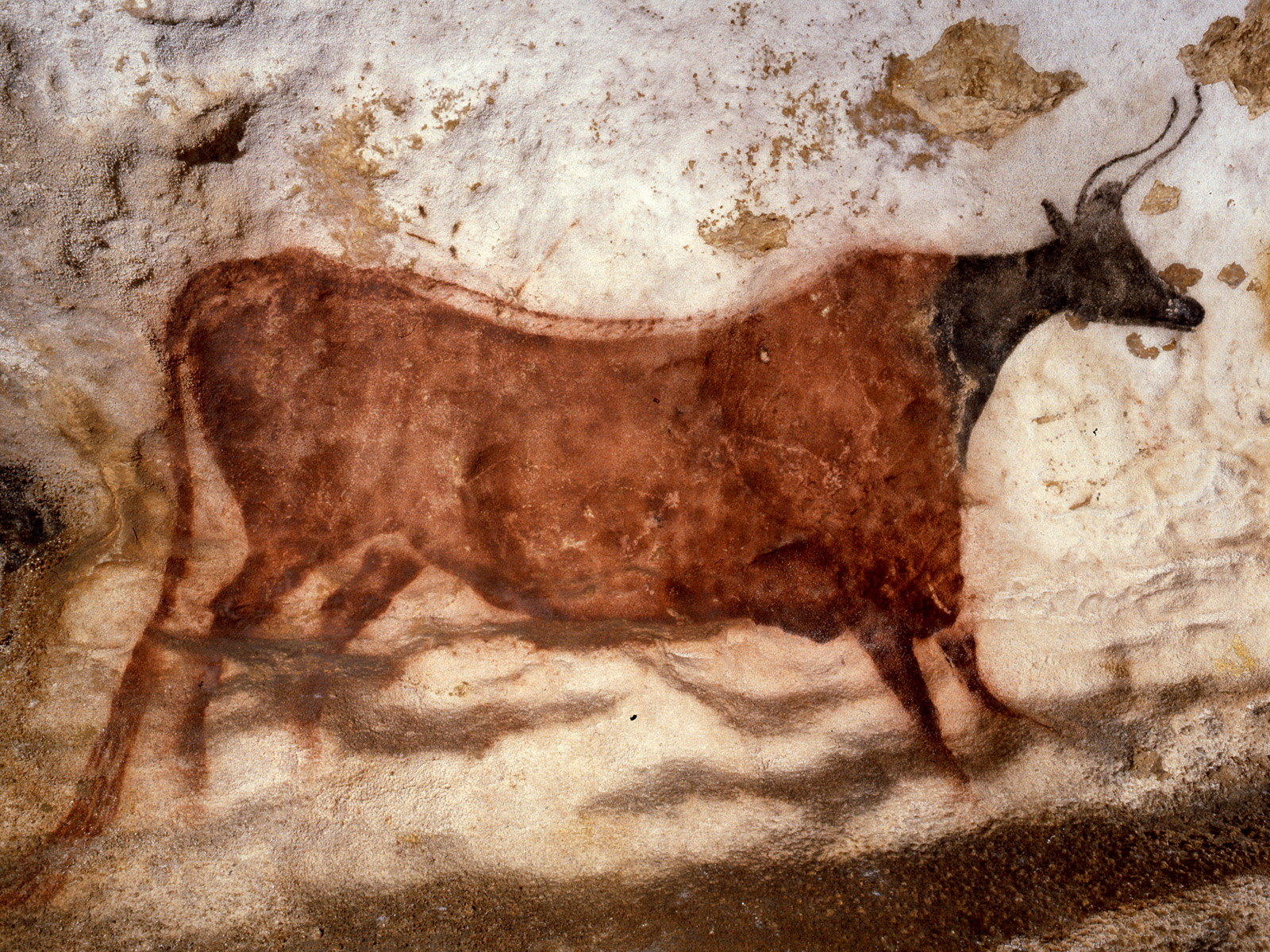
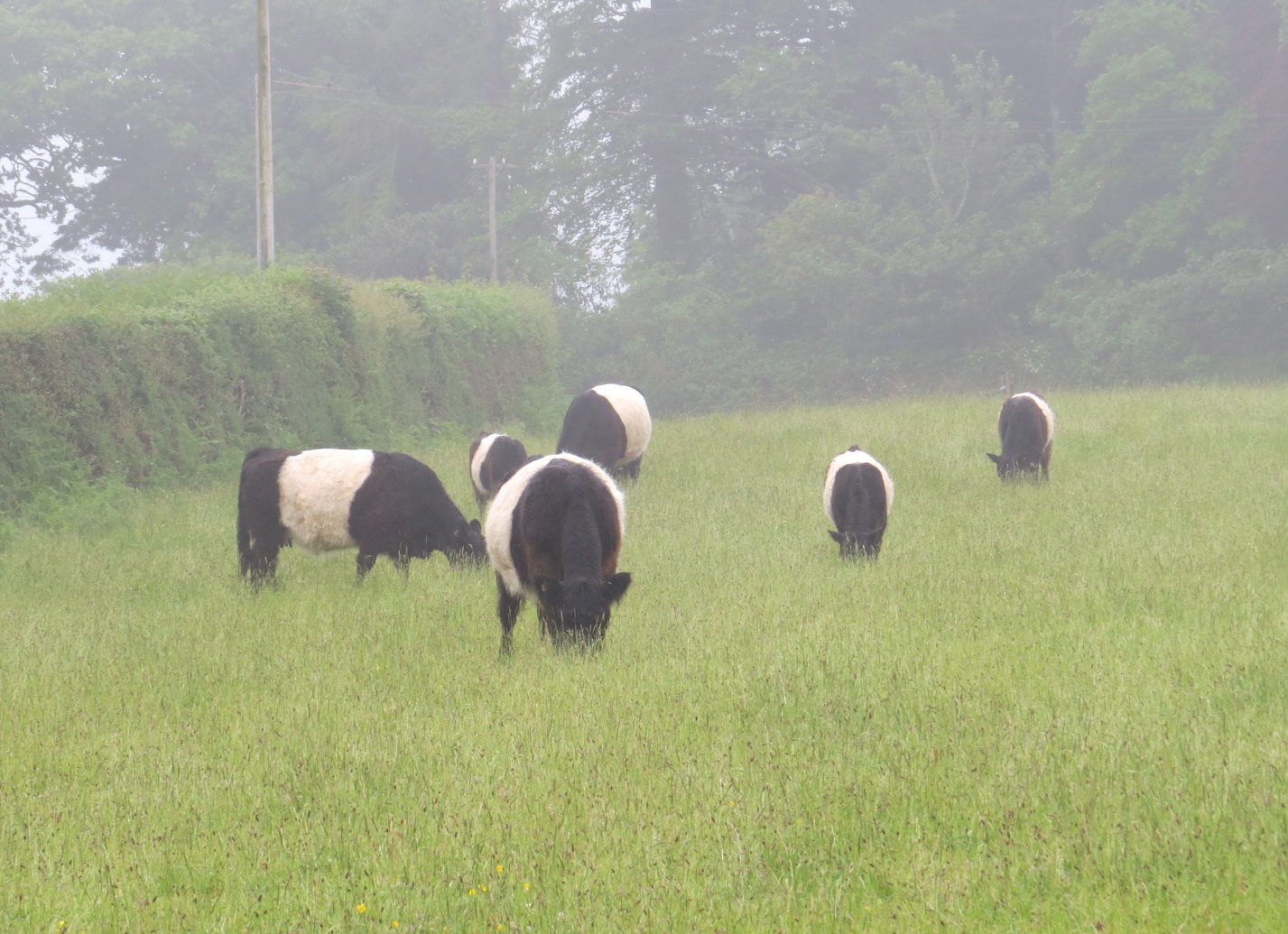 Rambling through farmers’ fields in Dartmoor, I occasionally came across cattle face-to-face.
 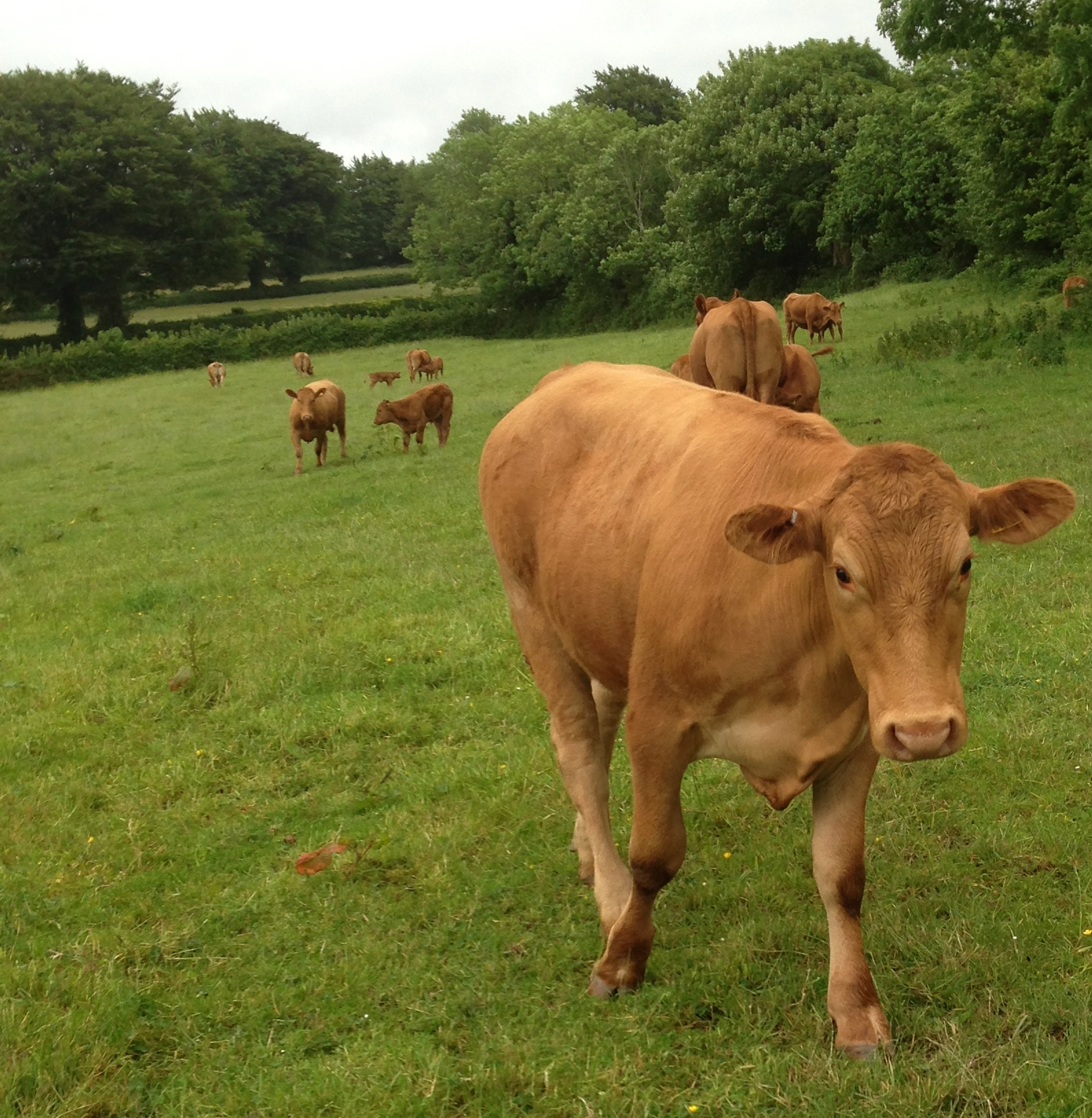 The fields were the cows’ after all, and I was just passing through, remembering to close the gate behind me. If I got close enough, they would freeze and stare. I found myself somewhat mesmerized by them. Firstly, because I’m no farm boy and had no idea what they would do, never having been so close before; I’d passed a few notices about the birthing season, just past, and how the animals will sometimes crowd people to protect their calves. Secondly, because these creatures were much bigger than I was, a little respect was in order. And thirdly, because of their eyes. Yes, their big, soft eyes. Classic don’t-kill-the-cute-baby trick there, the big eyes.
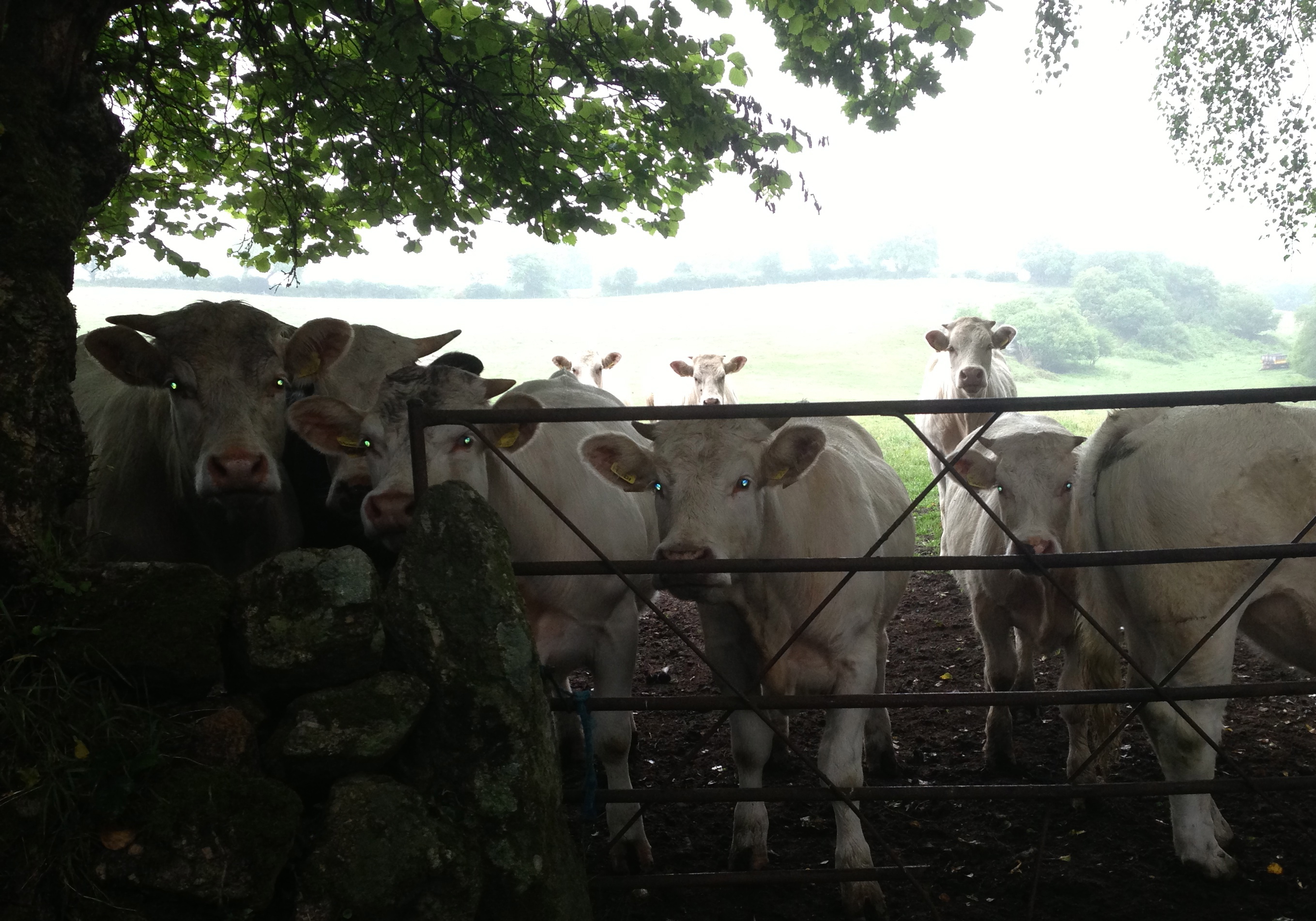 (This is the bovine equivalent of camera-flash red-eye.) Bred, worked, milked, slaughtered, sacrificed to the gods, cattle have served us well. It’s with some gall then, that we condemn them as none-to-bright, if this is indeed what we have made of them. What they certainly are is tamed, domesticated, so that they can live in the domus, the home (this was literally so in the traditional Dartmoor long house, for instance, in which the farm animals wintered below and helped warm the people above). They have been breed for thousands of years now to get the wild out of them. But what is the wild? Fear of humans? There are plenty of examples of animals with no experience of humans who walked right up to people, who then proceed to slaughter them all, as happened to numerous now extinct island species. But most animals have learned to fear us, to run, or simply to stay hidden. Survival depends on it. We are, after all, a species-cidal lot, killing well beyond our need for food and safety. Cattle, meanwhile, have been our companions for a long time now — until fairly recently, a greater proportion of us were in much greater contact with farms, and in some places still are.
 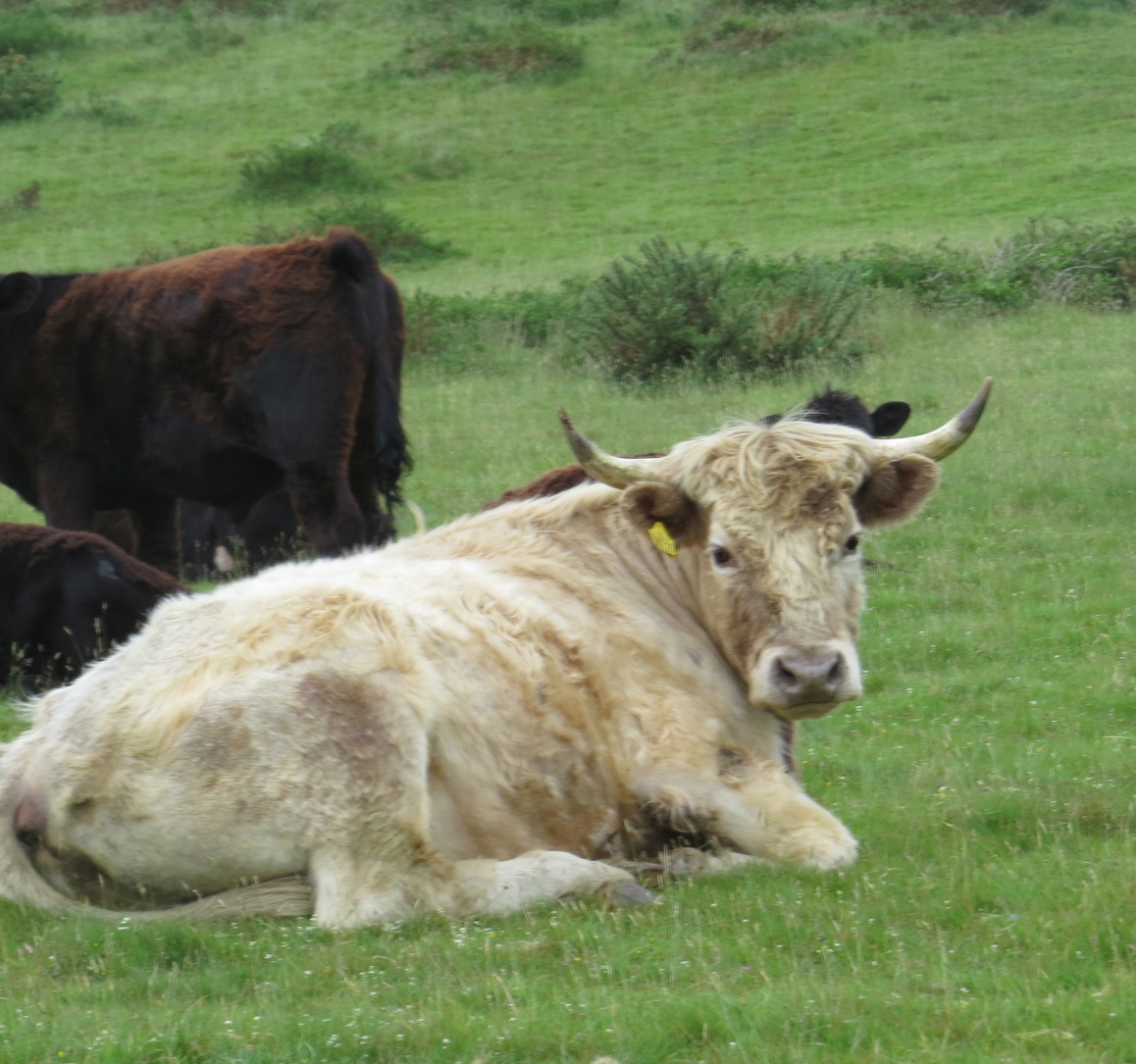 These passing stick figures in the fields may be associated with food, water, and shelter, all good things, on the whole, as well as, inevitably, pain. Consider the cattle prod, for instance, and read Ted Hughes, who farmed near Dartmoor in the 1970s, on “Dehorning.” And of course, the last seconds of terror in the abattoirs.
There is an effort to cross-breed cattle back to something close to the Aurochsen. Close, perhaps, but certainly not the actual thing. I don’t immediately clap my hands with wonder at this idea, as I don’t greet with awe those who talk excitedly about cloning mammoths and other extinct species from samples of DNA. De-extinction, as the groupies call it; when told that some people think it’s playing at being god, one fan says that killing off these species in the first place was playing with god. Right, so isn’t the lesson then: don’t play at being god? Cloning the mammoth means nothing without cloning the big predators that hunted them, and you may have noticed how the re-introduction of wolves has been greeted by some. Now imagine dire wolves and saber-toothed cats roaming the land. People are talking about cloning the passenger pigeon, but not, for obvious reasons, the hundreds of thousands of acres of woodlands they once thrived in. (Much woodland has regrown after the scorched-earth settlement, but it’s not at all the same.) One without the other is a sad circus freak, to be gawked and gaped at. At the back of all such talk, I hear the inevitable cash register, and the amoral notion that if it can be done, it should be done. 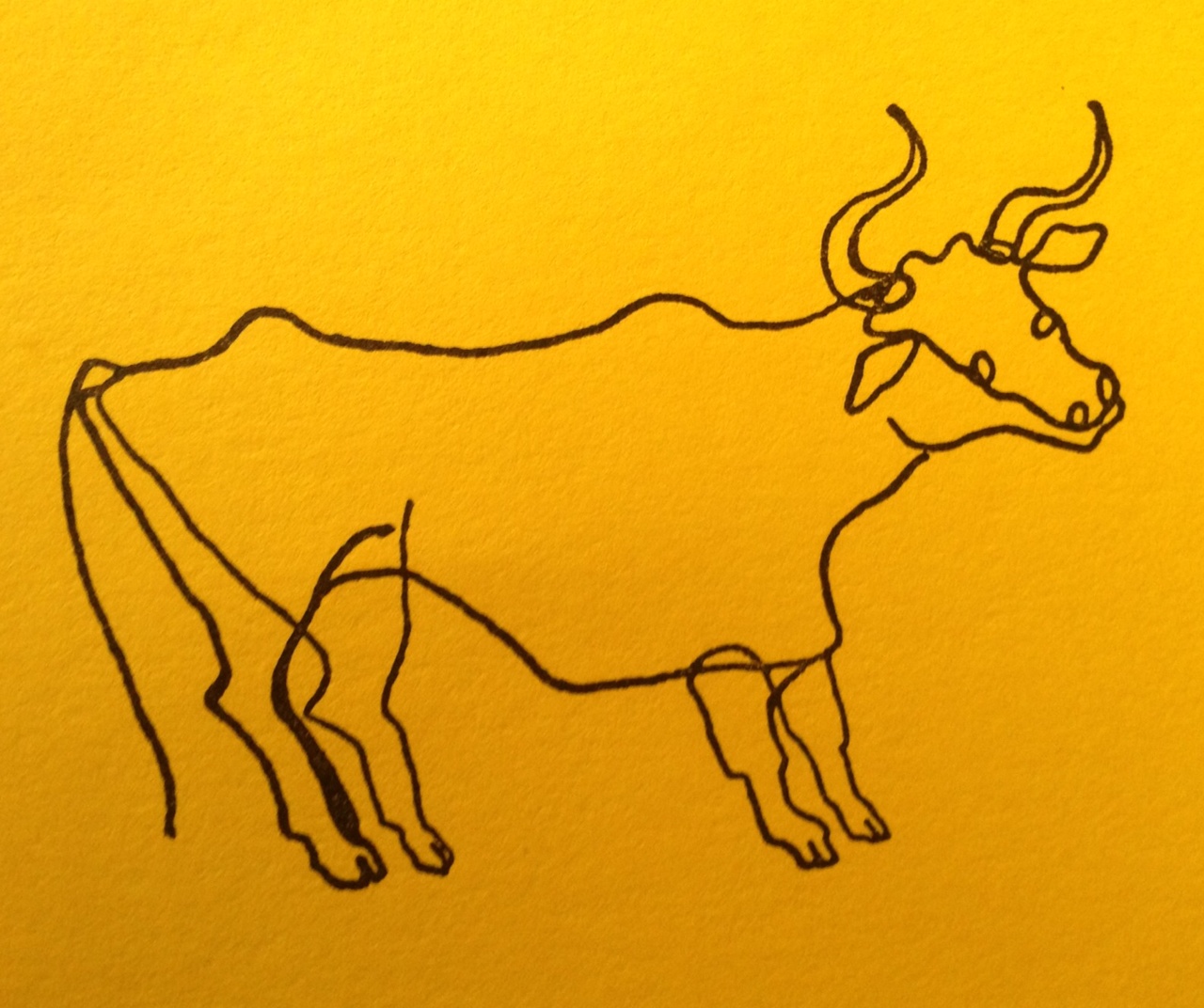 Alexander Calder, 20th Century, a seemingly simple but very evocative limning of a shape that would be, I wager, instantly recognizable to Paleolithic humans.
Auroch is singular; Aurochses, Aurochs, and Aurochsen are all possible plurals. The word comes out of the Old High German, related to the Old English ur, origin unknown, but I would suspect a Indo-European root. Ox, too, comes forth from the word. 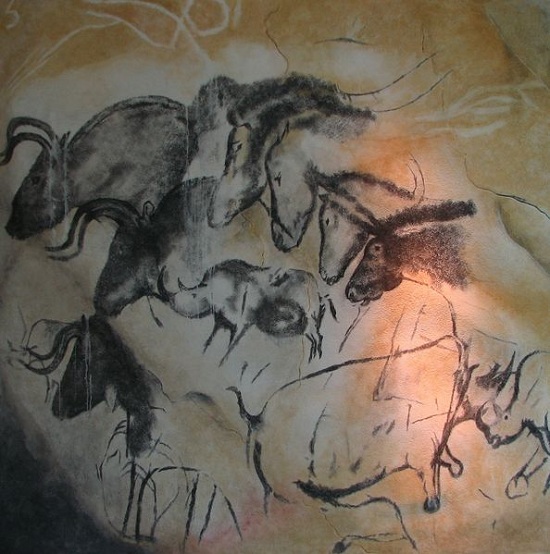 Chauvet Cave, c. 34,000 years ago. Aurochs, rhinos, and, the great survivor, the horse.
 Backyard and Beyond
Leave a comment