We went out to Prince’s Bay on the southwestern shore of Staten Island to look at the Purple Martin Colony at Lemon Creek Park. Purple Martins (Progne subis) are our largest swallow. On the East Coast, they pretty much nest exclusive in colonial human-made “houses,” which are usually patterned like little human mansions, or, this being NYC, “luxury” condos. They were one of the species hit by a double whammy of the eradication of old growth forest, with its ample supply of old woodpecker nests, which the Martins would recycle for nesting, and the introductions of House Sparrows and European Starlings, both aggressive cavity nesters that take over likely nesting holes.
But wait, before we got to the Martins, we walked along the beach and discovered a settlement of Bank Swallows. Holy skies swimming with swallows, Batman! The colony was only about a hundred yards from the Martins, so it was indeed a swallowy afternoon. A stiff wind was blowing from the west, so it was possible to watch the Banksters hanging in the air as they faced the breeze before veering off.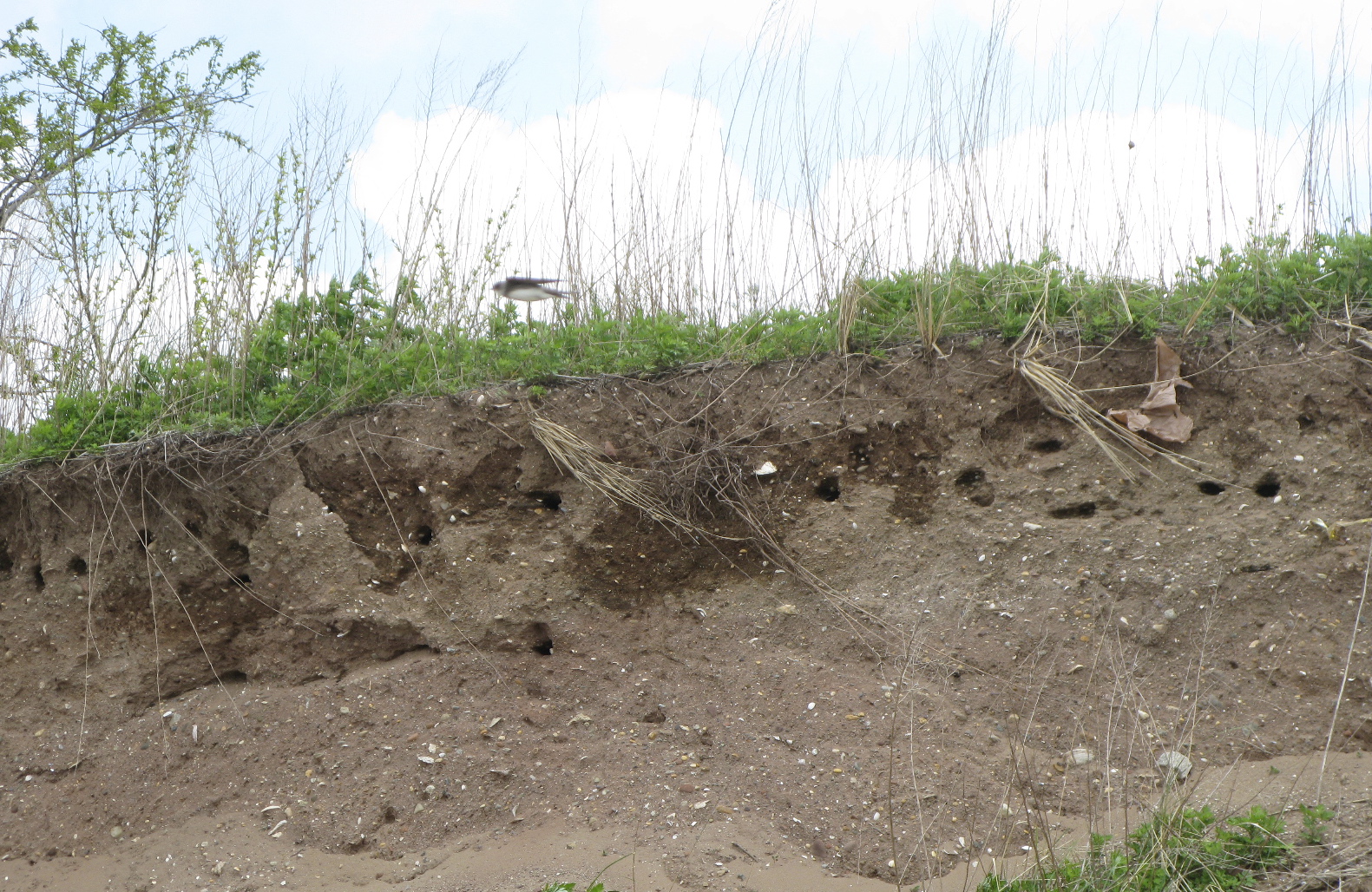 Riparia riparia, of the wonderful binomial, are our smallest species of sparrow. They make tunnels in bank sides along rivers, coasts, etc., to nest in. (The family Hirundinidae has quite a variety of nesting strategies.) Since such landforms are inherently unstable — you can see the raw reddish earth where Sandy made new cliffs further east on the beach — these swallows’ nesting sites may shift from breeding season to breeding season.
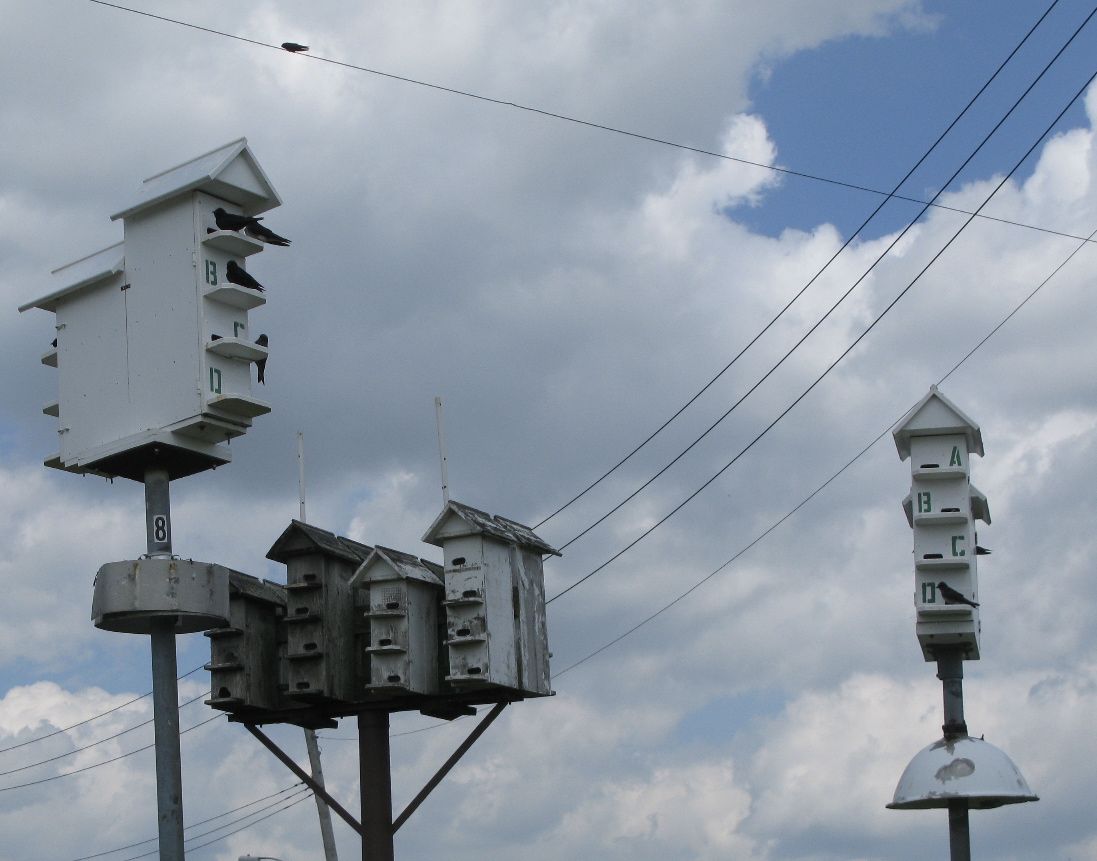 I recently purchased a 1964 edition of Bull’s Birds of the New York Area. Bull homonymly labels the location of this Purple Martin Colony as “Princess Bay,” but I trust his records more: the establishment of the colony dates to the 1950s. The Staten Island Museum and volunteers are in charge of maintaining it now. The older homes are screened off so that Starlings and Sparrows don’t try to muscle in on the territory.
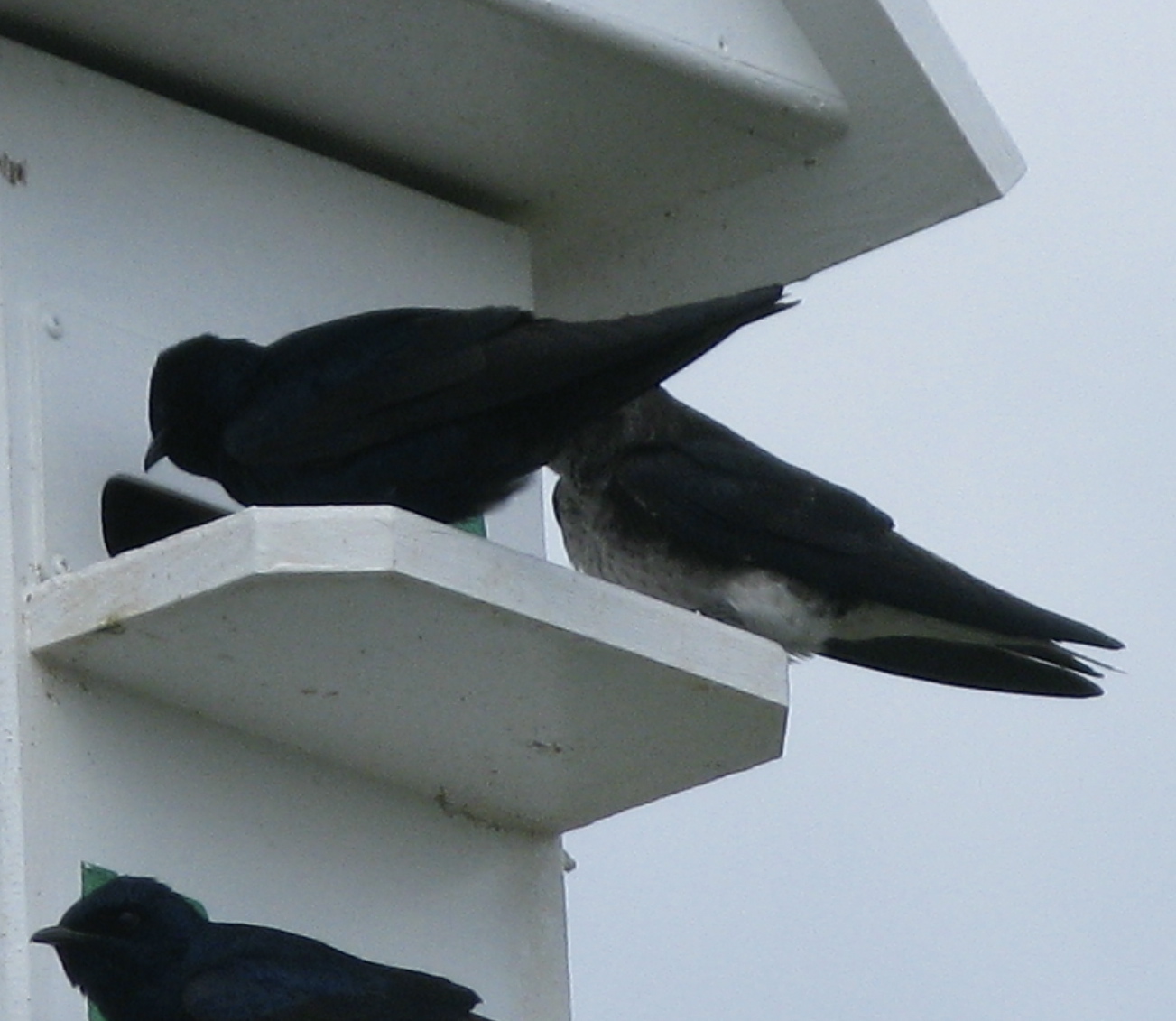 The male Martin is bluish/purplish black, the female rather less glittery, with a very pale underside as seen here on the top right. A couple of Martin decoys are attached to the houses to lure this acrobatic insectivores in, one of them tipped over like a drunken fowl. (These three are the real McCoy Martins, noisy, and fluttery.)
At cross-purposes, some idiot leaves large piles of cat food right next to the colony for the feral cats, and, inevitably, the rats and raccoons, all of them a serious threat to birds, eggs, and in this case, the young Martins who might happen to land on the ground on their first flights.
 Backyard and Beyond
Leave a comment