 Last year, there was one fledged Osprey (Pandion haliaetus) chick on the east end of Nantucket. Numbers had been dwindling in previous years and last year was pretty much bottom; there just weren’t any fish to be had, so the adult Osprey were traveling to hunt at the other end of the island, but that was a much longer trip, and the hungry adults were eating most of the prey before it got back to the young ones.
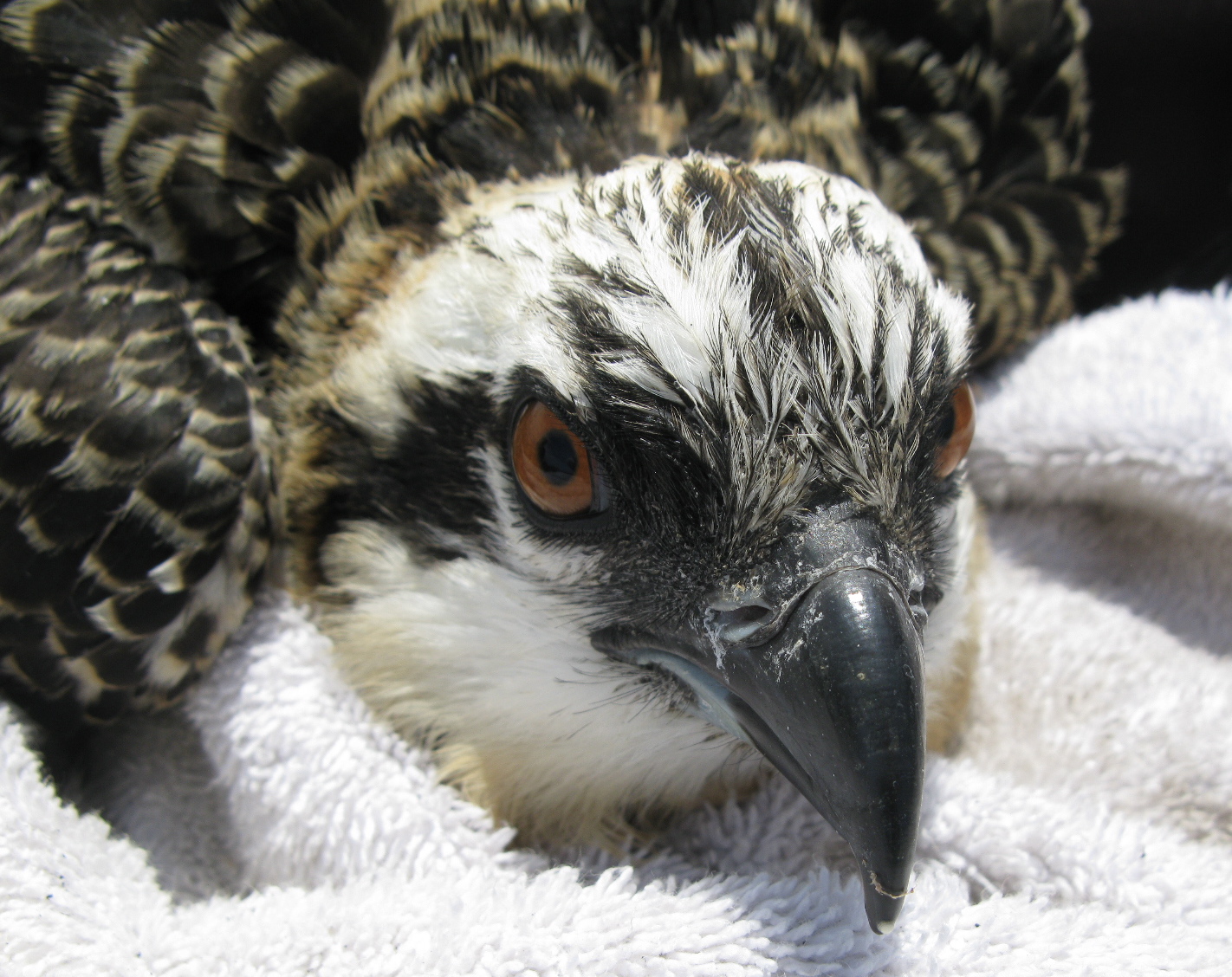
 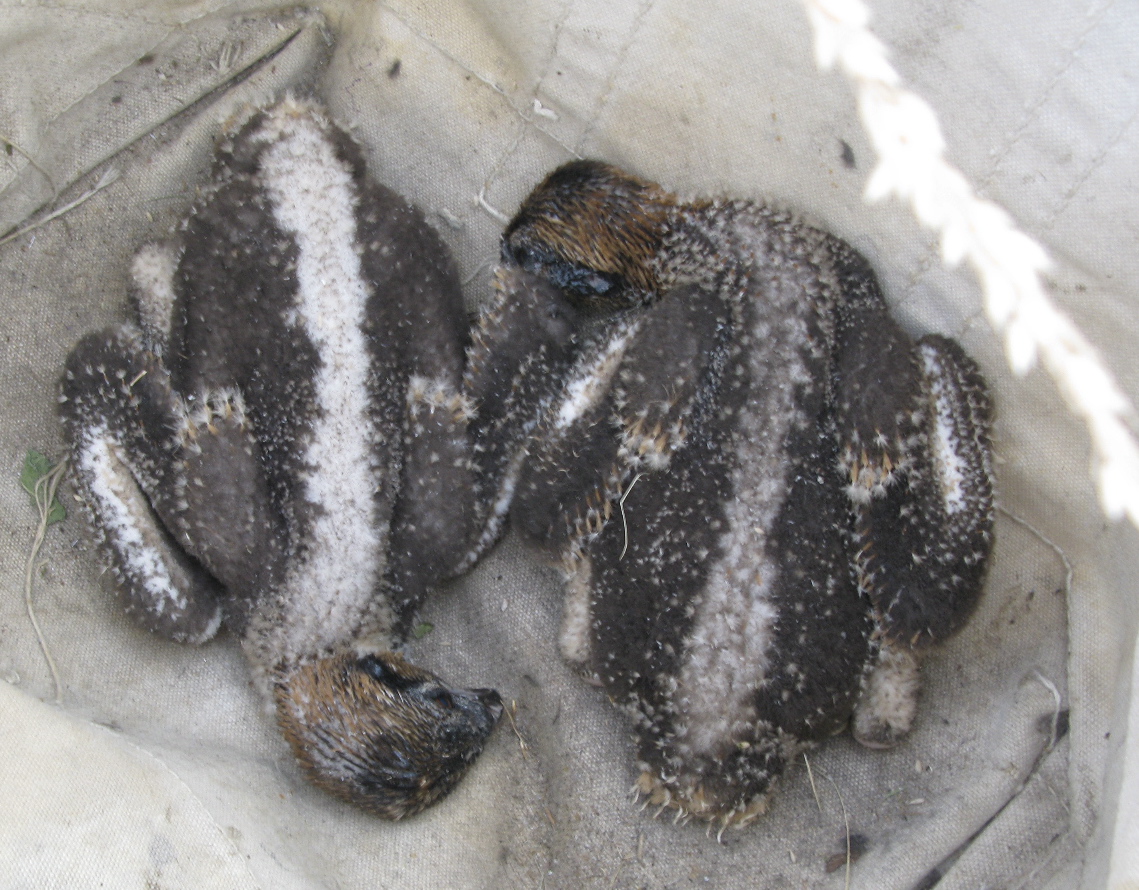 This year’s a lot better: eight chicks, two in each of four active nests on the east side. I joined a group from the Maria Mitchell Association last Monday to band the nestlings. The first two were just about a week old, too young to be banded; the metal bands would have slipped right off their legs. When they are this young, they are pretty much helpless, and so play dead to the cheeping commands of their parents, who circle above. Note the stripes down their backs: this helps them blend into their stick nests when seen from above.
 The next three pairs were all old enough to band. Each bird got a numbered band and had his or her wing and tail feathers measured.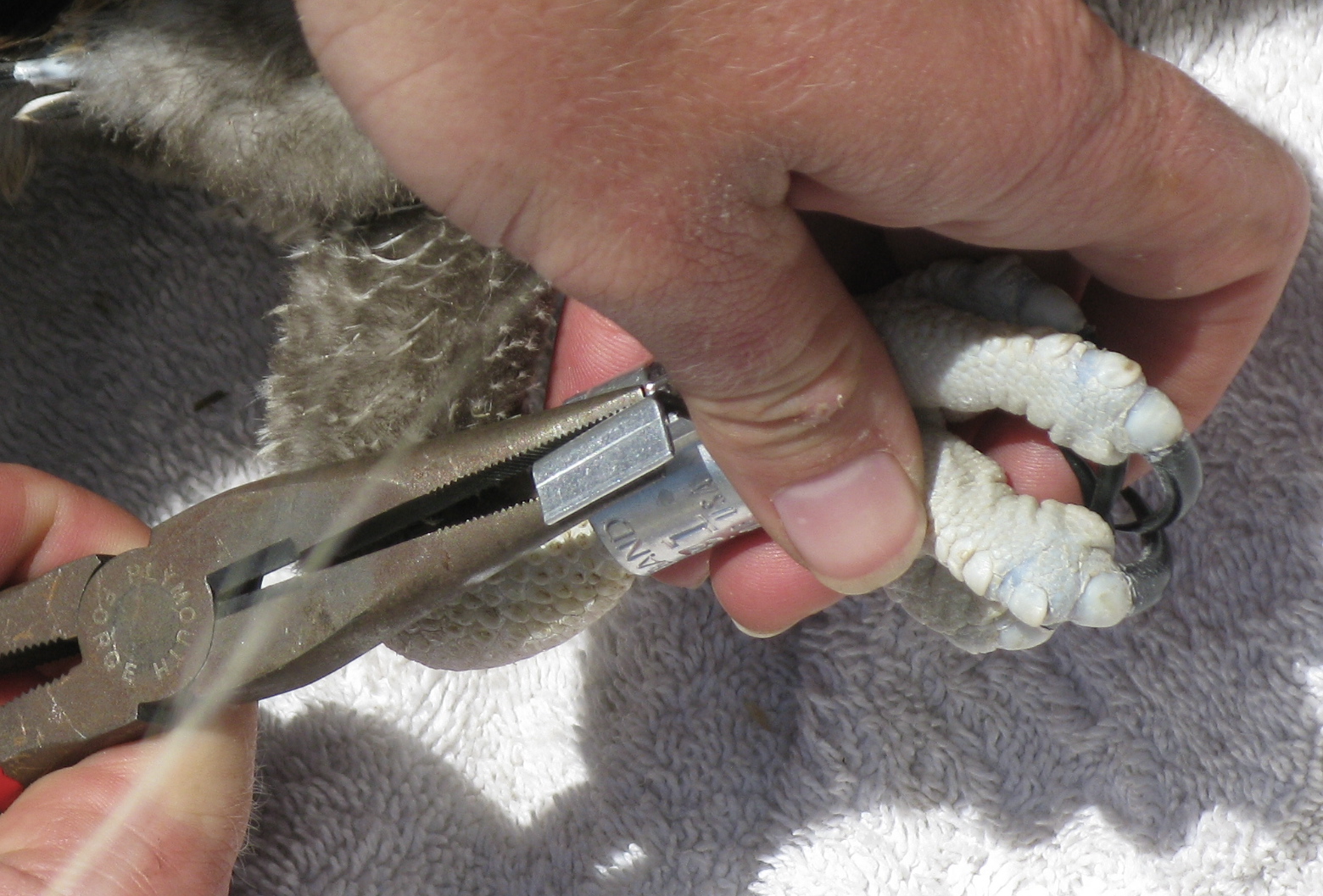
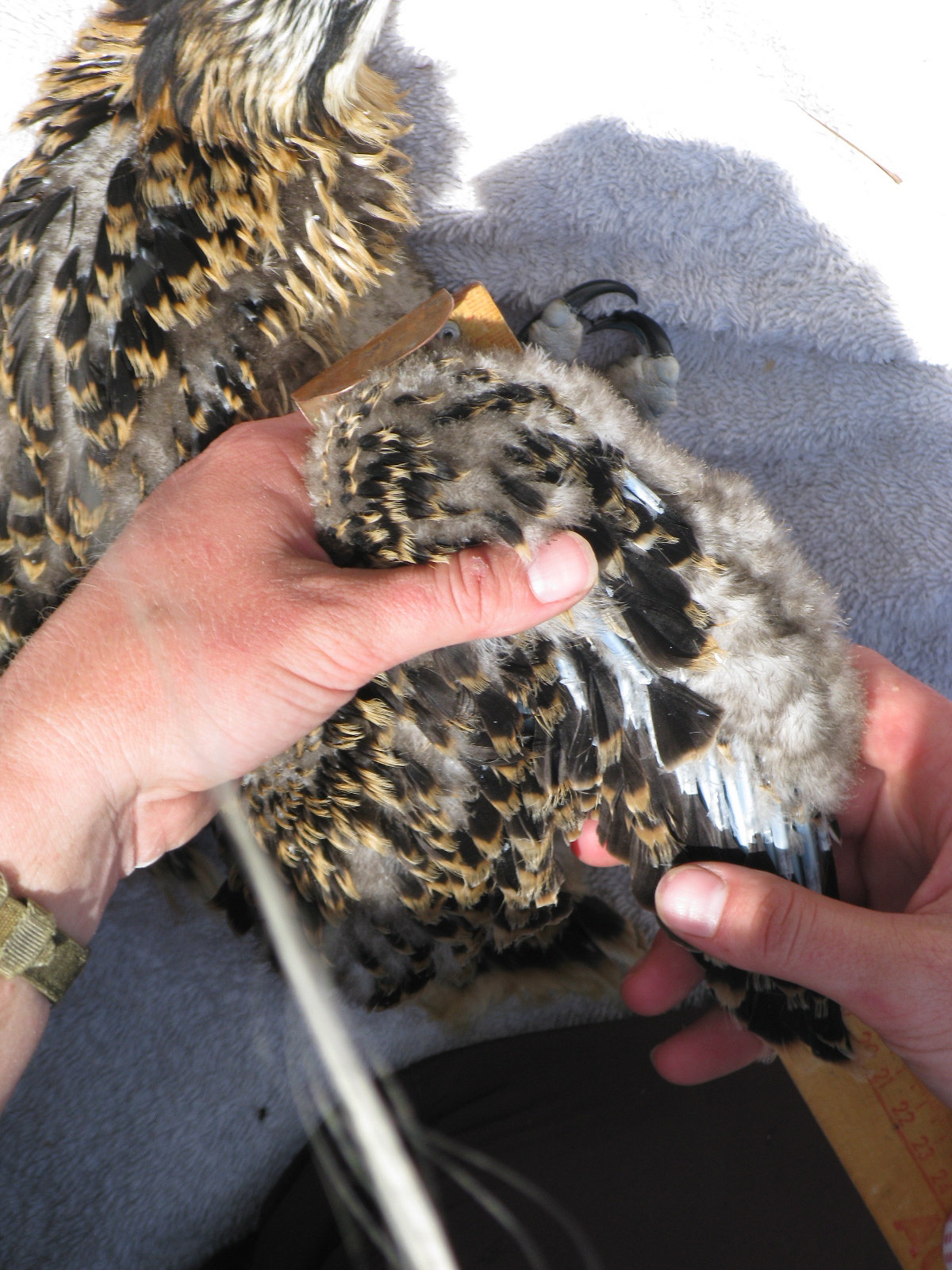 Banding data is all centrally collected; when bands are reported found, the information can give an idea of age and migration patterns of birds (the oldest known Ospreys have lived into their late 20s; if they survive their first year, a very big if, they may more typically live 12-15 years). From two years of satellite tracking, we know that one of Nantucket’s male Osprey spends our winter in Colombia. He takes about two weeks to fly back and forth in the spring and fall.
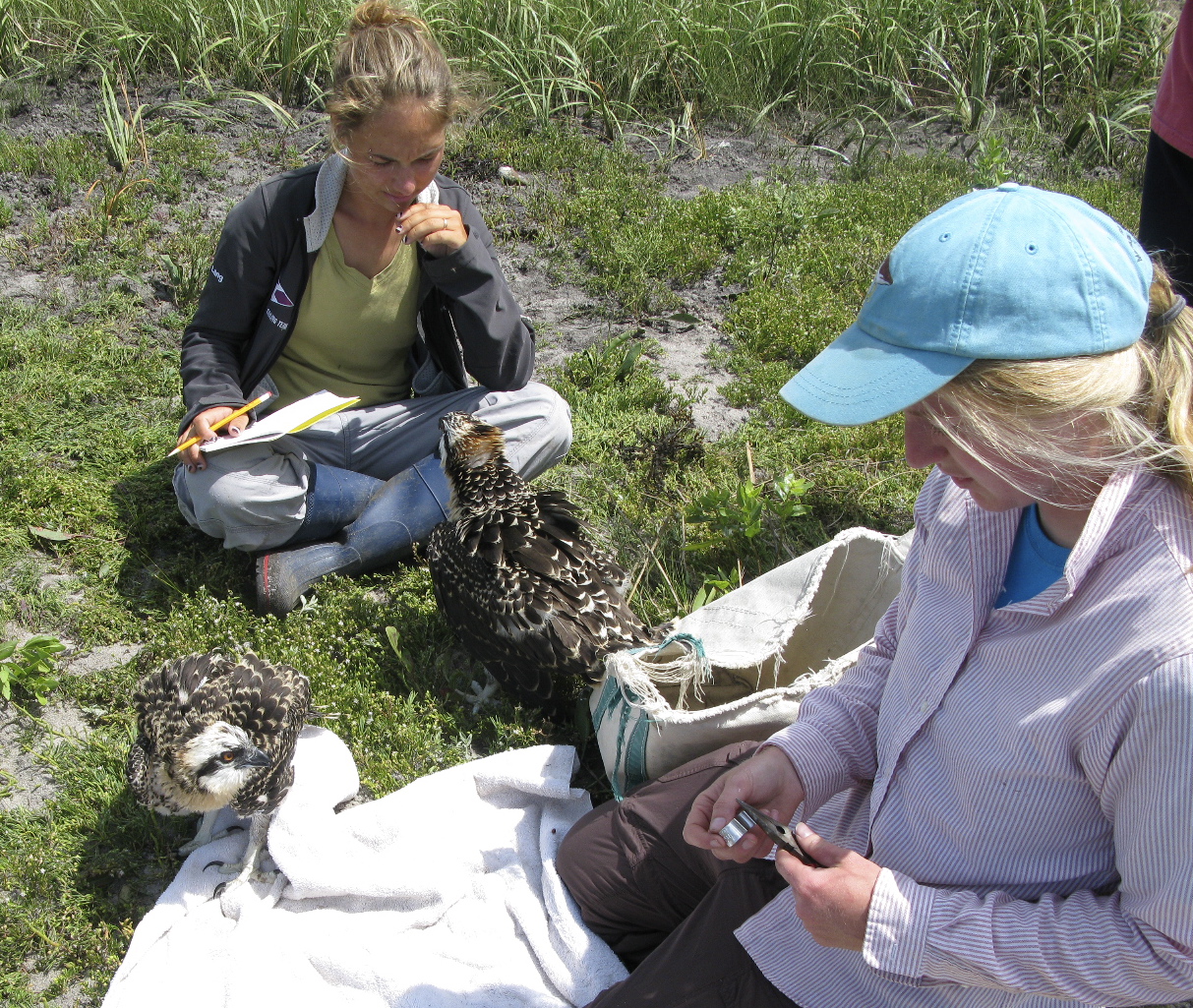 Humans Jessie, left, and Julia, right, were the recorder and bander on this trip. (Julia recently banded over 70 Barn Owl chicks on the island; a few years ago there was one known barn owl in residence after a couple of bad winters.) I helped to carry the ladders and to feed the mosquitoes. As fish eaters, Osprey usually nest near bodies of water, fresh, brackish, and salt. They are thus often near or around marshes. And that means our deadly enemies the mosquitoes, specifically the salt marsh murderous mosqito.
 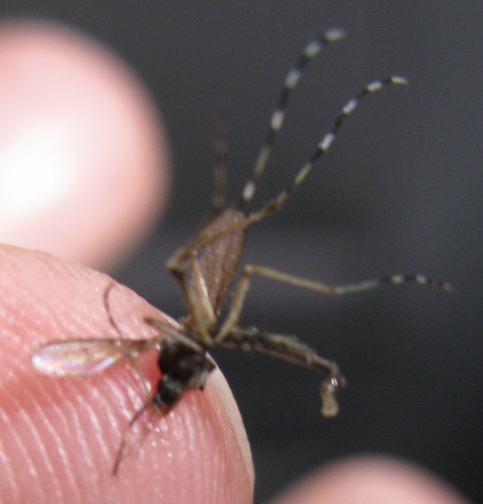 I was absolutely savaged by the little fuckers. Luckily, the carnivorous green-headed flies were not out in force as well. One of the nest sites was in Medouie Creek, renown as the most mosquito-ridden part of the island; the people who bought the property where the osprey nest was set up did so in the middle of winter. Oops.
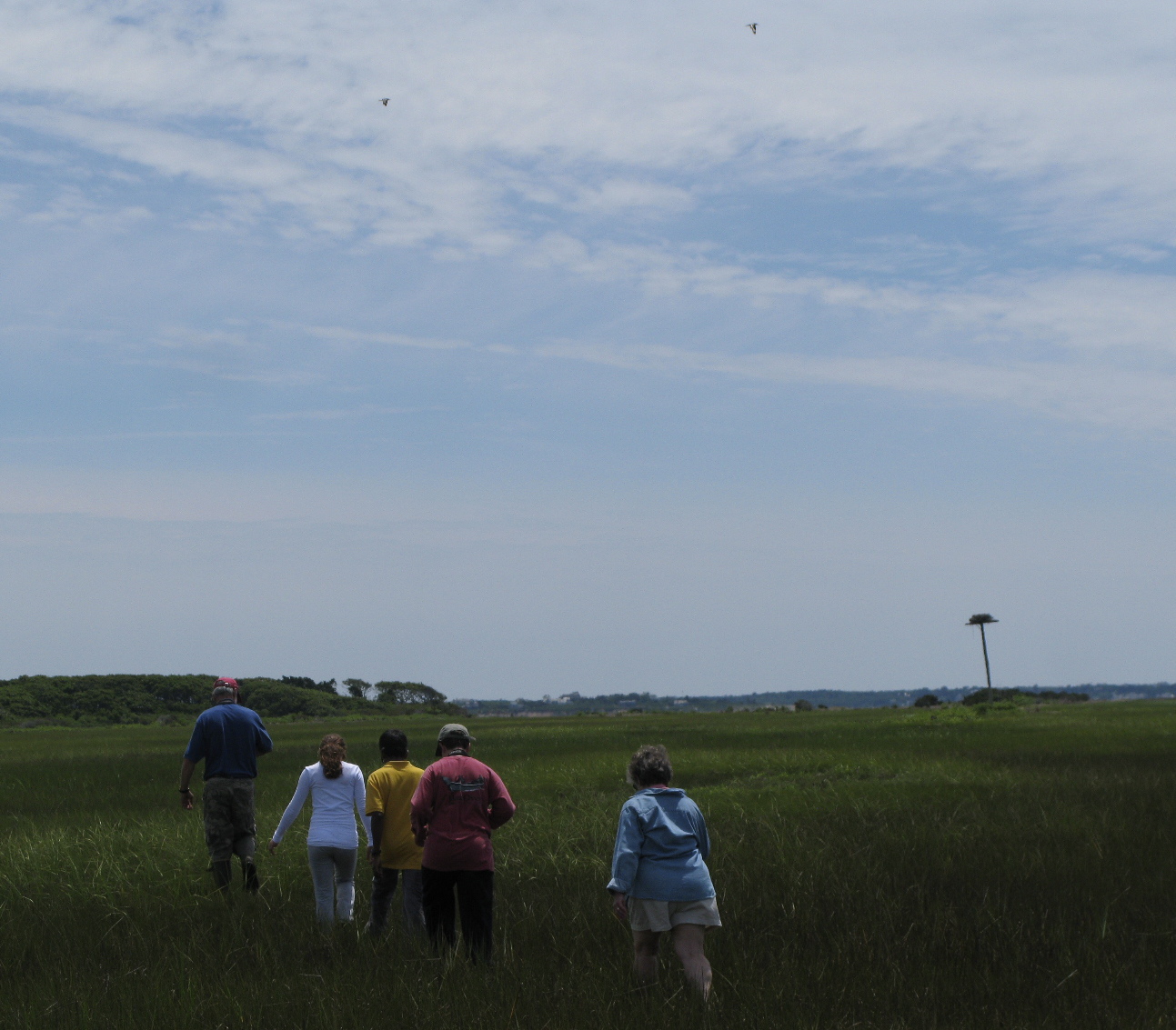 Bob Kennedy, in blue in the lead here, has been following the island’s Osprey for many years. (He’s now also involved with a project with the birds at Jamaica Bay Wildlife Refuge.) We’re in the salt-marsh Glades at Costaka in this shot, heading to that distant nest pole. Salt marsh hay, fiddler crabs, and that strange succulent salicornia at our feet. Nesting Willets adding to the noise of the adult Osprey overhead. And that horrible high-pitched whine. Jessie said it looked like I had a halo of mosquitoes around my head. With my hat and my long hair, only my face was available for bloodmeals.
 More to come Sunday.
Banding Osprey, Part I
5 responses to “Banding Osprey, Part I”
-
What a great day out. Really good to hear the numbers of both Barn Owls and Ospreys are increasing in Nantucket. I hope the mosquito bites are easing 🙂
-
Just a few scars left.
-
-
Wow! What an opportunity you had to see these birds so close! Great post!
-
[…] time I assisted the Maria Mitchell crew in banding baby Osprey on Nantucket: Part I Part […]
-
[…] years studying these birds. He writes a good book. Pictures from a banding I helped out at in 2010. Another in 2012. And […]
 Backyard and Beyond
Leave a comment