Remember my “bad acid trip” of nearly a year ago? I dropped an egg in some vinegar to show how acid breaks down calcium carbonate. Something like this is happening right now as some of the excess carbon dioxide we are pumping into the atmosphere gets absorbed by the ocean and acidifies the water. This spells doom for the many forms of ocean life that use calcium carbonate in their skeletons, shells, and bony architecture, as in the corals. A recent article detailing two papers on the Permian-Triassic Extinction brought my little experiment quickly to mind. 252 million years ago, during the “Great Dying,” something like 95% of marine species went extinct, along with a similar percentage of land species. Included in the extinguished ocean life were all species of the trilobites. I happen to have the remains of one that was transmuted into ghostly rock: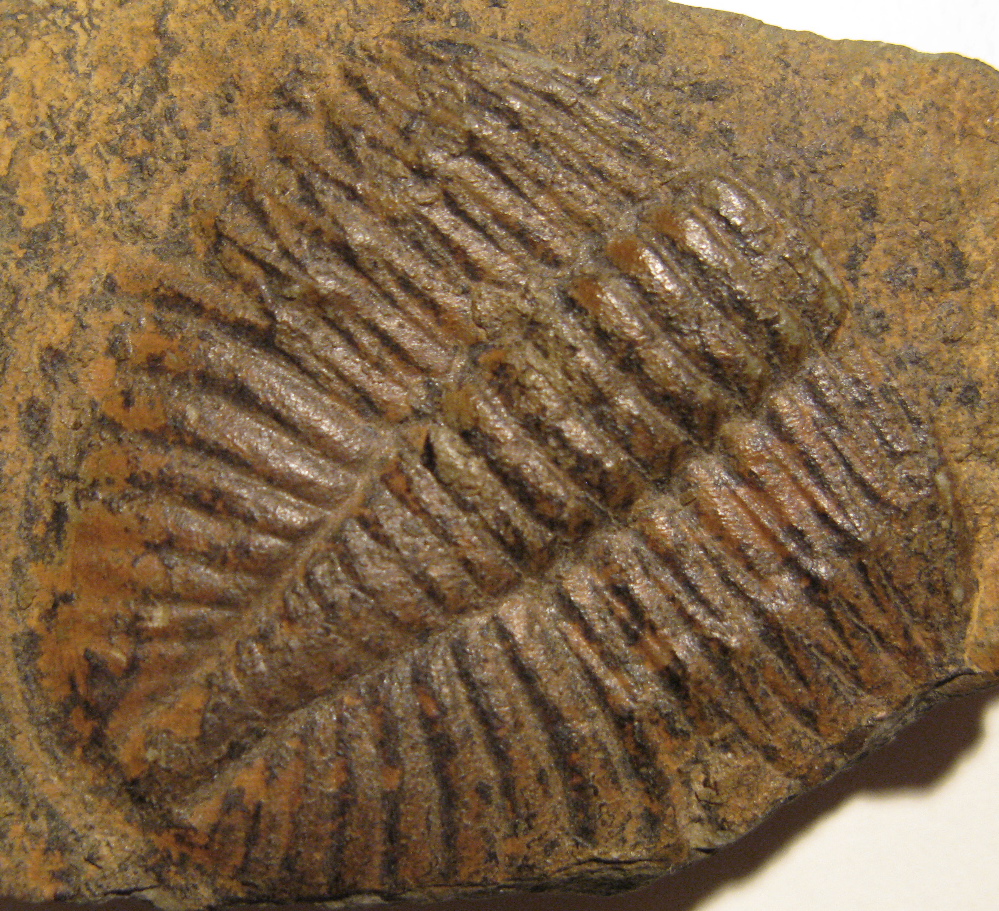 The studies argue that “the animals died from a lack of dissolved oxygen in the water, an excess of carbon dioxide, a reduced ability to make shells from calcium carbonate, altered ocean acidity and higher water temperatures. They also concluded that all these stresses happened rapidly [in geological terms, 200,000 years or much less] and that each one amplified the effects of the others.” The reason postulated is a monstrous infusion of carbon into the atmosphere, from the biggest volcanic event in the last half billion years.
Very similar conditions pertain today: “warming, rapid acidification and low-oxygen dead zones.” Only today, we are the earth-shaking volcano. And we are producing more carbon dioxide than then, which suggests the work of the sixth Great Extinction will be done in much, much faster time.
The mind simply boggles. Have we humans, beginning quite accidently, become, essentially, the equivalent of a planet-transforming volcanic cataclysm, or the shattering event that destroyed the dinosaurs at the Cretaceous-Paleogene Extinction? Both the Permian and Cretaceous extinctions scrambled the evolutionary course of the planet, resulting in the development of very different flora and fauna afterwards.
After the Anthropocene Extinction… who or what will be around to document its ruins, find its fossils on the beach, theorize about its causes? Some fossilized coral, we think, I found on a Nantucket beach: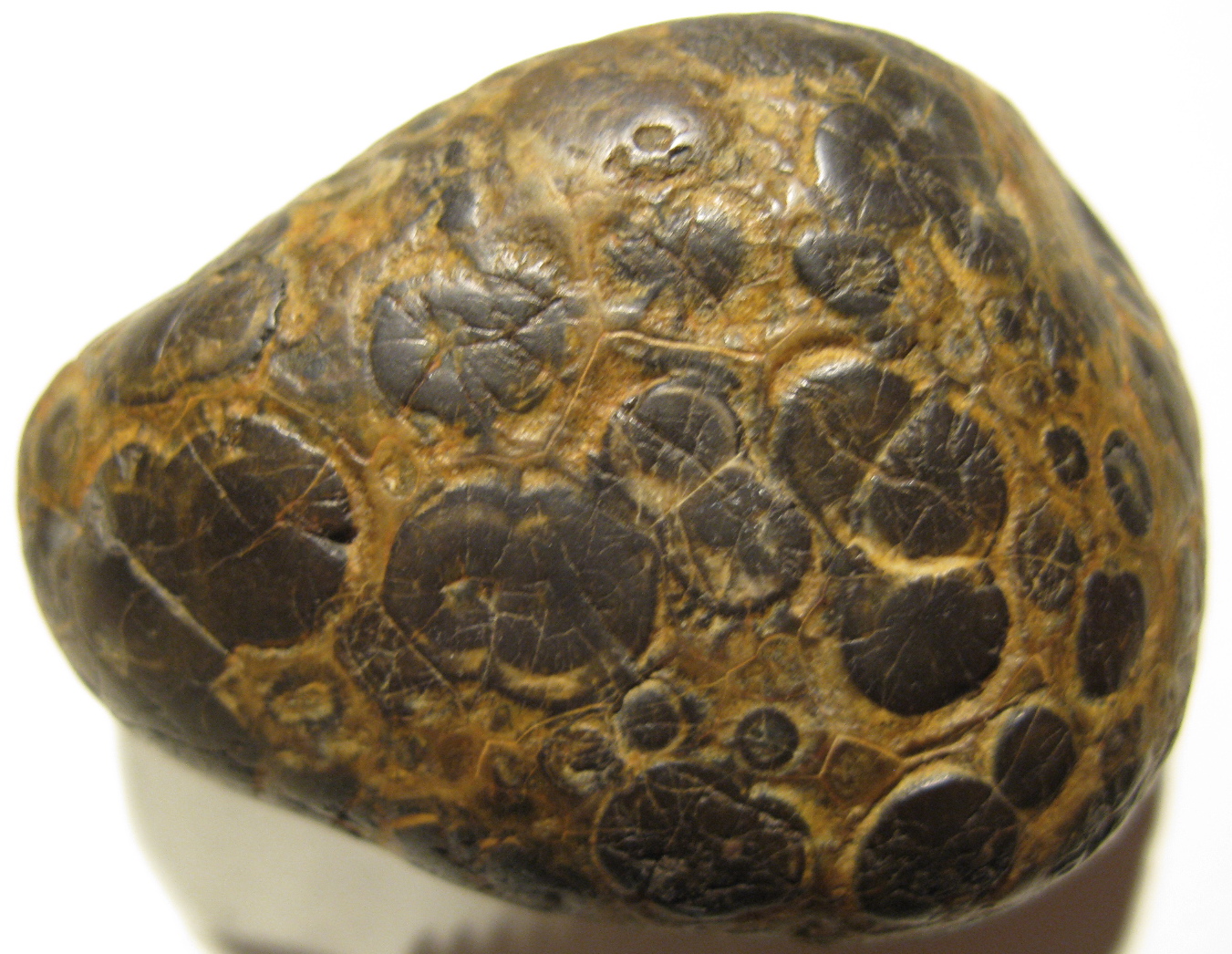 We can’t stuff the carbon genie back down into the chimney and we’re unwilling to make the sacrifices to slow down our growing CO2 production (would that even help?) because, let’s face, it, this is a fossil-fuel civilization (and as Timothy Mitchell argues, we live in a Carbon Democracy, or rather more carbon, less democracy). So on we march to vanquishing… how much ocean life? 50% 75% 95%?
All things pass, as the long history of the planet shows us. Human beings have been and will be just a blip in time. Will we also be a planetary disaster? When a volcano blows up or an asteroid smacks into the planet, it’s a random, accidental event. But when we kill off a great proportion of life-forms by our actions, by our very civilization, does it matter that it’s not premeditated? (Or was it? The assault on the planet was something new in human history, beginning in earnest about two centuries ago, ideologically constructed from old religious texts and new capitalist ones, but Arrhenius fingered CO2 from burning coal, then the dominant fossil fuel, as likely to increase the greenhouse effect as far back as 1896 ~ we don’t have a single excuse today.) Admittedly, the majority of our victims are pretty abstract to most of us — even vegetarians have a hard time sympathizing with zooplankton. Still, I can’t help feeling that our moral failure here is spectacular, cosmic.


Leave a comment