Two native trees in the legume family, which produce bean-like seed pods and, often, nasty defensive thorns. Black Locust (Robinia pseudoacia) just sprouting in Brooklyn Bridge Park. The pods for this one are small and flat. This hardy, fast-growing tree can be found pretty much anywhere and produces pretty white flowers.
 Honeylocust (Gleditsia triacanthos) on Bergen St. A common street tree species, this is the tree that produces the long, twisty brown pods that clatter on sidewalks in the fall. This particular tree is sprouting on the trunk. The tree pictured below, which was next to this one, is sprouting at the roots.
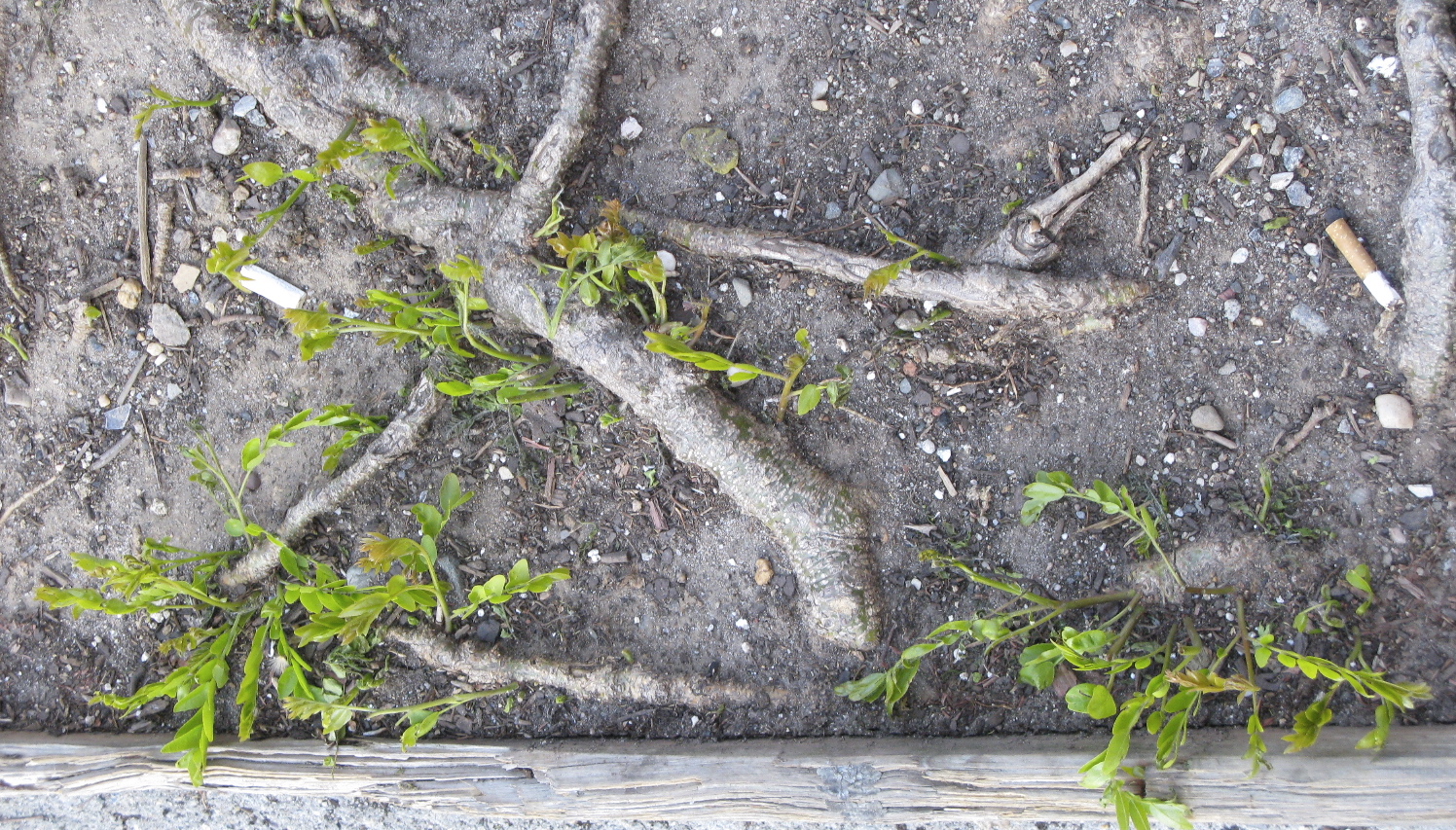 Such sprouting is generally a sign of great stress for the tree. Typically, it’s choking to death in the compacted soil of the tree pit, one of the hazards for street trees besides vandalism, vehicles, and endless gallons of dog piss.
Interestingly, Honeylocusts seem to be prone to such sprouting, which may have something to do with their natural inclination to sprout fierce thorns on its trunk. Hybrids that don’t sprout thorns (people would yowl) are now planted — although you can find the thorny ones in parks and other greenswards — but perhaps even the hybrids want to sprout something off the trunk.
 Backyard and Beyond
Leave a comment