With all the new trees planted around the city, there’s just a lot more eye-level detail to be seen. As the trees bud out into leaves and flowers, we can get a lot closer to these saplings than we can to many a tall, trimmed up, mature tree. These pictures were all taken along two blocks of Washington Avenue in Clinton Hill.
The enormous Pin Oak (Quercus palustris) lost in the tornado of September 2010, which pretty much plowed up Washington after battering the northeast sector of Prospect Park, has just been replaced with a Shingle Oak (Q. imbricaria). 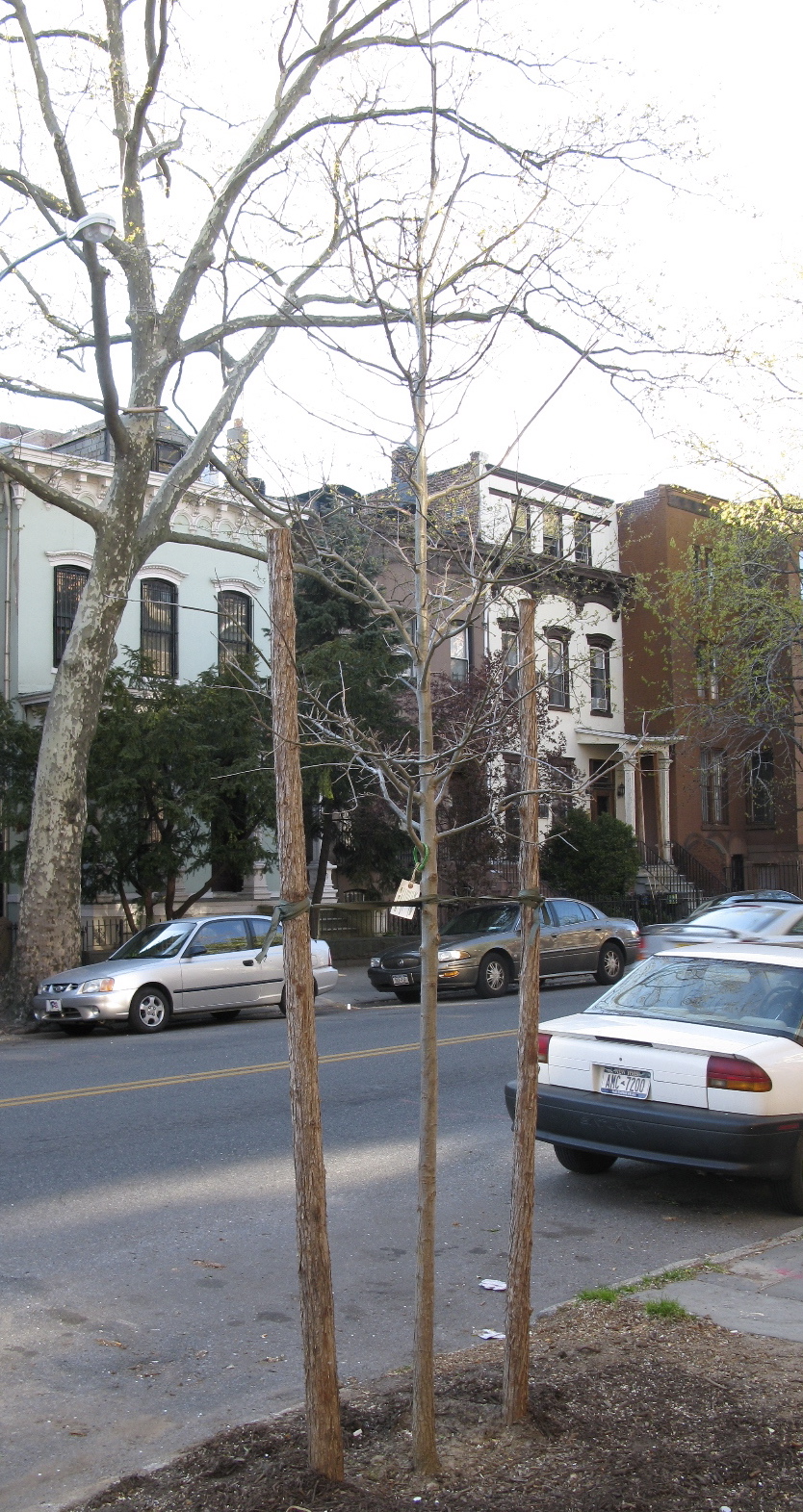 The Shingle is one of those oaks that do not have lobed leaves. This particular youngster had not a speck of green on it yet; it’s no doubt still recovering from the transplant.
This is what most of us think as a typical oak leaf: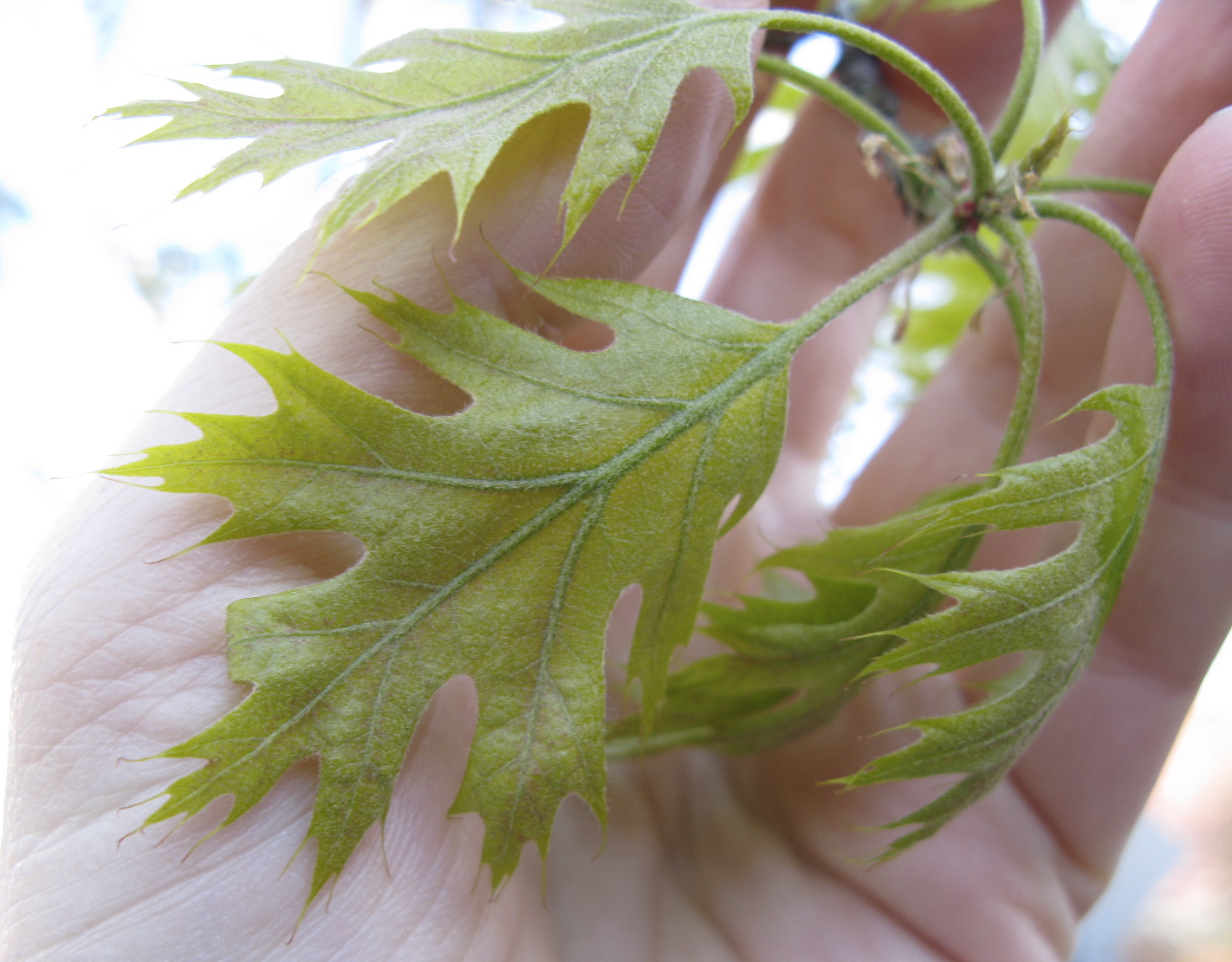 I’m not sure which species of oak this is, but it’s in the Red Oak Group, as testified by the bristle-tipped pointed lobes. There is also a White Oak Group, characterized by leaves without bristle tips and usually with rounded lobes.
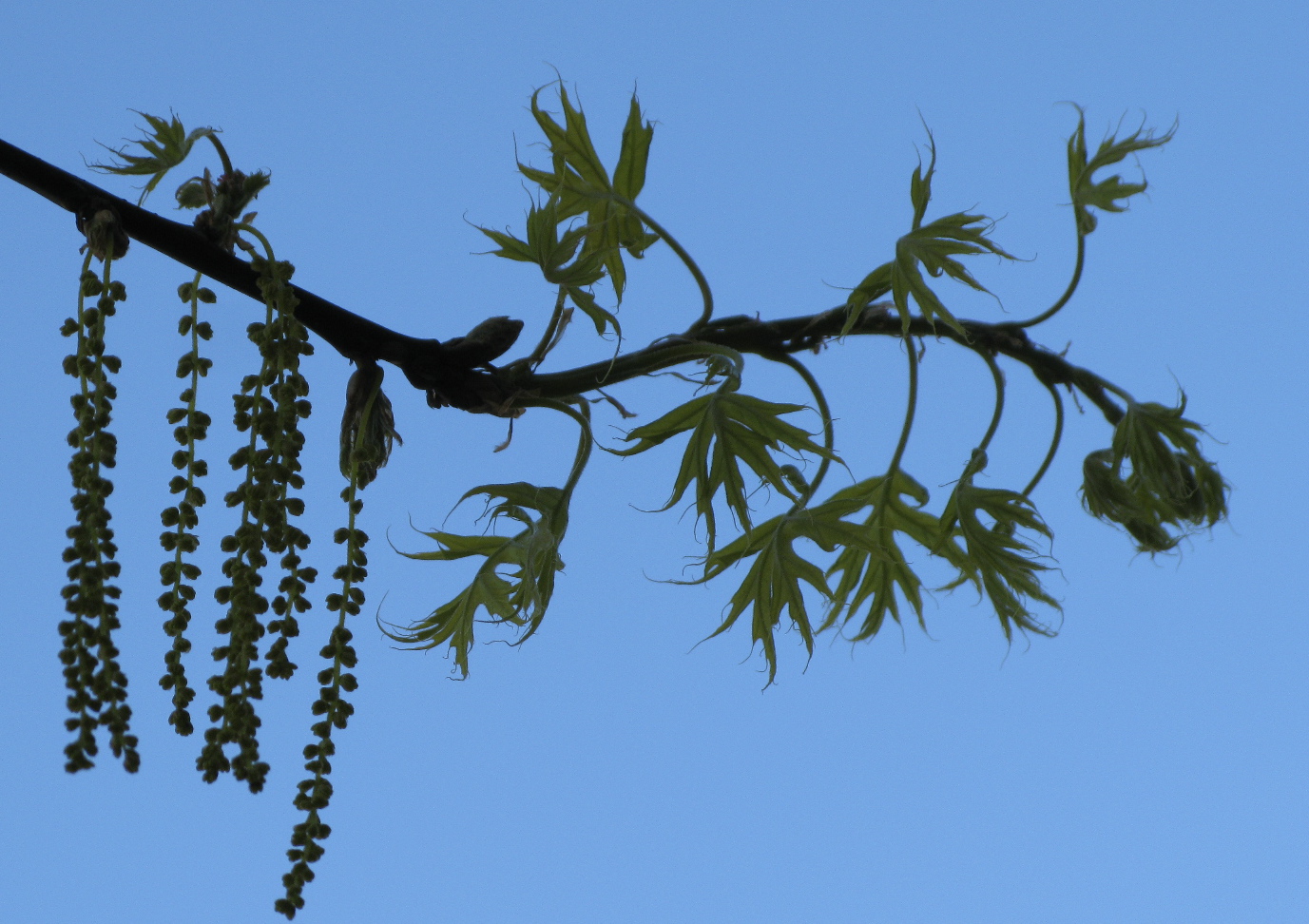 Oaks are wind-pollinated, so they do not have showy, pollinator-attracting flowers. Instead, the flowers are small and hang in catkins. This is probably our old friend Pin Oak, an assumption I make because of the deep sinuses in the very fresh leaves.
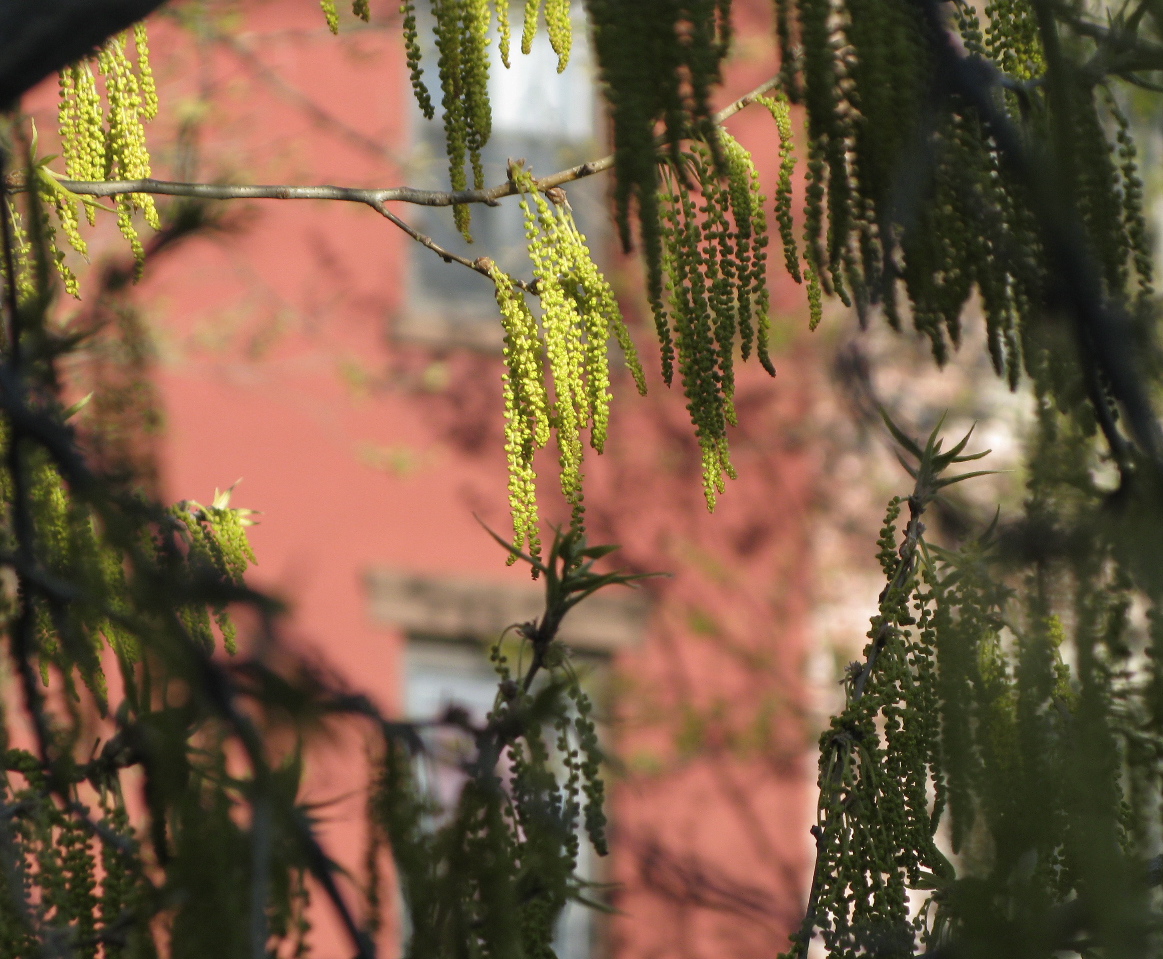 Some of the oaks are positively dripping with catkins right now.
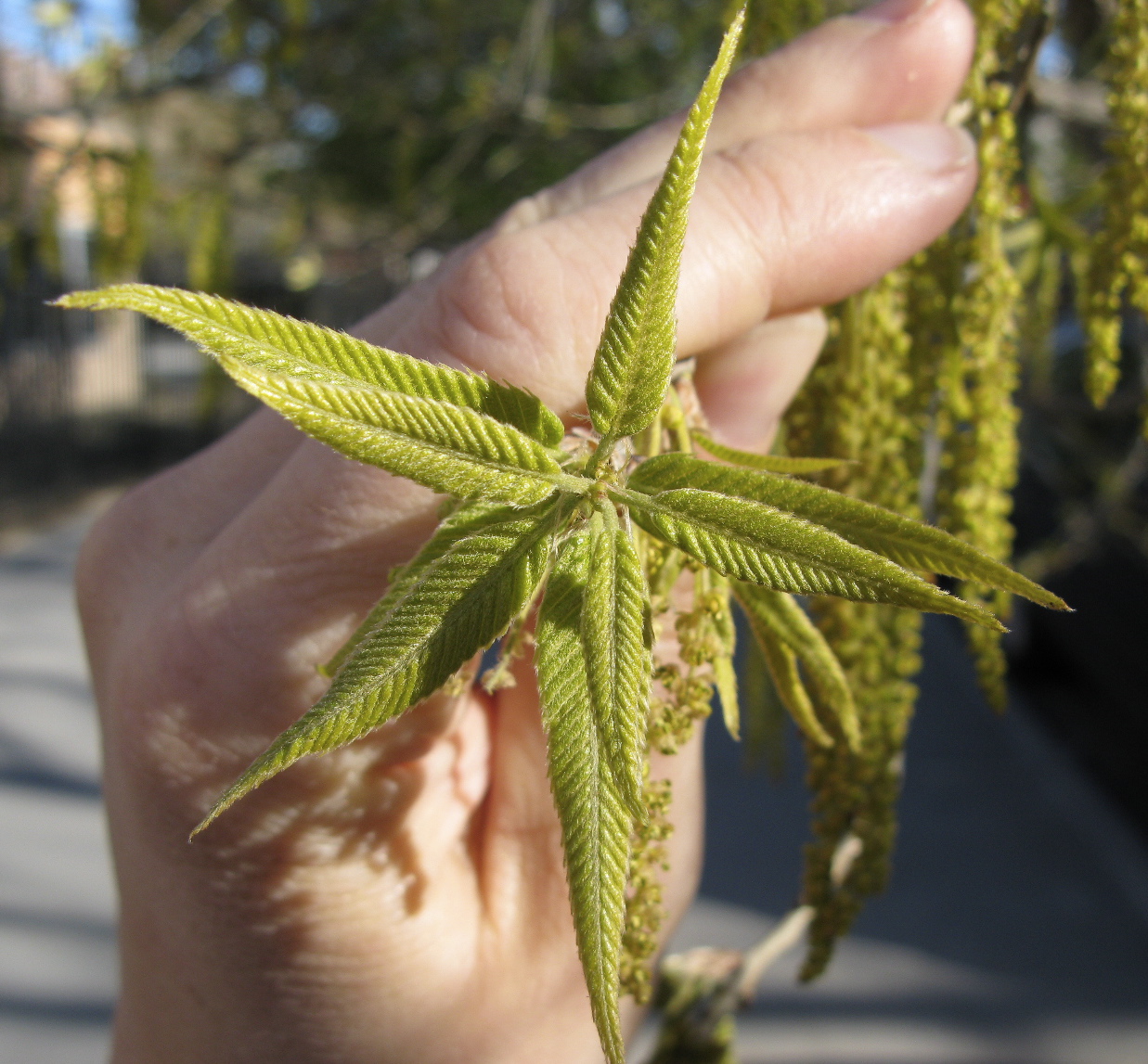 Now, note the catkins in the background of this one. Even though these are baby leaves are quite un-oak-like, this is in fact another atypical oak, the Sawtooth Oak (Q. acutissima). The tree is native to western Asia and Japan, and hence in neither the Red or White group, but rather the “exotic” group. It is found on both our streets and parks. It produces substantial acorns with very hairy caps every two years.
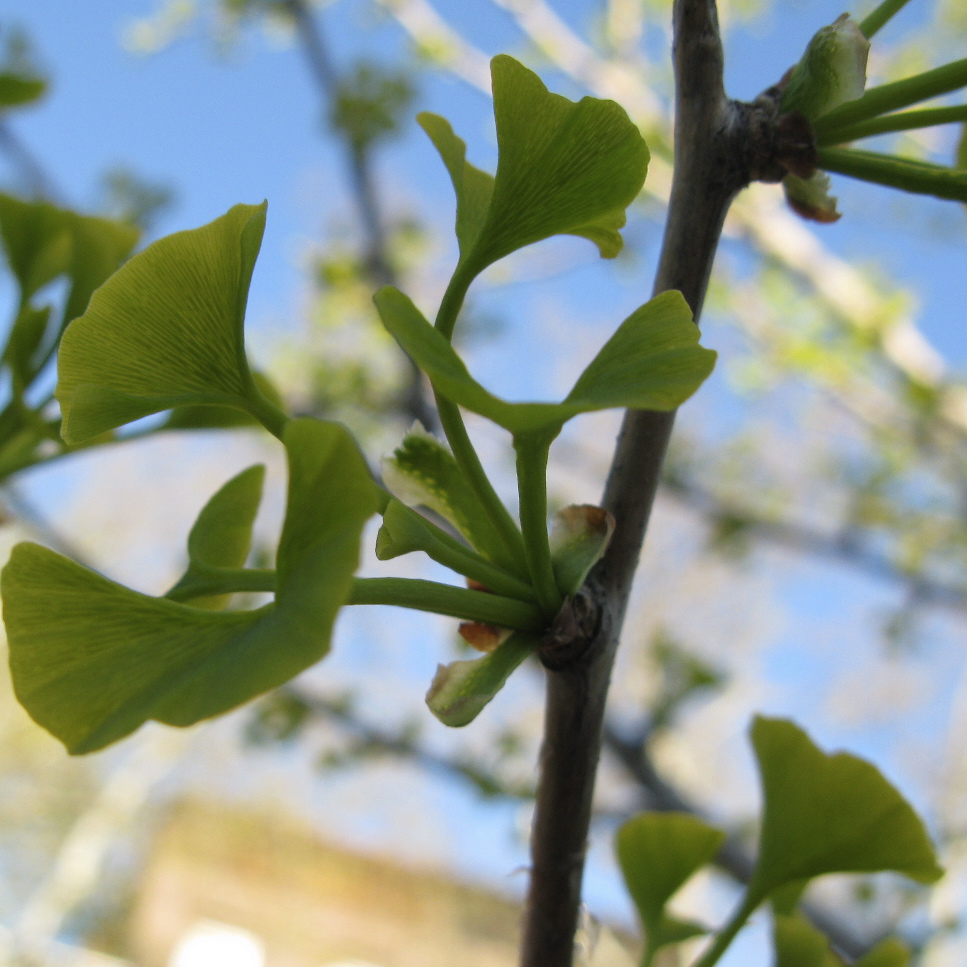 The distinctive fan-shaped leaves of the Ginkgo (Ginkgo biloba). Here they are finger-nail sized as they sprout off the stubby “spur twigs.” Everything about the Ginkgo is unique. It has no living relatives. 270 million year old fossils of the tree are nearly identical to living specimens today. It’s even in its own division in the kingdom Plantae: Ginkgophyta, while all the evergreen trees are in Pinophyta and all the broadleaf trees are in Magnoliophyta.
 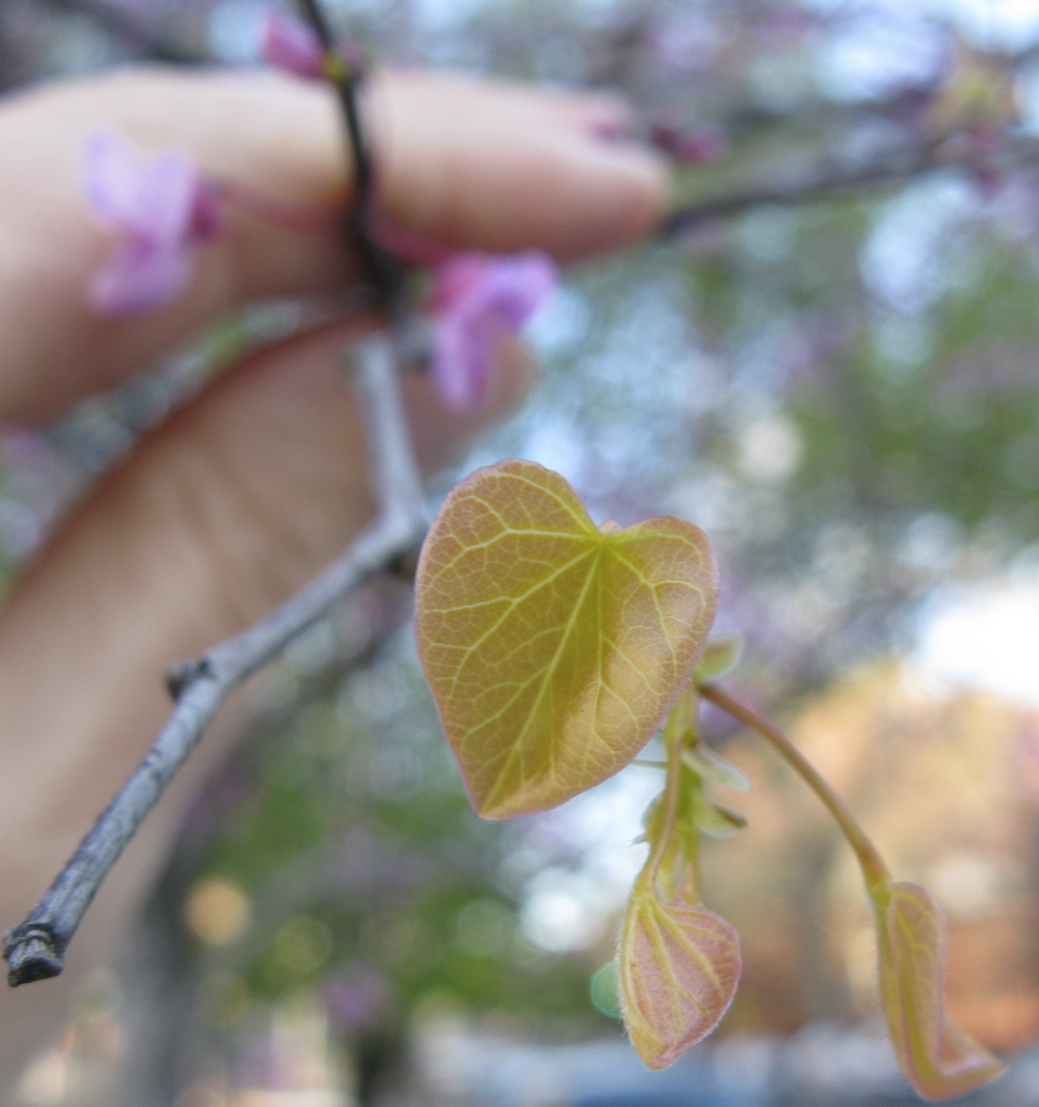 The heart-shaped leaves of Eastern Redbud (Cercis canadensis). This tree is unmistakable when in bloom, the little pink flowers all along its branches, but it becomes a bit more obscure then the flowers drop away. But these heart-y leaves will get to be 4″ across, so look for them later in the spring and the summer.
 Backyard and Beyond
Leave a comment