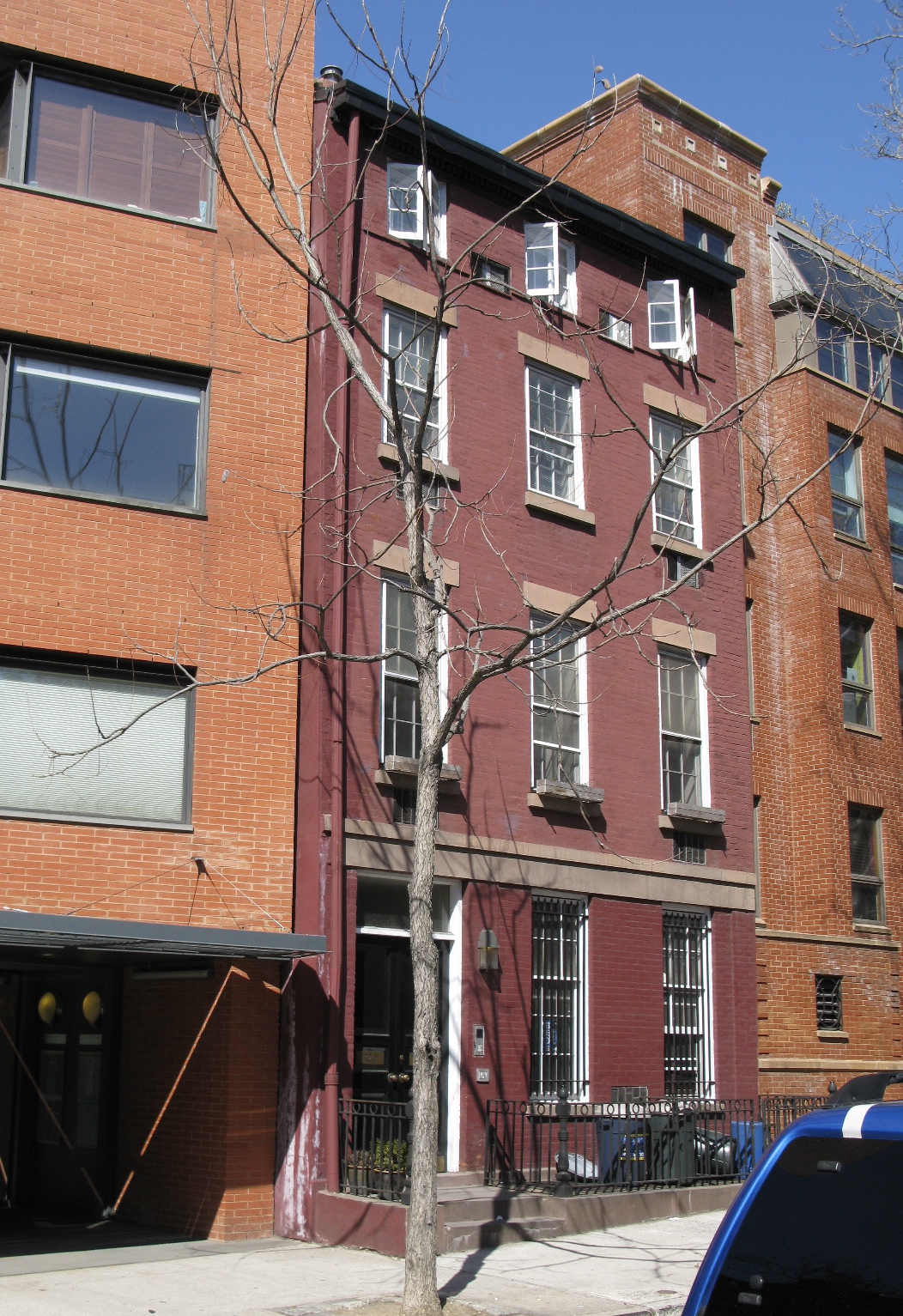
 There’s a Kentucky Coffeetree (Gymnocladus dioica) on the street around the corner. This Midwesterner is a fairly uncommon tree here in the city, but a few are scattered on the streets and in the parks. It is on the official street tree list, in the form of the suggested cultivar “Espresso” (cute). Male and female flowers are produced on separate trees in this species, but the tree can get by this geographical difficulty by growing in clonal groupings.
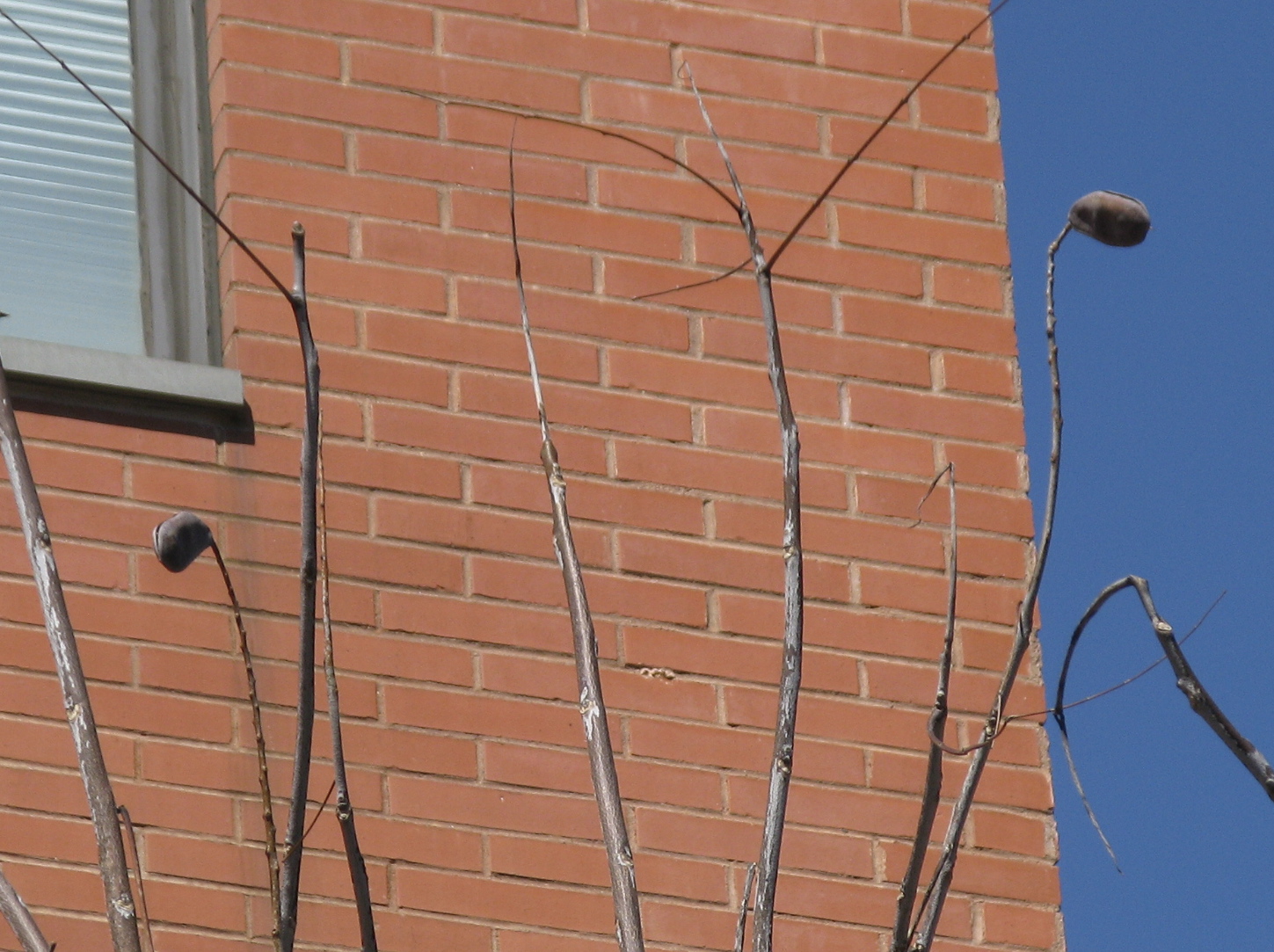 I identified this tree by noticing the distinctive pods. You’ve seen the pods before if you’re a regular here at B&B.. The seeds within the pods are toxic when raw. When roasted, however, the seeds were used as a coffee substitute by hard-up pioneers who had crossed the Appalachians without benefit of Starbucks.
I’ll return for a picture of this tree’s bipinnately compound leaves once they are out in force.
 Backyard and Beyond
Leave a reply to Denise P. Puchol Cancel reply