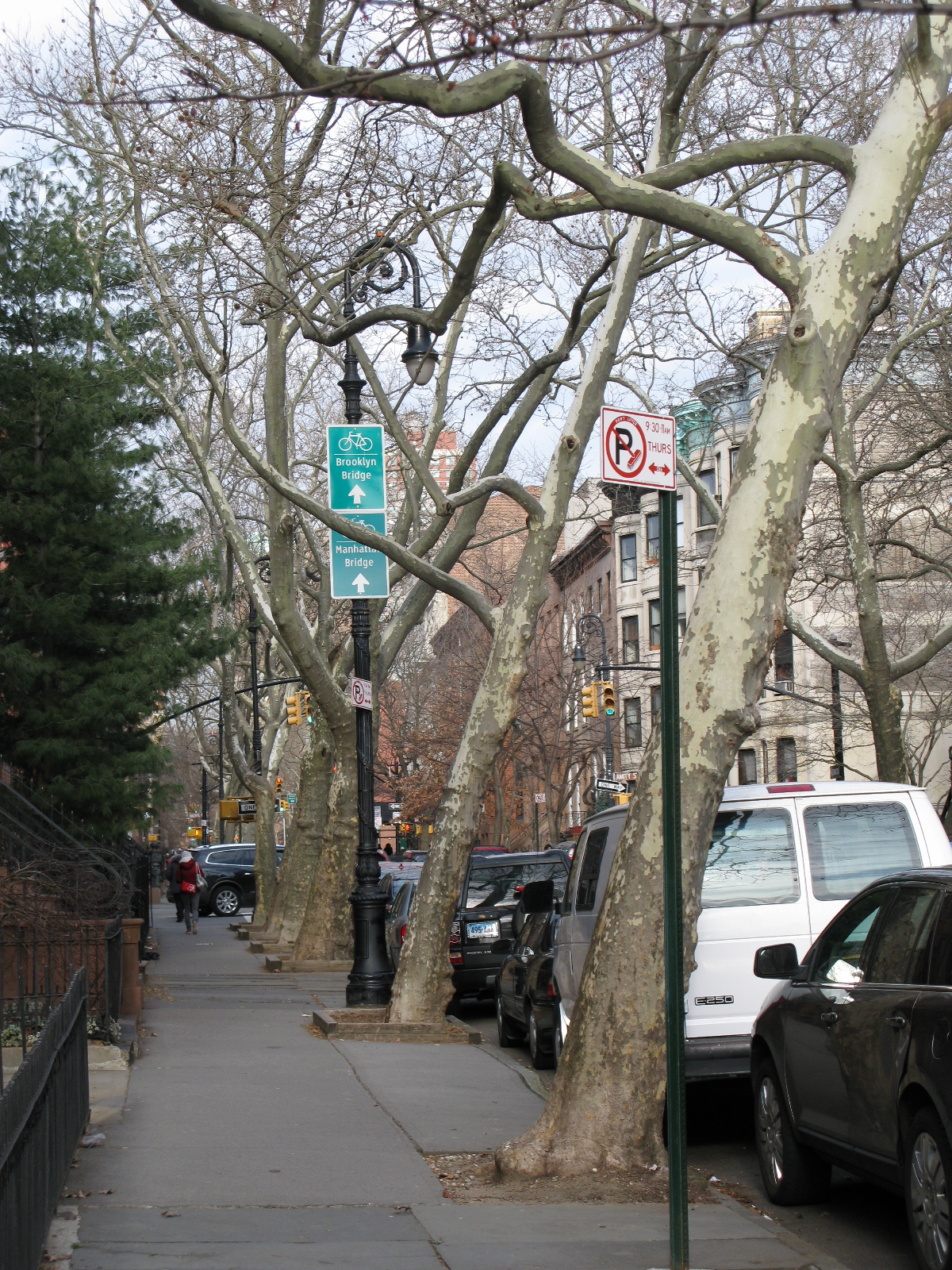
 The London Planetree is one of most common street trees in New York City. It is easily distinguished by its pale, smooth, and mottled bark. Rain-slicked, this bark looks something like tropical camouflage. The fruit balls are also distinctive. Of course, when I say “easily distinguished,” I ignore the American Sycamore, which is quite similar, although not much found planted on the street. A native tree, the American sycamore, Platanus occidentalis, is common in the Mid-Atlantic, Southern, and Midwestern states, and cultivated elsewhere. We city residents are more likely to see it in a park or forest setting.
The common name of the London Planetree, meanwhile, suggests that it’s not a native. Indeed, it’s scientific name, Platanus ‘x acerifolia’ tells us it’s a hybrid. X marks the cross. It was first recorded in Europe in the 1600s (some say in Spain, some say in Britain), when imported American Sycamores and imported Oriental Planes (P. orientalis), native to the Balkans and eastward, intermixed. (Globalism is nothing new.) Since then, the trees have felt the controlling hand of humans; there are now numerous cultivars. The resulting trees are often quite tolerant of pollution and poor soil, and thus thrive in cities. Some of the cultivars are attacked by anthracnose, a fungal disease that can make the leaves look miserable and the trees embattled; it’s mostly an aesthetic issue, but repeated bouts of anthracnose can weaken the tree, which often can lead to other problems. 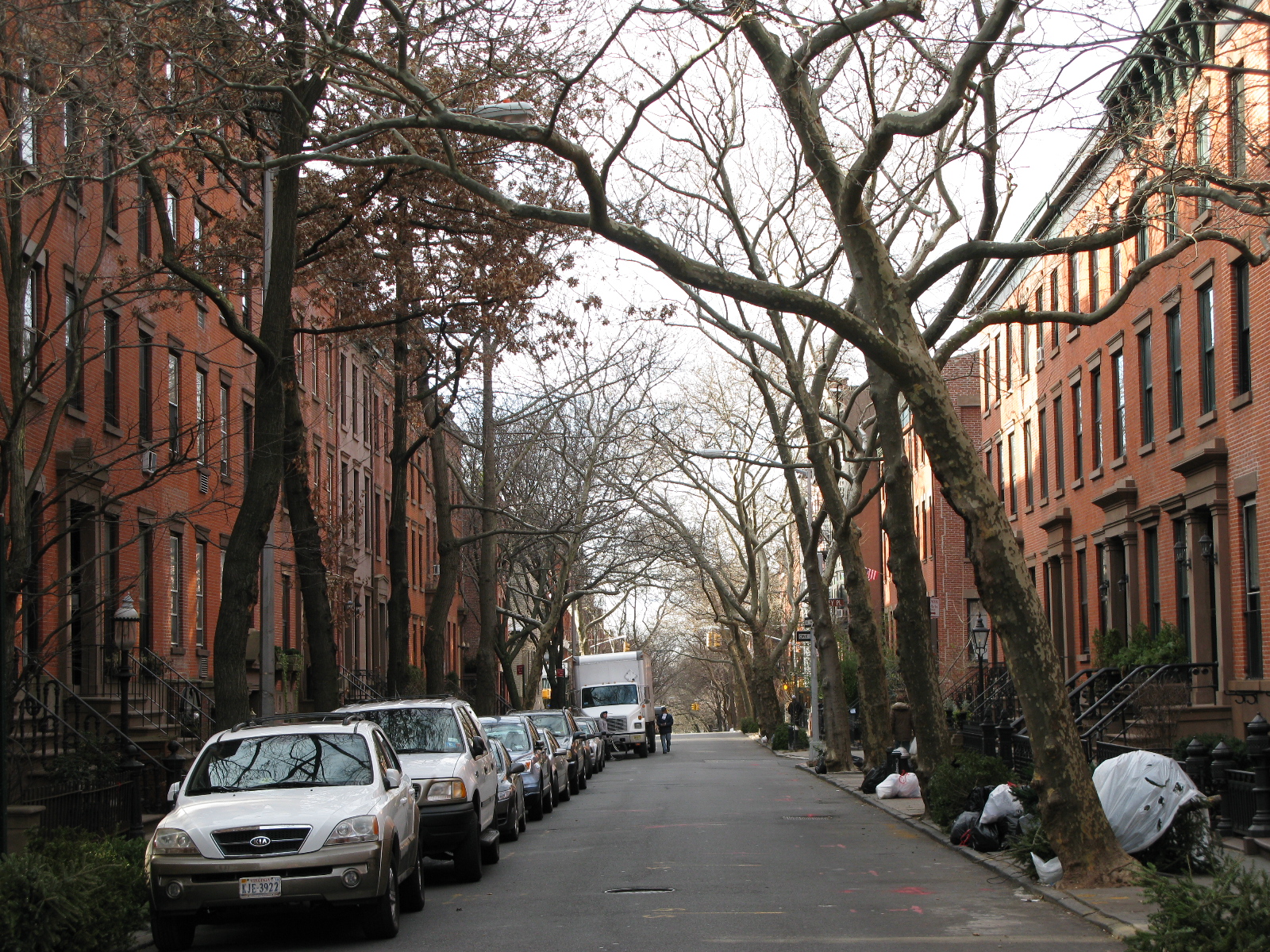 But what I really wanted to bring to your attention is the fact that Planetrees are highly phototropic. They move towards the light. On our streets, this is manifested by the trees arching over towards the center of the street and away from buildings. In the picture above, a half dozen Planetrees on one side of the street bend towards the relatively straight trunks of other tree species on the other side of the street (there is one Planetree on the left side). A downside of this tendency is that the trees are not correspondingly autophobic, so the sometimes sharp angle of the trunks means they can be gouged by delivery trucks, Suburban Utility Vehicles, and other monstrously inappropriate civilian tanks.
 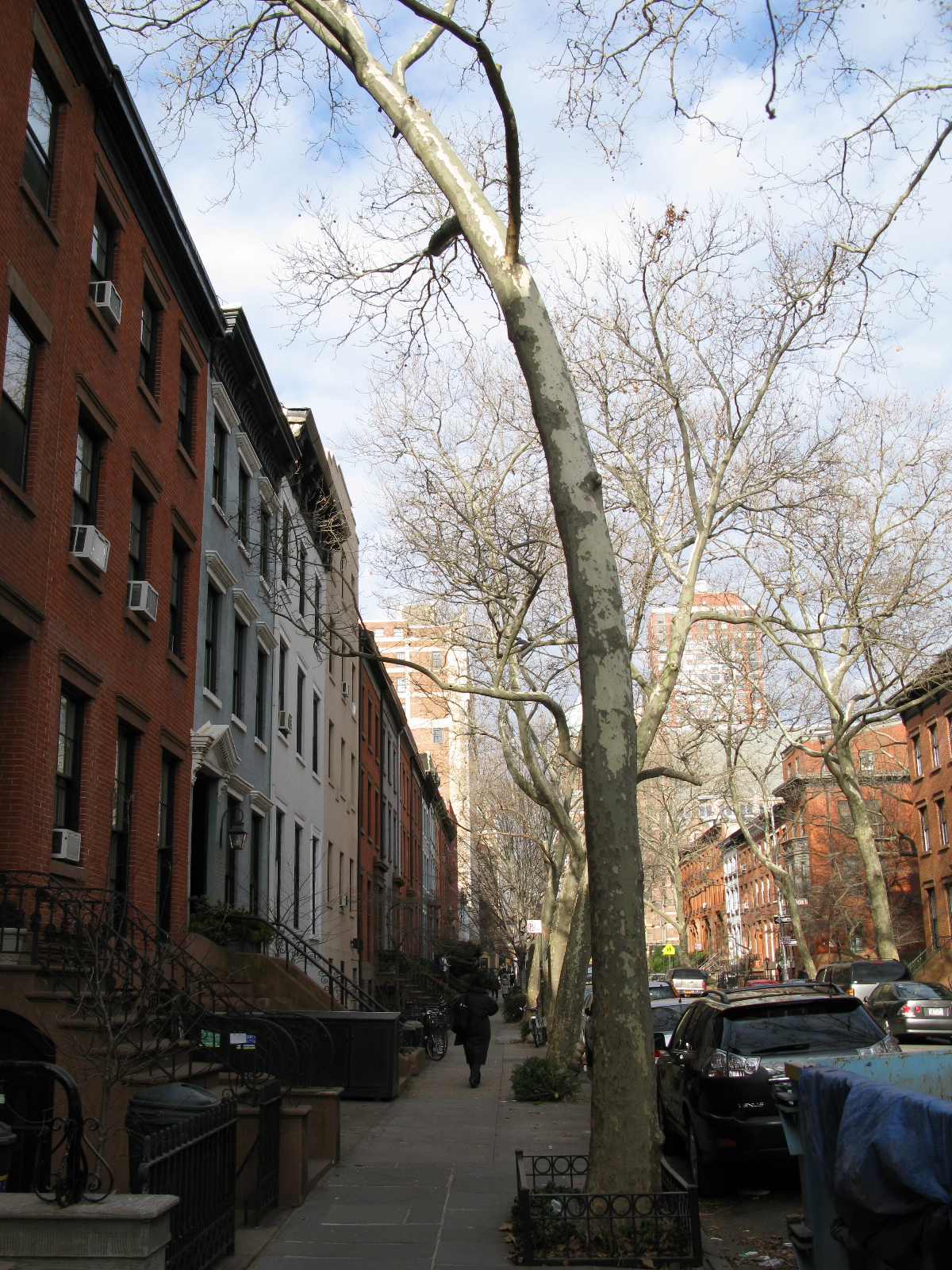 Here’s an unusual example of a London Planetree arching towards a building. Can you guess why?
 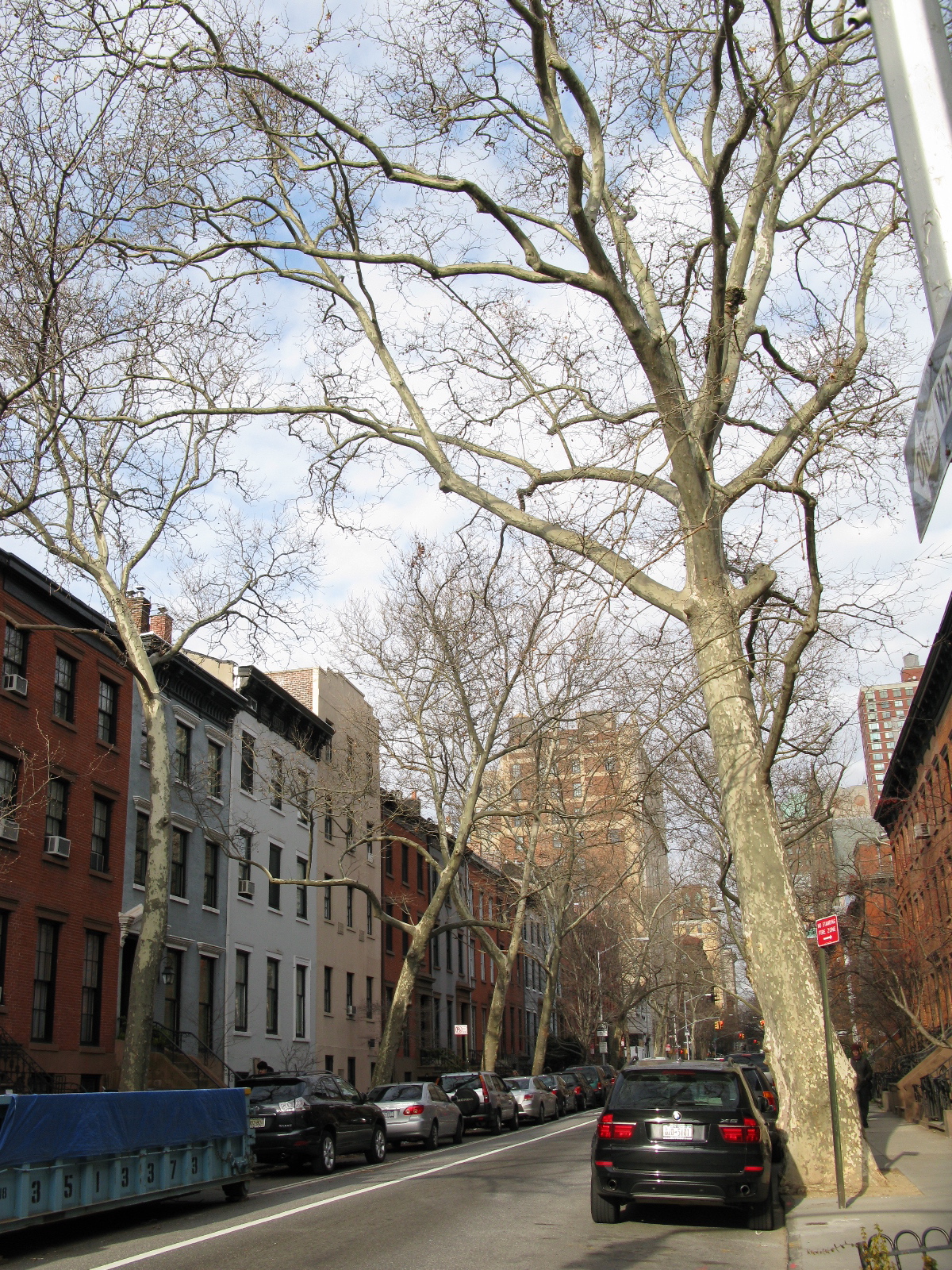 Across the street is an enormous — it has the biggest bole in the ‘hood — older Planetree that, in angling upwards, has “pushed” the younger one away from it. As the tree grows, it senses where the light is, even where the light is only marginally better, and moves accordingly. Location, location, location, it’s all about the “view” of the light.
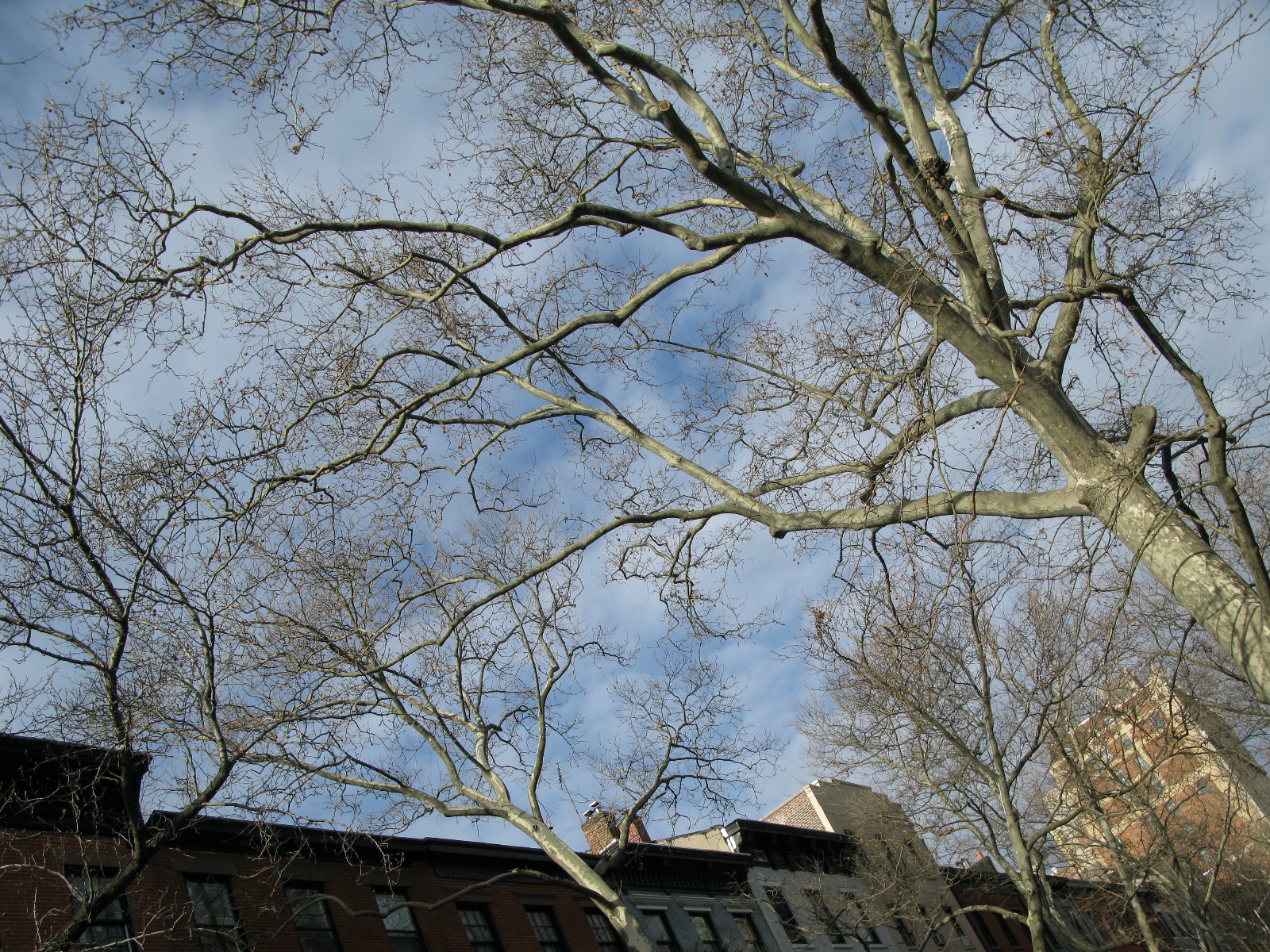 Here they are, battling it out for the light overhead.
 Backyard and Beyond
Leave a comment