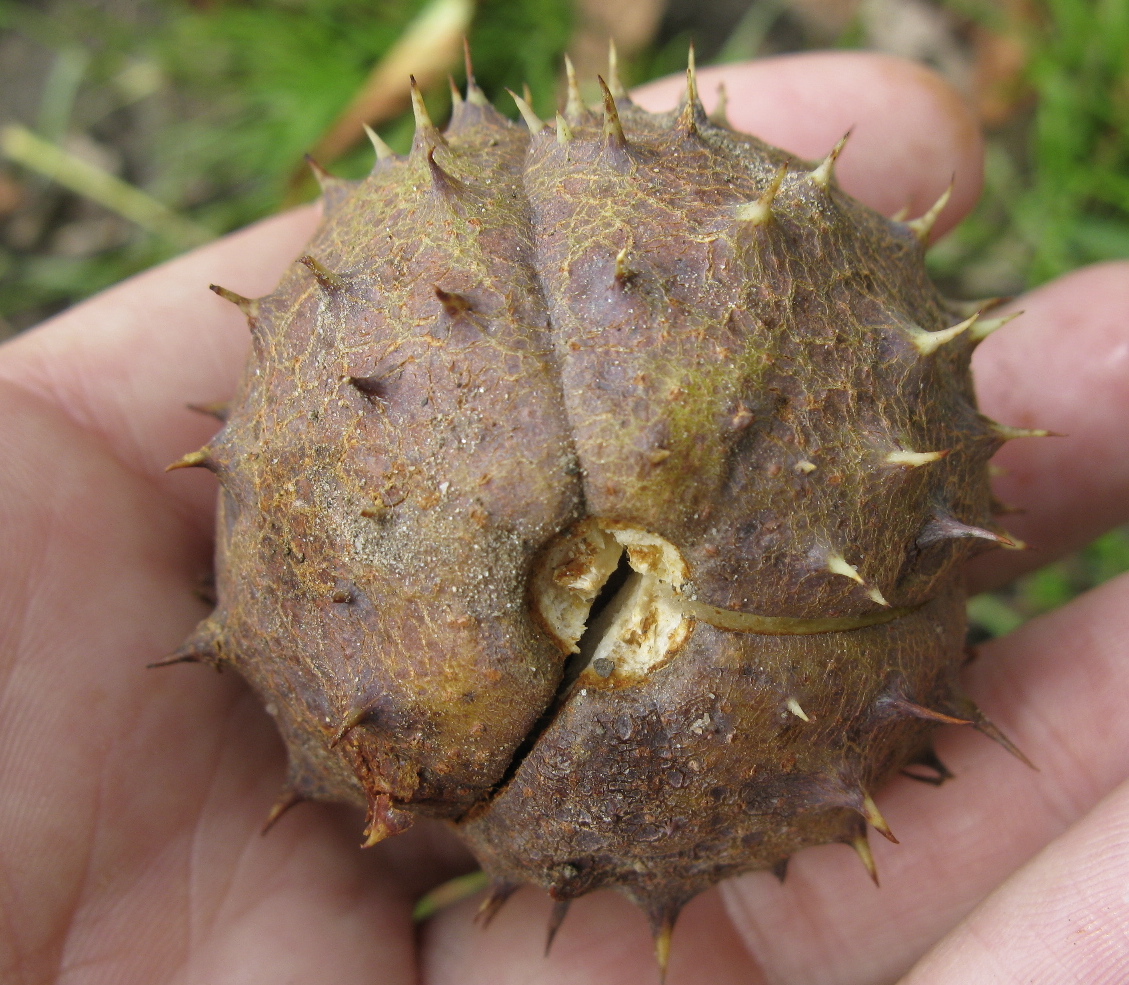

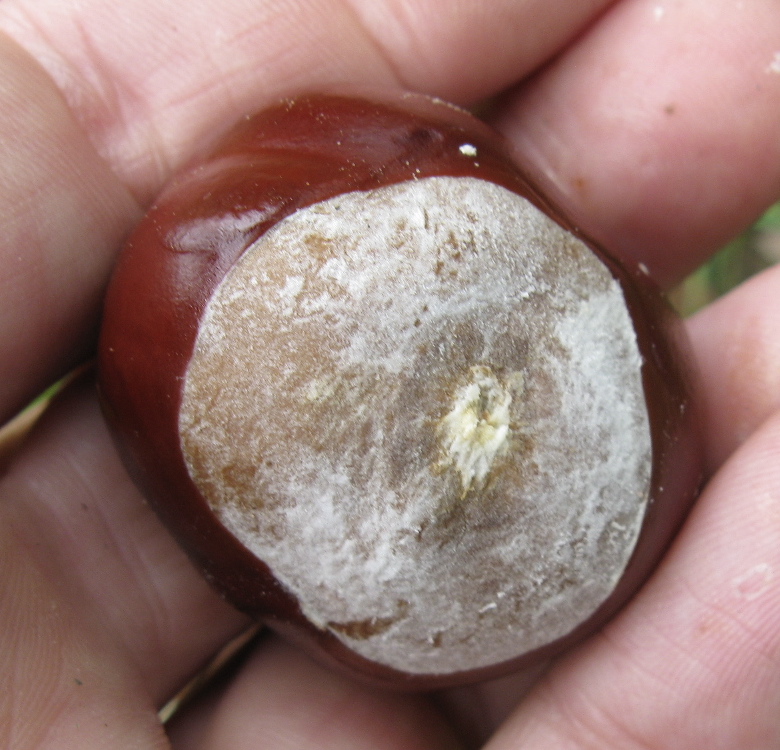
 The Horse-chestnut, Aesculus hippocastanum, a native of Eurasia, is a relatively common tree in the city, having long been a popular ornamental. This is its seed, or conker.
The Yellow Buckeye, Aesculus flava, meanwhile, is a native of the Ohio River valley and other Appalachian valleys, and is seen much less frequently in the city. There is a magnificent specimen on the southeast corner of Prospect Park’s Long Meadow, the section amputated by the Moses Memorial ballfields. There’s also one amid the Horse-chestnuts just inside the 9th Street entrance to the park, giving us a good opportunity to compare.  Buckeyes have quite different fruits: bigger, fleshier, smoother, spineless. This one has been ravaged by a squirrel, and only one of the 3 or so seeds hasn’t been extracted. I popped it out for a closer view.
  Unfortunately, this luscious chestnut color fades pretty quickly.
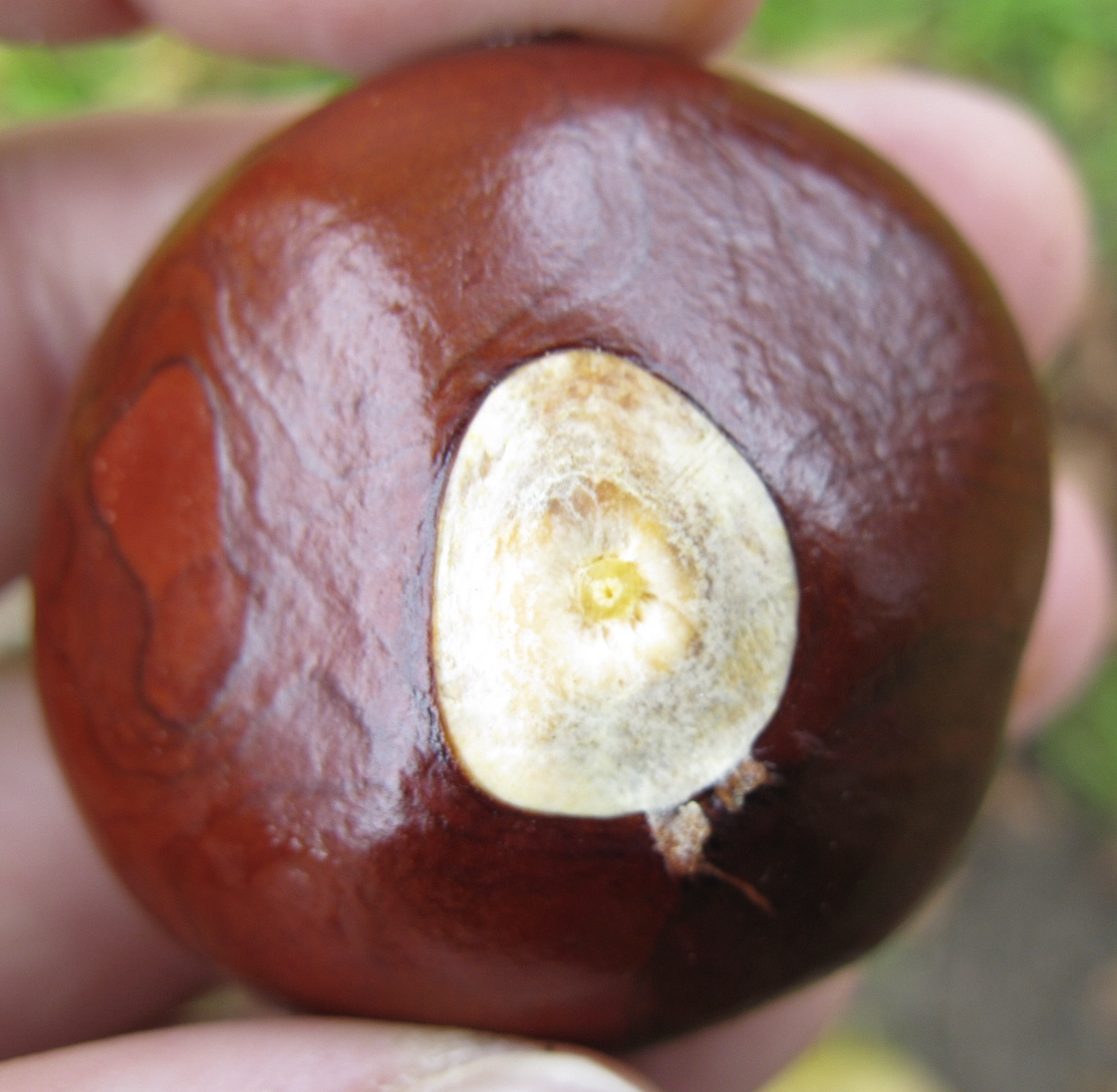 Generally, the buckeye is larger, flatter, and has a smaller “eye.”
In ancient times, say into the mid-20th century, rural folk would carry a buckeye/conker or two in their pocket to finger, believing they were good for joint health. Sympathetic medicine, I guess, since the seed is vaguely joint-like. Conkers — the game was played with the seeds — are inedible to humans, but can be leached, like acorns, for consumption. If you’re really, really hungry.
 A herd of buckeyes. The black ones are old (from as long ago as last year?), hollowed out by insects and time. The too bright one is half-chewed. The husks dry out to a leathery nature quickly.
 Backyard and Beyond
Leave a reply to Kiley Cancel reply