The last, the very last, Passenger Pigeon died in captivity (1914). So did the last Carolina Parakeet (1918). The last Heath Hen, named Booming Ben, died in the preserve set aside for the species on Martha’s Vineyard (1932).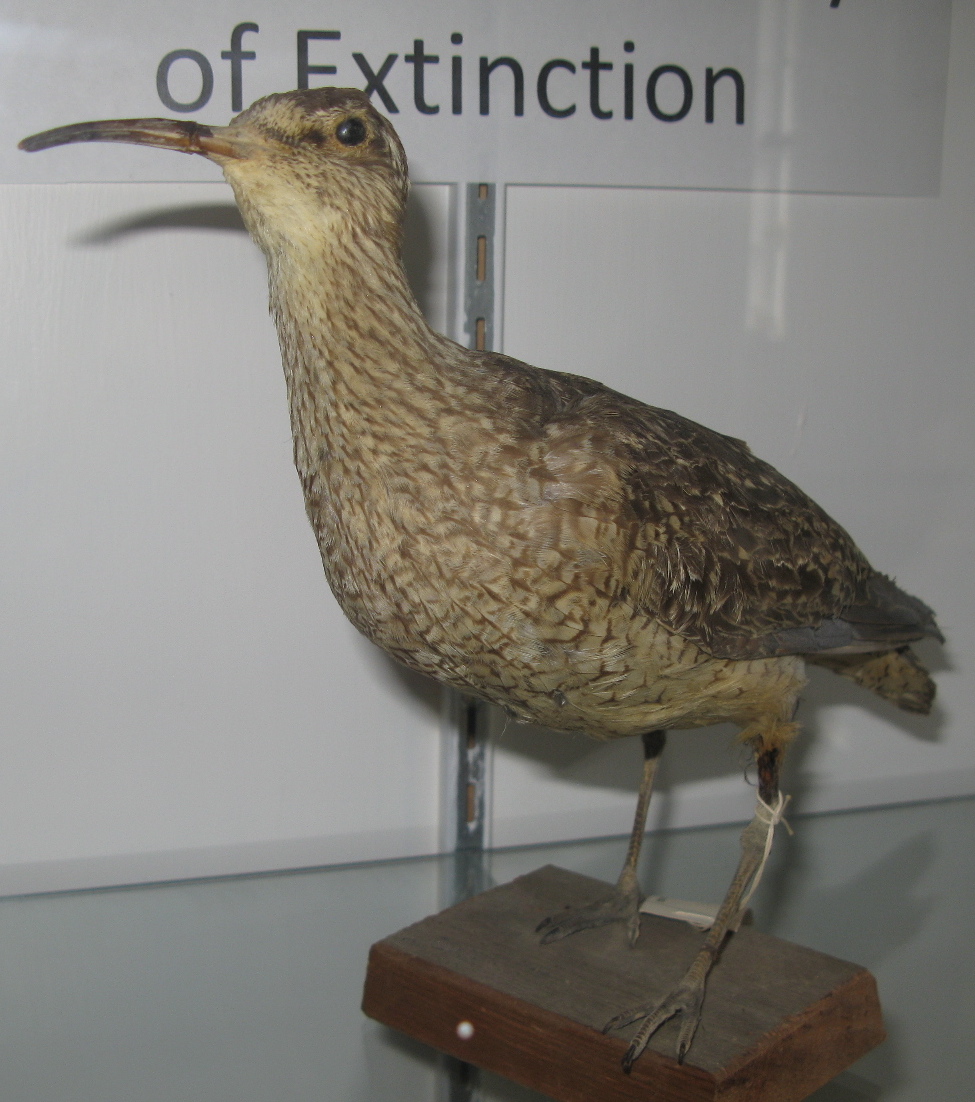 But we don’t know where or when (or even if) the last Eskimo Curlew died. The species, Numenius borealis, is presumed extinct, but some people still have hope. Hope being a thing with feathers, after all. Theses birds once migrated in enormous flocks through the Mississippi Valley and the Atlantic Flyway: two million a year were killed for their prized flesh in the late 19th century. The last confirmed sightings were in the early 1960s.
This specimen is found in the collection of the Maria Mitchell Association on Nantucket.
I find taxidermy pretty damn depressing, as far from the marvelous vivacity of the living animal as can be. Flaubert writes in Madame Bovary, “Human speech is like a cracked kettle on which we tap crude rhythms for bears to dance to, while we long to make music that will melt the stars” (Steegmuller trans.), and I feel something akin to this about such stuffed animals. Yes, we try to represent, to memorialize, to speak, this creature, but we fail spectacularly.
And now all we have are some glass eyes to look into.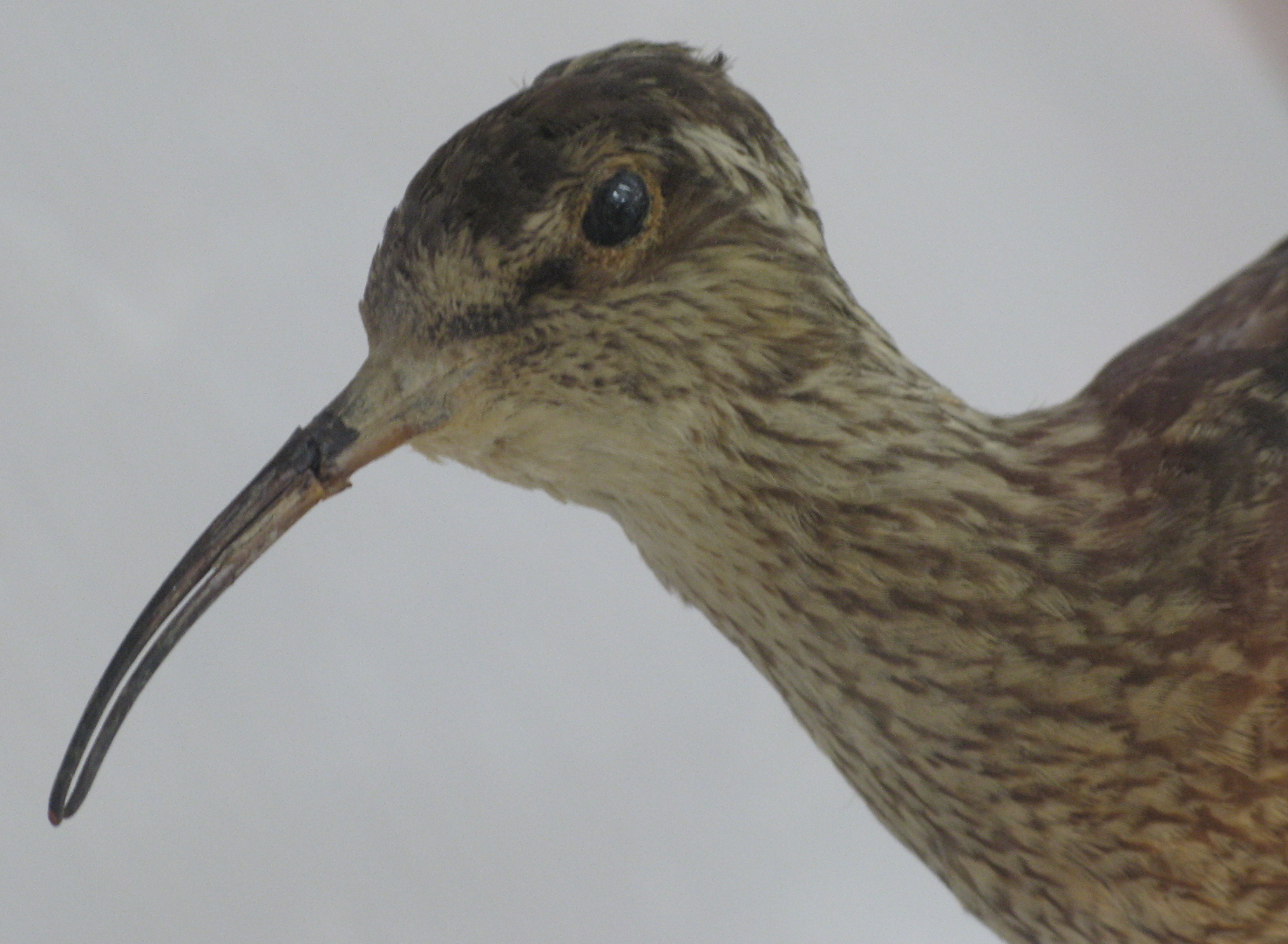 Which means we can see a small reflection of ourselves…I think of Plato’s Cave, where we are imprisoned, watching a fractured shadowplay we think is the real thing.
You can read about hunter/conservationist (not considered a paradoxical combination back then) George H. MacKay’s thorough documentation of the dwindling population of these curlews on Nantucket in the last quarter of the 19th century in this paper. My fellow urban naturalist Rob Jett, the City Birder, has put an Eskimo Curlew on a T-shirt to celebrate the species. Not to say memorialize…
 Backyard and Beyond
Leave a comment